
Last updated November 17, 2026
 Wrought iron
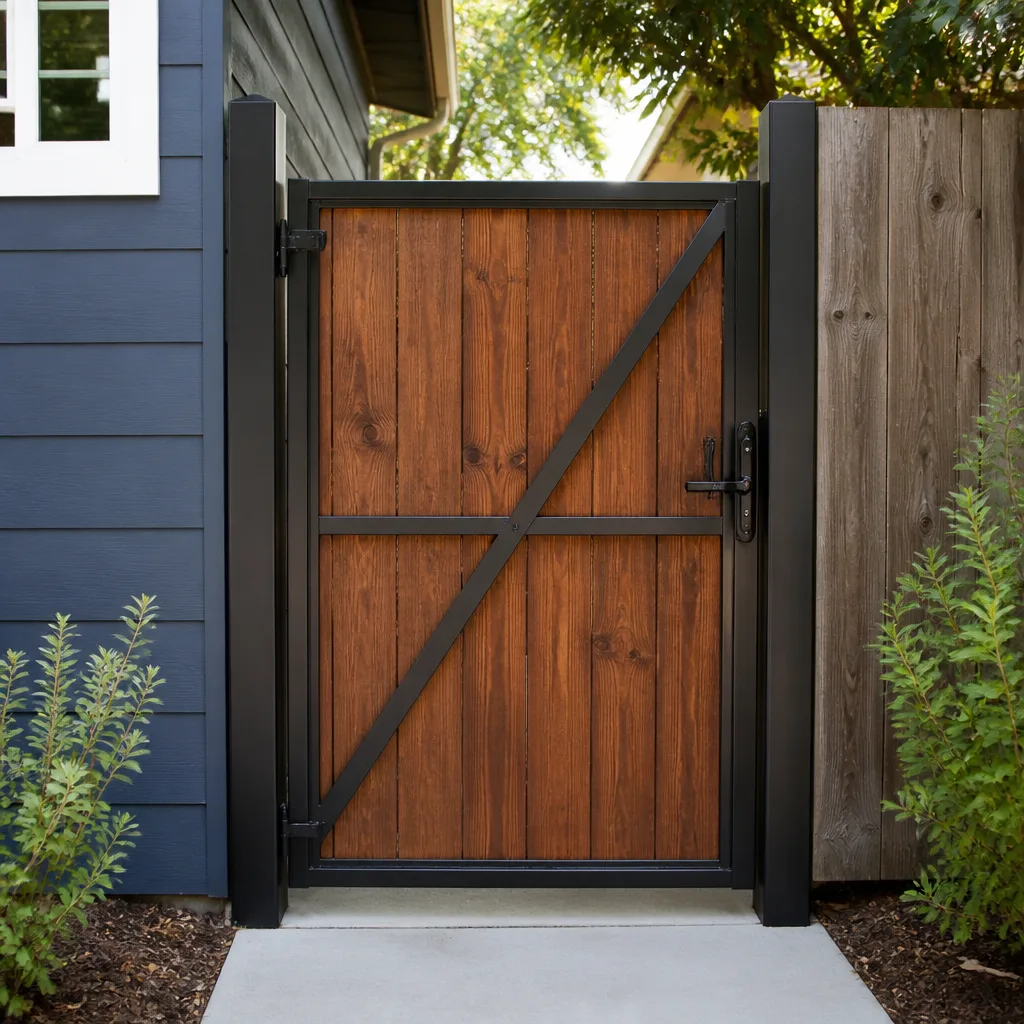 Wood & steel frame
 Farm & ranch
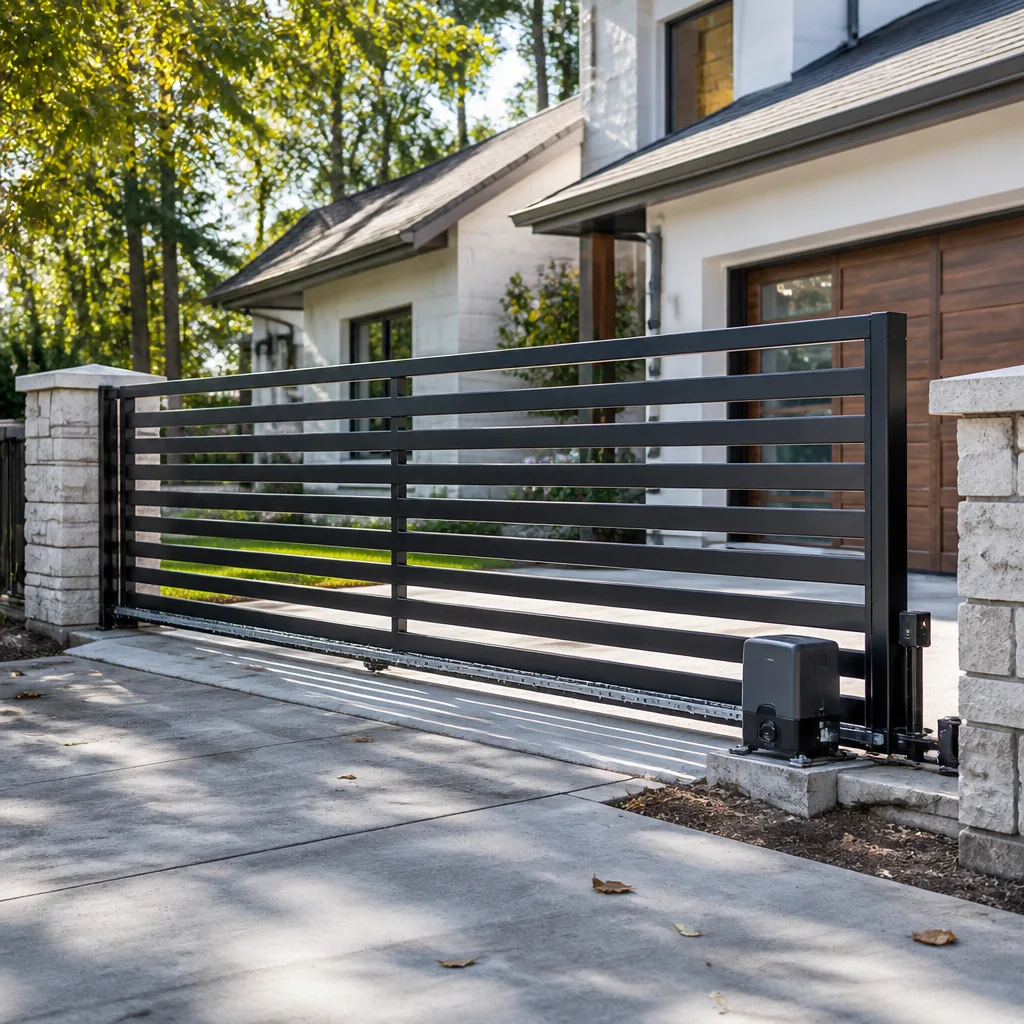 Sliding driveway gates
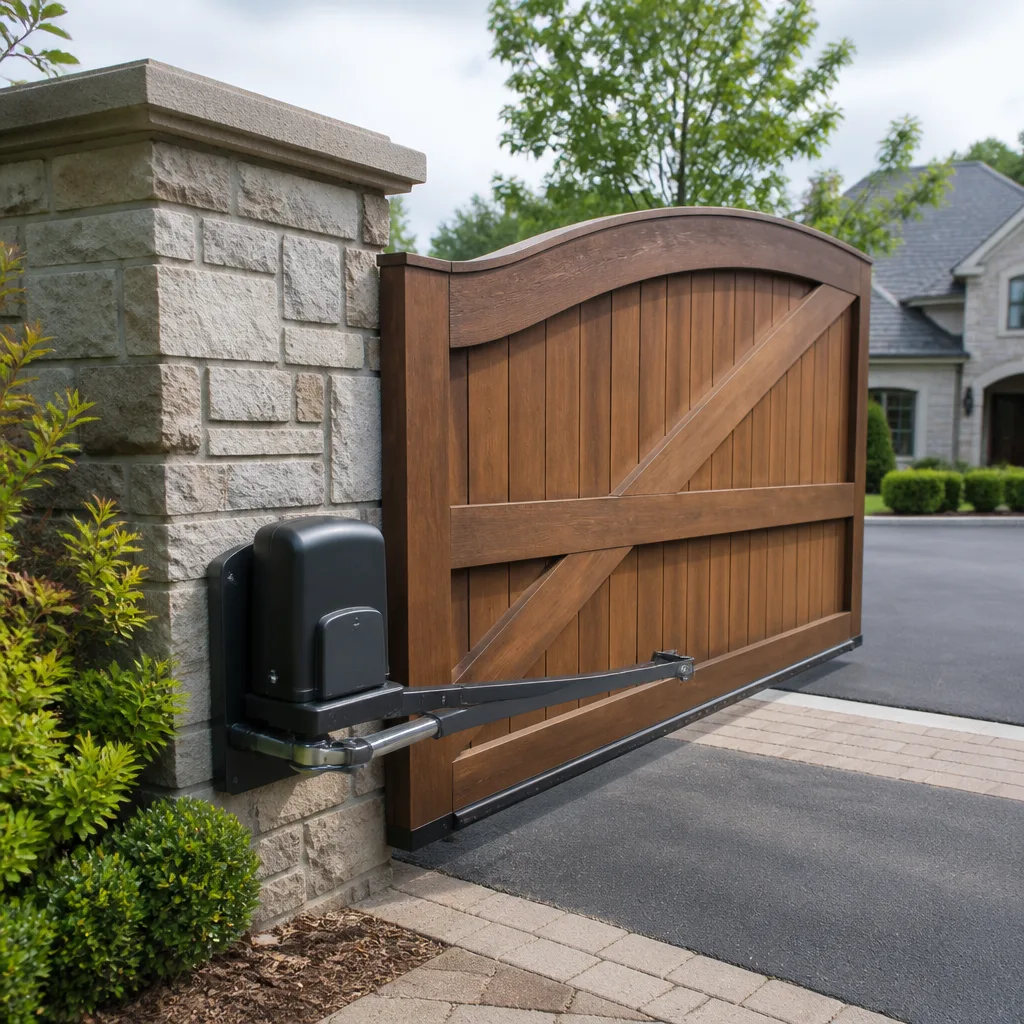 LiftMaster operators
Free on-site gate assessment - hinges, posts, and your LiftMaster or Nice gate operator checked before anything is quoted
The assessment is free and the quote is the invoice.
Get your free estimateGate Motor & Opener Troubleshooting: Common Problems and How to Fix Them
When a gate stops mid-travel and reverses, most homeowners blame the motor. Most of the time, the motor is fine. The obstruction sensor, a limit switch, or a loose ground wire is the actual culprit, and knowing the difference can save you a service call and a week of scheduling. In our experience across Mesquite, roughly nine in ten gate motor calls we take could be diagnosed in advance by checking the same three systems in the same order. This guide teaches that diagnostic logic. You will learn what to check first, how to read the codes on your control board, which symptoms mean stop immediately, and how to describe a problem so clearly that a technician finishes the job in thirty minutes instead of two hours.
Quick Answer
Gate motor and opener problems are almost always one of three things, and you should check them in this order: power, signal, then mechanical. Power covers the breaker, transformer, battery, and ground connection. Signal covers the safety sensors, remote, and control board. Mechanical covers the gate itself: hinges, wheels, track, and physical obstructions. Working in that sequence solves the majority of faults without tools or guesswork, and it tells you exactly what to say when you do call for help.
Styles & brands we work with
- Wrought iron
- Wood & steel frame
- Farm & ranch
- Sliding driveway gates
- LiftMaster operators
Table of Contents
- Why the Motor Is Usually Innocent: The Three-System Diagnostic Sequence
- System One: Power, the Ground Wire, and Intermittent Failures
- How to Read Error Codes on Common Opener Control Boards
- System Two: Signal, Safety Sensors, and Control Boards
- System Three: Mechanical Problems in the Gate Itself
- Why Mesquite Conditions Worsen Gate Motor Problems
- Symptoms That Mean Stop Immediately
- How to Document a Problem So the Service Call Takes 30 Minutes
Why the Motor Is Usually Innocent: The Three-System Diagnostic Sequence
Everything in your gate system is downstream of the motor’s power supply, and that is why the sequence matters. If you start by inspecting the motor itself, you are inspecting the last link in a chain. Start at the wall and work forward.
We use a simple order on every service call, and it works the same for a homeowner standing in their driveway:
- Power. Confirm the breaker and any disconnect switch, test the outlet or low-voltage transformer, check the battery if the unit is battery-backed, and look at the ground connection.
- Signal. Check the safety sensors, the remote or keypad, the control board indicators, and the limit switch wiring.
- Mechanical. Then and only then, examine the gate panel itself: hinges, rollers, sag, binding, and debris.
This order eliminates guesswork because each system builds on the one before it. A gate that won’t respond at all is a power question. A gate that responds but reverses or stops partway is a signal question. A gate that moves but strains or drags is a mechanical question. When you classify the symptom first, you stop chasing the motor and start finding the real fault. That distinction is the whole game in troubleshooting.
For more on how these systems fit together on a driveway gate, our Gate Motor & Opener in Mesquite page walks through the components from the transformer to the arm.
System One: Power, the Ground Wire, and Intermittent Failures
Intermittent failures are almost always a connection or a ground issue, not a failed board. A gate that works in the morning and refuses in the afternoon, or one that only acts up after a hot day, is telling you the power path is marginal rather than broken.
Here is what to check, safely, without opening the housing:
- The breaker and any dedicated disconnect. A tripped breaker looks like a dead motor. Do not reset it more than once without investigating why it tripped.
- The transformer. A low-voltage transformer that has drifted out of spec will cause slow, weak, or inconsistent opening. Look for a scorch smell or housing that is unusually hot to the touch, and if you see either, stop and call.
- The battery, if the unit is battery-backed. Batteries fade slowly, and a tired one shows up as the gate losing its travel or stalling on the return.
- The ground connection. A corroded or loose ground wire is the classic cause of glitchy, on-and-off behavior. In a desert climate, thermal movement works these connections loose over time.
The reason intermittent faults point to connections is straightforward: a broken wire fails completely, but a loose one fails only when vibration, heat, or moisture shifts it. That pattern is far more common than a dead control board, which tends to fail once and stay failed. If your gate has a stubborn habit of misbehaving some days and not others, think connection first. This is where a trained eye pays for itself, and it is one reason we recommend a professional look at anything involving the line-voltage side of the system. The low-voltage checks are homeowner-safe; the wiring inside the enclosure is not.
How to Read Error Codes on Common Opener Control Boards
Most residential control boards announce their fault with a blinking LED or a code, but the codes are not identical across brands, and reading them wrong sends homeowners down the wrong path. The good news is the logic is consistent even when the blink pattern isn’t.
What the indicators generally tell you:
- A rapid repeated blink: typically an obstruction or safety-sensor fault. The board sees something in the path or has lost the sensor signal.
- A set number of blinks followed by a pause: a specific fault, and the count maps to the code table in that unit’s manual. Note the count before you touch anything.
- A steady light with no movement: often a locked-out state the board entered after too many failed cycles. It is protecting itself, not broken.
- No indicator at all: back to power. A board with no light is not getting what it needs.
For a Linear or Viking unit, the code table lives in the installation manual, and we keep those on file. Ghost Controls units are common on lighter residential gates and behave predictably once you know their indicator language. If you can tell us the brand and the blink count, we can often tell you what the board is complaining about before we arrive. Photograph the indicator while it is blinking, because the pattern repeats too fast to describe from memory. If the manual is long gone, the manufacturer’s model and serial number will get you the right table.
System Two: Signal, Safety Sensors, and Control Boards
Once you know the gate has power, the next question is whether the signal is reaching the motor cleanly. This is where the reversal mentioned at the top of this guide comes from. A gate that closes and then reverses on its own is obeying a safety sensor that thinks the path is blocked.
Work through these in order:
- Look at the safety eyes. Alignment is the first suspect. A sensor knocked a hair out of line, or one with a dirty lens, will cause a reverse every time. Clean the lenses, then check that the two sensors face each other squarely.
- Test the remote and keypad separately. If the keypad works and the remote doesn’t, the board is fine and the problem is the remote or its battery.
- Check the limit switch wiring. The limit switch tells the motor where the gate has reached. A loose limit wire makes the gate stop in the wrong place or refuse to reverse.
- Look for sun and heat on the sensors. In Mesquite, afternoon sun on a misaimed sensor can cause a gate to fail only during certain hours. That is a signal problem, not a motor problem, and it is easy to misdiagnose.
If the sensors and remotes check out but the behavior persists, the control board or its programming is the next suspect. Reprogramming travel and force limits clears a surprising number of faults. That work is best left to someone with the right tools and the right brand experience, because a board forced past its safe limits will damage the operator. Our Gate Repair in Mesquite service exists for exactly this middle ground: the fault is real, but the fix is calibration rather than replacement.
System Three: Mechanical Problems in the Gate Itself
By the time you reach the third system, you have ruled out power and signal. Now the question is whether the gate is fighting the motor. A motor that strains, drags, or trips its own overload protection is often being asked to move a gate that no longer swings freely.
Look for these mechanical causes:
- Hinge wear. Hinges sag over time, and a gate that droops a fraction of an inch can bind against its post.
- Wheel or roller problems on sliding gates, where grit and worn bearings create drag.
- Track and guide obstruction from debris, sand, or settled ground.
- Loose or bent gate frame that changes the geometry the motor was set for.
Here is the test that separates motor from gate: with the operator disengaged, a healthy gate should swing or slide through its full travel with two fingers of effort. If it takes a shoulder, the gate is the problem, not the motor. We see this constantly on gates that have settled into desert soil, where the ground under a post shifts after a season of heat and the gate hangs just enough to load the operator. If disengaging the motor is not obvious on your system, do not force anything. When the gate is hung correctly, the motor barely has to work, and that is the standard we hold our Gate Installation in Mesquite work to.
Why Mesquite Conditions Worsen Gate Motor Problems
A gate in Mesquite lives a harder life than one in a milder climate, and that shapes almost every fault we see. The summer heat stresses electronics and batteries, the dust works its way into moving parts, and the wide temperature swings between day and night loosen connections and settle posts. An operator that would last a decade in a damp climate may need attention sooner here.
The practical consequences are specific. Battery-backed units age faster in sustained heat. Safety sensor lenses collect dust and start misreading. Ground connections corrode and loosen as the metal expands and contracts. Hinges and wheels wear under grit. None of this is a motor failure, and all of it is manageable with the right routine. A seasonal tune-up before the hottest months pays for itself, because it catches the marginal connections and dirty sensors before they strand you. For a gate that has to keep working through a Mesquite summer, the maintenance calendar matters as much as the hardware. If your gate is overdue, our Ironworks Gate Co. Mesquite home page is a good place to see the full range of what we keep running.
Symptoms That Mean Stop Immediately
Some symptoms are safe to investigate. Others are not, because repeated cycling turns a small fault into permanent damage. If you see any of the following, stop using the gate and call for service.
- The motor smells burnt or the housing is hot to the touch. Repeated cycling on a strained operator can burn out the motor or the board. Stop, and do not reset it to try again.
- The gate reverses on an object that is not there, repeatedly. Stop forcing it. A sensor fault that keeps cycling the gate is loading the mechanical parts that are trying to obey it.
- A loud grinding, clunking, or metal-on-metal sound. Something mechanical is hitting evidence of wear, and every cycle makes it worse.
- The gate moves with no command. This is a safety concern, not just an annoyance. Keep clear of the path until it is looked at.
- Sparks, a scorch smell, or visible damage at the power supply. This is an electrical hazard. Do not touch it. Call a professional.
The common thread is that a gate that keeps cycling under a fault is doing damage every time it runs. The instinct to reset and retry is understandable, but on these symptoms it is the wrong move. A quick call can stop the damage before it becomes a motor replacement.
How to Document a Problem So the Service Call Takes 30 Minutes
The difference between a thirty-minute service call and a two-hour one is usually the description you give on the phone. We can show up prepared, with the right part and the right tools, if we know the brand, the symptom, and the pattern. Here is how to document a fault so the technician walks in already knowing where to look.
- Write down the brand and model. The plate on the operator lists it. This alone tells us which manual to pull and which parts to bring.
- Describe the exact behavior, not your guess. “It closes partway, stops, and reverses” is far more useful than “the motor is broken.”
- Note when it happens. Always, only in the afternoon heat, only after a power flicker, only on the first cycle of the day. The pattern is a clue.
- Record any error code or blink count. Photograph the indicator so the pattern is not lost.
- Note recent changes. A new keypad, a storm, a power outage, or a gate that started dragging after a hot week all point to the cause.
With that information, we often arrive already holding the likely replacement part, which is why so many of these jobs finish in a single visit. A clear description is not paperwork for its own sake. It is the fastest route to a fix, and it is how we keep our promise that the price is settled before a single bolt is turned.
Common Mistakes to Avoid
- Resetting the breaker over and over. A breaker that keeps tripping is reporting a real fault. Repeated resets can hide a hazardous condition rather than clear it.
- Opening the operator housing to look inside. The line-voltage wiring in there can injure you. Homeowners should stop at the breaker and the sensors and leave the internals to a trained professional.
- Forcing a binding gate “one more time.” In our experience, most burned-out motors in Mesquite were healthy until someone kept cycling a gate that was dragging on a settled post.
- Blaming the board for an intermittent fault. Intermittent behavior points to a loose connection or ground far more often than a failed board. Replacing the board first is a needless cost.
- Ignoring sun and dust on the safety sensors. A gate that only misbehaves in the afternoon often has a misaimed sensor catching the desert sun. That is a free fix, not a repair.
- Skipping seasonal service. The heat, dust, and temperature swings here wear gate parts faster than milder climates. A tune-up before summer heads off most strandings.
- Painting over hinges and sensors. A cosmetic refresh that coats moving parts or sensor lenses causes binding and false readings. Keep paint off both.
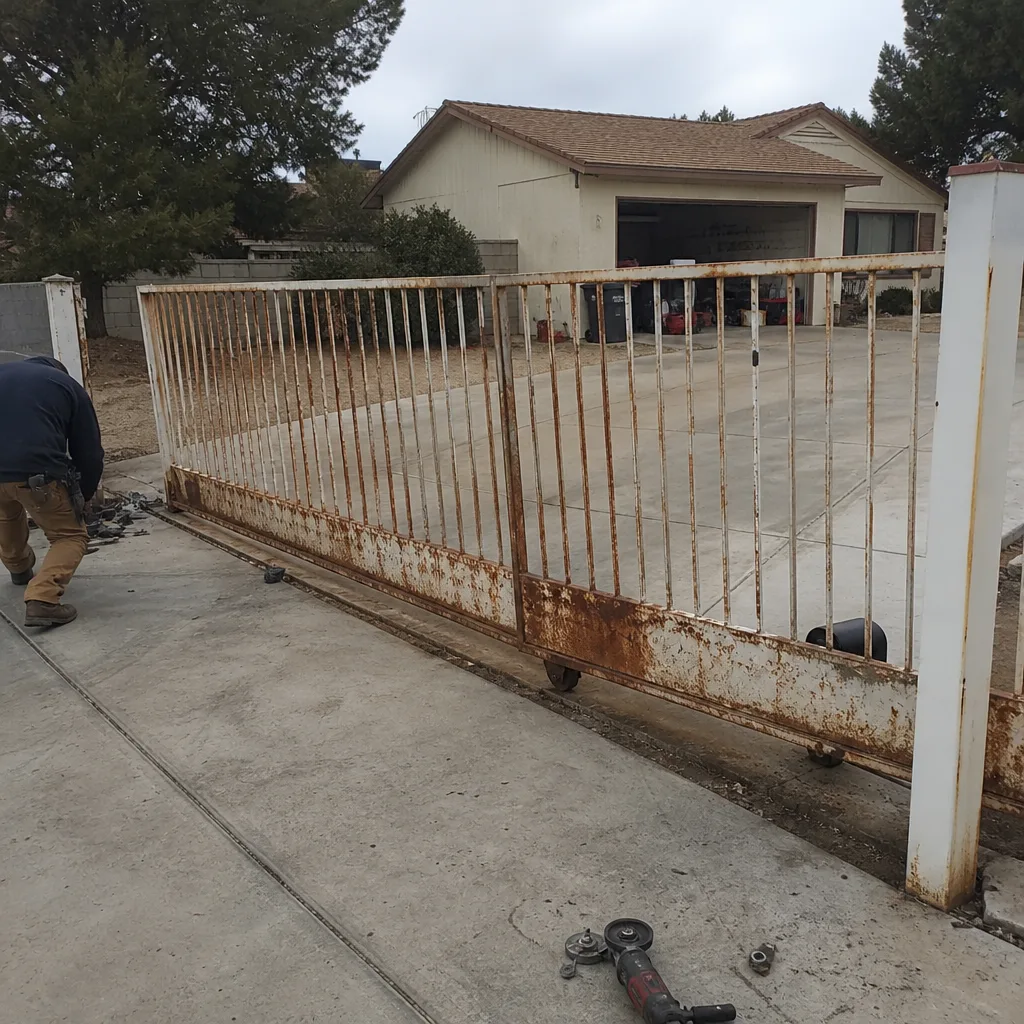
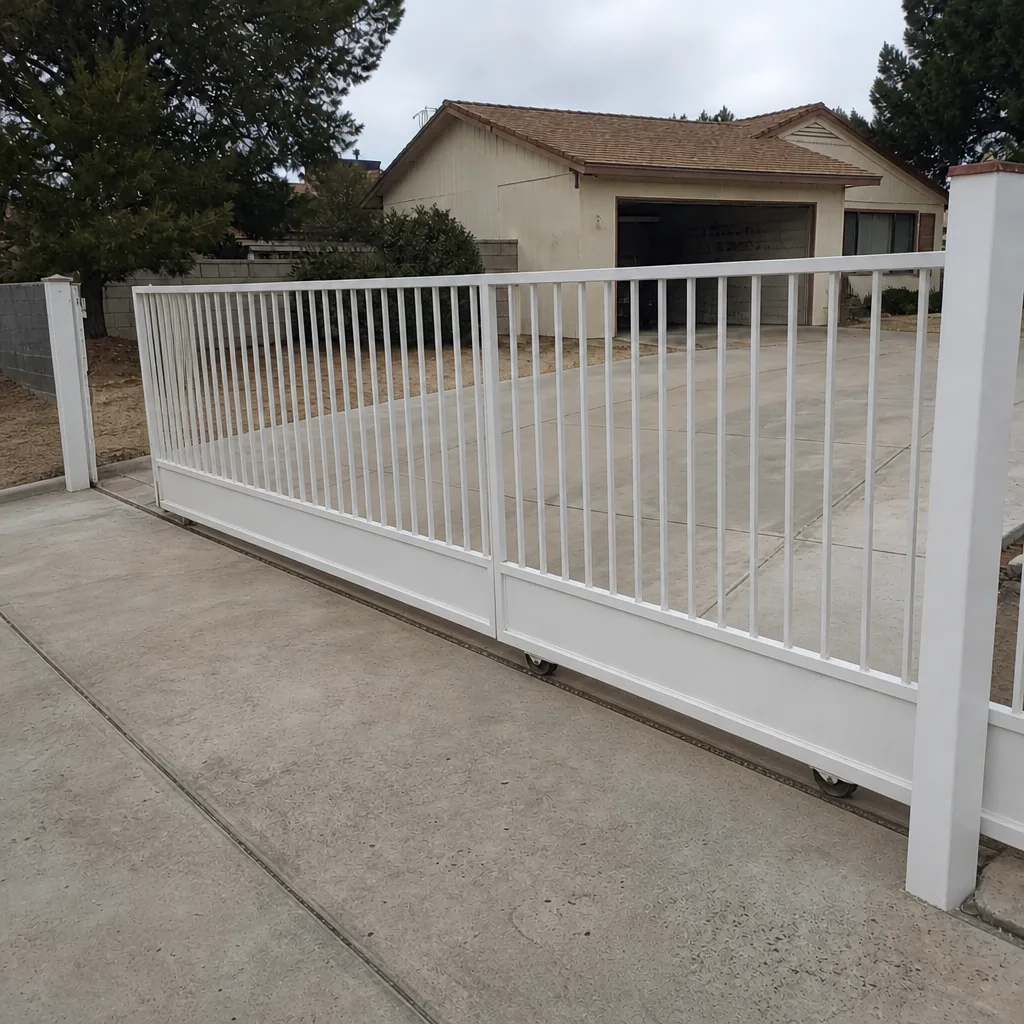
See the difference
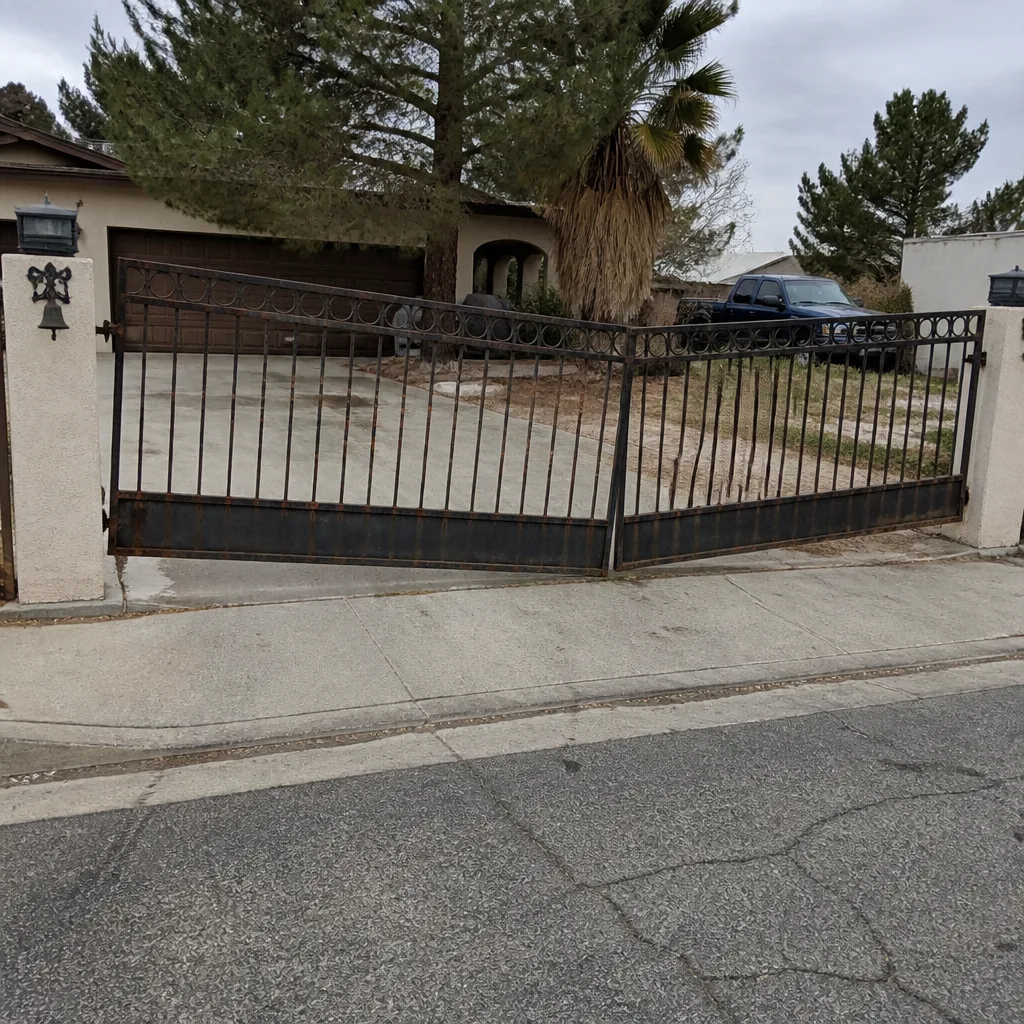 Before
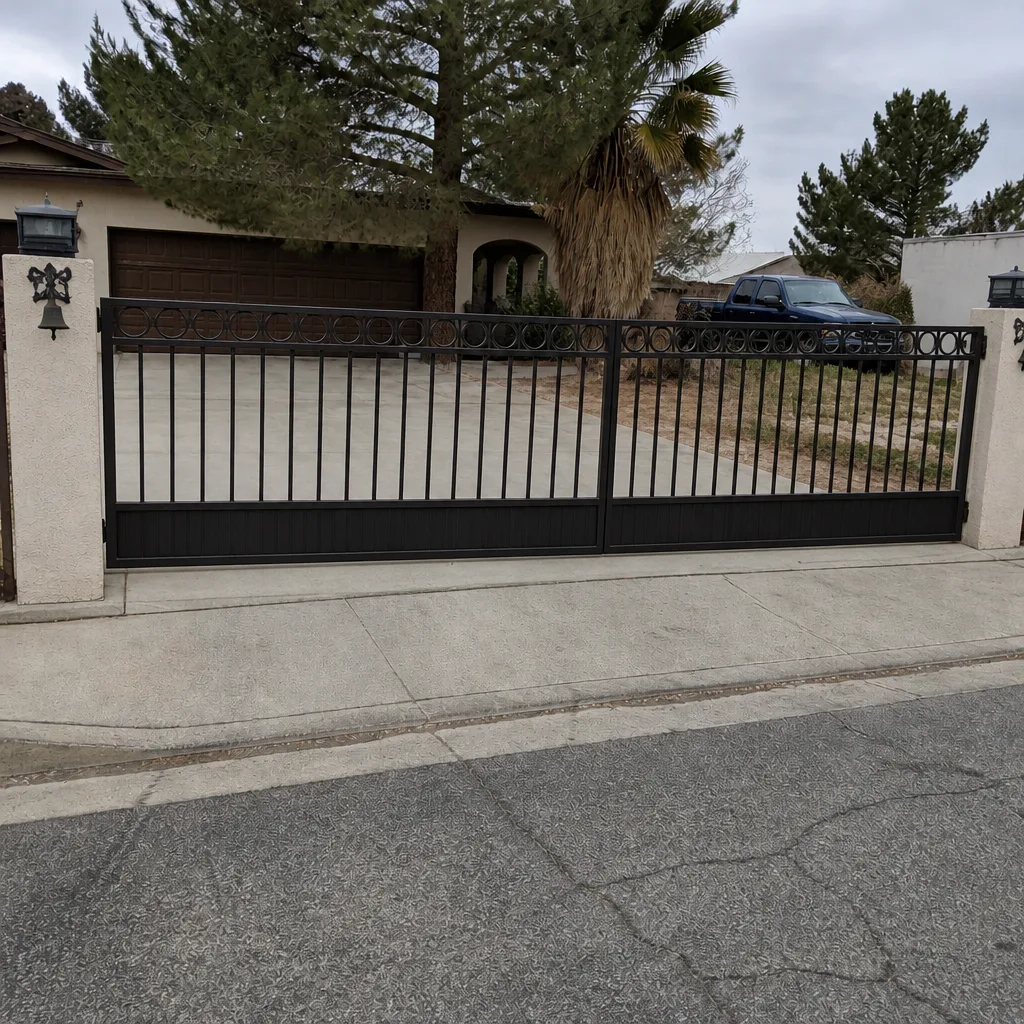 After
 Before
 After
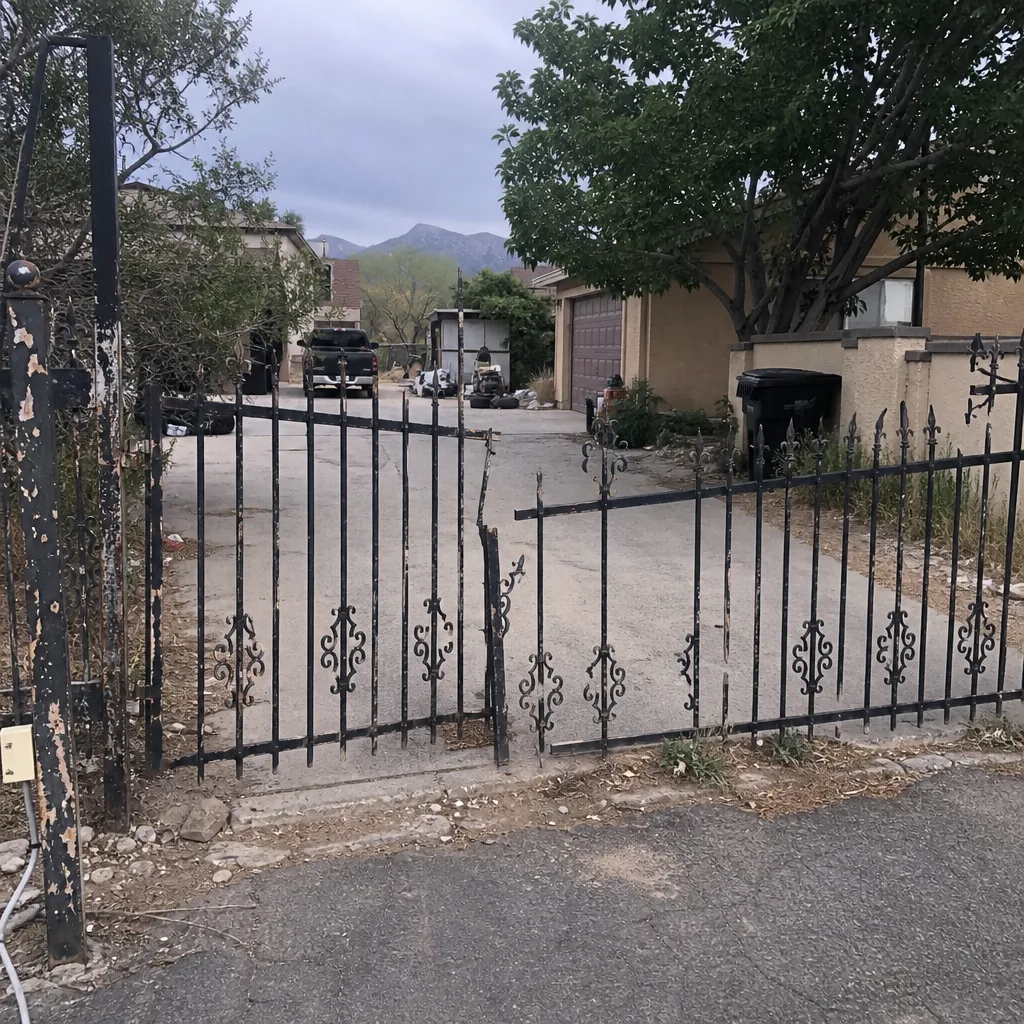 Before
 After
When to Call a Professional
Call a professional when the fault touches the line-voltage wiring, when the motor runs hot or smells burnt, when the gate cycles with no command, or when you have checked power, signal, and mechanical in that order and still have no answer. Also call if the gate is binding and you cannot find why, because a sagging gate loads the operator every time it moves. These are the situations where a trained eye pays for itself. The scope runs from the smallest repair to full automation, and if you are unsure which you need, our gate motor and opener service is built to sort that out. Ironworks Gate Co. Mesquite offers free estimates in Mesquite. Call (844) 797-2573 and a live person will answer, day or night, ready to help you diagnose before you commit to anything.
Frequently Asked Questions
Because a safety sensor thinks the path is blocked. The usual culprits are misaligned safety eyes, dirty lenses, or a sensor catching the sun at the wrong angle. Clean and realign the sensors, then check the limit switch wiring. If the reversal continues, the control board needs recalibration, which is a job for a technician. Call (844) 797-2573 for a free estimate; we handle sensor and board faults across Mesquite.
Usually neither. Intermittent behavior points to a loose connection or a corroded ground wire, not a failed board or motor. A broken wire fails completely, but a loose one fails only when heat or vibration shifts it. Check the ground connection and the transformer first. If that does not explain it, a professional can test the board properly. Call (844) 797-2573 and we will help you narrow it down.
Only when the fault is a sensor or remote issue, and only after power and signal have been checked. Never reset a motor that smells burnt, runs hot, or cycles on its own. On those symptoms, repeated cycling causes permanent damage, and the safe move is to stop and call. Call (844) 797-2573 for a free estimate in Mesquite.
Note the blink pattern first, then match it to your manual. A rapid repeated blink is usually an obstruction or sensor fault. A counted number of blinks followed by a pause is a specific code from that unit’s table. Photograph the indicator while it is blinking. If the manual is gone, call (844) 797-2573 with the brand and the count and we can usually tell you what the board is reporting.
Yes. Sustained heat shortens battery life and stresses electronics, dust fouls the safety sensors, and wide day-to-night temperature swings loosen connections and settle posts. That is why a seasonal tune-up before summer prevents most of the strandings we see. If your gate is due, call (844) 797-2573 for a free estimate in Mesquite.
Have the operator brand and model, a plain description of the exact behavior, when it happens, any blink code, and any recent change like a power outage or a new keypad. That information lets us bring the likely part and finish most jobs in a single visit. Call (844) 797-2573 with those details and we will take it from there.
The Bottom Line
The gate motor is rarely the villain. Check power, then signal, then mechanical, in that order, and most Mesquite gate faults become obvious without a service call. Read the control board before you reset anything, treat intermittent problems as connection or ground issues until proven otherwise, and stop immediately on symptoms like a burnt smell, a grinding noise, or a gate that moves on its own. Document the brand, the behavior, the timing, and the blink code, and the repair gets faster and cheaper. When the fault touches wiring, or the checks come back empty, a professional saves you time and damage. The goal is a gate that closes like the day it was hung, and done right is how we like to leave it.
If your gate needs a trained eye, Ironworks Gate Co. Mesquite is ready to help. Call (844) 797-2573 for a free estimate. A live person answers every call, estimates are free, and every price is settled before a single bolt is turned.
Written by the team at Ironworks Gate Co. Mesquite.