
Last updated November 16, 2026
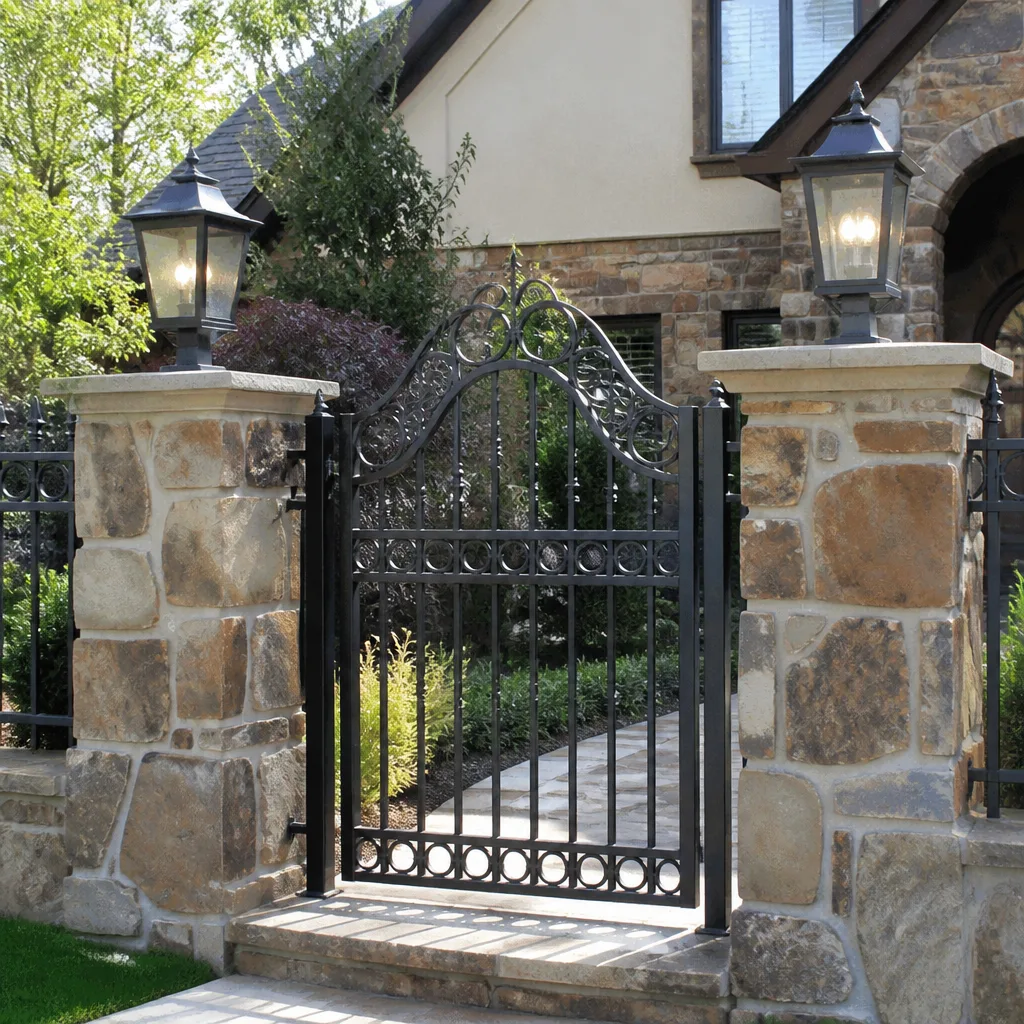 Wrought iron
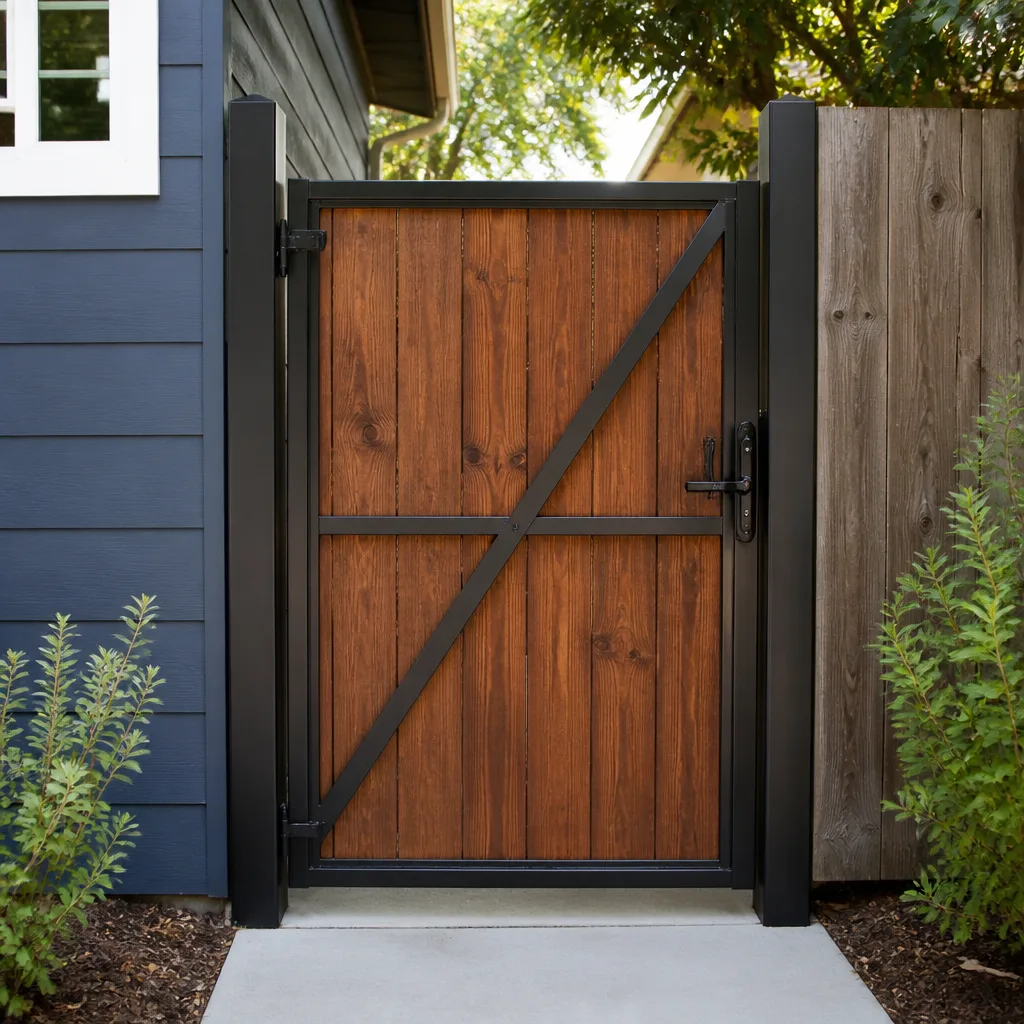 Wood & steel frame
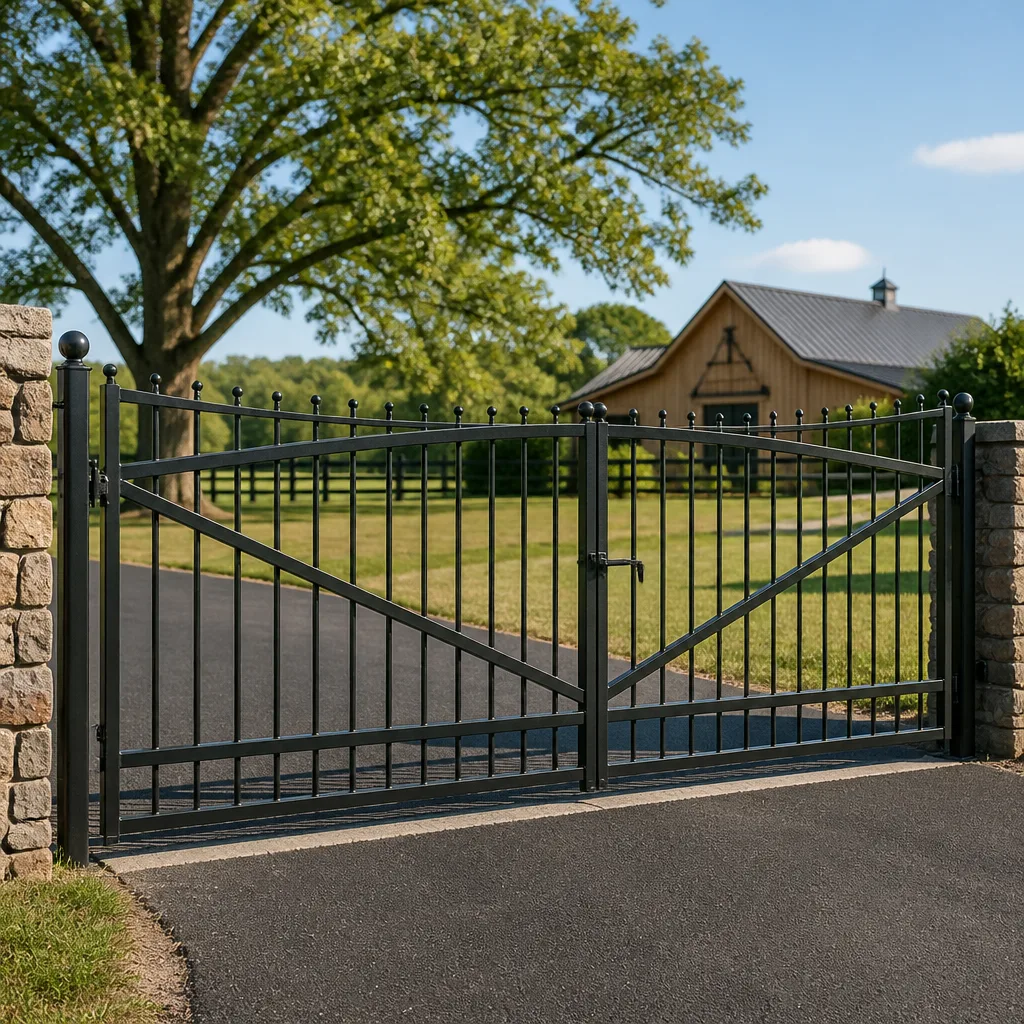 Farm & ranch
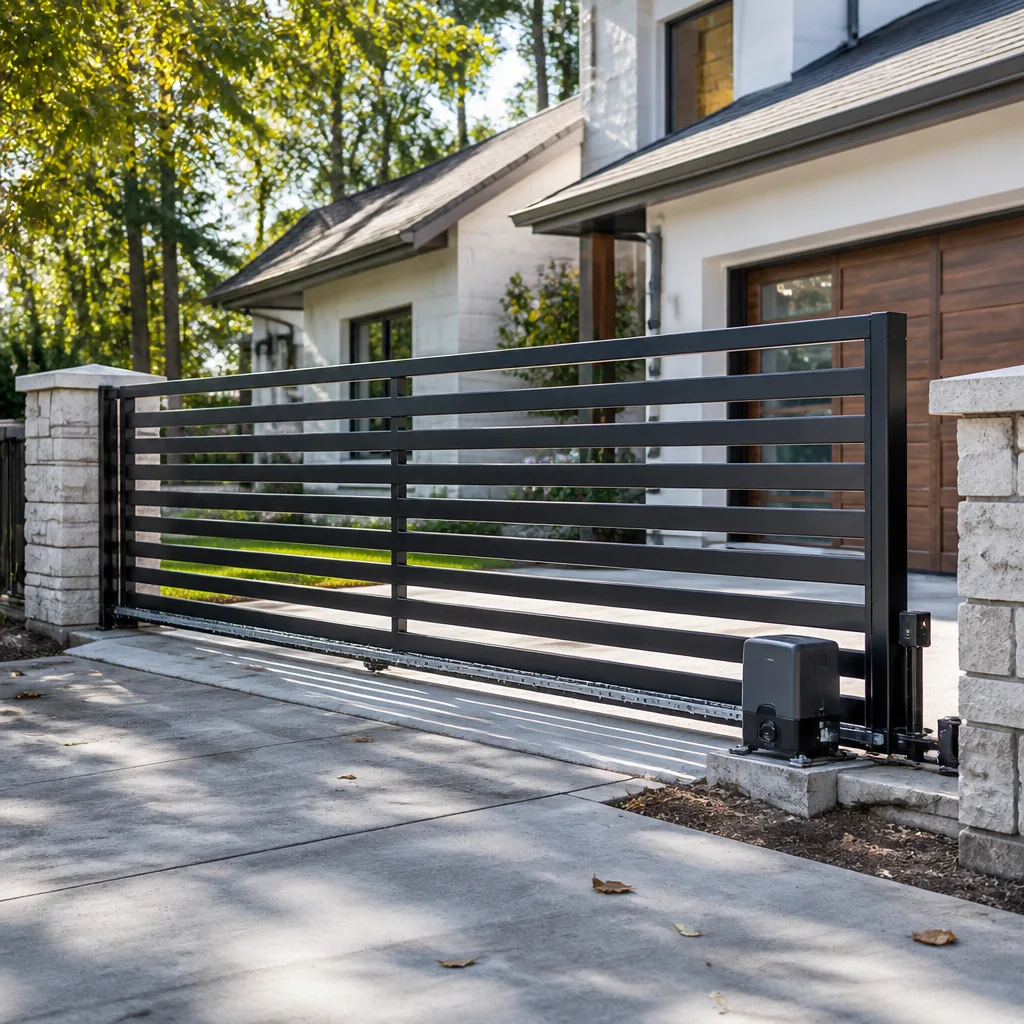 Sliding driveway gates
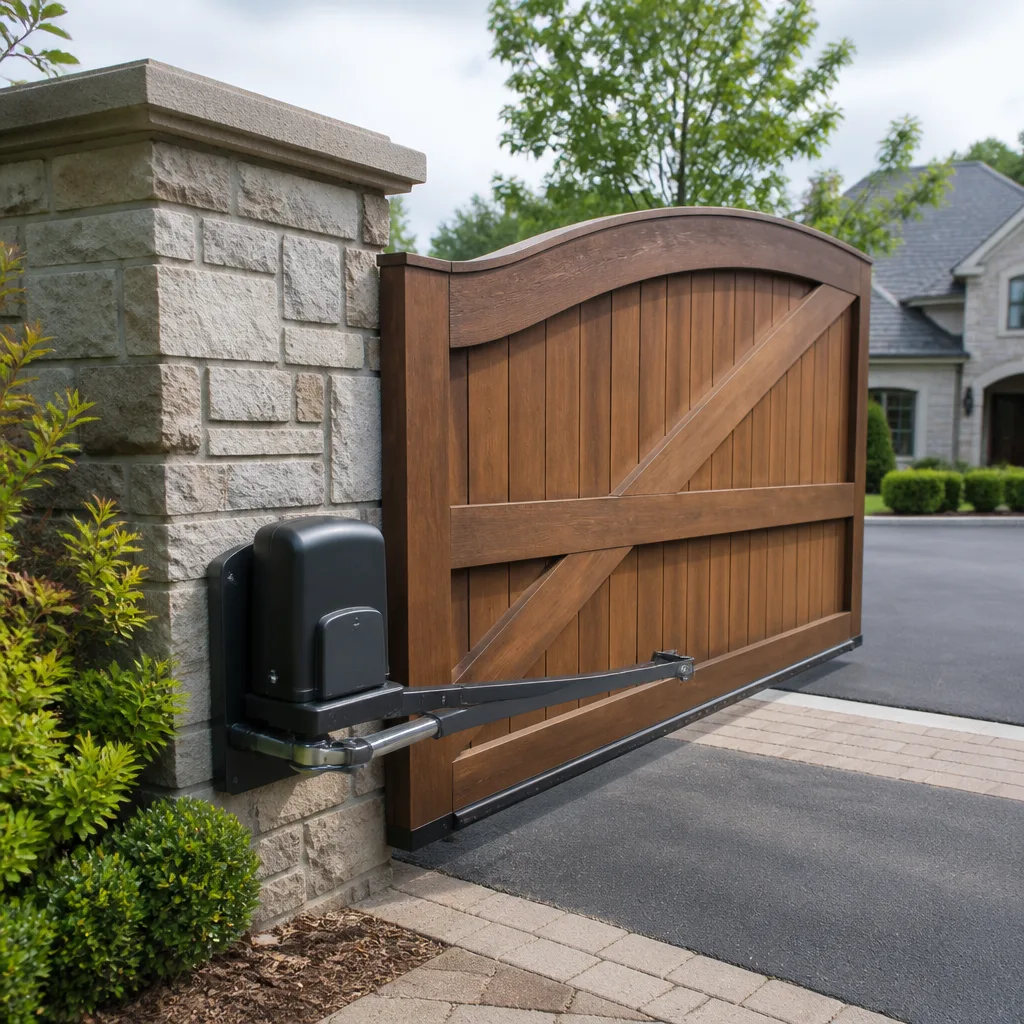 LiftMaster operators
Free on-site gate assessment - hinges, posts, and your LiftMaster or Nice gate operator checked before anything is quoted
The assessment is free and the quote is the invoice.
Get your free estimateGate Parts & Welding Maintenance Schedule: What to Do and When
Hinge bolts need checking every six months. Structural welds need a visual inspection every two years. Put both on the same annual schedule and you’ll catch hinge wear a year late while spending time on welds that are still perfectly sound. A gate is a stack of parts that age at different speeds: rollers dry out, latch hardware drifts out of alignment, post anchors settle, and coating fails long before the frame does. This guide breaks the gate down into its components and gives each one the interval it actually needs, with the Mesquite-specific timing that matters here. By the end you’ll know what to check, when to check it, and when to put the wrench down and call a welder.
Quick Answer
Check hinges, rollers and latch hardware every six months; inspect structural welds and post anchors every two years; refresh lubrication and touch up coating once or twice a year depending on exposure. In Mesquite, add a post-summer thermal inspection and a pre-monsoon drainage check around your post bases. Anything involving a broken weld, a cracked hinge plate or a shifted anchor belongs with a trained welder, not a homeowner.
Styles & brands we work with
- Wrought iron
- Wood & steel frame
- Farm & ranch
- Sliding driveway gates
- LiftMaster operators
Table of Contents
- The Component-by-Component Interval Chart
- The Six-Month Tasks: Hinges, Rollers and Latch Hardware
- The Two-Year Tasks: Welds, Post Anchors and Frame Connections
- Mesquite Seasonal Calendar: Thermal Fatigue and Monsoon Prep
- How to Do a Basic Visual Weld Inspection
- Lubrication Points and the Right Product for Each Metal
- Why a Written Maintenance Log Saves Money
- Common Mistakes to Avoid
The Component-by-Component Interval Chart
Most maintenance advice lumps a gate into one annual service. That’s how hinge wear gets missed and how welds get over-inspected. Each part has its own clock. Here is how we schedule it.
- Hinges and hinge bolts: every 6 months. Check bolt torque, look for elongation in the bolt holes, listen for a grinding or popping sound on opening.
- Rollers and track (sliding gates): every 6 months. Inspect for flat spots, debris buildup and track alignment. Lubricate the bearing, never the wheel tread.
- Latch hardware and strike plates: every 6 months. Check for drift, worn catch faces and looseness. Monthly if the gate is used many times a day.
- Frame welds: visual inspection every 2 years, or after any impact, earthquake or significant storm event.
- Post anchors and concrete footings: every 2 years. Look for cracks in the concrete, lift at the base plate and exposure of anchor hardware.
- Surface coating and paint: once a year in full sun, every 18 months in shaded areas. Touch up immediately on any bare metal.
- Operator and safety device check: monthly photo-eye and reverse test, annual service by a trained technician.
If you’d rather have the whole list handled in one visit, the gate repair service in Mesquite covers the full component walkthrough with no-hassle pricing settled before any work starts.
The Six-Month Tasks: Hinges, Rollers and Latch Hardware
The moving parts wear fastest, so they get the most frequent attention. Every six months, walk the full swing or slide on your own:
- Check every hinge bolt for torque. A loose top hinge throws the whole gate leaf out of square over time. If the same bolt keeps backing out, the hole is likely elongated and needs to be welded or sleeved, not re-tightened.
- Listen on opening. A pop, clunk or grind points to a worn hinge bushing or a roller that has flat-spotted. Silent gates are the healthy ones.
- Test the latch. The latch should engage with light pressure and hold against a firm push. If it catches only halfway or wiggles, the strike plate has drifted and the gate is out of alignment.
- Rollers on a sliding gate. Spin each one by hand. It should turn freely and be tight to the carriage. A wobbly roller wears the track and starts rattling.
- Coat every hinge and roller bearing. A light coat of the right product, not a heavy grease blob. See the lubrication section below for the products we use.
In Mesquite, this six-month check pairs naturally with the seasons. Do one pass in late spring, before the summer heat, and one in late fall. That way the parts that heat-stressed over summer get caught before winter, and the parts that cooled and contracted get caught before spring dust season.
The Two-Year Tasks: Welds, Post Anchors and Frame Connections
Welds and anchors are the parts nobody wants to look at. The good news is they rarely fail without warning, and a two-year visual pass catches almost all of it. Here’s what to inspect:
- All visible weld joints on the frame, hinge plates, latch assembly and any decorative scrollwork. Look for hairline cracks, rust streaks trailing down from a joint, and any weld that has lost its crown.
- Post base plates. Check for rust blooming around the weld where the post meets the plate. That’s where water collects.
- Anchor bolts and concrete. Look for cracks radiating from the anchor holes, a gap between the base plate and concrete, or exposed threads that should be buried.
- Frame connection points where rails meet stiles. Those junctions carry the most flex.
- Gate-to-post alignment. Open the gate to the stop and check the gap. If it has closed up or opened since last inspection, the post has moved or a hinge has worn.
Two-year inspection is also a good time to walk the operator and confirm the safety edges still reverse the gate. If your operator is a Linear, Viking or Ghost Controls unit, the annual service interval in the manual is a strong guide, and a trained technician can confirm what the operator is actually telling you. The gate motor and opener service in Mesquite handles the automation side while the frame inspection is under way.
Mesquite Seasonal Calendar: Thermal Fatigue and Monsoon Prep
Mesquite is hard on metal in ways the manufacturer’s manual doesn’t account for. Our summers push gate surface temperatures well past what a painted steel frame wants, and our monsoon season arrives with real wind and sudden rain. Both events leave a signature on the gate, and both deserve their own inspection slot.
Post-summer thermal inspection (late September). Heat expands the metal, relaxes welds slightly, and lets paint fail where the substrate flexed. Walk the gate and look for:
- New rust streaks at weld joints, especially on the sun-facing side
- Paint cracking along corners and curves
- Any hinge or roller that has loosened after months of expansion and contraction
- Gaps opening between the post base plate and concrete
Pre-monsoon drainage check (June). Water pooling around a post base is the single most common cause of anchor failure in Mesquite. Walk the base of every post and confirm:
- Ground is graded away from the post, not toward it
- No cracks in the concrete footing
- No water staining on the post itself
- Downspouts and irrigation lines are not pointed at the footing
If you find ponding or a cracked footing before the rains hit, it’s a straightforward fix. If you find it after, it’s often a re-set post and a re-weld. The gate installation service in Mesquite handles footing and base work when a post needs to be replaced rather than repaired.
How to Do a Basic Visual Weld Inspection
A trained welder can spot a failing weld from ten feet. A homeowner can spot most of what matters with a flashlight and a phone camera. Here’s the process we walk customers through:
- Clean first. A soft wire brush and a rag. Rust and dust hide everything.
- Look for cracks at the toe of the weld (where the weld meets the base metal). A crack there is the one that matters most.
- Look for rust streaks that trail down from a joint. Water only comes out of a joint if the weld has opened up somewhere.
- Check the crown. A humped, cracked crown or a flaking surface on the weld is a sign the weld is failing at the edge.
- Listen for a hollow sound. A light tap with a plastic-handled screwdriver near a weld that sounds different from its neighbors is worth a photo.
- Photograph and log. Get a wide shot of the joint, a close-up, and the date. Take the same three photos at your next inspection. A year of side-by-side photos tells the story better than any memory.
Anything that looks like an actual crack, a lifted weld or a bent hinge plate is a welder’s job. Do not attempt to weld a gate rung, hinge or post in place if you haven’t been trained. Structural welds carry the load of a gate that can weigh hundreds of pounds, and a bad field repair can fail with someone standing under it. We’d rather you photograph it and call.
Lubrication Points and the Right Product for Each Metal
Lubrication is the task most homeowners get half right. The wrong product doesn’t just underperform, it accelerates the problem. Here’s how we match product to part:
- Hinges, pivot points and latch pivots: a lithium grease or a light white grease. Two drops or a light film is enough. Heavy globs collect Mesquite dust and turn into grinding paste.
- Roller bearings: a dry PTFE or silicone spray. These attract less grit than grease and keep the bearing turning.
- Track surfaces: no grease. Wipe clean and leave dry. Grease on a track is a magnet for sand.
- Latch bolt and strike plate contact faces: a very light film of lithium grease, wiped almost dry.
- Powder-coated or painted surfaces: no lubricant. Use a carnauba wax or a UV-stable automotive wax once a year. Petroleum lubes on a coated surface soften the finish over time.
The wrong-product problem is real in Mesquite. A general-purpose oil on a gate in full sun can bake into a sticky film that holds grit and traps moisture against bare metal. That’s how a hinge that should last a decade starts corroding in three summers. If you’re not sure what’s on your gate now, wipe it clean with a rag and a mild degreaser before applying anything new. Whatever brand of operator you have (DoorKing and Mighty Mule systems both want the same discipline at the pivot points), the parts still need the right product. If the automation itself is acting up, that’s a job for a trained technician.
Why a Written Maintenance Log Saves Money
The single cheapest thing you can do for a gate is keep a piece of paper. A simple log with the date, what you inspected, what you found and a photo or two does three things most homeowners don’t expect:
- It catches slow failures. A hinge that has loosened 2mm since last fall is invisible. A hinge that has loosened 2mm in a log next to a note from last year showing it was tight is a clear signal. Slow wear is exactly what log-keeping catches.
- It supports warranty claims. Most gate hardware and operator warranties ask for reasonable maintenance. A log showing you serviced the parts on schedule, and that a failure happened despite that service, puts you in a much stronger position than a shrug and a receipt.
- It shortens every repair visit. A technician who can see what was checked and when doesn’t have to diagnose from scratch. That saves time, and time is what you pay for.
We build this log into every job, and it’s part of the Ironworks Gate Co. Mesquite home standard: the customer leaves with a written record of what was inspected and what to watch next season. Our technicians have up to 13 years of experience and know the difference between a weld that needs immediate attention and one that just needs watching.
Common Mistakes to Avoid
- Treating every part on the same annual schedule. That’s the mistake this guide is built to fix. Hinges checked once a year catch wear 6 months late; welds checked once a year waste time on joints that don’t need it. Match the interval to the part.
- Greasing a sliding gate track. Grease on a track collects Mesquite sand and grit, which wears the rollers and the track faster than a dry, clean surface ever would. Wipe it clean and leave it dry.
- Re-tightening a hinge bolt that keeps loosening without checking the hole. If a bolt has backed out twice in a year, the hole is elongated. Welding is the correct fix; tightening it a third time just delays the failing hinge.
- Ignoring rust streaks at a weld. A faint brown trail down a joint is water escaping from inside the weld. It’s the earliest warning sign you’ll get, and it’s the easiest one to miss.
- Skipping the post-summer and pre-monsoon checks because the gate “looks fine.” In Mesquite summer heat and sudden monsoon rain, gate damage happens faster than most homeowners expect. The two seasonal checks matter more than a single annual one.
- Welding a gate rung, hinge or post in place as a homeowner. Structural welds carry real weight. A bad field repair can fail with someone standing under it. That’s a trained welder’s job, every time.
- Using the wrong lubricant on a coated surface. Petroleum products soften powder coat and paint. Wax the coated surfaces once a year, not oil them.
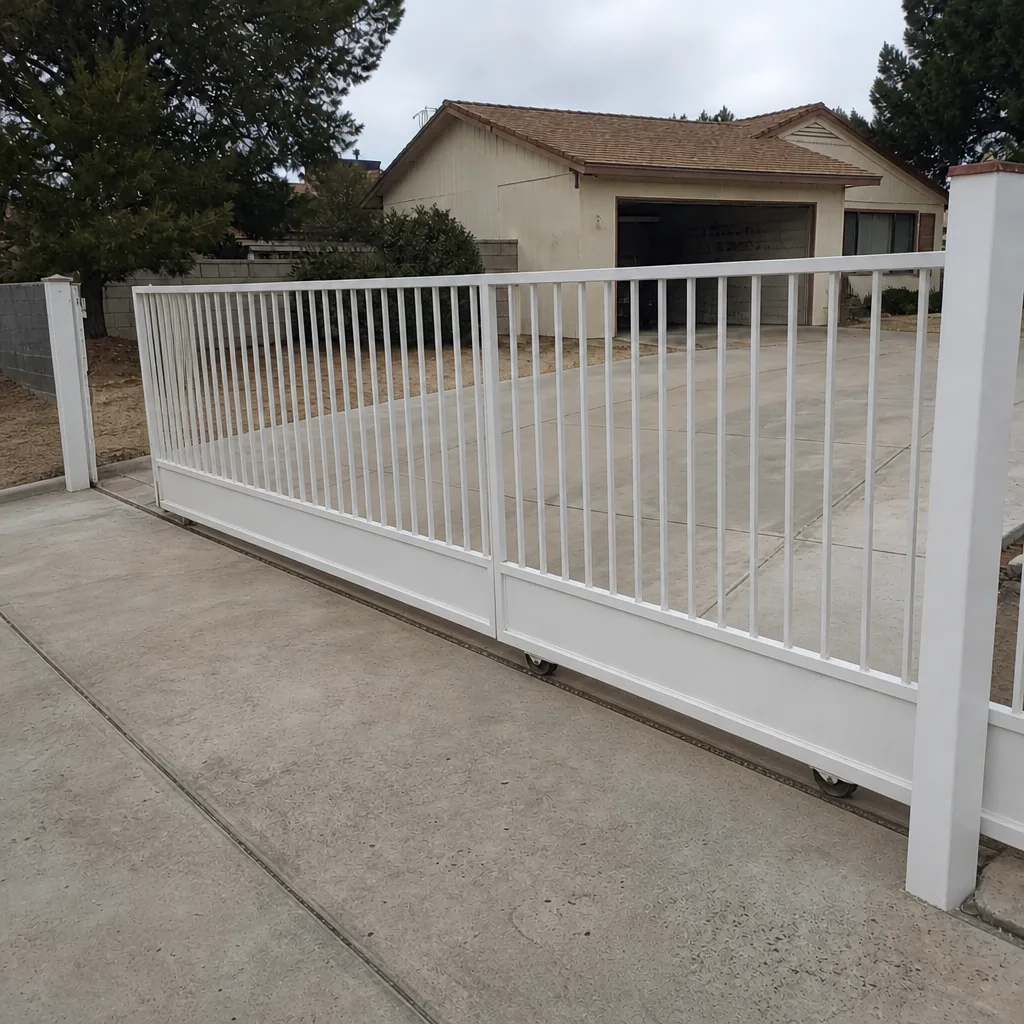
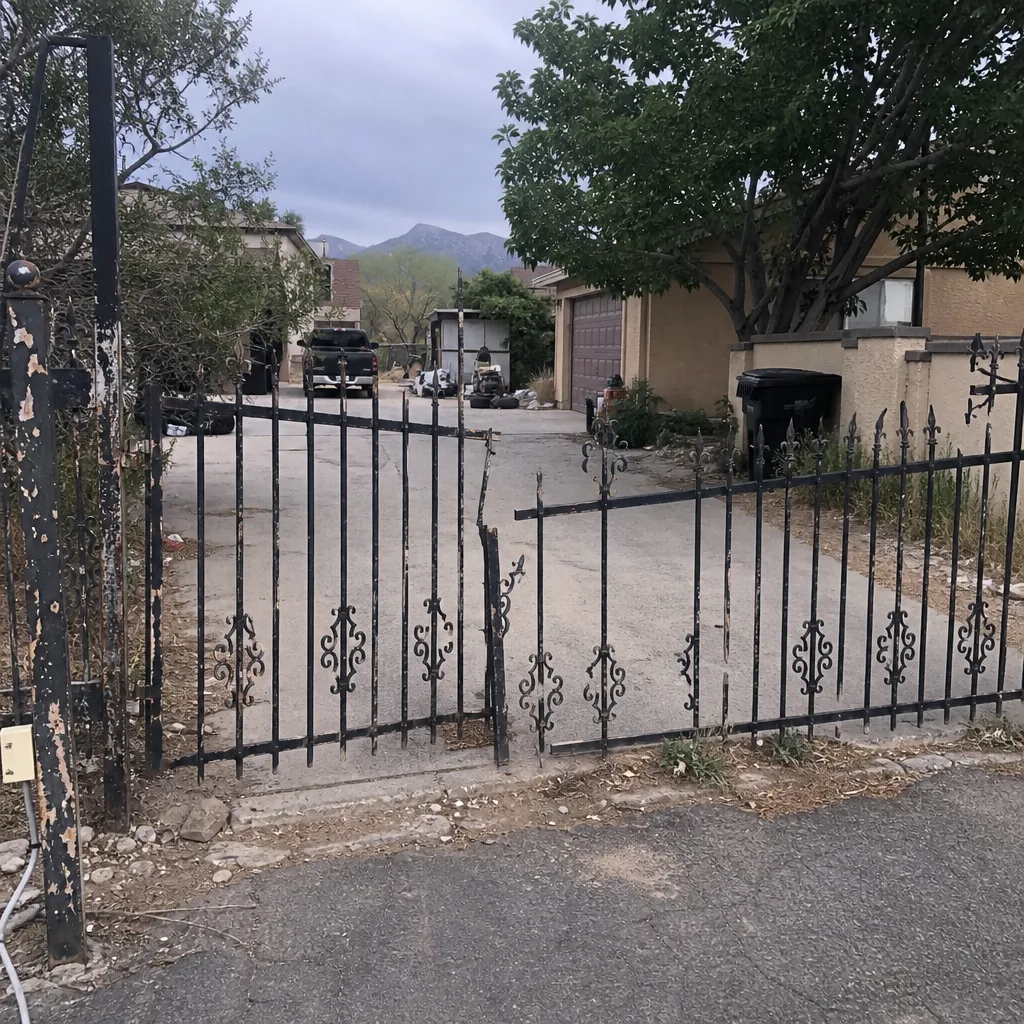
See the difference
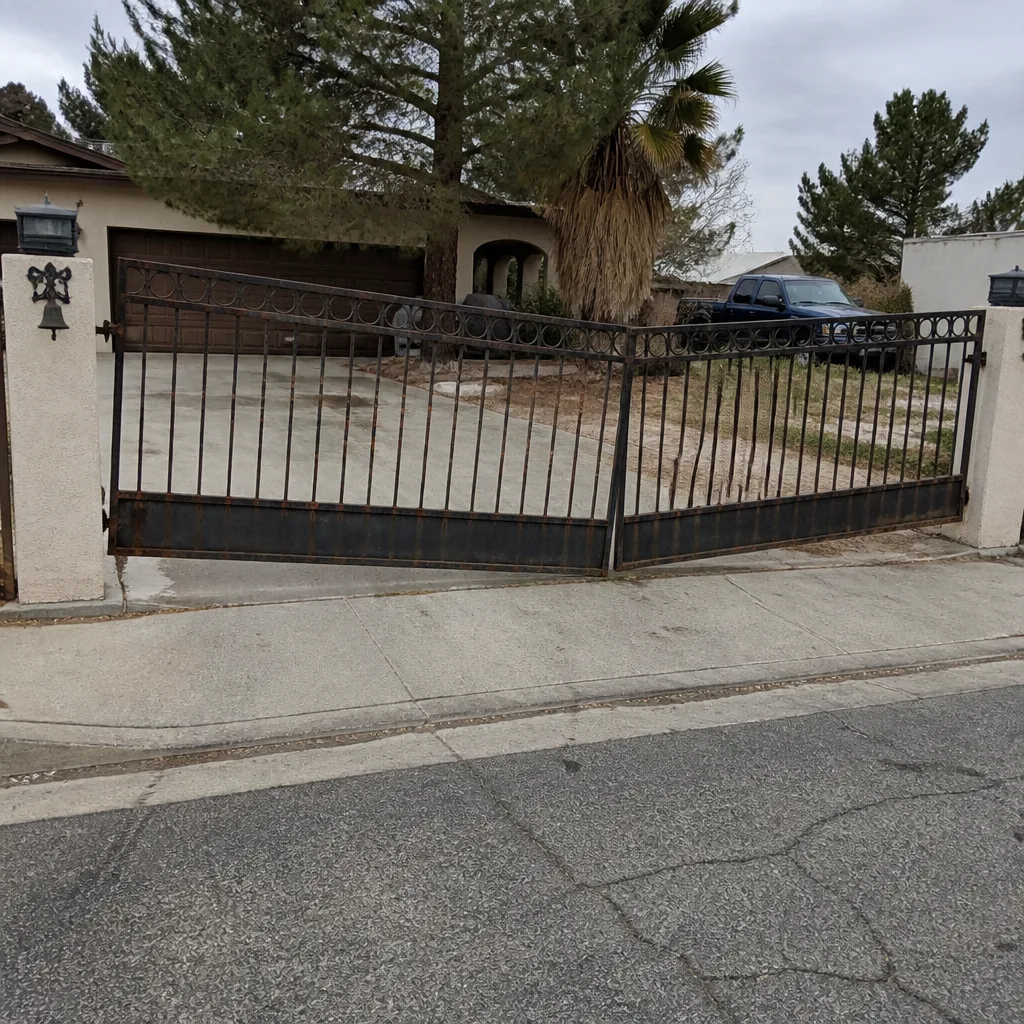 Before
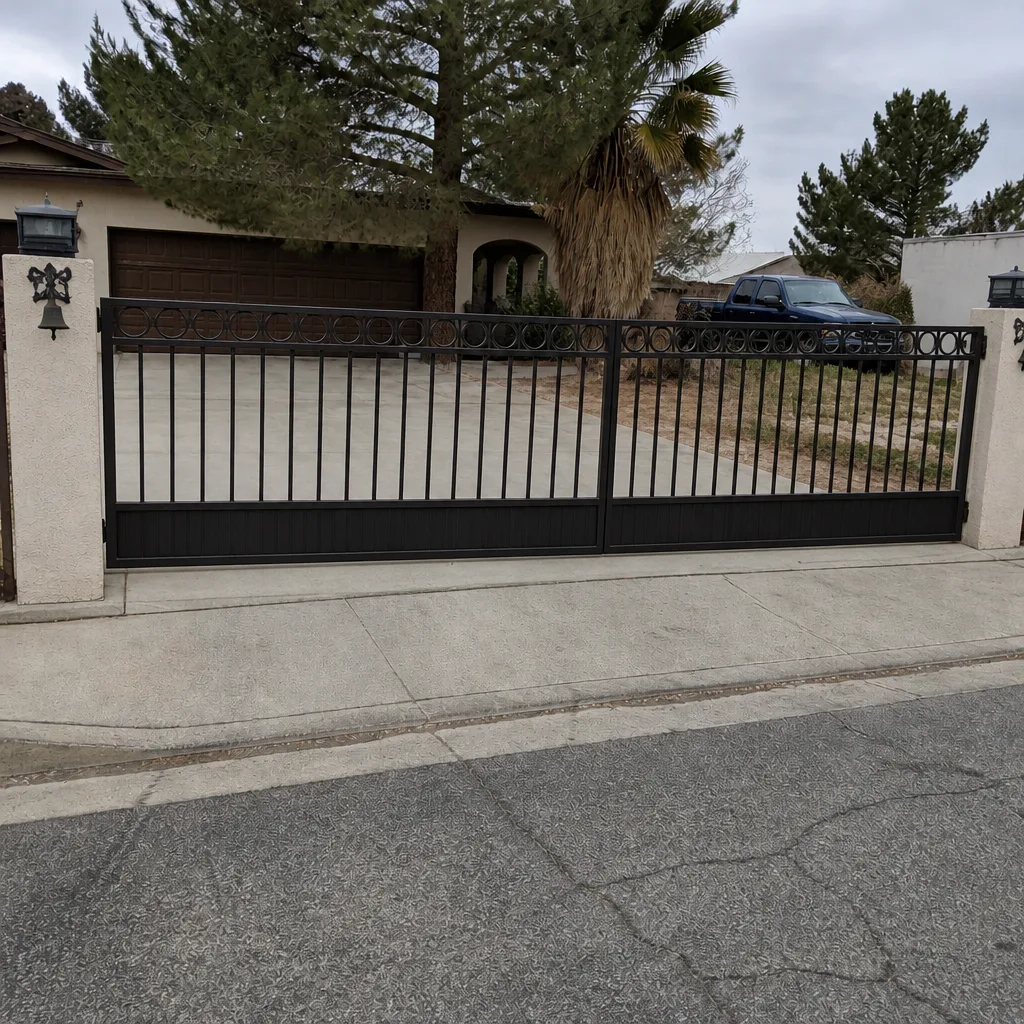 After
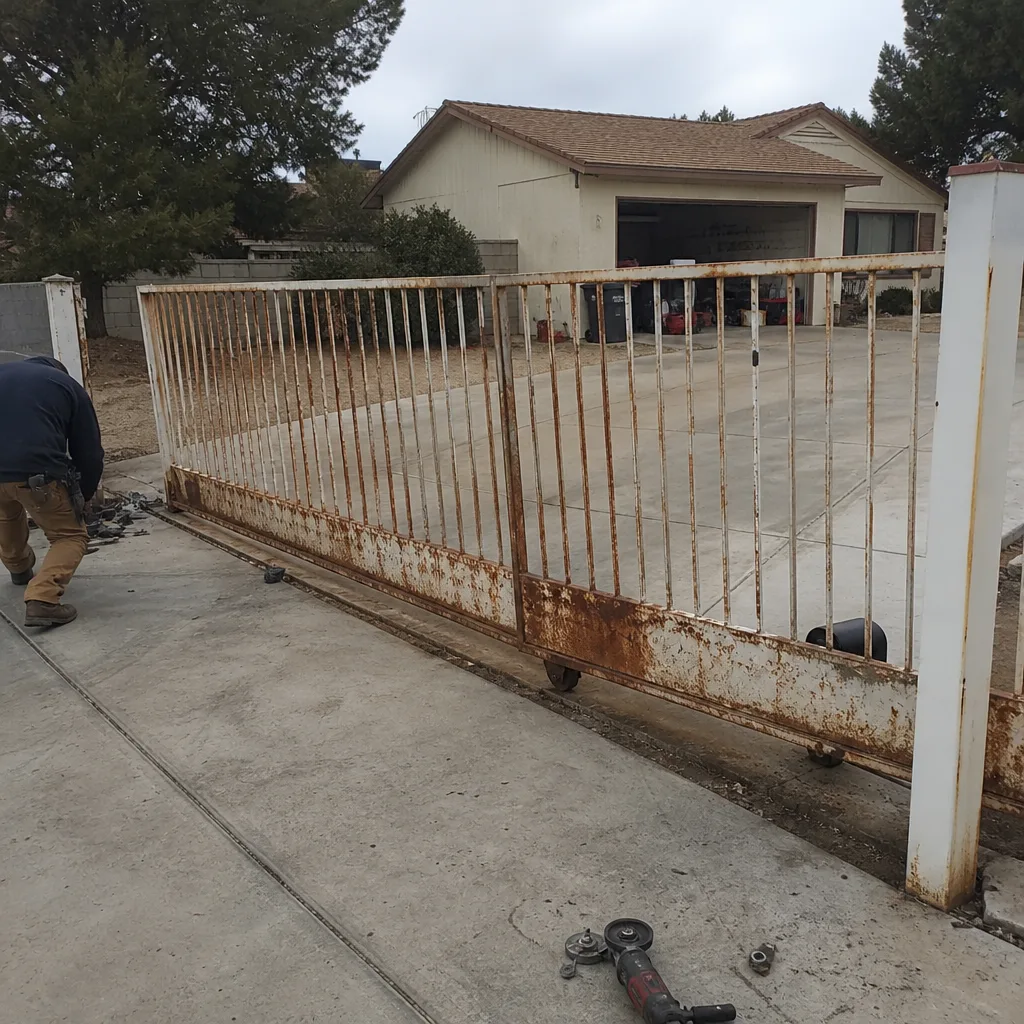 Before
 After
 Before
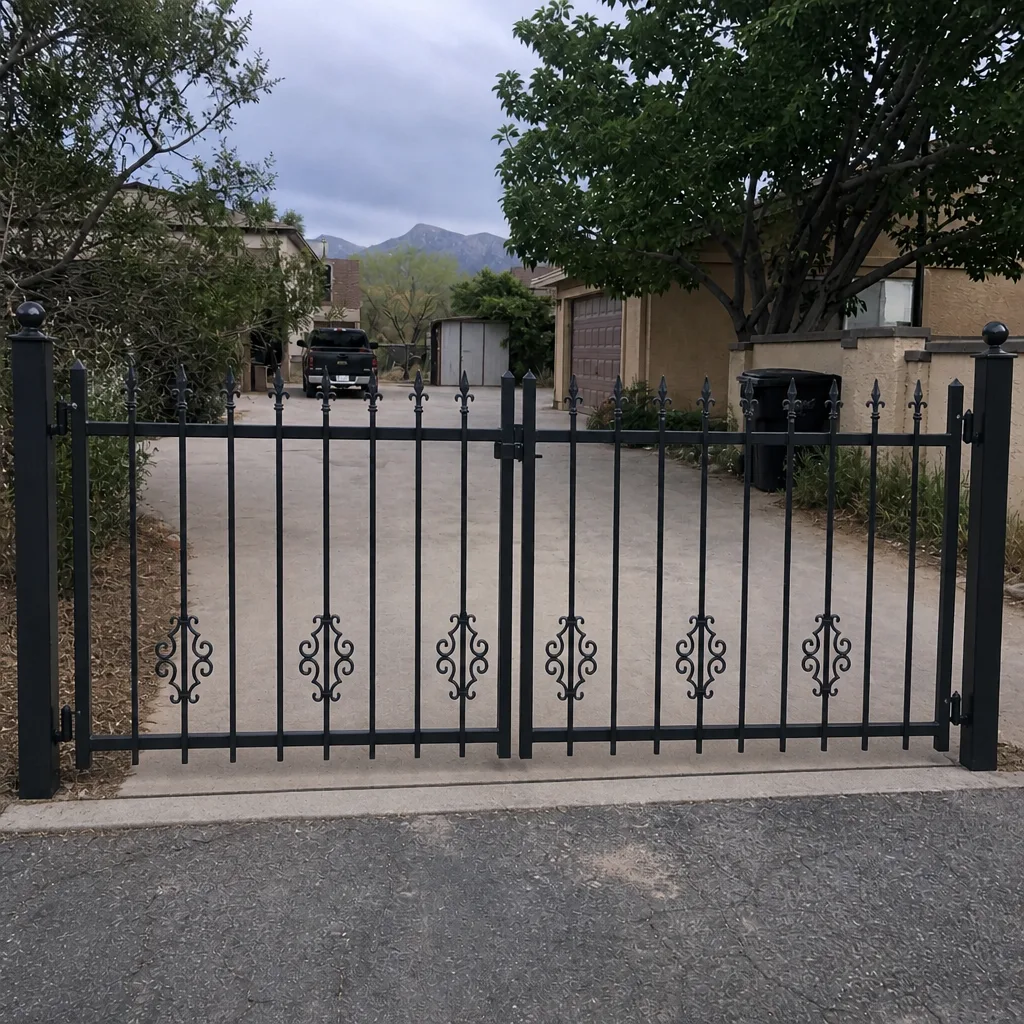 After
When to Call a Professional
Call a professional the moment you find a cracked weld, a hinge plate that has started to bend, a post anchor that has lifted from the concrete, a gate that no longer meets its latch cleanly, or any bare metal that has started rusting through. Call sooner if the gate has had an impact, been through a storm, or has started sounding different on opening. Watch for a photo you can text or email; a professional can often diagnose from a picture before the trip. Ironworks Gate Co. Mesquite offers free estimates in Mesquite, with pricing settled before any work starts and the written 90-Day Done Right Promise behind every job. Call (844) 797-2573 any time, day or night; a live person answers the phone. If you’d rather keep the whole thing simple, the $89 Seasonal Tune-Up covers the six-month and annual tasks in one visit.
Frequently Asked Questions
Moving parts (hinges, rollers, latch hardware) should be checked every six months. Structural welds, post anchors and frame connections should be visually inspected every two years. Coating and lubrication are once a year or better. Treating the gate as one annual service catches hinge wear too late and wastes time on welds that don’t need it yet. Call (844) 797-2573 to schedule a full component walkthrough; estimates are free.
Look for a hairline crack at the toe of the weld, a rust streak trailing down from the joint, or a weld that has lost its crown. A light tap that sounds different from its neighboring welds is another sign. Photograph anything that looks suspicious and call a welder. Do not attempt to weld the joint yourself. Call (844) 797-2573 for a free second opinion on any written estimate.
In addition to the standard six-month and two-year checklist, Mesquite gates need a post-summer thermal inspection (late September) for heat-stressed welds and paint, and a pre-monsoon drainage check (June) around the base of every post. Our heat and monsoon rain put specific loads on gate metal that the manufacturer’s manual doesn’t account for. Call (844) 797-2573 for an estimate on a seasonal tune-up.
No. Structural welds carry the weight of a gate that can be several hundred pounds, and a bad field repair can fail with someone standing under it. A trained welder with the right equipment and the right inspection of the surrounding metal is the safe choice. A small adjustment (bolt tightening, lubrication) is a homeowner job; anything involving a weld, hinge plate or anchor is not. Call (844) 797-2573 for a quote.
A light lithium grease or white grease on hinges, pivot points and latch pivots. Roller bearings take a dry PTFE or silicone spray. Tracks stay dry and clean. Coated or painted surfaces get a carnauba wax or automotive wax, never a petroleum lubricant. In Mesquite, the wrong product collects dust and traps moisture, which is how a hinge that should last a decade starts failing in three summers.
Yes. A written log catches slow wear (a hinge loosening 2mm a year is invisible; the same change in a log is obvious), supports warranty claims on hardware and operators, and shortens every repair visit because the technician doesn’t have to diagnose from scratch. It’s the cheapest maintenance work you can do. Call (844) 797-2573 if you’d like a professional to start a log for you.
The Bottom Line
The right schedule for a gate isn’t one annual visit. It’s hinges and rollers every six months, welds and post anchors every two years, and coating and lubrication once a year. In Mesquite, add a late-September thermal inspection and a June drainage check around post bases. Keep a written log with photos so slow wear gets caught and warranty claims stay strong. Do the small tasks yourself; leave the welds, hinge plate repair and anchor work to a trained professional. Ironworks Gate Co. Mesquite is built to handle the full list, backed by the written 90-Day Done Right Promise and standing offers like $50 Off Any Repair Over $250. Call (844) 797-2573 for a free estimate and a written price before any work starts.
Written by the team at Ironworks Gate Co. Mesquite.