
Last updated November 17, 2026
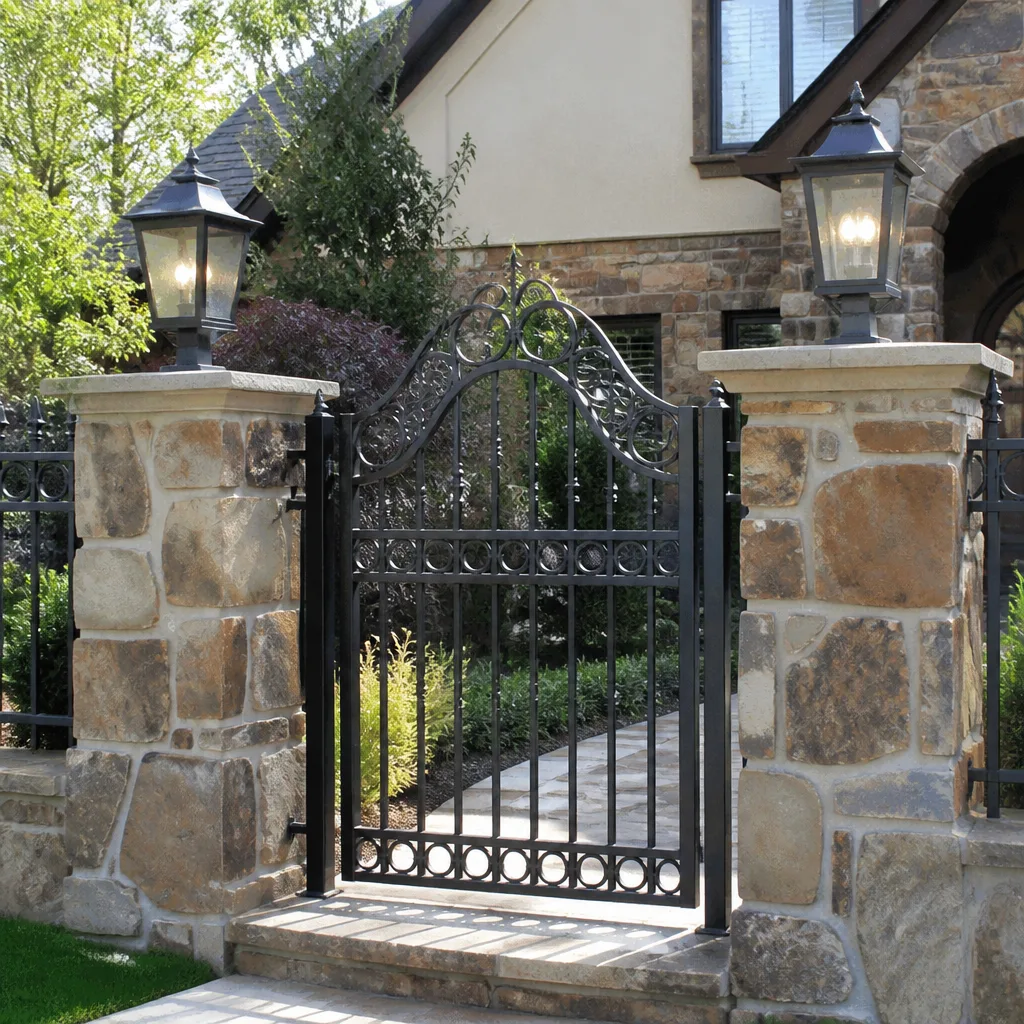 Wrought iron
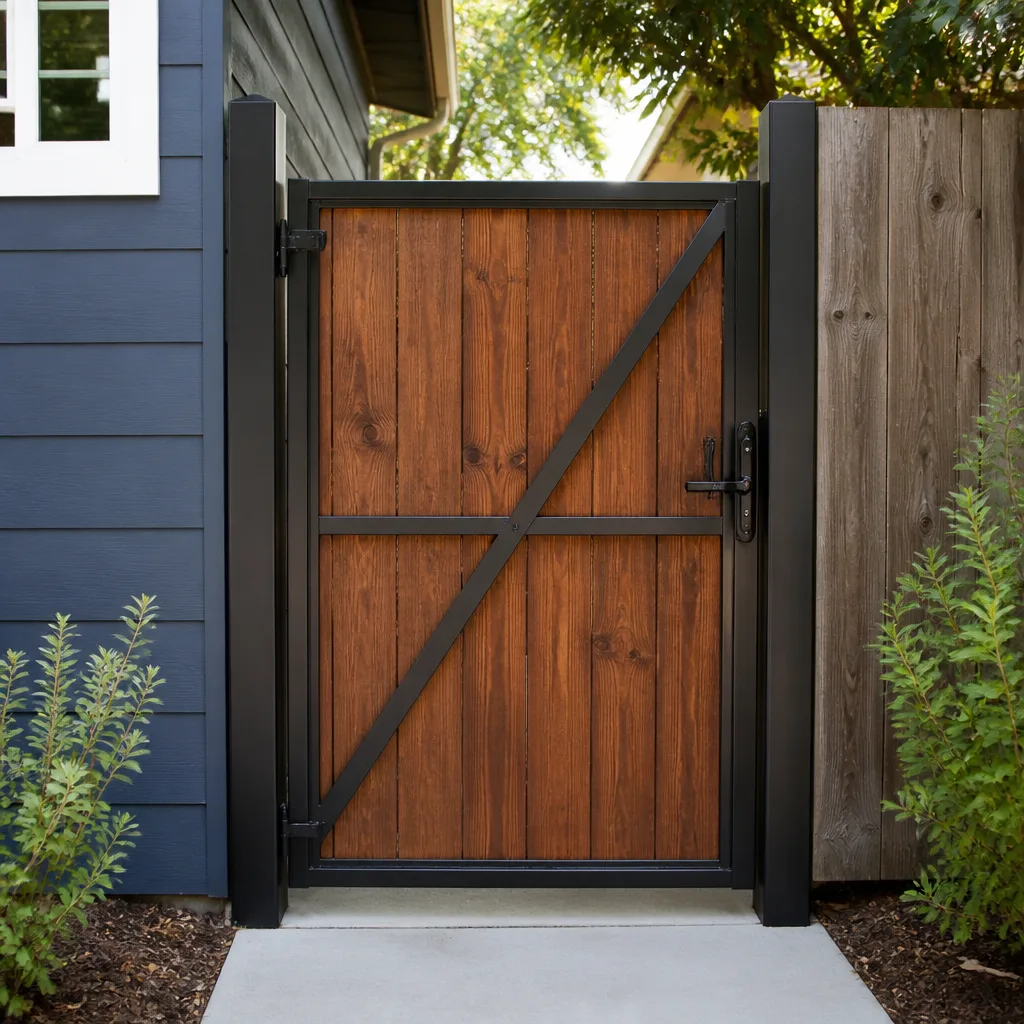 Wood & steel frame
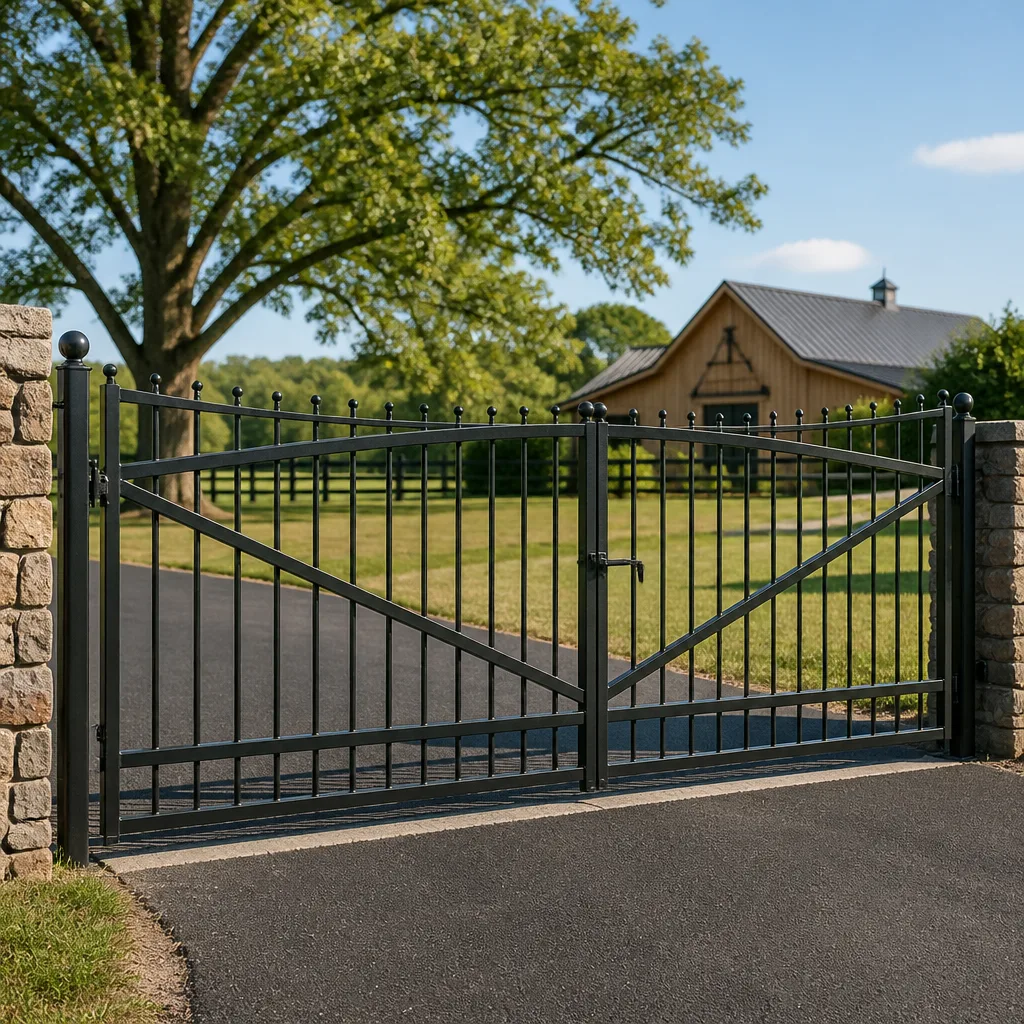 Farm & ranch
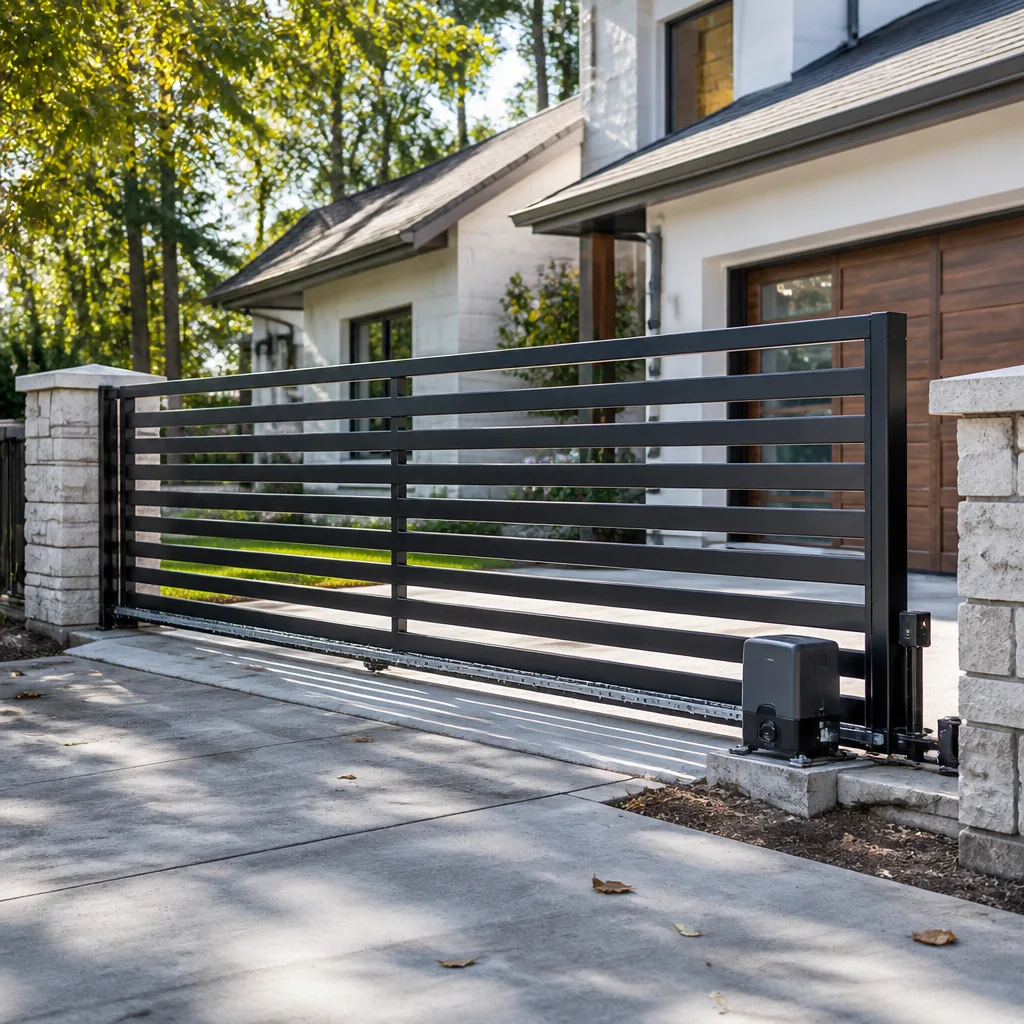 Sliding driveway gates
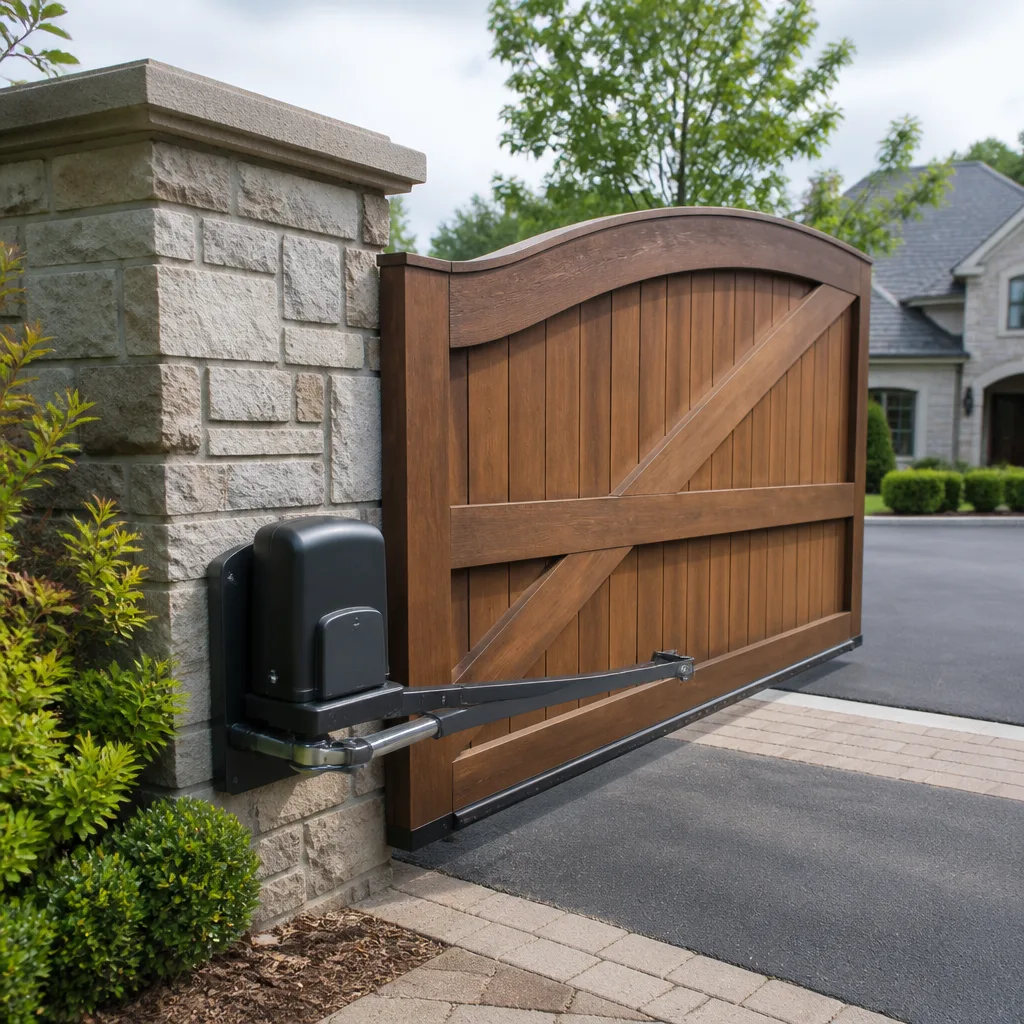 LiftMaster operators
Free on-site gate assessment - hinges, posts, and your LiftMaster or Nice gate operator checked before anything is quoted
The assessment is free and the quote is the invoice.
Get your free estimateGate Motor & Opener Warning Signs Every Homeowner Should Know
A gate that hesitates for half a second before it moves is not quirky. It is a motor drawing excess amperage to overcome a mechanical resistance problem, and that extra load is shortening the control board’s life every single cycle. The hesitation is the warning, not the failure. Most automatic gates in Mesquite that quit at midnight on a Friday were announcing the breakdown for six to eight weeks beforehand. Somewhere in the driveway there was a hum, a grind, a remote that stopped working from the bottom of the hill. In this guide we name those signals precisely, explain what each one means mechanically, and tell you plainly which ones can wait for a scheduled visit and which ones need service this week.
Quick Answer
Gate motor warning signs fall into five groups: unusual sounds (hum, grind, click, chatter, silence), changes in speed or smoothness, reduced remote range, erratic stopping or reversing, and visible physical changes like sagging or a motor that runs hot. Slow operation, one weak direction, or a remote that only works close to the gate is usually a developing mechanical problem, not a dying battery. Grinding, chatter, or a motor that hums without moving requires prompt attention. Any gate that stops mid-travel or reverses on its own is a safety issue and should be looked at before it is used again.
Styles & brands we work with
- Wrought iron
- Wood & steel frame
- Farm & ranch
- Sliding driveway gates
- LiftMaster operators
Table of Contents
- The five acoustic warning signs and what each sound tells you
- Why your gate runs slow in cool weather but normal in heat
- What short remote range actually means
- Normal wear versus the signs of a sudden failure
- Same-week service versus a scheduled visit: an honest priority list
- The safety checks every gate owner should recognize
- What Mesquite conditions do to gate operators
- Common mistakes to avoid
The Five Acoustic Warning Signs: Hum, Grind, Click, Chatter, and Silence
Sound is the most honest diagnostic tool a gate gives you. Each noise maps to a specific component, and each one tends to appear in a predictable order as a system wears. Here is how we read them.
- Hum without movement. The motor is energized but the gate is not traveling. That points to a mechanical bind or a blown capacitor on the motor circuit. The motor is being fed power and cannot turn, which heats the windings fast. Stop using the gate and call.
- Grind. Metal on metal in the drive chain, in the rack and pinion on a sliding gate, or in the gearbox. Dried lubricant and worn sprockets are the usual culprits. Grinding left alone chews through gears that could have been saved with service.
- Click, then nothing. The control board is issuing the command but the operator is not responding. A single loud click followed by silence usually means a failed capacitor, a stuck relay, or a limit switch telling the board the gate is already fully open or closed.
- Chatter. A rapid stutter as the gate tries to start. Almost always a voltage or capacitor fault, or a slipping clutch on the operator. It will eventually stop altogether.
- Silence. The click or the remote beep happens and the gate does not move at all. This is the end stage of the other four. If you heard the earlier sounds and did not act, silence is where it lands.
In our experience on Mesquite gates, grind and chatter show up most often on older Mighty Mule and Linear operators installed a decade or more ago, where the original lubricant has long since dried out.
Why Your Gate Runs Slow in Cool Weather but Normal in Heat (and Vice Versa)
Temperature-dependent speed is one of the clearest signals a gate gives you, and it points to two very different failure modes depending on which direction the change runs.
If your gate is slower in cool weather and normal in heat, the mechanical side is the suspect. Cold thickens grease in the gearbox and stiffens the hinges. If the drive system is already marginal, the added resistance of a cool morning pushes it into visible slowdown. This is a lubrication and alignment problem, usually fixable with service before anything breaks.
If your gate is slower in hot weather and normal in cool, the electrical side is the suspect. Heat raises resistance in aging wiring and puts stress on capacitors and control boards. In Mesquite, where summer afternoons sit above 105°F for weeks, an operator mounted in direct sun is working in an oven. A board that is degrading often shows it first on the hottest afternoons, then settles down as the evening cools.
Either pattern is telling you the drive system is at the edge of its capacity. The gate is not just “a little slow.” It is reporting which half of the system is losing margin. Slow operation is a same-month callback, not a same-day emergency, unless the gate also stops mid-travel.
What Reduced Remote Range Actually Means
A remote that used to open the gate from two hundred feet and now only works from thirty is almost never the remote’s fault. Remote range reduction is the earliest electrical warning sign on an automatic gate, and it usually points to one of four things:
- A weakening receiver antenna or corroded connection. The receiver on the operator loses signal strength when its antenna wire is frayed, wet, or loose. This is the most common explanation and the cheapest to fix.
- A failing receiver module. On DoorKing, Elite, and LiftMaster operators, the receiver is a replaceable module. When it starts to fail, range drops before the module quits entirely.
- A battery at the end of its life. Most transmitters run three to five years on the original battery. Test it before you blame the operator.
- Interference from a new source. A new keypad, a newly installed security camera, or a wireless irrigation controller on the same frequency can crowd the receiver. Move the source and range can return.
What range reduction tells you is that the receiver chain is losing margin. If the remote also works intermittently, or works only with the gate in one position, the receiver or antenna is the suspect and should be tested before it quits completely.
How to Tell Normal Wear from Approaching Sudden Failure
Gates wear. The question that matters is whether the wear you see is the slow kind that can be scheduled or the fast kind that turns into a sudden failure event. Here is how we distinguish the two.
Normal wear looks like: a gate that is a touch noisier than it was five years ago but opens and closes at the same speed every time, a remote that works from the same distance as always, a motor that runs warm but not hot, and hinges that move freely with a little annual lubricant.
Approaching sudden failure looks like: a gate whose behavior changes from one week to the next. One day it hesitates, the next day it does not. It is slower going up than coming down, or it needs a second press of the remote to close. A motor that is notably hot after a cycle it used to run cool. Any new sound that did not exist a month ago. That inconsistency is the red flag. Consistent behavior is a healthy gate even if it is older. Inconsistent behavior is a gate telling you something is about to give.
We have seen more sudden failures from ignored inconsistency than from any other cause. A gate in Mesquite that works fine on a Tuesday and hesitates on a Thursday has a binding problem, not a mood.
Same-Week Service Versus a Scheduled Visit: An Honest Priority List
Not every warning sign needs an immediate visit, and a company that treats them as if they do is selling urgency instead of service. Here is how we actually prioritize what we see.
Call us this week (same-week service):
- Any gate that reverses on its own, stops mid-travel, or fails the safety reverse test
- A motor that hums without moving, or runs noticeably hot
- Chatter, grinding, or a new loud sound that appeared suddenly
- A gate that has stopped responding to the remote or keypad entirely
- Visible sagging, a dropped hinge, or a rack that has come loose from a sliding gate
Schedule a visit at your convenience:
- Slow operation in cool weather that normalizes in the afternoon
- Reduced remote range with the gate still operating correctly
- Annual lubrication, hinge inspection, and control board checkup
- A remote battery replacement, which you can often handle yourself
The line between the two lists is not age or cost. It is whether the gate’s behavior is changing from cycle to cycle. Consistent, slow wear is a scheduled visit. Inconsistent behavior is a same-week call. If you are not sure which list your gate belongs on, call our Gate Motor & Opener service and describe the sound. We can usually tell you over the phone whether it is a this-week problem or a when-it’s-convenient problem.
The Safety Checks Every Gate Owner Should Recognize
An automatic gate is a heavy moving object, and the safety devices that stop it from closing on a person or a car are the part of the system you should never troubleshoot yourself. Here is what to check, not how to repair it.
- Test the safety reverse monthly. Place a solid object in the gate’s path and command it to close. The gate should reverse on contact. If it does not, stop using the gate and call.
- Check the photo-eye alignment. The small infrared eye on each side of the gate opening should be clean, aimed at its partner, and unobstructed. A misaligned eye will keep the gate open or make it behave erratically.
- Look for damage to the safety edges. The rubber strip on the leading edge of the gate is a pressure sensor. A cracked or missing edge strip means the gate no longer detects a person in its path.
- Verify the warning sign and the pedestrian gap. A functioning automatic gate should have a visible warning sign and enough gap at the swing or slide path that a person cannot be trapped.
- Do not bypass the safety devices. Never tape over, disconnect, or “temporarily fix” a photo-eye or safety edge to make the gate close. The devices are there because a gate that does not sense a person can injure them.
If any of these checks fail, the gate is not safe to operate automatically. Call a trained technician. Safety systems on automatic gates involve low-voltage wiring, reversing logic, and moving metal that can cause serious injury, and they are not a homeowner repair.
What Mesquite Conditions Do to Gate Operators
Mesquite is hard on gate hardware in ways that coastal or temperate climates are not, and the warning signs you see in a Mesquite driveway are often shaped by the local conditions.
The summer heat is the primary factor. Operators mounted on a west-facing wall or in direct sun can run 30 to 40 degrees hotter than the ambient air. Control boards, capacitors, and receiver modules all age faster under that heat, which is why a Mesquite gate often shows electrical warning signs (slow in heat, short range, click-and-nothing) before it shows mechanical ones. Winter nights that dip below freezing, meanwhile, thicken lubricant and expose any hinge or gearbox already at the edge of its tolerance, which is why a gate that ran fine in October grinds on a January morning.
Dust is the other factor. Wind-blown desert dust works into gears, track slots, and rack teeth, and turns grease into an abrasive paste. A gate in a neighborhood like Sun City or off Sandhill Boulevard will need lubrication and inspection on a tighter schedule than the same gate in a wetter climate. That is not a sales pitch: it is what we see every season when we service Mesquite driveways. Keeping the track clear and the gears lubricated is the single highest-return maintenance task on a Mesquite gate. Our Gate Repair in Mesquite team handles that seasonal service alongside repairs.
Common Mistakes to Avoid
- Ignoring a hesitation because “it’s always done that.” A half-second pause is a motor fighting resistance. Left alone, it costs a control board instead of a lubricant and a hinge adjustment.
- Blaming the remote for short range. Ninety percent of “my remote stopped working” calls are a receiver or antenna problem, not a transmitter. Replacing the remote first wastes money.
- Greasing the track instead of the gears. Excess grease on a sliding gate track traps Mesquite dust and makes the binding worse. Lubricate the drive gears and hinges, keep the track clean and dry.
- Taping over a safety photo-eye to make the gate close. This disables the reverse-on-contact protection. A gate that cannot sense a person will close on one.
- Ignoring speed changes with the season. A gate that is slow in cold and normal in heat is a drive system at its limit. Catch it before the gears do.
- Calling the cheapest outfit for a control board replacement. A board costs real money, and a technician who guesses at the diagnosis will sell you a second one next month. Get a written estimate before any work starts.
- Waiting until the gate quits. The failure at midnight on a Friday is the end of a six-to-eight-week warning period. Every one of those warning sounds was fixable.
See the difference
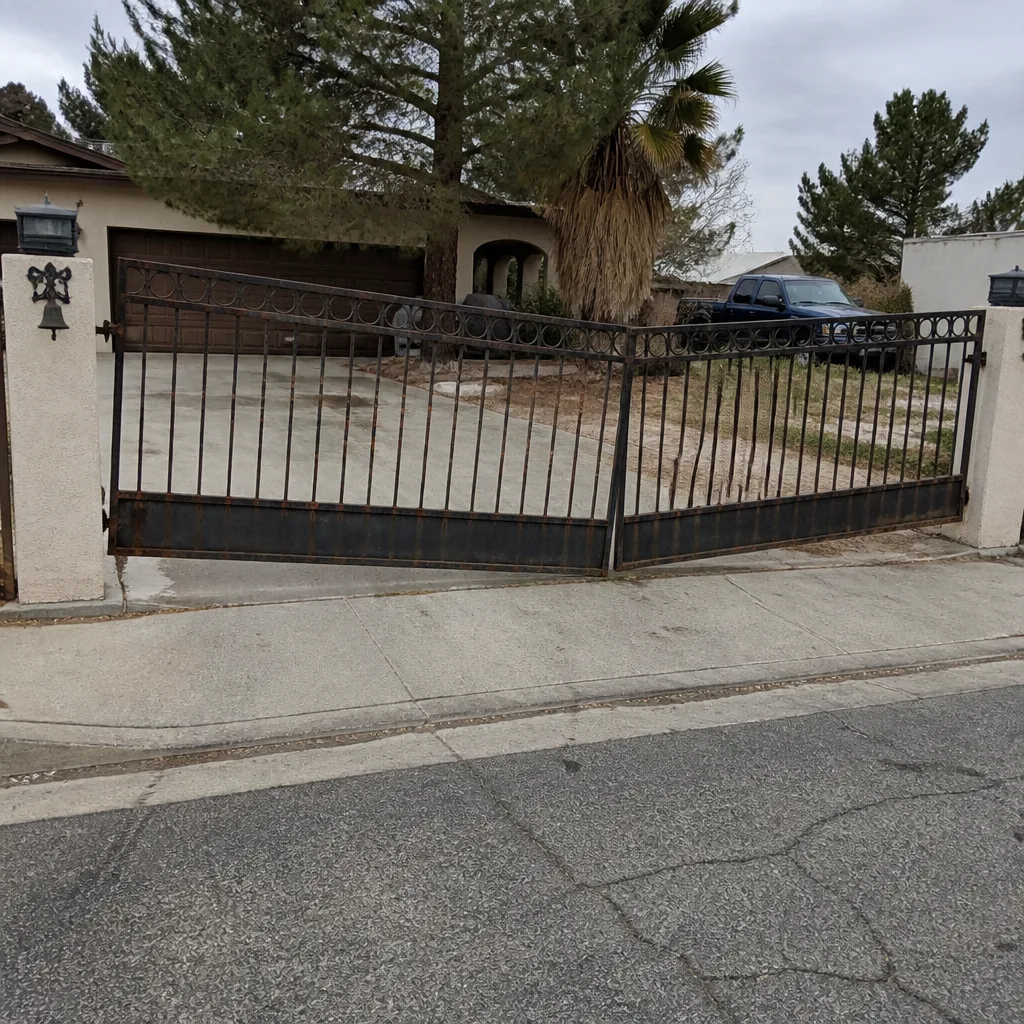 Before
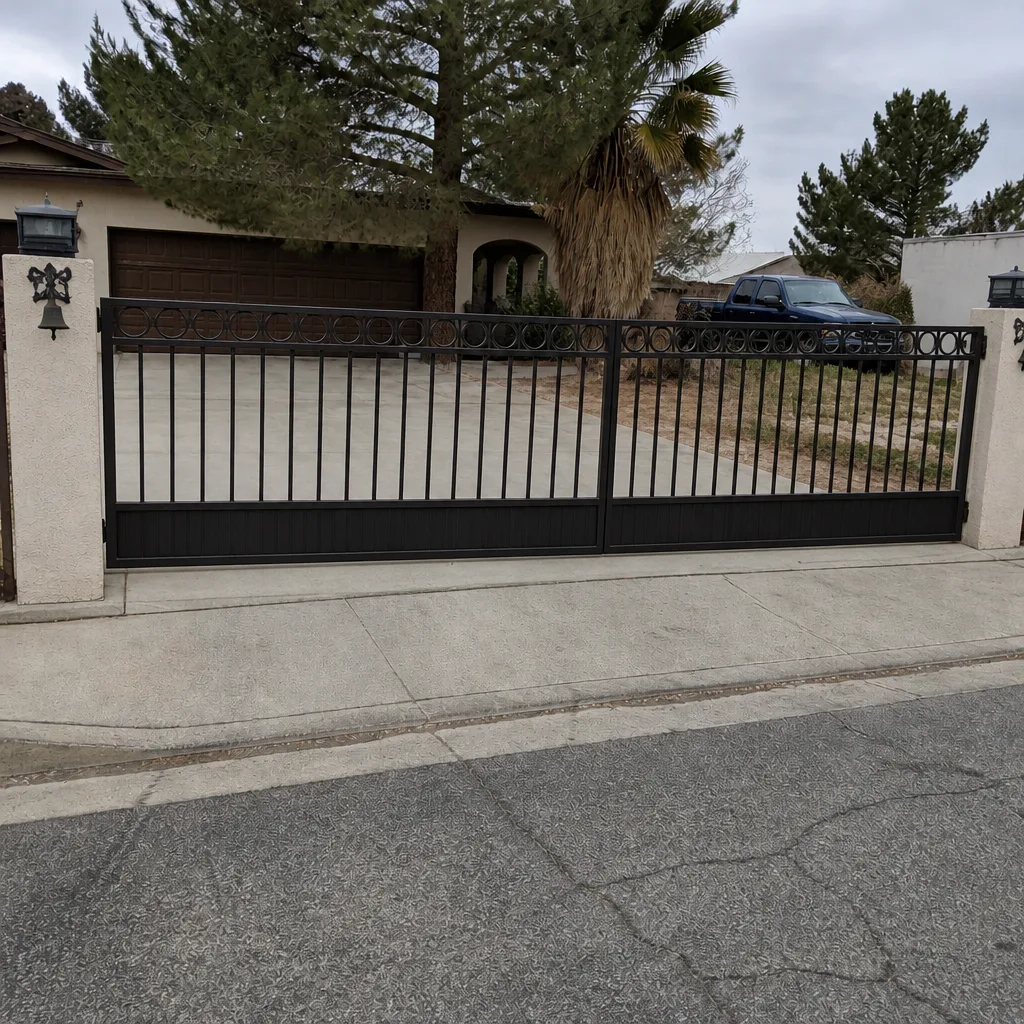 After
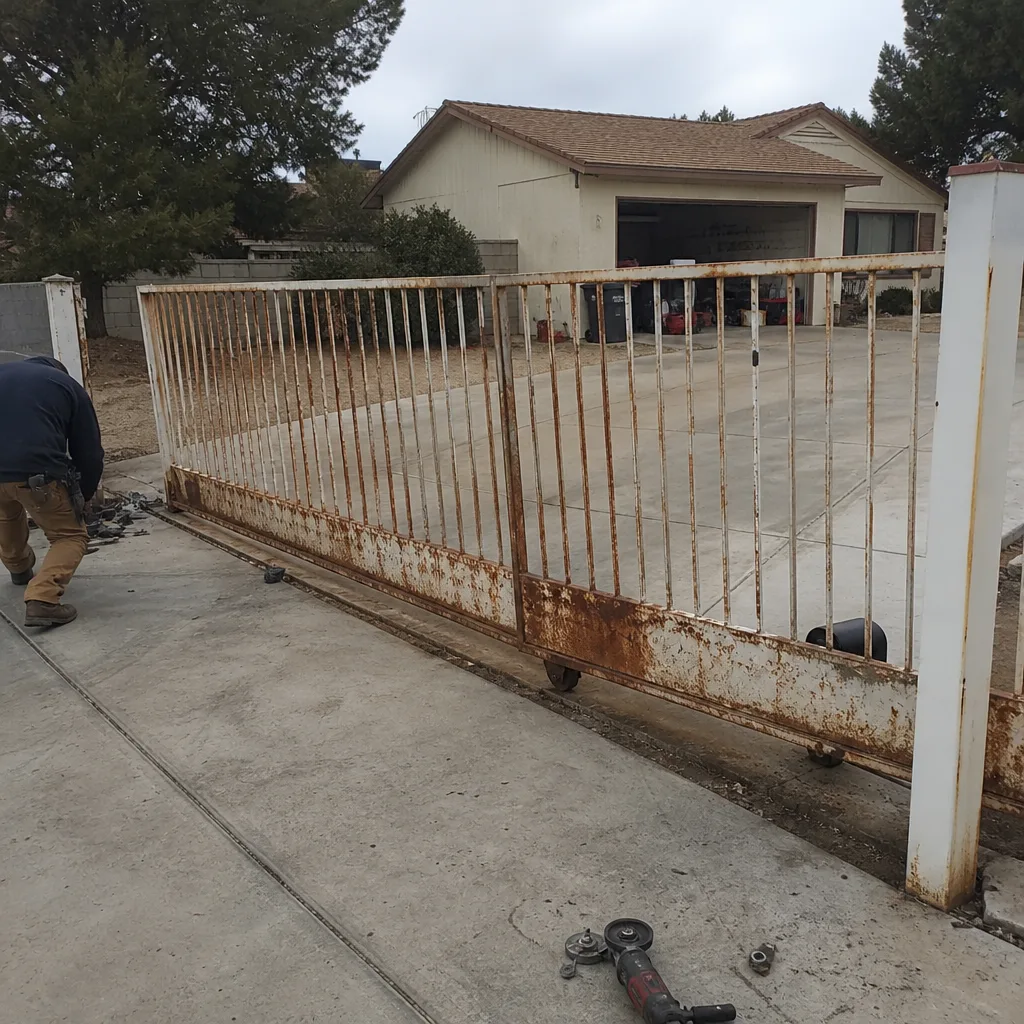 Before
 After
 Before
 After
When to Call a Professional
Call us when the gate’s behavior is changing, not just when it has stopped. A click with no movement, a hum that goes nowhere, chatter on startup, a gate that reverses on its own, a safety reverse that fails the monthly test, or a reduced remote range that has come on suddenly all warrant a visit. These are the signals a trained eye can turn into a repair instead of a replacement, and they are exactly what we diagnose on every callout. Older operators and gates with heavy seasonal use deserve an annual tune-up even when nothing sounds wrong.
Ironworks Gate Co. Mesquite offers free estimates in Mesquite. Call (844) 797-2573 for a free estimate, and we will give you an upfront price before any work starts. No surprises on the bill, and every repair is backed by our written 90-Day Done Right Promise. If a second opinion on another contractor’s estimate would help, that is free too. We are trained on nine gate-automation brands, including DoorKing, Elite, LiftMaster, and Mighty Mule, so we can diagnose and repair the operator on your driveway, whatever it is.
Frequently Asked Questions
The most common early sign is a hesitation or a hum before the gate moves. The motor is drawing extra current to overcome mechanical resistance, which is usually a binding hinge, a dry gearbox, or a failing capacitor. Catching the hesitation early is the difference between a repair and a control board replacement. Call (844) 797-2573 for a free estimate if you hear it.
Usually not. Short remote range is almost always a receiver, antenna, or battery problem, not a failing transmitter. Before you buy a new remote, have the receiver chain tested. In our experience on Mesquite gates, the antenna connection is the culprit more often than the remote itself. Call (844) 797-2573 and we can help you sort out which it is.
Cool morning temperatures thicken lubricant in the gearbox and stiffen the hinges, so a gate with marginal drive components slows down until it warms up. It points to a drive-system lubrication and alignment issue, and it is a scheduled-visit problem, not an emergency, unless the gate also stops mid-travel. Call (844) 797-2573 for a free estimate.
No. Grinding means metal is contacting metal, and every cycle wears the component further. It is usually a dry chain, a worn sprocket, or a gearbox losing lubricant. Keep using it and you risk a seized operator or a snapped chain. Have it serviced this week. Call (844) 797-2573 for a free estimate.
A gate in Mesquite should get a full inspection and lubrication at least once a year, and twice a year if it is in heavy daily use or sits in direct summer sun and desert dust. The heat, dust, and freeze-thaw cycles wear lubrication and electrical components faster than in milder climates. Our seasonal tune-up is one option, and it costs $89. Call (844) 797-2573 to schedule one.
Yes, the monthly test is something you can do yourself: place a solid object in the gate’s closing path and command it to close, and the gate should reverse on contact. If it does not, stop using the gate and call a technician. Do not attempt to repair the photo-eye, safety edge, or reversing logic yourself. Those are low-voltage safety systems on a heavy moving gate, and a trained professional should handle them. Call (844) 797-2573 for a free estimate.
The Bottom Line
A gate motor telegraphs failure weeks before it quits. The hesitation before the move, the grind, the chatter, the remote that only works close up, the slowdown that depends on the temperature: every one of those is the operator telling you which component is losing margin. Consistent wear is a scheduled visit. Inconsistent behavior is a same-week call. The Mesquite heat and dust accelerate both, so an annual inspection is the cheapest insurance you can put on a driveway gate. We have been at this for over 42 years, and the gates we service today are the same ones we will service next year. Done right, and backed in writing.
If you would like a straight answer on what your gate is telling you, call Ironworks Gate Co. Mesquite at (844) 797-2573 for a free estimate. We answer the phone 24 hours a day, 7 days a week, and we will tell you honestly whether you need this-week service or a scheduled visit. You can also start with our Gate Installation in Mesquite page if the diagnostics are pointing you toward a replacement, or our Ironworks Gate Co. Mesquite home page for the full picture of what we do.
Written by the team at Ironworks Gate Co. Mesquite.