
Last updated November 17, 2026
 Wrought iron
 Wood & steel frame
 Farm & ranch
 Sliding driveway gates
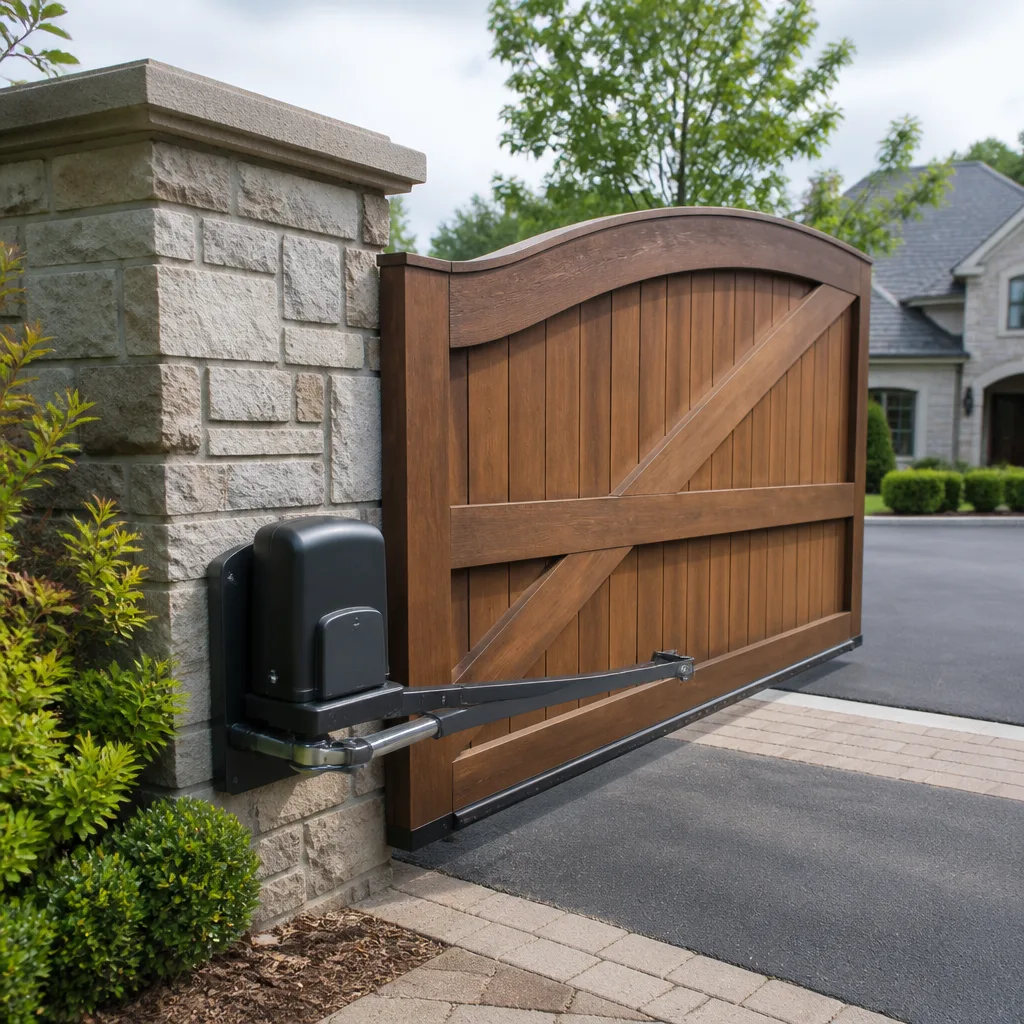 LiftMaster operators
Free on-site gate assessment - hinges, posts, and your LiftMaster or Nice gate operator checked before anything is quoted
The assessment is free and the quote is the invoice.
Get your free estimateGate Motor & Opener Maintenance Schedule: What to Do and When
Most gate opener maintenance guides were written to sell annual service contracts, so they pad the calendar with quarterly visits for tasks that honestly only need attention once a year. Here’s the counterintuitive part we’ve learned from thousands of service calls: the single most common cause of early gate motor failure isn’t lack of lubrication or worn gears. It’s a corroded battery terminal on the backup unit that slowly starves the control board of clean power during normal operation. It takes less than two minutes to inspect. In this guide, we’ll walk through a maintenance schedule built around what the hardware actually needs in Mesquite’s climate, month by month.
Quick Answer
A residential gate opener needs real attention twice a year (a spring pre-summer check and a fall voltage check) plus a two-minute monthly walk-around to catch battery terminal corrosion, sensor misalignment, and physical obstructions before they cause a failure. Deep lubrication, gear inspection, and force testing should happen annually. Anything quarterly beyond that is usually revenue, not maintenance.
Styles & brands we work with
- Wrought iron
- Wood & steel frame
- Farm & ranch
- Sliding driveway gates
- LiftMaster operators
Table of Contents
- Why Most Maintenance Schedules Are Wrong
- The Mesquite Month-by-Month Task Calendar
- Which Lubrication Points Actually Need Attention
- Testing the Obstruction Sensor and Auto-Reverse Force
- The Backup Battery Interval Most Homeowners Miss
- What to Log and Document on Your Own
- What You Can Safely Check vs. What a Technician Should Handle
- Common Mistakes to Avoid
Why Most Maintenance Schedules Are Wrong
Open any major gate motor manufacturer’s manual and you’ll find a maintenance table recommending quarterly inspections. What the manual doesn’t tell you is that those recommendations were written to protect the warranty in every climate from coastal Florida to Minnesota, not to match the actual wear patterns of a driveway gate in the high desert. In our experience servicing Mesquite neighborhoods like Sun City and Vista Del Monte, the real failure drivers are heat, dust, and voltage sag, and each of those follows a different timeline than a quarterly calendar would suggest.
Here’s what we consistently find when a gate stops working in Mesquite:
- Backup battery terminal corrosion at the control board or the battery itself, quietly reducing voltage until the board reboots mid-cycle or refuses to open at all
- Dust-fouled limit switches after a monsoon wind event pushes fine grit into the housing
- Sensor misalignment after soil shifts or a landscaping crew bumps a photo-eye
- Dry pivot bushings and hinge points after a summer of 110°F days bakes out whatever grease was applied last fall
- Worn gearbox grease that has separated and no longer coats the worm gear properly
The good news: none of these require quarterly visits. They require the right tasks at the right time of year, and an owner who knows what to look for between service calls.
The Mesquite Month-by-Month Task Calendar
This is the calendar we’d hand a homeowner if they asked what to do and when. It’s built around Mesquite’s actual seasonal conditions: the brutal pre-summer heat ramp from March through May, the monsoon dust and wind from July through September, and the voltage-stressing temperature swings of winter.
- March – April (pre-summer heat prep): Inspect battery terminals and clean any corrosion. Test auto-reverse on a light obstruction (a piece of wood, not your hand). Check lubrication on all pivot bushings and hinge pins. Look for cracked or sun-dried wiring in the conduit.
- May (pre-season last call): If you haven’t tested your opener’s manual release, do it now. In a power outage during a heat emergency, you want to know the release works before you need it. Confirm the keypad code and remote batteries are fresh.
- June – August (survival mode): Monthly two-minute walk-around. Clear debris from around the track or hinges. Check that the photo-eye lens isn’t dust-caked. Don’t apply new grease during peak heat unless a specific fitting is squealing.
- September – October (post-monsoon dust purge): This is the big one. Open the control box cover and gently blow out dust (canned air works). Inspect limit switches for grit. Re-test auto-reverse. Check that the chassis bolts holding the operator haven’t loosened from soil shifts.
- November – December (winter voltage check): Mesquite nights dip into the 30s and 40s, and that temperature swing stresses older backup batteries and voltage regulators. Test the battery by simulating a power cut. Inspect the low-voltage wiring for cracks.
- January – February (annual deep service): This is when a professional gearbox inspection, gear grease replacement, force calibration, and full safety-sensor test belong on the calendar. Schedule before spring heat arrives.
If you’d rather hand all of this to a technician, that’s what our Gate Motor & Opener service in Mesquite is for. We build the schedule around your specific operator model and the age of the gate.
Which Lubrication Points Actually Need Attention
Over-lubrication is as harmful as under-lubrication in a desert. Every excess drop of grease on an exposed surface becomes a dust magnet, and once grit mixes with grease, you’ve created a slow-grinding paste that wears metal faster than dry operation ever would. Here’s the honest breakdown of which points deserve attention and which ones to leave alone.
Lubricate (sparingly):
- Hinge pins and pivot bushings: a small amount of lithium or moly grease twice a year, applied with a rag, not a spray can
- Chain drive and chain idler pulley (if your operator uses a chain): chain-specific lubricant, once a year, wiped down after application
- Gate latch and striker: a few drops of light oil keeps the mechanism free
Leave alone:
- Photo-eye lenses: clean with a soft, dry cloth only, never a lubricant or solvent
- Limit switch contacts: sealed units, no lubrication
- Sliding gate track: if your gate is a slider, small amounts of graphite or dry silicone on the track rollers, never a wet grease
- Any exposed gear surface on a sealed gearbox: sealed means sealed, and if it’s leaking you need a technician, not a grease gun
For FAAC and BFT operators, which are common on estate gates in Mesquite, the manuals are specific about which lubricants are approved. Using the wrong product on the wrong component can void the warranty. If you’re not certain, ask before you spray.
Testing the Obstruction Sensor and Auto-Reverse Force
The obstruction sensor (the photo-eye pair) and the auto-reverse force setting are the two safety features that keep a closing gate from injuring a child, a pet, or a vehicle. Both fail silently. A sensor that’s slightly out of alignment may pass a random test but leave a dead zone. A force setting that’s too high may not reverse on a light obstruction at all.
Test both features every 90 days, and after any of the following events:
- A landscaping crew works near the gate line
- Heavy monsoon rain or wind moves the soil
- Anyone has bumped the sensor post with a vehicle
- The operator has been powered off for an extended period
To test the photo-eye sensor:
- Stand between the sensors with the gate in its open position
- Press the close button (or use the remote)
- The gate should stop or reverse immediately, not continue closing
- Repeat with a piece of wood or a cardboard box at the sensor plane, not your own body, for the follow-up test
To test auto-reverse force:
- Lay a 2×4 piece of wood flat on the ground at the gate’s closing path
- Command the gate to close
- The gate should reverse within a few inches of contacting the wood
- If it pushes past or crushes the wood, the force setting is too high or the sensitivity needs adjustment
Never use your hand, arm, or body weight to test auto-reverse on a heavy gate. We’ve seen this go wrong. A technician should set force levels with a force gauge per the manufacturer spec, and adjust after any mechanical change to the gate leaf, hinge, or operator.
The Backup Battery Interval Most Homeowners Miss
Here’s the question we get most often after a power outage: “Why did my gate stop opening when the power went out?” The answer, in almost every case, is the backup battery. It was fine the day before, because it was sitting quietly on a charging circuit doing nothing. Then the power dropped, and suddenly the battery had to carry the load of one or two open cycles, and it couldn’t.
The problem with backup batteries is that they fail silently. The gate still “works” during normal operation because it’s running on AC power, not the battery. Homeowners don’t notice the degradation until the day the power is out and the gate is stuck closed.
Replacement intervals:
- Standard sealed lead-acid backup batteries in a Mesquite summer: 3 to 4 years, sometimes less if the control box sits in direct afternoon sun
- Lithium backup packs on newer Linear and Viking operators: 5 to 7 years, but still worth testing annually
- Any battery older than 4 years: test it by cutting power at the breaker and opening the gate twice. If it struggles or won’t complete a cycle, replace it
Cleaning the battery terminals should happen every six months. A corroded terminal can rob 1 to 2 volts from a healthy battery, and that’s enough to create the exact symptom we mentioned at the top of this guide: a board that reboots mid-cycle, an opener that hesitates, or a gate that stops halfway. Two minutes with a small wire brush and some dielectric grease prevents all of it.
What to Log and Document on Your Own
The single best thing a homeowner can do for the long-term health of a gate operator is keep a maintenance log. Not because the manufacturer requires it, but because the next technician who arrives on a service call will fix the actual problem faster when they can see what’s already been tried, what’s been replaced, and when. A documented history means less diagnostic time on the clock and a more precise match between symptom and cause.
Keep a simple notebook (or a folder in your phone) with these entries:
- Date of each service call and what was done (lubrication, battery replacement, force adjustment, sensor realignment)
- Battery installation date and battery brand/model
- Any symptom you observed – “gate hesitated twice in July”, “remote worked from driveway but not from the corner” – even if it stopped on its own
- Force setting changes and who made them
- Sensor alignment events after landscaping, storm, or vehicle contact
- Photo or video of anything strange (odd noises, sparks, slow movement, flashing error codes on the control board)
When you call for service, read the log to the technician. If you’re in a Mesquite neighborhood like Highland Hills or Canyon Crest and your gate is on an FAAC or BFT operator, our team can pull the same history from the operator’s internal fault memory, but a homeowner log fills in the gaps that memory doesn’t capture.
What You Can Safely Check vs. What a Technician Should Handle
We’ll be direct: some of this schedule is genuinely homeowner work, and some of it isn’t. The dividing line is whether the task touches live electrical components, the force calibration, or the mechanical tension of the gate.
Safe for a homeowner:
- Visual inspection of the gate and hardware
- Battery terminal cleaning and inspection
- Photo-eye lens cleaning with a dry cloth
- Manual release test (per the operator’s manual)
- Log entries and photo documentation
- Keeping the gate area clear of debris, branches, and landscaping growth
Call a trained technician:
- Any work inside the control box beyond visual inspection (there’s live line voltage in there, even on battery-backup units)
- Force calibration with a gauge
- Photo-eye replacement or rewiring
- Gearbox grease change or gear replacement
- Hinge repair, welding, or any structural metalwork
- Operator replacement or brand change
- Solar panel and charging system diagnostics
We say this as a company that stands to earn more by recommending professional service: most of the routine check items here are safe for a careful homeowner, and we’d rather you do those yourself and save your service call for the tasks that need training and tools. Call us when you’re past the safe line. Our Gate Repair in Mesquite team handles the electrical and mechanical work that isn’t owner-safe.
Common Mistakes to Avoid
- Greasing the gate “just in case” before monsoon season. Wet grease plus windblown dust equals a grinding paste on every pivot. In Mesquite, we see more accelerated wear from over-lubrication than from under-lubrication.
- Assuming the gate “still works” means the battery is fine. The backup battery does nothing during normal operation, so it can be dead for months without a symptom. Test it by cutting the breaker, not by watching the gate move.
- Skipping the manual release test. We’ve responded to Mesquite calls where the homeowner couldn’t get the gate open during a power outage because the release had seized from years of non-use. Test it twice a year.
- Pushing past a photo-eye that “sometimes” works. A sensor that fails intermittently is misaligned more often than it is broken, but it needs realignment either way. Intermittent is not the same as working.
- Adjusting force settings by feel instead of with a gauge. Too low and the gate reverses on wind. Too high and it fails the safety test. Only a technician with a force gauge should touch this setting.
- Ignoring odd noises. A grind, a squeal, or a clunk that wasn’t there last month is the cheapest problem you’ll ever fix. Waiting turns a $180 adjustment into a $900 gearbox rebuild.
- Letting landscaping grow into the gate line. Mesquite’s spring growth pushes oleander and lantana into photo-eye paths and hinge assemblies. Six inches of clearance on either side of the gate saves both sensors and hinges.
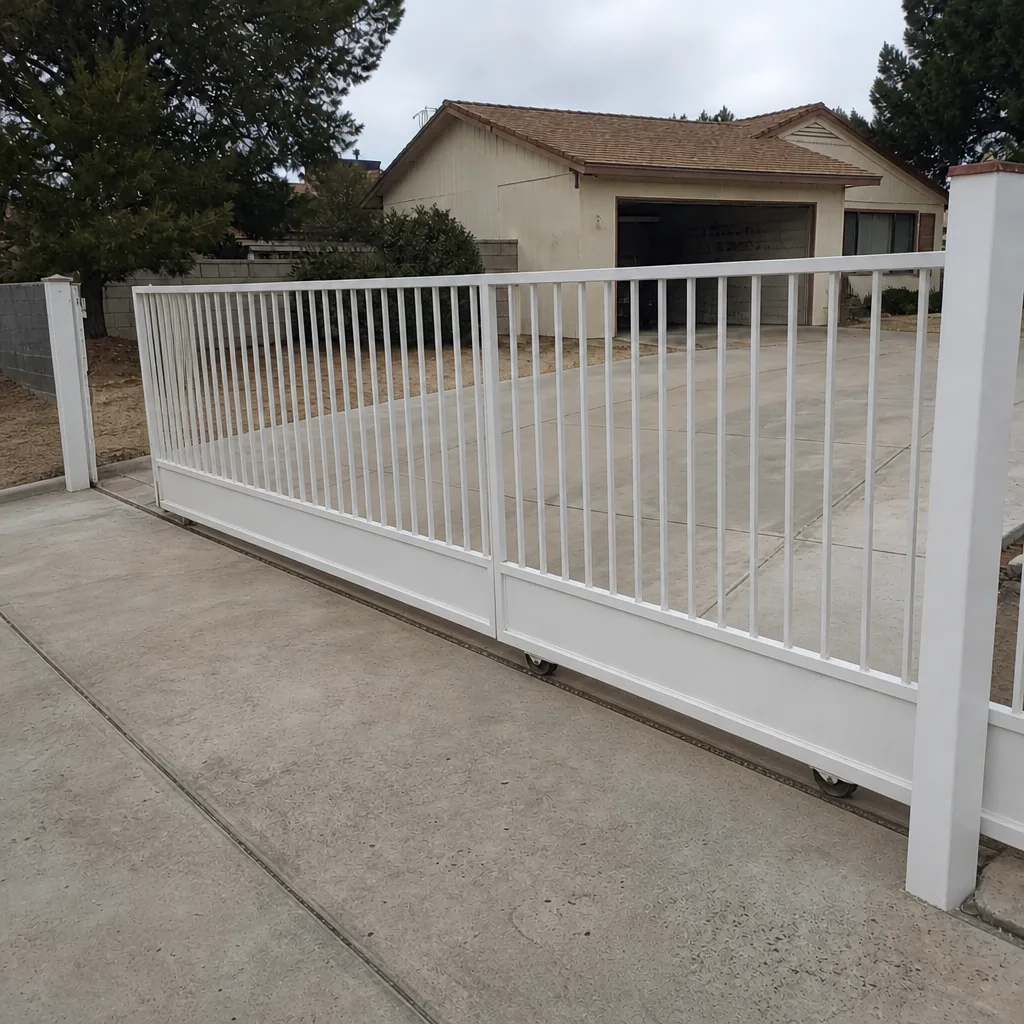
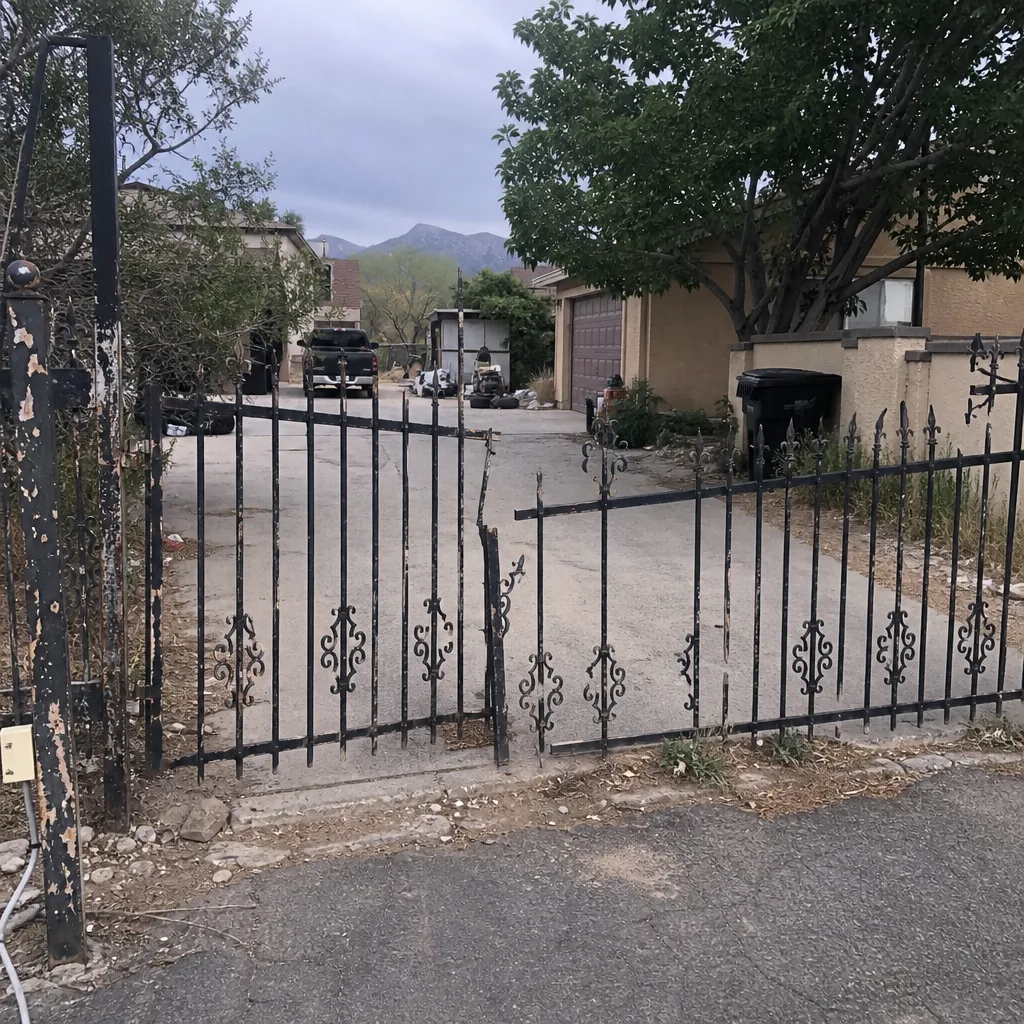
See the difference
 Before
 After
 Before
 After
 Before
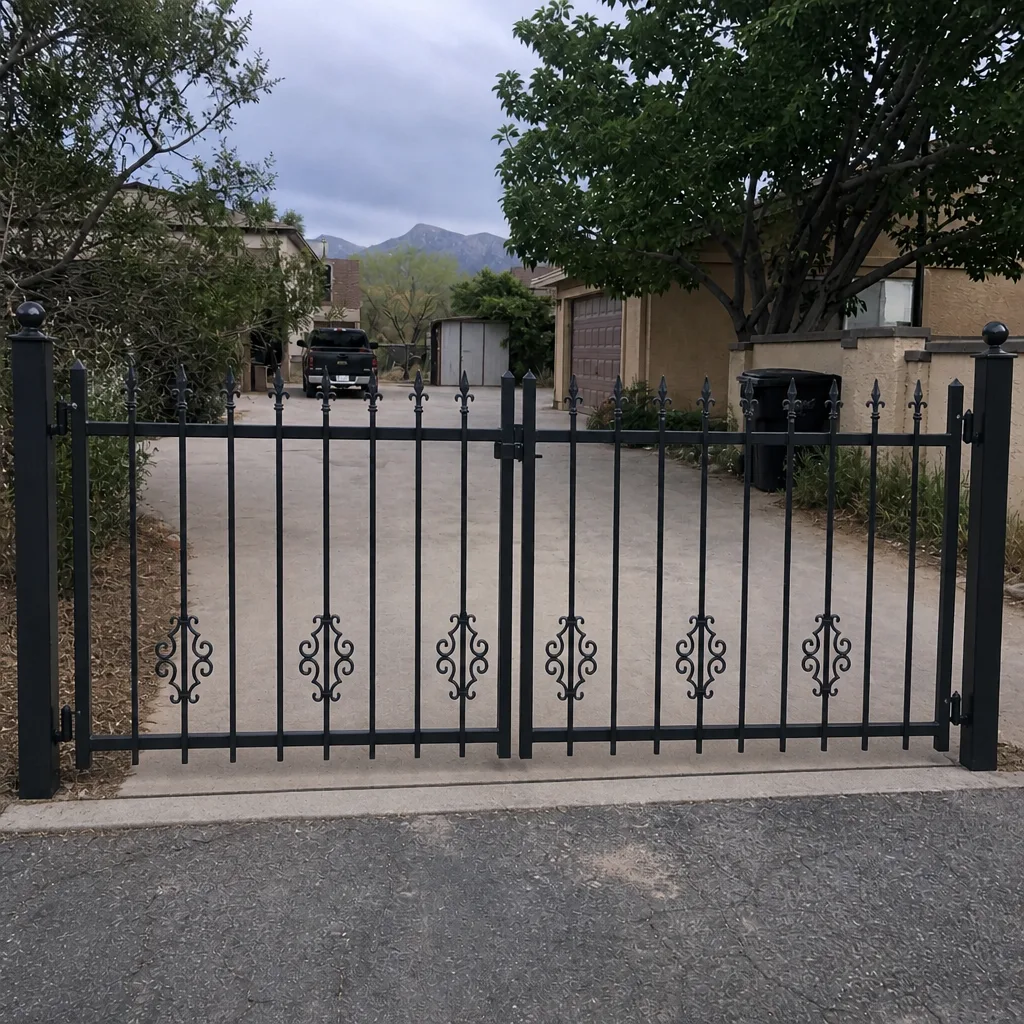 After
When to Call a Professional
Call a trained technician the moment any of these appear: an operator that hesitates, stalls, or reverses on its own; a gate that no longer sits square in its frame; visible sparks, burning smells, or scorch marks at the control box; a photo-eye that fails any part of the auto-reverse test; a manual release that won’t budge; grinding or clunking noises from the gearbox; or any sign of structural movement at the gate posts or hinges. If a monsoon storm or a vehicle contact has shifted the gate, the fix isn’t always the operator: it’s often the metal, and that’s a welding job, not a motor tune-up.
Ironworks Gate Co. Mesquite offers free estimates in Mesquite – call (844) 797-2573 for a written quote. Every job comes with our 90-Day Done Right Promise, and we settle pricing before we touch a bolt. Our technicians have up to 13 years of experience across operators like FAAC, BFT, Linear, and Viking.
Frequently Asked Questions
Twice a year for real service, plus a two-minute monthly walk-around by the homeowner. The twice-yearly visits should be timed to your climate: in Mesquite, we recommend a spring pre-summer prep around March or April and a fall voltage and dust check in September or October. Annual deep service of the gearbox and force calibration completes the cycle.
Corroded battery terminals on the backup unit, followed closely by dust-fouled limit switches after monsoon season. Mesquite’s heat accelerates battery degradation, and the summer dust storms push grit into places that manufacturers probably didn’t anticipate. Cleaning terminals every six months prevents most failures we diagnose. Call (844) 797-2573 if your operator is already hesitating or stalling.
On many residential operators, yes – the battery is a sealed lead-acid pack in an accessible compartment. The tricky part is matching voltage and amp-hour ratings exactly, and identifying whether your specific brand uses a plug-in harness or hard-wired terminals. If you’re not certain, it’s a five-minute job for a technician and a potentially expensive mistake for a homeowner. Call us for an exact replacement recommendation.
Stand between the sensors with the gate in its open position and press close. The gate should stop or reverse immediately. If it continues closing, the sensor is misaligned, dirty, or failing. Never test with your hand or body weight – use a piece of wood. If the sensor passes that test but fails intermittently, it still needs realignment. Call (844) 797-2573 to schedule a sensor check.
Our $89 Seasonal Tune-Up covers battery terminal inspection and cleaning, photo-eye testing, force-check, hinge and pivot lubrication, gearbox visual inspection, manual release check, and a written report of anything that needs attention. It’s built around the specific seasonal tasks this guide outlines. For gates needing more than a tune-up, we quote the repair in writing before any work begins. Call (844) 797-2573 to schedule yours.
Three to four years for most sealed lead-acid backup batteries, sometimes less if the control box sits in direct afternoon sun. Lithium packs on newer Linear and Viking operators typically run five to seven years. Regardless of rating, test your battery by cutting the breaker and running two open cycles every year. If it struggles, replace it before the next power outage.
The Bottom Line
A gate motor doesn’t need quarterly maintenance. It needs the right attention at the right time: a spring heat-prep check, a post-monsoon dust purge, a fall voltage test, and an annual deep service, plus a two-minute walk-around every month to catch battery corrosion, sensor misalignment, and physical damage before they become expensive. In Mesquite, the two tasks that prevent the most failures are cleaning the backup battery terminals and testing the photo-eye sensors every ninety days. Everything beyond that is on the schedule for a reason, but quarterly visits for tasks that only need annual attention are revenue, not maintenance. Keep a log, stay on the calendar, and call a trained technician when you hit the parts of the schedule that touch live power or force calibration.
When your gate needs a repair, a full installation, or a professional tune-up to reset the schedule, our team at Ironworks Gate Co. Mesquite is ready. Explore our Mesquite home gate services for the full scope of what we do, or look at Gate Installation in Mesquite if you’re planning a new gate and want the operator and the metal ordered correctly the first time. A live person answers the phone around the clock, and we’ll give you a straight, written price before we start.
Call (844) 797-2573 for a free estimate. We’ll bring the calendar, the gauge, and the grease – and we’ll leave your gate closer to the day it was hung.
Written by the team at Ironworks Gate Co. Mesquite.