
Last updated November 17, 2026
 Wrought iron
 Wood & steel frame
 Farm & ranch
 Sliding driveway gates
 LiftMaster operators
Free on-site gate assessment - hinges, posts, and your LiftMaster or Nice gate operator checked before anything is quoted
The assessment is free and the quote is the invoice.
Get your free estimateDIY vs Professional Gate Access Control: What’s Safe to Do Yourself
Reprogramming a keypad code takes about five minutes and costs nothing. Rewiring that same keypad to a new control board can expose you to 24V DC faults that leave your gate hanging open at 2 a.m. – the difference between the two jobs is often a single connector, and it isn’t always obvious which one you’re looking at. That’s the real question here, and it isn’t about whether you’re handy. It’s about which side of the voltage-and-liability line a given task sits on. In this guide we’ll draw that line task by task, so you know exactly what’s safe to touch on a Mesquite gate and what isn’t, without voiding a warranty or creating a hazard in your own driveway.
Quick Answer
Credential work is DIY-safe: adding a keypad code, pairing a phone app, or deleting a contractor’s entry code are user-level tasks you can do yourself. Anything that touches line voltage, the control board, or a safety loop detector is not safe to do yourself and usually voids the manufacturer’s warranty if unlicensed work is involved. When a “simple” keypad swap turns into a wiring problem, that’s the moment to call a professional in Mesquite.
Styles & brands we work with
- Wrought iron
- Wood & steel frame
- Farm & ranch
- Sliding driveway gates
- LiftMaster operators
Table of Contents
- Where the Voltage and Liability Line Actually Sits
- Tasks That Are Genuinely DIY-Safe
- Tasks That Are Not: Board, Loop, and Line Voltage
- Why Unlicensed Wiring Voids a $600 Control Board
- Tools and Certifications for the Nine Major Brands
- How to Spot Hidden Wiring Damage Before a Keypad Swap
- What a Professional Access Control Visit Actually Includes
- Common Mistakes to Avoid
- When to Call a Professional
Where the Voltage and Liability Line Actually Sits
Every access control decision comes down to one question: does the task sit above or below the line that separates a user-level setting from a certified-installation job? User-level work is what the manufacturer designed for the homeowner – programming, pairing, adjusting keypad brightness, adding a temporary code for the landscaper. Certified-installation work is everything the manufacturer expects a trained technician to handle: anything that opens the control enclosure, terminates a wire, or touches the low-voltage loop that tells the gate a car is there.
The tricky part is that a keypad can look identical from the outside whether it’s a simple code change or a rewire. On a Linear or Viking keypad, for example, the front face and buttons are the same. The difference is what’s behind it. If a previous installer used the wrong gauge wire, skipped a surge suppressor, or left a splice exposed, your “simple swap” becomes a repair. Mesquite’s summer heat – routinely above 105°F – hardens insulation on outdoor wiring faster than most climates, and we’ve seen more than one hidden splice fail in July when a homeowner was only trying to change a code.
There’s also the liability piece. If your gate is on a shared driveway or serves a small HOA in a community like Sun City Mesquite, the access control system may fall under community rules that require licensed work. A DIY rewire in that setting can put you on the wrong side of both the warranty and the association’s insurance. That’s the line. Everything below it you can safely handle. Everything above it belongs to a trained technician.
Tasks That Are Genuinely DIY-Safe
These are the jobs the manufacturer intends you to do yourself. They don’t require opening the control enclosure, they don’t involve line voltage, and they won’t void your warranty when done correctly.
- Adding or deleting a keypad entry code. Every keypad we service has a programming sequence printed in the manual or on a sticker inside the battery cover. Follow it exactly and you’re fine.
- Pairing a smartphone app to a Wi-Fi or Bluetooth-enabled operator. Newer LiftMaster and Ghost Controls units support app pairing right out of the box. If the app walks you through it, you can do it.
- Changing a keypad battery. A dead 9V or coin cell is the single most common reason a keypad “stops working.” Swap it, then test every code.
- Adding a temporary or one-time code for a contractor or houseguest. Most modern systems support this without touching the board.
- Adjusting the auto-close timer or light settings if your operator exposes these through the app or an external dial rather than the control board.
- Cleaning the keypad face and photo-eye lenses. Mesquite’s dust blows in on spring winds and coats the reflectors on safety beams. A soft cloth and a check that the gate reverses when blocked is user-level maintenance.
If a task is on this list and it works, stop there. The moment a step doesn’t match the manual – the code won’t take, the app won’t find the operator, the gate won’t reverse – you’ve crossed into the next section.
Tasks That Are Not: Board, Loop, and Line Voltage
These are the jobs that put you above the line. We’re naming them so you recognize them, not so you attempt them. For each one, the safe answer is to call a licensed technician.
- Replacing a control board. A board swap means disconnecting and re-terminating every wire in the enclosure. A single crossed lead can destroy the new board on power-up – a $600 part gone in one second.
- Calibrating or replacing a loop detector. The in-ground loop that tells the gate a car is waiting involves induction wiring and sensitivity tuning. A poorly calibrated loop either misses cars or triggers the gate when nothing is there. Both are safety problems.
- Rewiring a keypad to a new control board. This is the classic hidden-danger job. Even at 24V DC, a miswired connector can short the board, defeat the safety reverse, or lock the gate open.
- Any work involving the 120V line that feeds the operator. This is line voltage. It requires a licensed electrician or a technician certified for the job. Period.
- Bypassing or disabling a safety photo-eye. We’ve seen this done as a “quick fix” for a gate that kept reversing. It’s also how gates injure people and pets. Never do it.
- Swapping an operator brand or model without checking the arm and hinge capacity. A heavier operator on an undersized arm causes torque failures that can drop a gate.
In our experience across Mesquite, the jobs on this list are where homeowner DIY attempts turn into emergency calls. The gate left hanging open at 2 a.m. is almost always a rewiring project that started as a keypad swap.
Why Unlicensed Wiring Voids a $600 Control Board
Manufacturers write their warranty language for a reason. When you open a control enclosure and terminate wiring yourself, you’ve taken on responsibility the manufacturer didn’t agree to cover. On a control board that costs several hundred dollars, that’s an expensive lesson.
Here’s how it actually plays out. Your gate fails on a Friday. You open the enclosure, spot a loose wire, and reconnect it. The gate works – for a week. Then the board fails, and when you call for warranty service, the technician opens the enclosure and sees signs of homeowner work: a different wire gauge, a hand-stripped end, a missing ferrule. The warranty claim is denied. You’re now paying for the board out of pocket, on top of the original service call, because the manufacturer can point to unauthorized work.
The same rule applies across the major brands we service – DoorKing commercial-grade boards, Linear residential units, and others. DoorKing in particular has strict installation requirements, and their warranty review is thorough. If you have a written estimate in front of you and you’re not sure whether the proposed work touches the board, ask. We offer a free second opinion on any written estimate for exactly this reason – a five-minute read of the estimate tells you whether the job is user-level or certified-installation.
Tools and Certifications for the Nine Major Brands
Each brand has its own programming quirks, terminal layouts, and diagnostic tools. A technician who works on LiftMaster every day can walk into a FAAC job and miss a setting that only an FAAC-trained tech would recognize. That’s why we’re trained and equipped on nine gate-automation brands: LiftMaster, FAAC, BFT, Linear, Viking, Ghost Controls, DoorKing, Elite, and Mighty Mule. It’s also why we can make the correct fix on the first visit, whatever is on your driveway.
Here’s what “trained and equipped” means in practice for the brands that come up most often in Mesquite:
- Linear: Known for reliable residential keypads and operators. Diagnostic work often requires the Linear handheld programmer to read fault codes the homeowner can’t see.
- Viking: Common on estate gates with heavy swing arms. Viking certification matters for torque settings and safety-reverse calibration.
- Ghost Controls: Popular for solar and rural installs. We work with their solar charge controllers and app integration on properties outside the city grid.
- DoorKing: The commercial-grade standard for shared and HOA entrances. DoorKing’s warranty terms are strict, and their loop detectors and telephone entry systems require certified knowledge to service without voiding coverage.
Add the standard tools – a digital multimeter, torque wrench, loop tester, and a laptop for firmware updates – and you’re looking at a professional kit that a homeowner isn’t expected to own. That’s fine. It’s not a judgment on your ability. It’s just the equipment that makes the job safe and warranty-compliant.
How to Spot Hidden Wiring Damage Before a Keypad Swap
The scenario we see most often in Mesquite: a homeowner decides to swap a failing keypad. New keypad arrives, old one comes off, and inside the wall or post they find a hairball of exposed splices, corroded connectors, or wire that’s been chewed by rodents. That change in the job – from “swap” to “repair” – is the moment you should stop and call.
Here’s a short checklist to run before you touch the new keypad:
- Look at the wire condition. If the insulation is cracked, stiff, or the wire is discolored, stop. Mesquite heat degrades outdoor wiring quickly, and a cracked conductor is a future short.
- Check for splices. If you see electrical tape or wire nuts inside the keypad housing, the wiring has already been worked on. That splice may not meet code or the manufacturer’s spec.
- Look for moisture stains. Corrosion at the terminals means water is getting in. A new keypad over a wet connection will fail early.
- Check the gauge. If the wire is thinner than what your manual specifies, it was likely sized for a lower-draw keypad or installed by someone cutting corners.
- Look for a surge suppressor. If there isn’t one, a Mesquite monsoon-season surge can take out the new keypad the first time lightning cracks nearby.
If any of those flags turn up, stop and get professional eyes on the job before the new keypad goes on. A fifteen-minute inspection saves a second failure. Our gate motor and opener service covers exactly this kind of pre-installation inspection – the tech checks the wiring and board before the new hardware goes on, so you’re not back to the same call in six months.
What a Professional Access Control Visit Actually Includes
Homeowners sometimes ask why a professional access control call costs more than a keypad swap. Here’s what’s actually on the visit – work a DIY attempt skips entirely.
- Torque testing. The arm and hinge hardware are checked against the manufacturer’s spec. An under-torqued arm slips; an over-torqued one stresses the operator motor. Either way, the gate fails early.
- Fail-safe verification. The gate is tested to confirm it reverses when the safety eye is blocked and stays put when power fails. A gate that fails in the open position is a security gap. A gate that fails closed is a safety hazard. We make sure it does the right thing.
- Emergency release check. The manual release is tested under load. If it won’t disengage, a power outage leaves the homeowner stranded.
- Full wiring and load check. Every terminal is torqued, every connection is tested, and the line voltage is verified at the source. That’s what protects the board.
- Surge protection review. On a Mesquite installation, a surge suppressor on the operator feed is polite insurance for the next monsoon.
- Written documentation. The work performed and the parts installed are documented. If anything fails within 90 days, the Ironworks Gate Co. Mesquite home page spells out the promise: we come back and make it right, in writing, with no hassle and no arguing.
That’s the difference between a swapped part and a job that’s done right. Most of the value of a professional visit isn’t the part. It’s the testing.
Common Mistakes to Avoid
- Assuming a keypad that stops working needs replacing. Nine times out of ten, a dead keypad is a dead battery or a loose terminal connection. Check those first.
- Opening the control enclosure without a reason. There’s no user-serviceable part inside except the fuse on some models, and even that has a specific rating. If you’re opening it for anything else, you’re in the wrong territory.
- Disabling the safety photo-eye to stop a gate that keeps reversing. We’ve seen this in Mesquite more than once, and it’s the most dangerous mistake on the list. The reverse is there to protect people. Fix the eye, don’t bypass it.
- Buying a cheap universal keypad without checking compatibility. Universal keypads often don’t support the features or the protocol your operator uses. A DoorKing operator, for example, needs a compatible DoorKing or specified third-party keypad, not a generic replacement.
- Ignoring a splice when installing a new keypad. If you see hand-stripped wire or electrical tape in the housing, fix the wiring before the new part goes on. The new keypad won’t survive a failing circuit.
- Trying to save money by skipping the surge suppressor. A Mesquite monsoon-season surge can take out a $300 operator board. The suppressor costs a fraction of that.
- Assuming a gate that “works when I use the app” is safe. The safety reverse, the loop detector, and the fail-safe are separate from the app. Test those independently, and call a professional if any of them fail.
When to Call a Professional
Call a professional when the task touches the control board, the loop detector, line voltage, or the safety reverse; when you find hidden wiring damage behind a failing keypad; when the gate is left in an unsafe state; or when a warranty claim is on the line. Also call when you’re not sure. That last one matters – the professional visit is free to schedule, and the estimate is upfront and settled before a single bolt is turned.
We handle access control work across Mesquite – from new gate installations with access control designed in from the start, to repairs on existing systems where the wiring has been limping along. Our technicians have up to 13 years of experience, and they work on LiftMaster, FAAC, BFT, Linear, Viking, Ghost Controls, DoorKing, Elite, and Mighty Mule hardware. Ironworks Gate Co. Mesquite offers free estimates in Mesquite – call (844) 797-2573 and a live person will answer, day or night.
See the difference
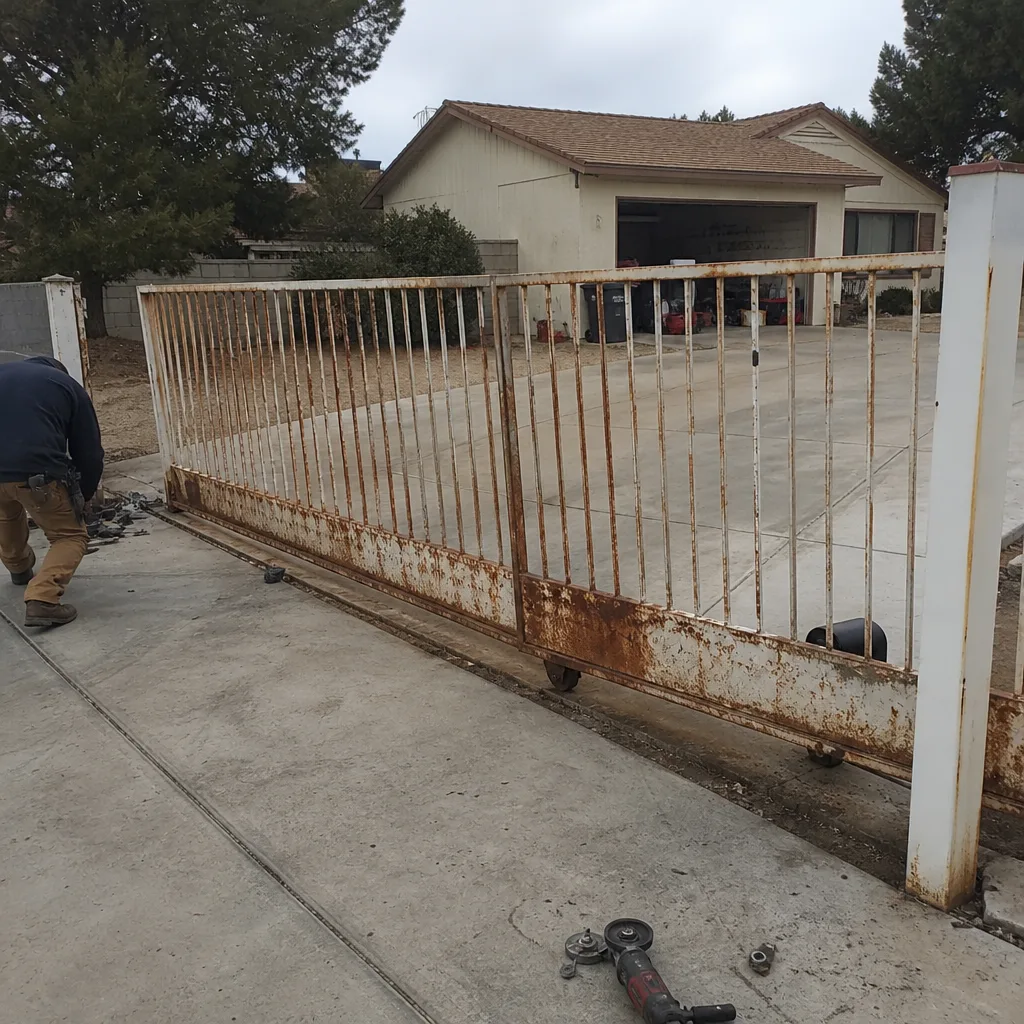
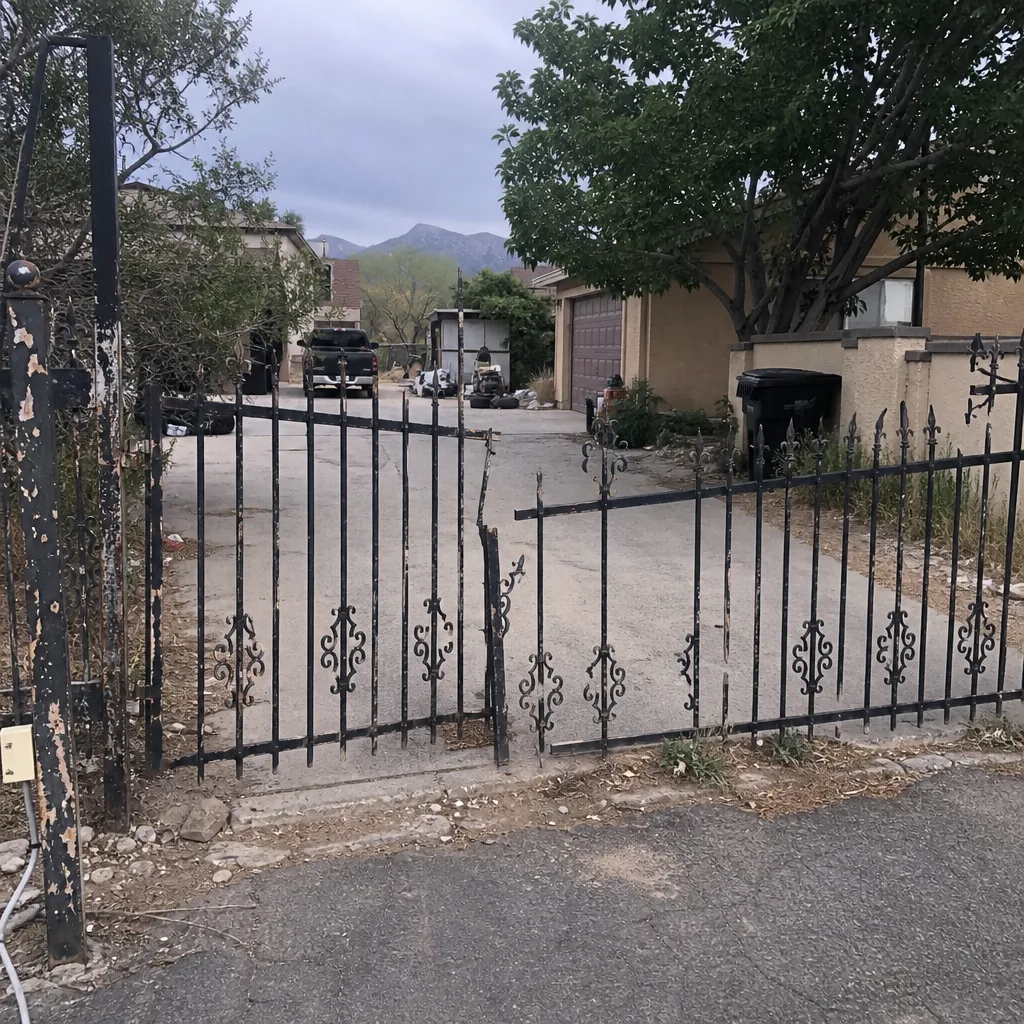
 Before
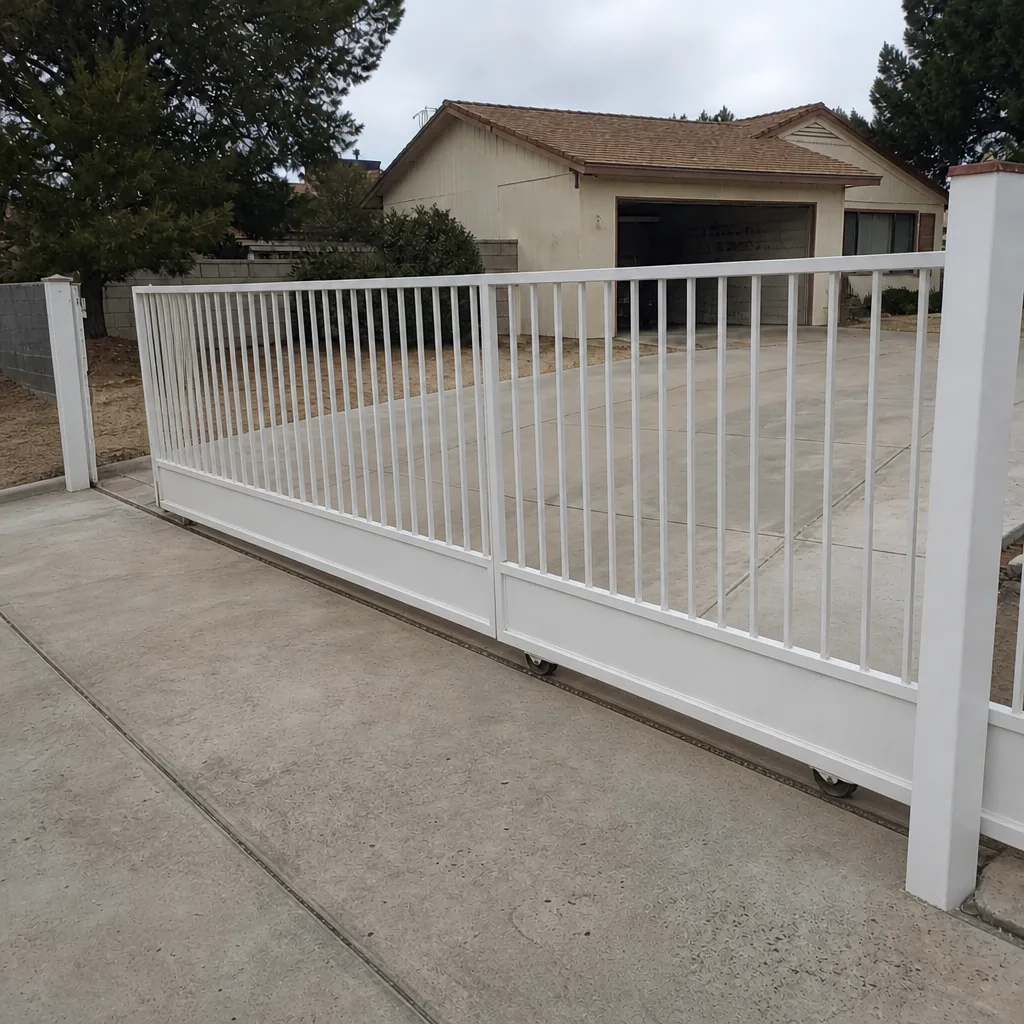
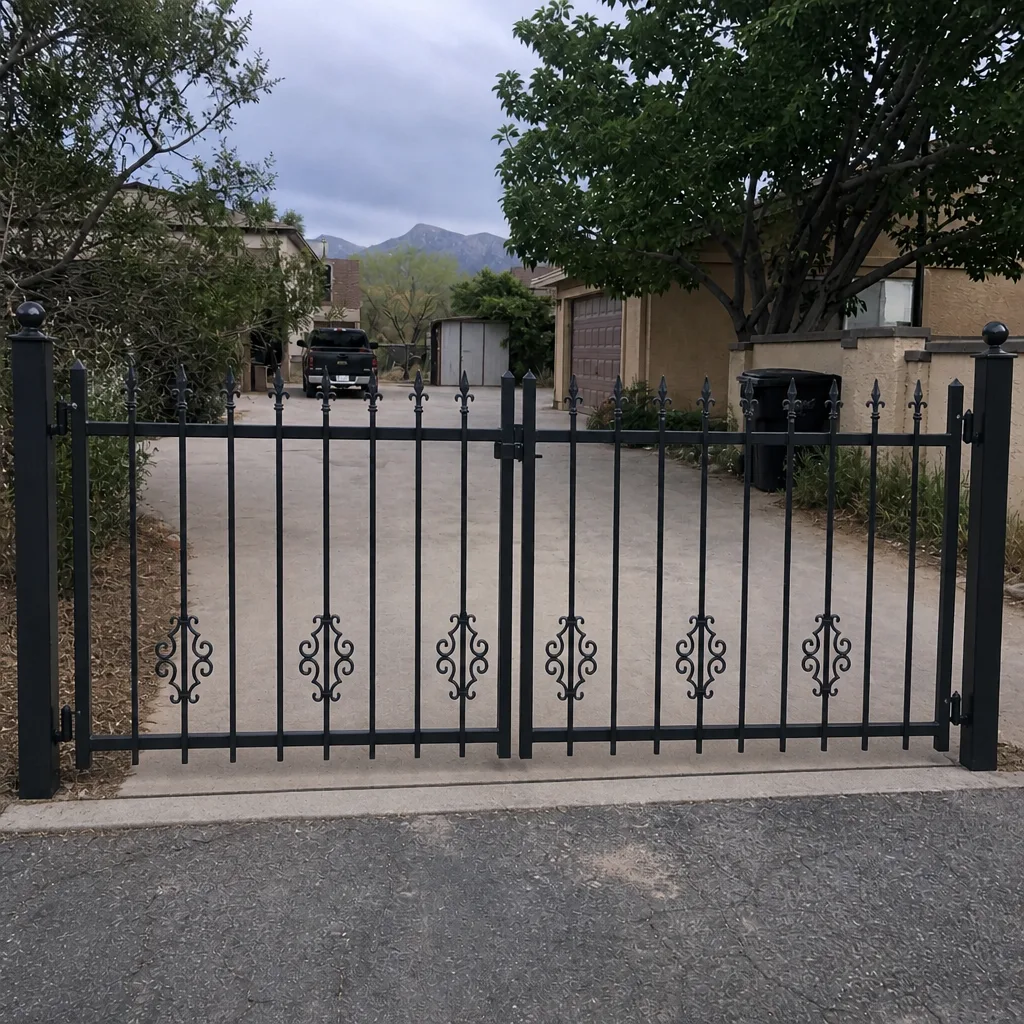
 After
 Before
 After
 Before
 After
Frequently Asked Questions
Yes. Reprogramming a keypad code is a user-level task, and it’s the safest DIY access control job there is. Follow the sequence in your manual or the sticker inside the battery cover, and test every code after the change. If the code won’t take or the keypad is unresponsive after a battery change, call (844) 797-2573 for a free estimate – the problem is likely wiring, not the keypad.
In most cases, yes. Manufacturers like DoorKing and Linear void warranty coverage when unauthorized work is found inside the control enclosure. On a control board that can cost several hundred dollars, that’s the whole reason to call a licensed technician for any board or loop work. Call (844) 797-2573 for a free second opinion on any written estimate.
Not necessarily. Start by cleaning the keypad face and testing the battery; dust and heat are the two most common causes of a “dead” keypad in Mesquite. If the keypad is clean, the battery is fresh, and it still won’t respond, that’s the moment to call. Wiring corrosion or a failed board behind the keypad needs professional hands.
Adding a keypad is a wiring job, not a code change. If the replacement keypad and the existing wiring are both in good condition and match the manufacturer’s spec, a confident DIYer can handle the swap. If you find splices, corrosion, or a different gauge wire inside the housing, stop and call – the underlying wiring needs a professional first. Call (844) 797-2573 for a free estimate on the inspection.
A professional visit includes torque testing on the arm and hinge hardware, a safety-reverse and fail-safe check, an emergency release test, full wiring and load verification, and a written record of the work. None of those steps are part of a DIY keypad swap, and each one protects the gate’s long-term safety. Call (844) 797-2573 to schedule a free estimate.
Only if the emergency release is tested and working. A battery backup keeps the operator running for a while, but the manual release is what gets you through an extended outage, and it needs to be tested under load. If your gate won’t disengage by hand, call a professional – the release mechanism needs adjustment before the next outage. Call (844) 797-2573 for a free estimate.
The Bottom Line
Credential work is DIY-safe. Wiring, board, loop, and line-voltage work is not. That’s the line, and it’s clearer than it looks: if a task requires opening the control enclosure, touching a wire termination, or touching the safety reverse, it belongs to a licensed technician. When a “simple” keypad swap turns into a hidden wiring repair, stop. When the warranty is on the line, stop. When the gate could be left unsafe, stop. Everything else, do yourself – safely, carefully, and with a professional number saved for the day it isn’t so simple. For anything above the line, call (844) 797-2573 for a free estimate – a live person answers, day or night.
Written by the team at Ironworks Gate Co. Mesquite.