
Last updated November 17, 2026
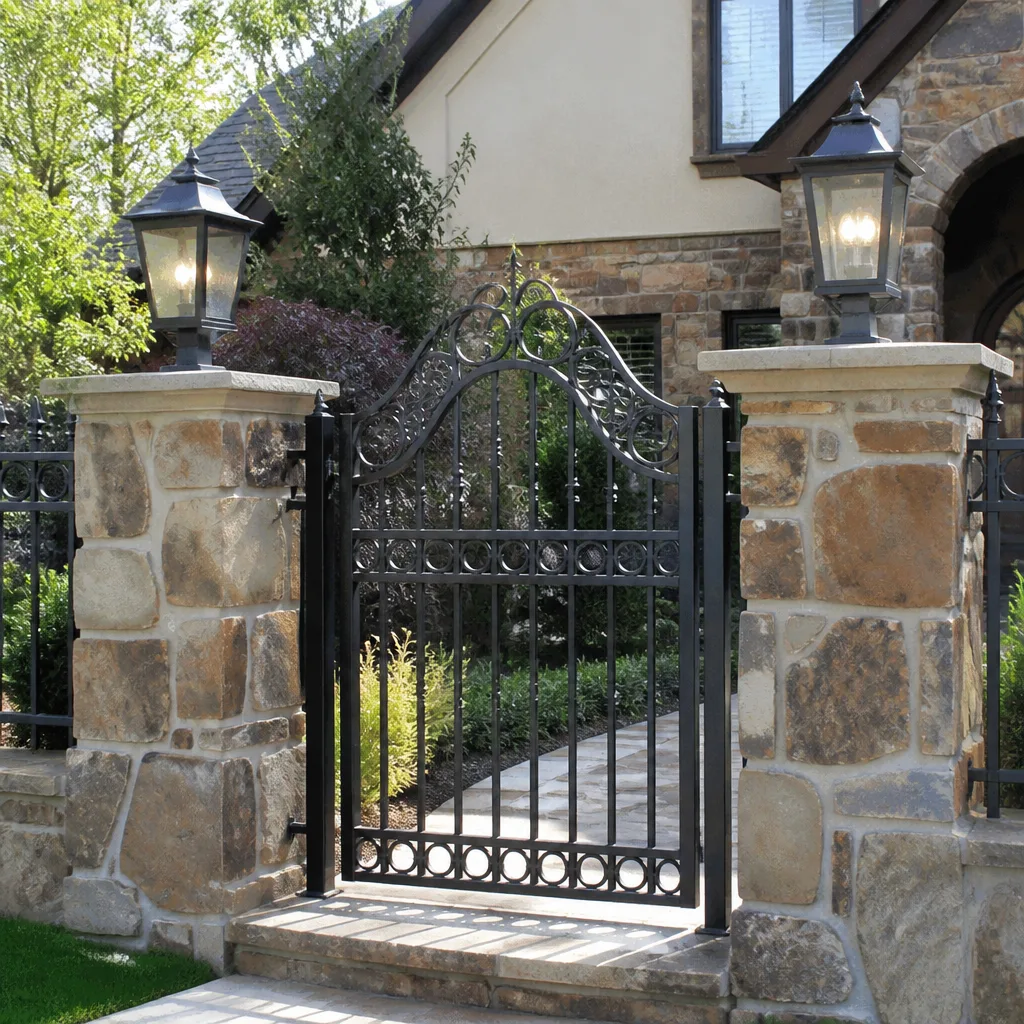 Wrought iron
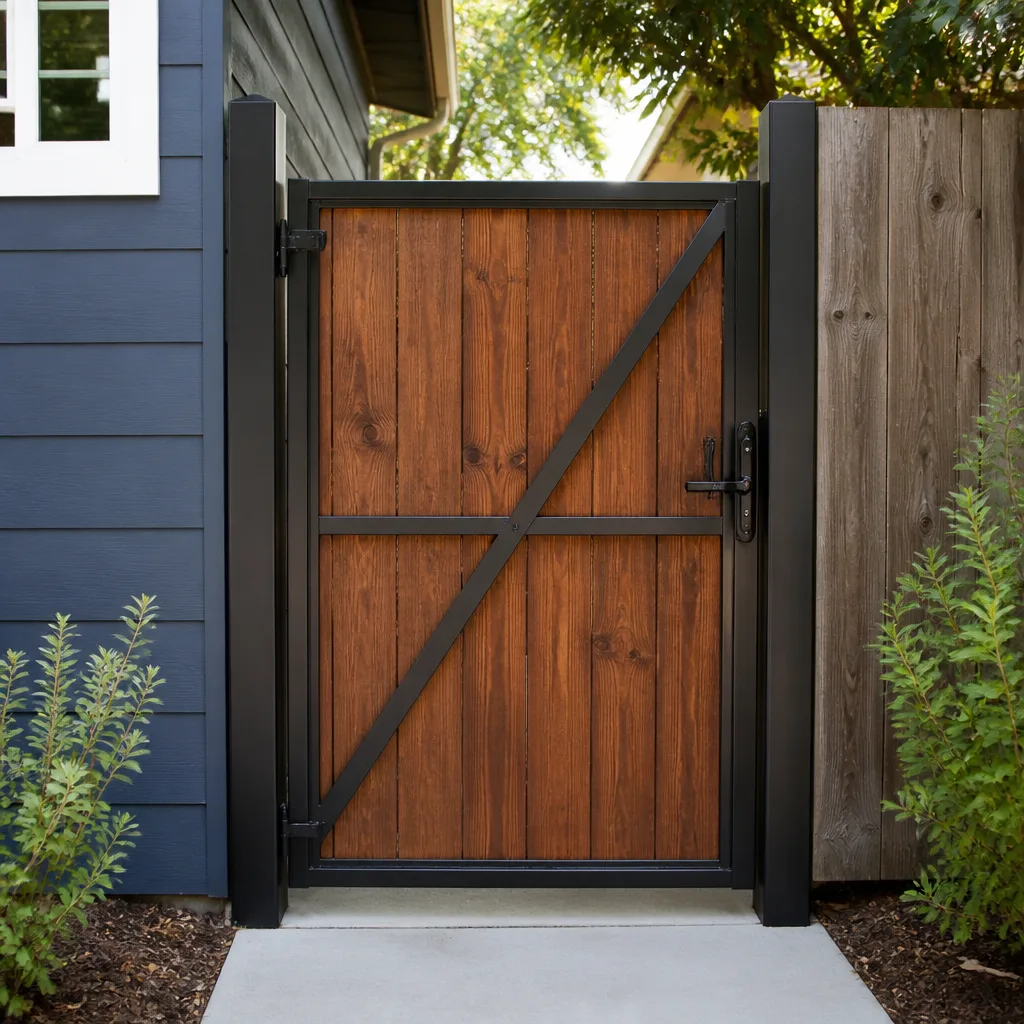 Wood & steel frame
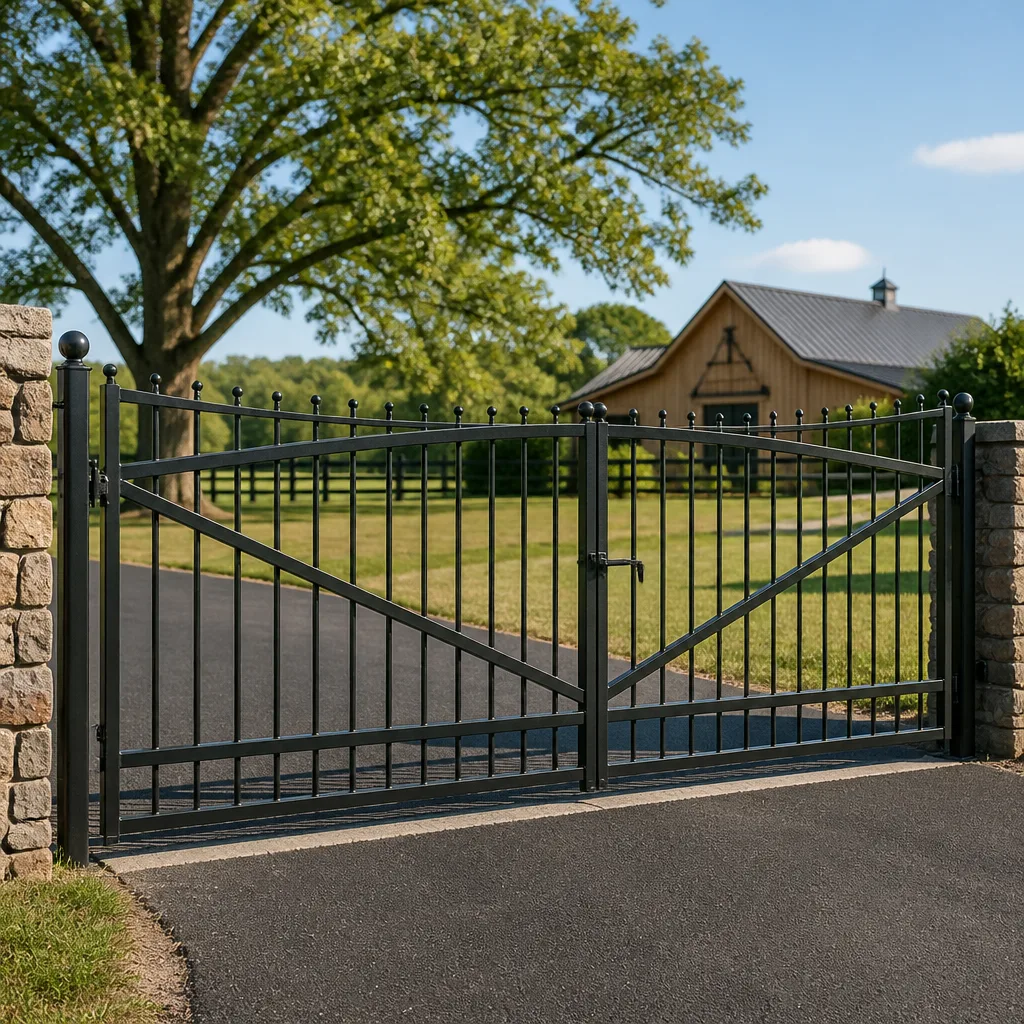 Farm & ranch
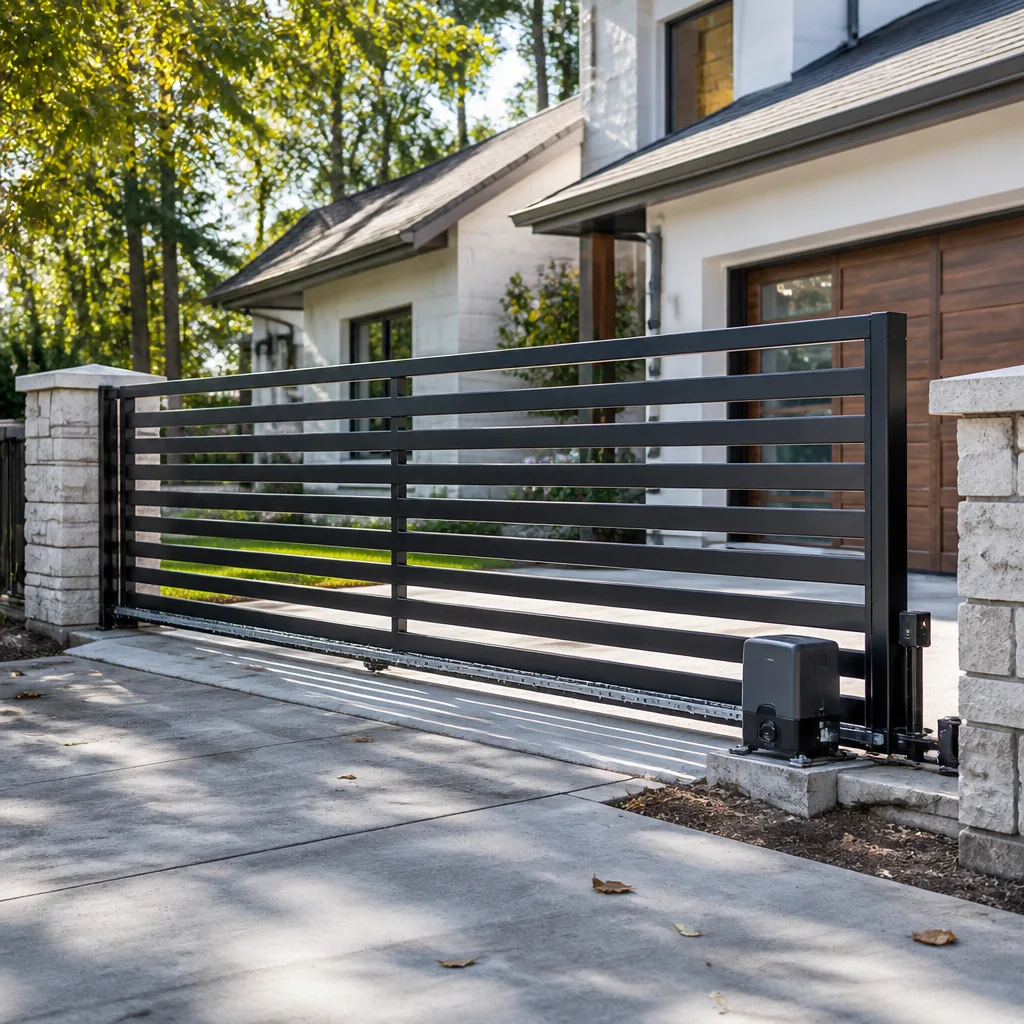 Sliding driveway gates
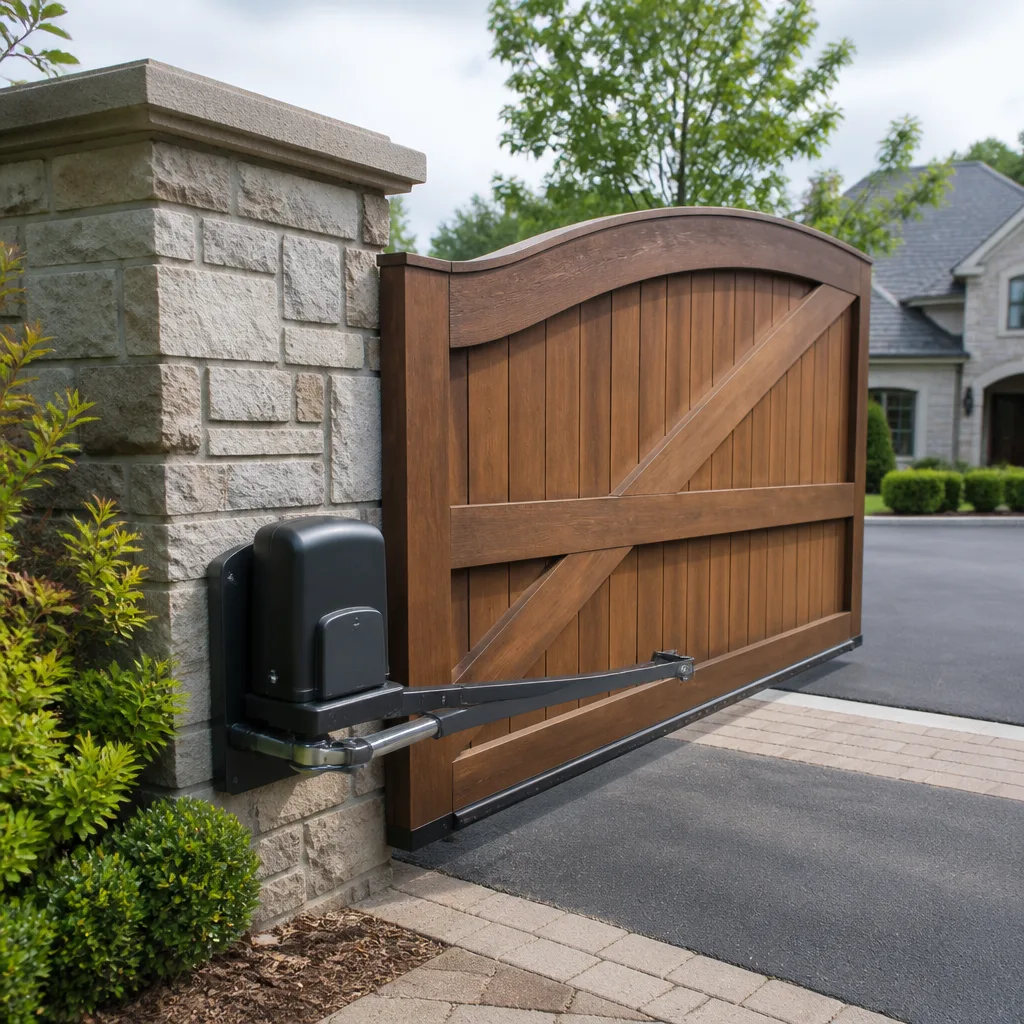 LiftMaster operators
Free on-site gate assessment - hinges, posts, and your LiftMaster or Nice gate operator checked before anything is quoted
The assessment is free and the quote is the invoice.
Get your free estimateDIY vs Professional Gate Installation: What’s Safe to Do Yourself
Here’s a fact that surprises most homeowners: the difference between a gate project you can finish on a Saturday and one that needs a licensed electrician and a welder has almost nothing to do with how handy you are. It has to do with the gate itself. A single-swing manual gate on flat ground is a genuinely reasonable DIY job for someone comfortable mixing concrete. A dual-swing automated gate on a slope, with an underground conduit run and a safety-edge loop, is not, no matter how many videos promise otherwise. This guide lays out the real dividing line, honestly, so you can decide which side of it your project sits on. We see both kinds of projects across Mesquite every week.
Quick Answer
Manual swing and basic sliding gates on level ground with good soil are realistic DIY projects if you can set posts in concrete to depth and hang a gate square. Anything automated, anything on a slope, anything requiring trenching and conduit, and anything over about 6 feet tall or near a property line belongs with licensed trades. In Mesquite, permits and HOA rules often decide the question for you before skill ever enters the picture.
Styles & brands we work with
- Wrought iron
- Wood & steel frame
- Farm & ranch
- Sliding driveway gates
- LiftMaster operators
Table of Contents
- The Project-Type Matrix: What’s Actually DIY
- Tools and Skills: The Real Threshold
- Permits, Code, and Insurance in Mesquite
- The Automation Question: Wiring and Certification
- Scoping and Pricing a Hybrid Approach
- What Each Path Really Costs
- Common Mistakes to Avoid
- When to Call a Professional
The Project-Type Matrix: What’s Actually DIY
Most gate content treats “gate installation” as one thing. It isn’t. Here’s how the configurations break down when we’re being straight with a homeowner about what they can and can’t safely take on themselves.
- Single-swing manual gate, flat ground, standard soil: DIY-appropriate. Two posts, one leaf, a latch. The main risk is a post set too shallow, not electrocution.
- Double-swing manual gate, flat ground: Borderline. Doable if you can keep both leaves level and plumb to each other, which is harder than it sounds and where most first-timers drift.
- Sliding gate, level track, manual: Borderline to DIY. The track foundation is the whole job, and it has to be dead level over its full run.
- Any automated gate: Not DIY. Even low-voltage operator wiring requires understanding the control board, safety reversing devices, and loop or photo-eye placement. This is where we see the most dangerous half-finished projects.
- Any gate on a slope: Not DIY. Gravity load, hinge stress, and operator geometry all change on an incline.
- Anything requiring trenching and conduit: Licensed electrician territory, full stop.
If you’re still deciding which category your project falls into, our Gate Installation in Mesquite page walks through the configurations we handle most often in this valley.
Tools and Skills: The Real Threshold
General tool lists are useless because they don’t tell you when the absence of a tool means failure rather than inconvenience. Here’s the honest threshold: the skills below aren’t “nice to have,” they’re the line between a gate that lasts twenty years and one that sags by year two.
- Can you mix and pour concrete to a specified depth and cure it correctly? In Mesquite’s heat, concrete cures fast and can crack if you don’t manage moisture. Post depth matters more than post height.
- Can you set a post plumb within a quarter inch over its full height? A post that’s off by an inch at the base is off by several inches at the top of a tall gate.
- Can you weld, or do you know a welder who can? Most gate frames need welded hinges, and bolted-on hinges work loose on a heavy leaf.
- Can you read a level, a square, and a string line and trust them over your eye? Sounds trivial. It’s the difference between a gate that swings freely and one that drags.
- Do you own or can you rent a post-hole digger, a concrete mixer, and a decent welder? The rental math often eats the savings on a single gate.
The absence of any one of these doesn’t automatically rule out DIY. But the absence of two or more usually means the project will cost more to fix than to have done right. We’ve repaired plenty of gates in Mesquite where the homeowner had the will but not the concrete depth.
Permits, Code, and Insurance in Mesquite
This is the section most DIY guides skip, and it’s the one that matters most for your wallet. In Mesquite, gate installations near a property line, over a certain height, or with electrical components typically require a permit. Fence and gate height limits, setback rules, and HOA requirements vary by neighborhood, and the rules that apply in a Sun City Mesquite property may not match those in a custom lot off Bunkerville Road.
What does that mean practically?
- Manual gates under the height threshold, set back from the property line: Often no permit needed, but check with the city before you dig.
- Gates over the height threshold, or close to a property line: Permit required, and inspection is usually part of the process.
- Any gate with a motor or low-voltage wiring: Electrical permit required, and the electrical portion must typically be done by a licensed electrician.
The insurance angle is the part homeowners don’t hear until it’s too late. If an unpermitted gate causes property damage, or worse, injures someone, your homeowner’s policy may decline the claim. A permitted, inspected installation is documentation that the work was done to code. That’s a quiet benefit most people never think about until they need it. Our Gate Repair in Mesquite team has seen the aftermath of unpermitted installs more than once, and it’s never a cheap conversation.
The Automation Question: Wiring and Certification
This is where DIY ambitions go to die, and it’s worth understanding exactly why so you’re not surprised halfway through.
Gate operators run on low voltage, which lulls people into thinking they’re safe to wire themselves. Low voltage can still burn out a control board, and a miswired operator can defeat the safety reversing system entirely. That safety system is what stops the gate from closing on a child, a pet, or a car. On brands like LiftMaster and FAAC, the reversing logic depends on correct photo-eye alignment and, often, a loop detector buried in the driveway. Get the loop placement wrong and the gate doesn’t know a car is there.
So what does “certified for the opener brand” actually mean in practice? It means the technician has been trained on that specific manufacturer’s control boards, safety protocols, and diagnostic codes. A LiftMaster operator and a FAAC operator don’t troubleshoot the same way. When we service an automated gate, we’re working from the manufacturer’s actual diagnostics, not guesswork. That’s why our Gate Motor & Opener in Mesquite work covers the brands we’re trained on rather than every brand on the market.
If you want the safety net that comes with professional automation, our Ironworks Gate Co. Mesquite home page connects you with the full scope of what we do. If you’re tackling the gate itself, hire the electrical portion out. It’s the one shortcut that isn’t worth taking.
Scoping and Pricing a Hybrid Approach
The best-value path for a lot of homeowners is the hybrid: you handle site prep and finish work, a specialist handles the structural and electrical portions. Here’s how to scope it honestly.
- You do the demolition and site clearing. Remove the old gate, clear brush, and get the ground ready. This is labor, not skill, and it’s where you save real money.
- You handle the finish work after installation. Paint, stain, landscaping, and gravel around the posts. Anything cosmetic and reversible.
- A specialist sets the posts and hangs the gate. This is where plumbing, depth, and welding decide whether the gate lasts. Don’t split this off.
- A licensed electrician runs the conduit and connects the operator. If you’re automating, this is non-negotiable and usually the single largest line item after the gate itself.
- A specialist commissions the automation. Photo-eyes, loop detectors, and control board programming, done to the manufacturer’s spec.
What does the hybrid realistically save? On a typical Mesquite project, doing your own demo and finish work can shave a meaningful chunk off the labor line, but the structural and electrical pieces stay fixed. The savings come from the parts of the job that don’t require a license, not from cutting corners on the parts that do. A free second opinion on any written estimate is one of the standing offers we make, and it’s a good way to sanity-check a hybrid quote before you commit.
What Each Path Really Costs
Pricing varies by gate style, size, and site conditions, so treat the ranges below as a planning guide rather than a quote. The important thing is understanding which line items you can control and which you can’t.
- DIY manual single-swing gate, materials only: gate kit, posts, concrete, hardware, finish. Labor is yours.
- DIY tool and equipment rental: post-hole digger, mixer, welder rental. This often surprises first-timers.
- Professional manual gate installation: labor and materials, quoted upfront before work starts.
- Permit and inspection fees: varies by scope, always a cost on permitted work.
- Licensed electrician for conduit and operator connection: the largest single line item on any automated project.
- Automation commissioning and safety setup: photo-eyes, loops, control board programming.
Every professional price we quote is settled and agreed before a single bolt is turned. No surprises on the bill. If you want a real number for your specific gate, a free estimate is the fastest path. Our team has up to 13 years of experience, and every job is backed by our written 90-Day Done Right Promise.
Common Mistakes to Avoid
- Setting posts too shallow for Mesquite’s soil. The ground here dries and shifts, and a post that felt solid in spring can loosen by summer. Depth is the whole ballgame.
- Skipping the permit to save time. An unpermitted gate can void insurance coverage on a claim related to the gate. That’s a gamble on the wrong side.
- Wiring the operator yourself because it’s “just low voltage.” A miswired safety reversing system is a genuine danger to anyone in the gate’s path, and it’s the mistake we see most often.
- Ignoring HOA rules until after installation. A finished gate that violates HOA covenants can mean removing it entirely.
- Hanging a gate before the post concrete has fully cured. In Mesquite heat, curing time is compressed, but the concrete still needs the full cure before load goes on it.
- Buying a discount operator with no local parts or service support. A brand nobody in town can service becomes a boat anchor when a control board fails.
- Not trenching conduit deep enough for the driveway crossing. Vehicle load cracks shallow conduit, and pulling new wire through is a miserable job to redo.
When to Call a Professional
Call a professional when the gate is automated, when it sits on a slope, when it needs a trench and conduit, when it’s near a property line or over your local height limit, or when the word “welding” makes you nervous. Also call if you’ve started a DIY install and the gate won’t hang square or the post has begun to lean. Coming back to a half-finished project is a real part of what we do, and there’s no judgment in it. Ironworks Gate Co. Mesquite offers free estimates in Mesquite. Call (844) 797-2573 and a live person will answer, day or night.
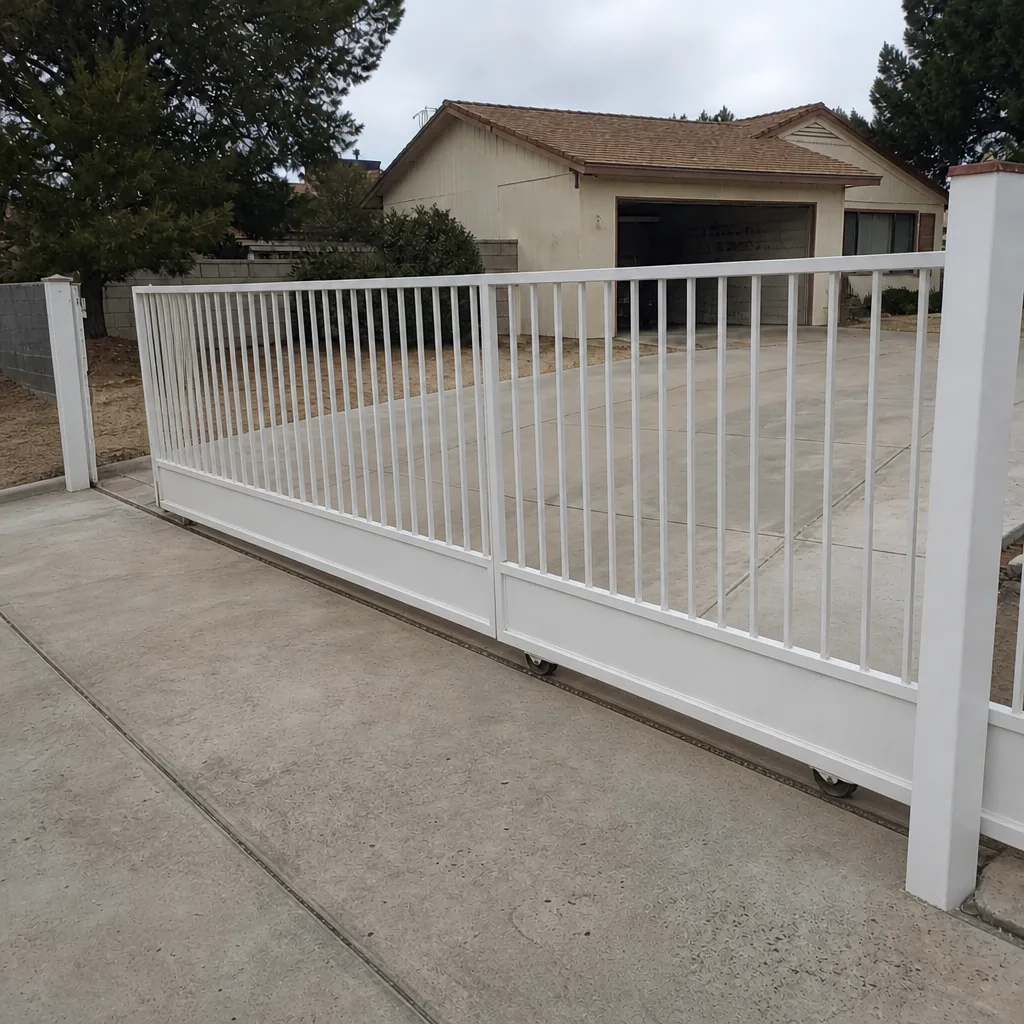
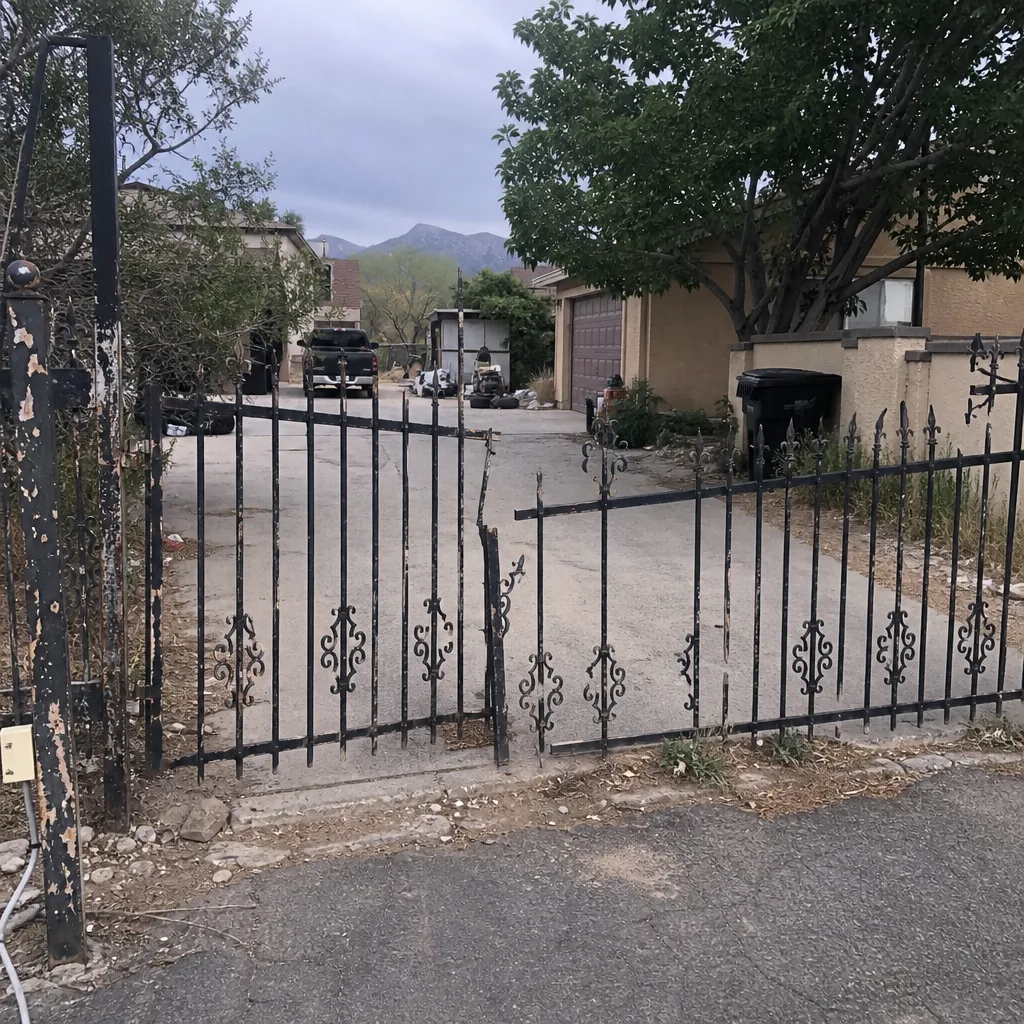
See the difference
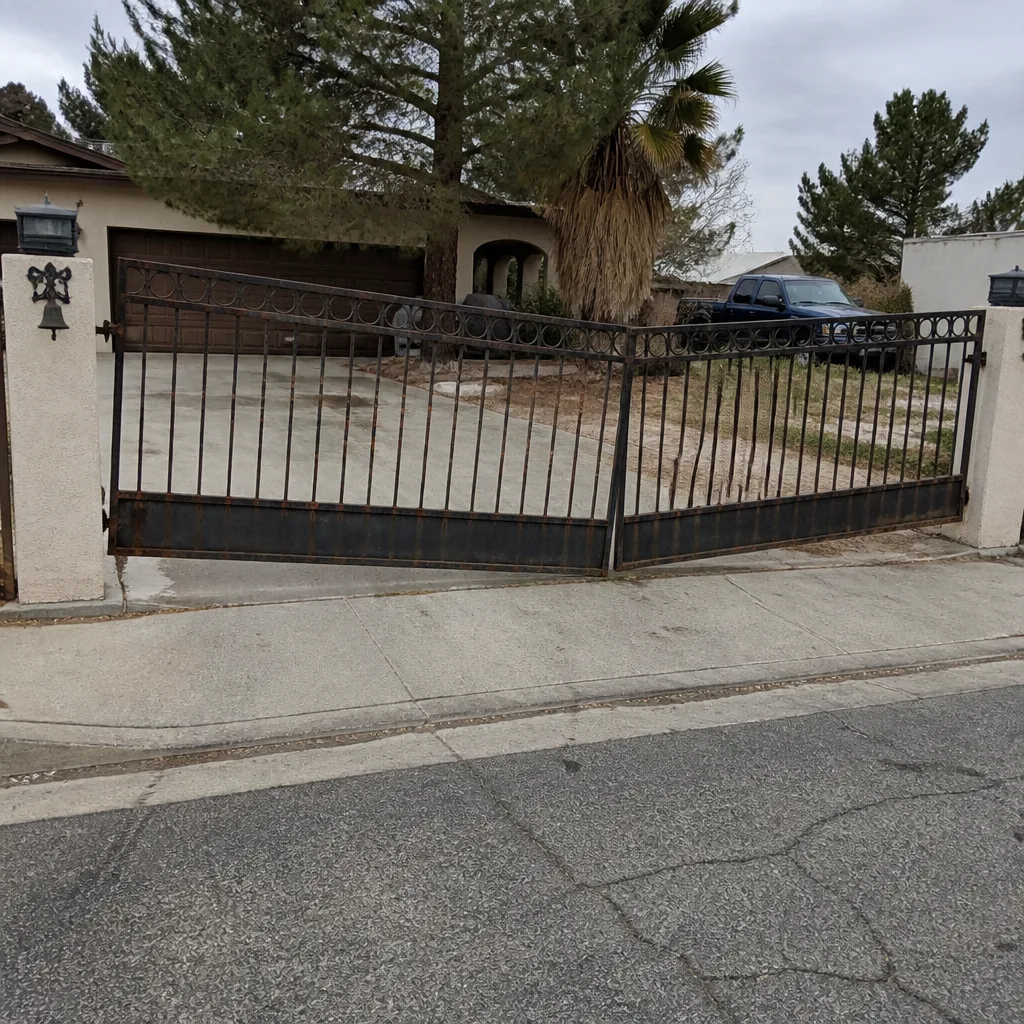 Before
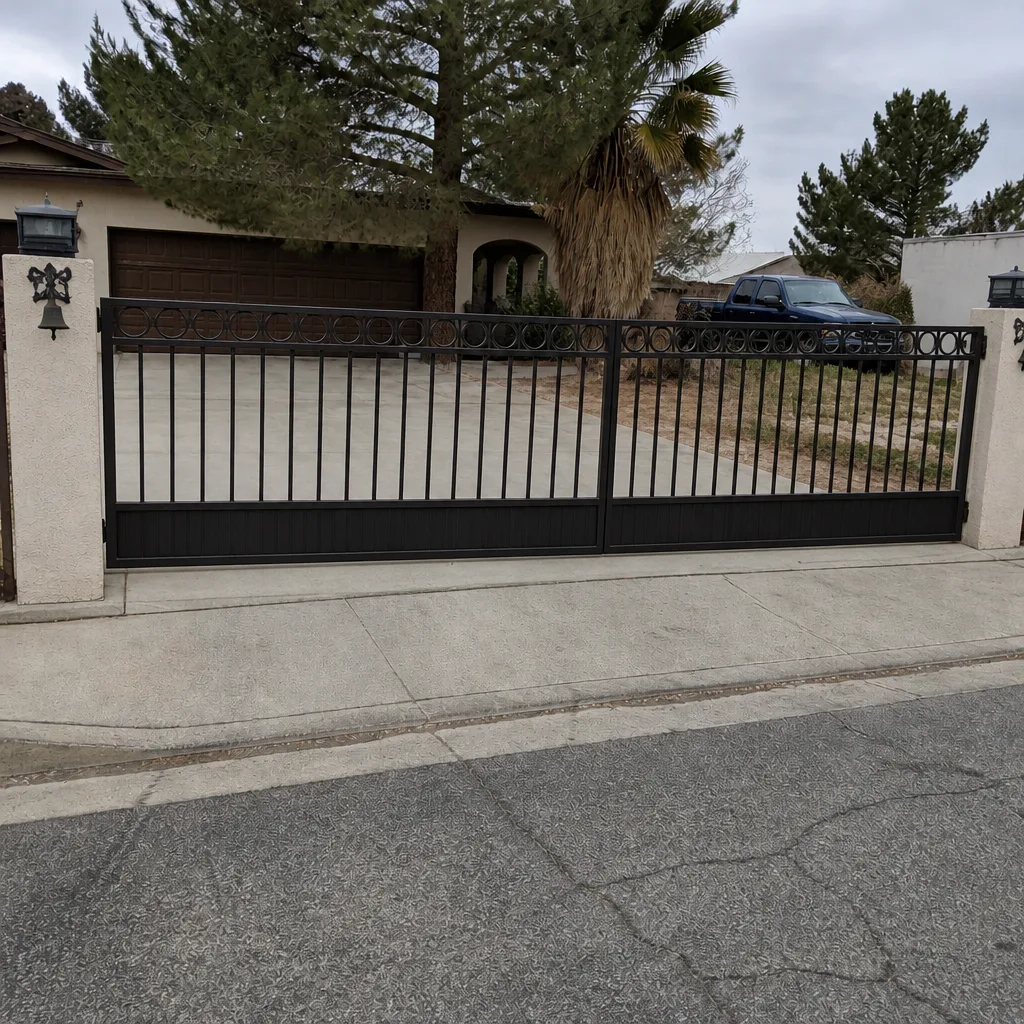 After
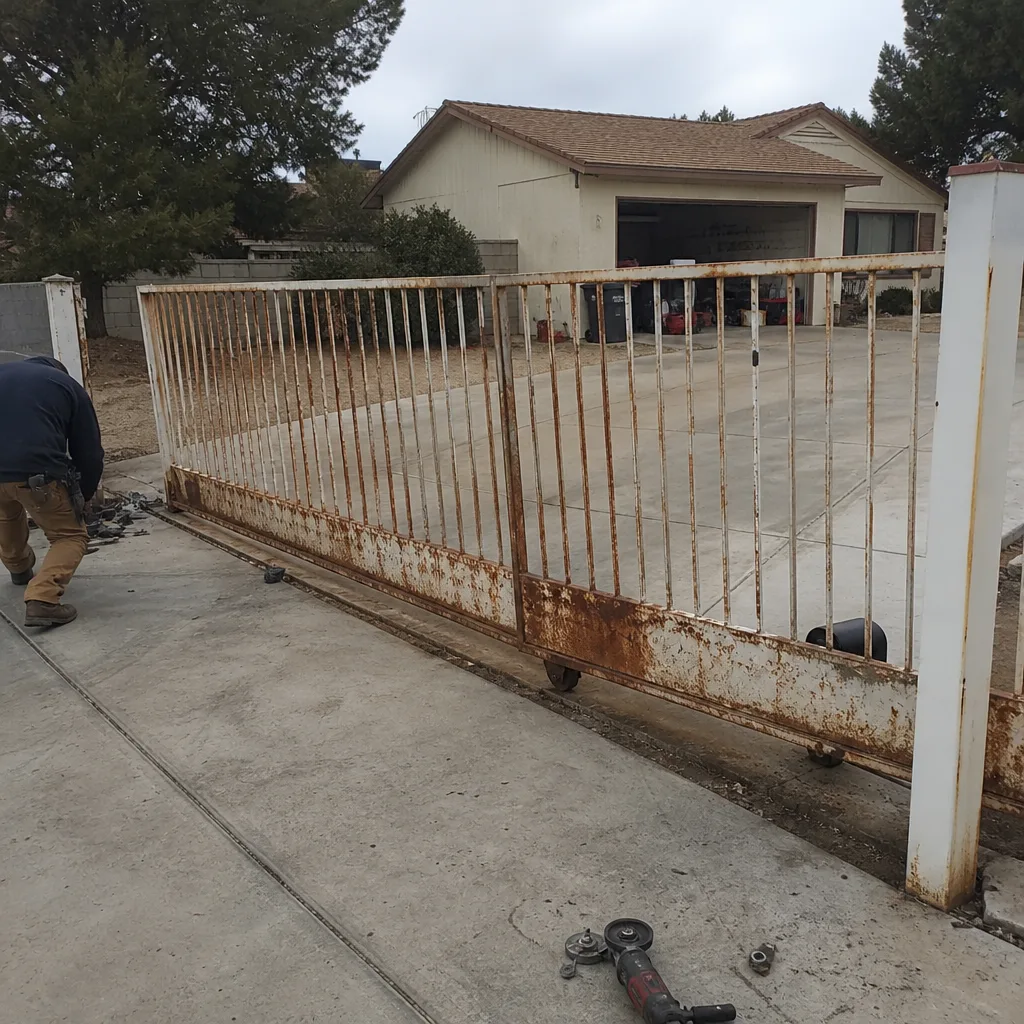 Before
 After
 Before
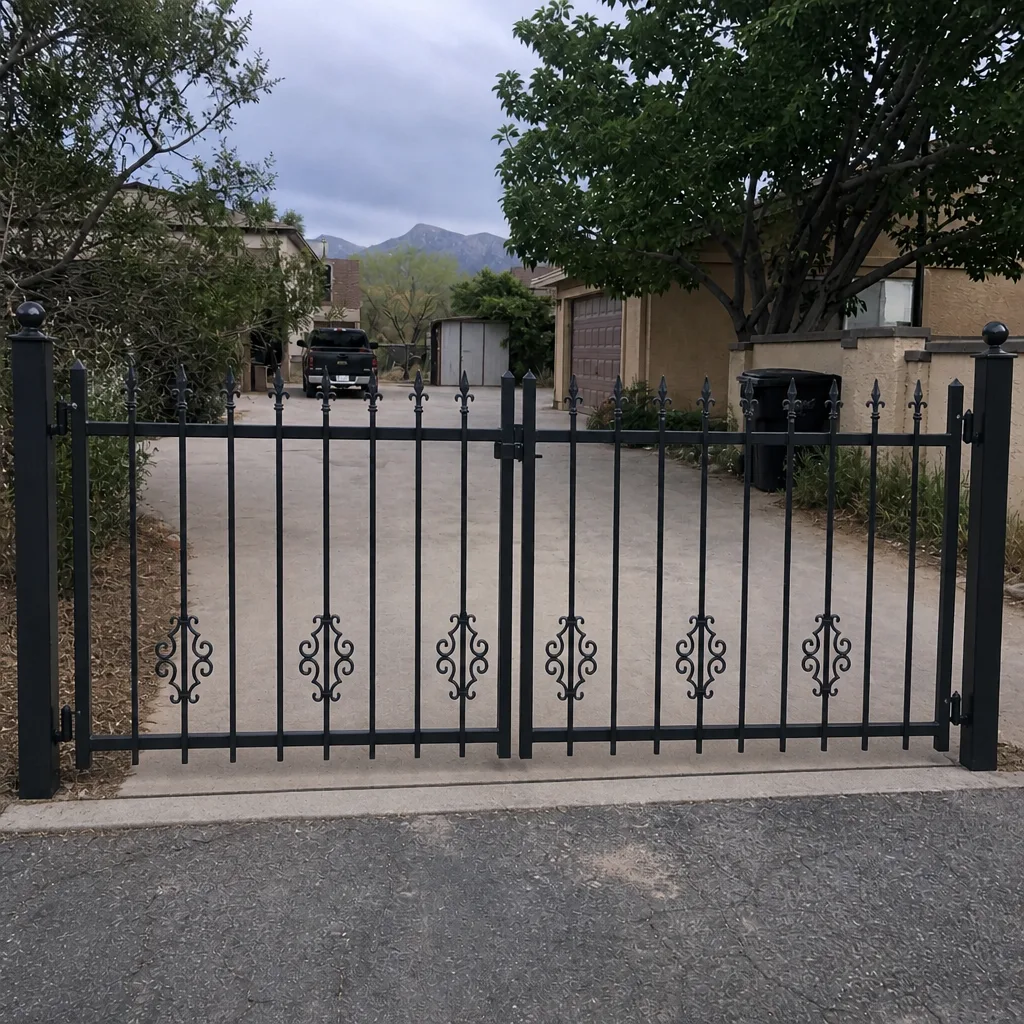 After
Frequently Asked Questions
Yes, for a manual single-swing gate on flat ground with good soil and no permit-triggering height or setback issues. Automated gates, sloped ground, and any trenching work should go to licensed trades regardless of your skill level.
It depends on height, setback from the property line, and whether the gate has electrical components. Manual gates under the threshold and set well back often don’t need one, while automated gates and tall or near-boundary gates usually do. Check with the city before you dig, and remember an unpermitted gate can complicate an insurance claim.
For the conduit run and the electrical connection, yes. For commissioning the automation and getting safety devices like photo-eyes and loop detectors working correctly, you want a technician trained on the specific opener brand. On a LiftMaster or BFT system, that training is what separates a working safety system from a disabled one.
It means the technician has been trained on that manufacturer’s specific control boards, diagnostic codes, and safety protocols. The troubleshooting process differs between a LiftMaster operator and a FAAC operator, and a brand-specific technician cuts out the trial-and-error.
It varies by gate style, size, slope, and whether you’re adding automation. Every price we quote is settled and agreed before work starts, so you’ll have a real number rather than a range. Call (844) 797-2573 for an exact quote, and remember the free second opinion on any written estimate.
Yes, and it’s a smart way to save. Homeowners can handle demo, clearing, and finish work while a specialist handles posts, hanging, and the electrical portion. The savings come from the unlicensed labor, not from cutting corners on the structural or electrical work.
The Bottom Line
The real DIY dividing line isn’t skill. It’s the project type. A manual gate on flat ground is genuinely doable if you can set posts plumb and pour concrete to depth. An automated gate, a sloped site, or anything needing conduit and a permit belongs with licensed trades. The hybrid approach is where the honest savings live: do your own prep and finish work, hire out the structural and electrical. Whatever you decide, get a real number before work starts, and remember your insurance cares about permits. Ironworks Gate Co. Mesquite is here to help you sort out which category your project sits in.
Ready for a straight answer on your gate? Call (844) 797-2573 for a free estimate. We will be there when we say, and every job is backed by our written 90-Day Done Right Promise.
Written by the team at Ironworks Gate Co. Mesquite.