
Last updated November 17, 2026
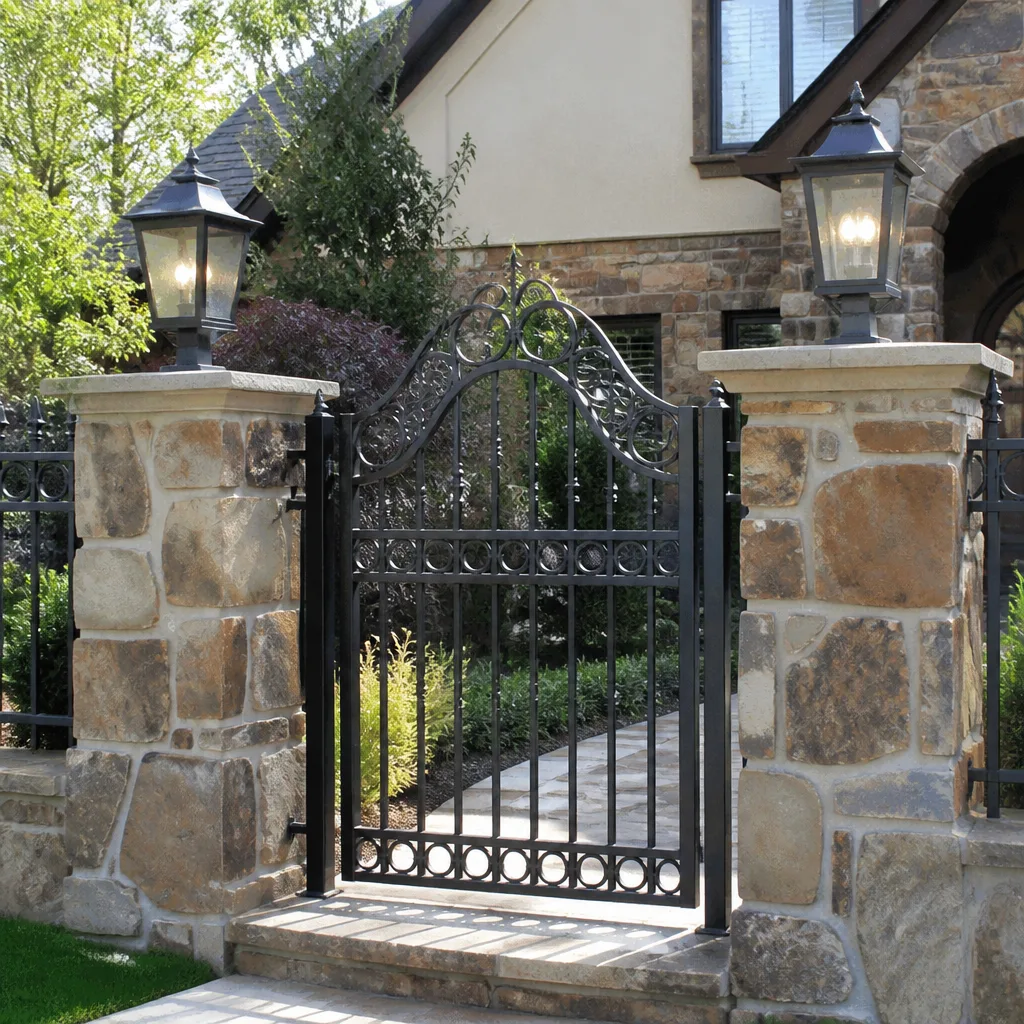 Wrought iron
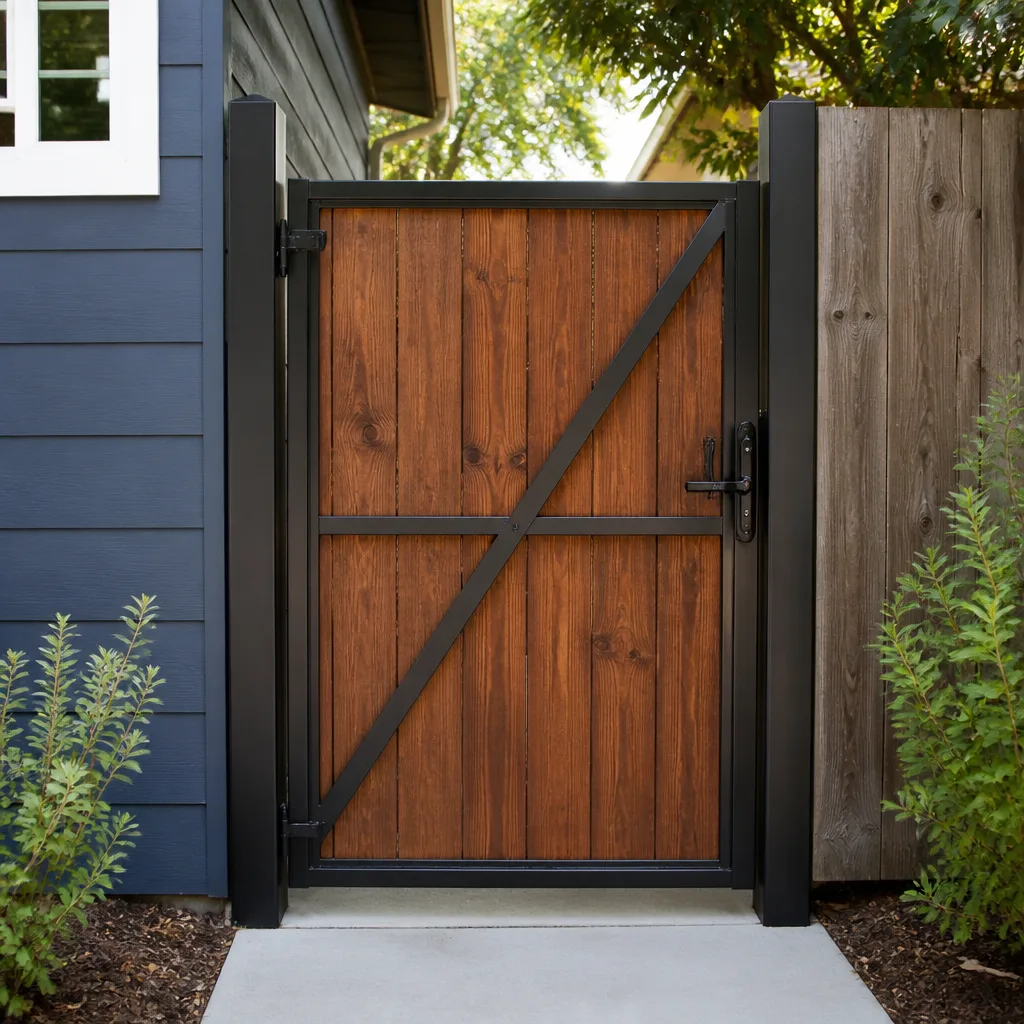 Wood & steel frame
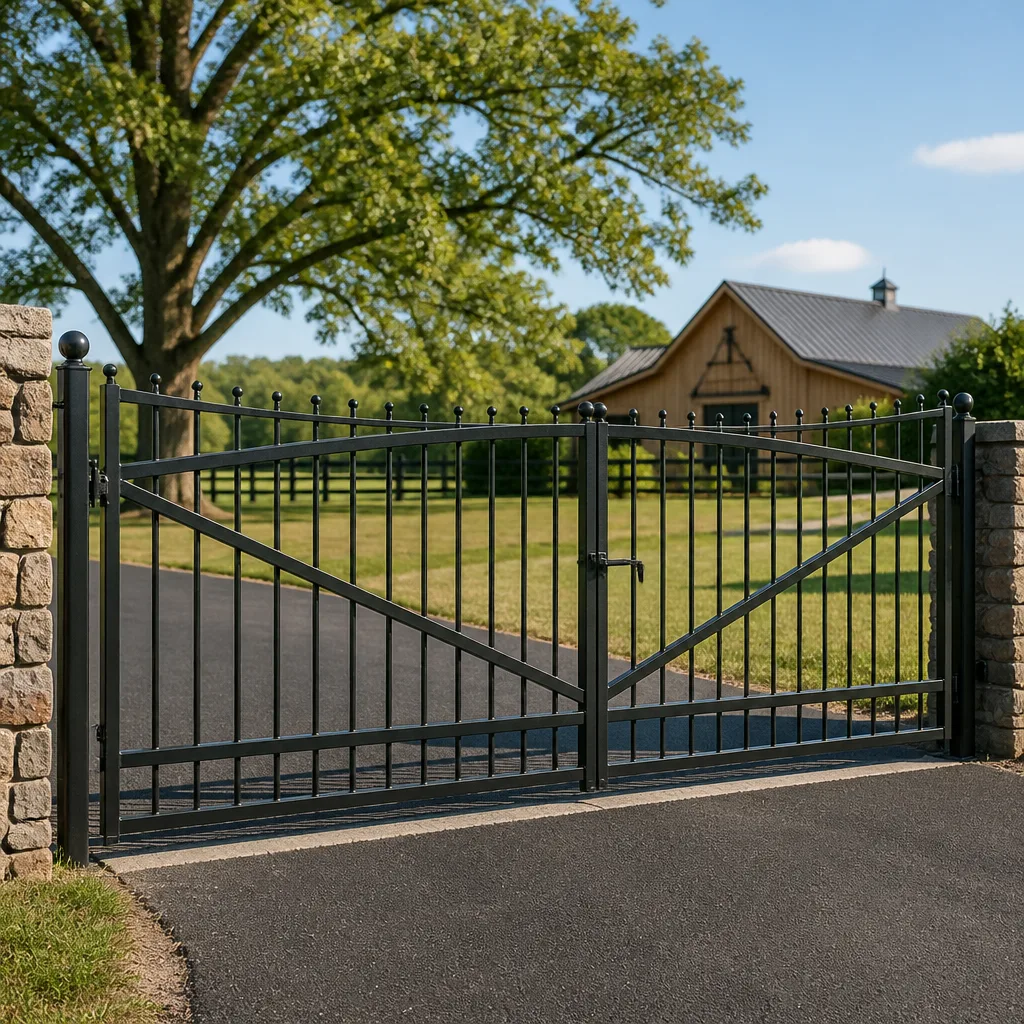 Farm & ranch
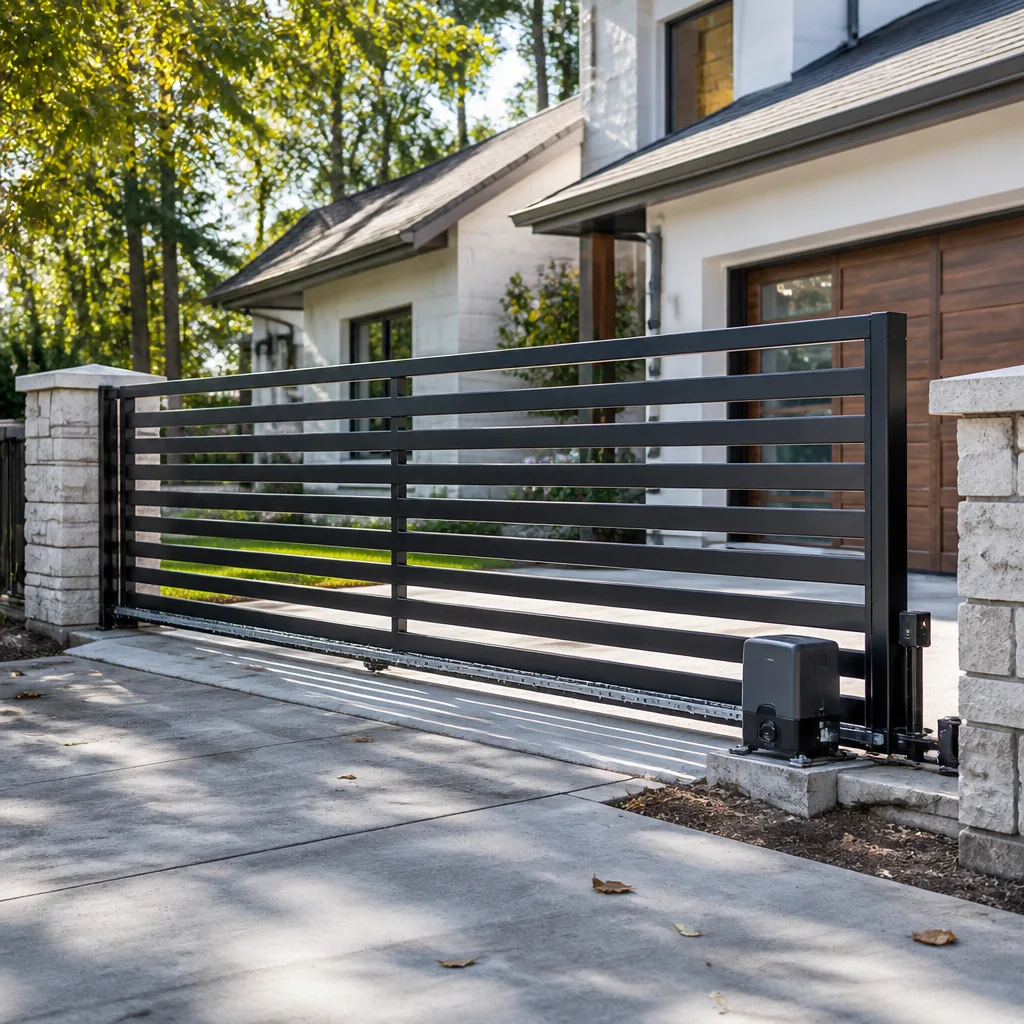 Sliding driveway gates
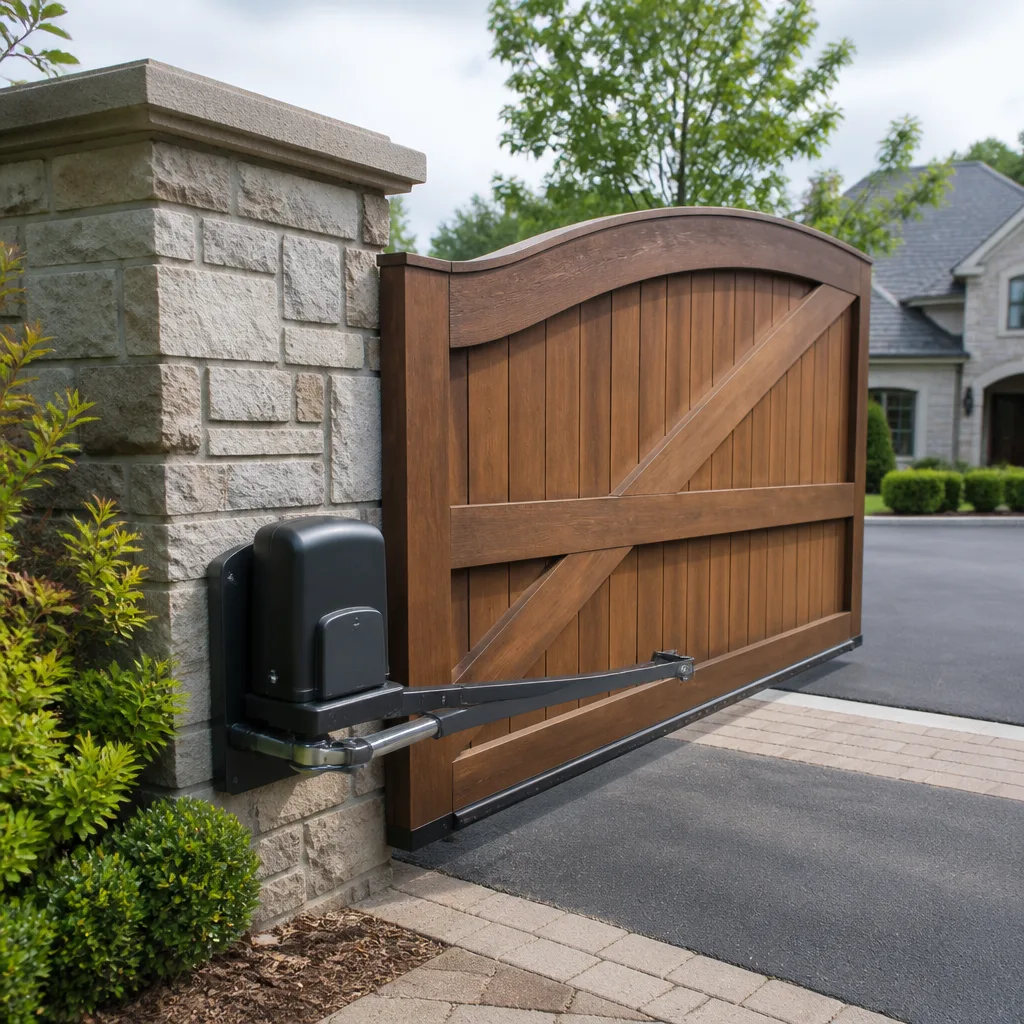 LiftMaster operators
Free on-site gate assessment - hinges, posts, and your LiftMaster or Nice gate operator checked before anything is quoted
The assessment is free and the quote is the invoice.
Get your free estimateGate Installation Troubleshooting: Common Problems and How to Fix Them
A gate that starts dragging on the driveway six months after installation wasn’t installed wrong by accident. It was installed with posts set too shallow, concrete mixed too wet, or footings poured without proper curing time. The same problem will keep coming back until someone corrects the root cause instead of patching the symptom. We’ve seen this pattern hundreds of times on driveways across Mesquite, and it’s almost always traceable to a specific shortcut taken on installation day. This guide walks through the five most common post-installation problems, how to tell a footing issue from a hinge issue from a frame warp, why automation faults show up weeks later, and what the timeline of a failure tells you about who should be fixing it.
Quick Answer
Most gate installation problems fall into five categories: sagging gates from shallow footings, misalignment from hinge wear or frame warp, automation faults from wiring or sensor placement, dragging from settling posts, and premature rust or binding from undersized hardware. The fix depends entirely on the root cause, not the visible symptom. Diagnose the cause first, then correct it once. Patching a symptom on a bad footing just buys you another six months.
Styles & brands we work with
- Wrought iron
- Wood & steel frame
- Farm & ranch
- Sliding driveway gates
- LiftMaster operators
Table of Contents
- The Five Most Common Problems After Installation
- Diagnosing Alignment Problems: Footing, Hinge, or Frame Warp?
- Automation Problems That Appear Weeks Later
- The 90-Day Rule vs. the 1-to-3-Year Timeline
- Why Mesquite Conditions Accelerate Certain Failures
- How to Document an Installation Problem Effectively
- Common Mistakes to Avoid
- When to Call a Professional
The Five Most Common Problems After Installation
In our experience working driveways throughout Mesquite, the same five problems come up again and again. Each one has a specific installation cause, and each one has a specific correction. Here they are in order of how often we see them:
- Gate sags and drags on the ground. Almost always a footing problem. The post was set too shallow for the gate’s weight, or the concrete was mixed too wet and cured weak. Sandy soil common on the east side of Mesquite makes this worse if the hole wasn’t dug deep enough to hit stable ground.
- Gate won’t latch or swings out of alignment. Usually hinge wear, but sometimes a frame warp from a gate built with too thin a tube for its span. The fix for each is completely different.
- Automation opens unevenly, reverses mid-travel, or ignores the remote. Programming error, sensor placement error, or a wiring fault. Distinguishing between the three is the whole job. We’ve written more about this on our Gate Motor & Opener in Mesquite page.
- Gate binds at the hinges or grinds mid-swing. Undersized hinges, incorrect hinge spacing, or a frame installed slightly out of square.
- Premature rust at welds or powder coat failure. A weld that wasn’t dressed and primed before coating, or a coating applied in the wrong conditions. Mesquite’s heat and dust accelerate the failure once it starts.
Notice the pattern: none of these are mysteries. Each traces back to something a careful installer would have caught during the build or the first adjustment.
Diagnosing Alignment Problems: Footing, Hinge, or Frame Warp?
Homeowners often describe an alignment problem the same way: “the gate doesn’t line up anymore.” But footing failure, hinge wear, and frame warp look similar and need completely different corrections. Here’s how to tell them apart before anyone touches the gate.
Step 1: Check the post first
Set a level against the gate post in two directions. If the post has moved off plumb, you have a footing issue. On a properly installed post in Mesquite, the post should be dead vertical. Any lean means the concrete didn’t cure properly or the hole wasn’t deep enough.
Step 2: Test the hinge play
Lift the gate at the latch end by hand. If the gate moves up and down more than a quarter inch, the hinges have worn or were undersized from day one. A small amount of play is normal on a heavy gate; noticeable play means you need hinge replacement, not post work.
Step 3: Measure the gate frame for square
If the post is plumb and the hinges are tight but the gate still binds, the frame has warped. Measure the two diagonals of the gate. On a square gate they’ll match. A difference of more than half an inch means the frame itself has twisted, often from a tube too thin for the span or a weld that was pulled off-square during fabrication.
If you’re seeing all three at once, the gate was probably installed underpowered from the start. Our Gate Repair in Mesquite team can measure the whole assembly and give you an honest answer on which correction actually fixes the problem.
Automation Problems That Appear Weeks Later
Automation faults that show up after installation come from three places, and the symptom often looks the same. The gate opens partway and reverses. The remote stops working. The operator runs slowly. You need to know which of the three is actually happening before you call anyone.
Programming error
Programming errors usually appear within the first week, and they hit specific functions: travel limits off, remote not taught, obstruction sensitivity set too sensitive. A quick re-teach of the operator usually fixes it. This is the least serious of the three.
Sensor placement error
Loop detectors, safety edges, and photoelectric eyes that were set in the wrong position will trigger random stops and reversals weeks after installation. The tell is that the fault is intermittent and often weather-related. A drive approach loop set too close to the gate triggers on passing vehicles. A safety edge wired to the wrong input trips on any sudden shadow. Move the sensor, not the operator.
Wiring fault
Wiring faults show up as a dead operator, an operator that runs one direction, or a control that works by button but not remote. Loose connections at the terminal block, a bad splice at the burial point, or a wire nicked during trenching are the usual causes. This is the one that most often benefits from a trained eye because the fault is usually invisible until you start tracing it. We’re trained on LiftMaster, FAAC, BFT, and Mighty Mule automation, so we can identify the fault without pulling in a specialist from out of town.
On every brand we service, the pattern is the same: programming error resolves in one visit, sensor placement error resolves in one visit, wiring fault resolves in one visit if the technician traces it properly the first time.
The 90-Day Rule vs. the 1-to-3-Year Timeline
The timeline of a failure tells you almost everything about who is accountable for fixing it. This is the single most useful diagnostic tool a homeowner has, and almost nobody uses it.
Failures inside 90 days = installation error
If the gate sags, stops, binds, or misbehaves inside the first 90 days, the installation was wrong. There was no time for the material to wear out. The installer owes you the correction, and a professional will offer it in writing without arguing about it. Our 90-Day Done Right Promise exists for exactly this reason: if it’s not right, we come back and make it right, every time, on every job.
Failures at 1 to 3 years = material specification error
If the gate fails between one and three years, the installation held but the materials were underspecified. Undersized hinges, a powder coat that was wrong for Mesquite’s sun, or a gate frame tube too thin for the span. This is the most common window in Mesquite, and it’s where most disagreements happen because the installer can legitimately say the gate “worked” for two years.
Failures after 5 years = normal wear
Hinges, remotes, and batteries wear out. This isn’t installation error. It’s maintenance. Our Ironworks Gate Co. Mesquite home page covers the tune-up schedule we recommend, and an $89 Seasonal Tune-Up catches most of these before they become repairs.
Why Mesquite Conditions Accelerate Certain Failures
Not every installation problem is a shortcut. Some are simply the result of Mesquite conditions working harder on a gate than they do in other climates. Knowing which failures are local to Mesquite helps you decide whether to ask for a repair or ask for a specification change.
- Soil settlement on the east side of town. Sandy, fast-draining soil common on the east side of Mesquite settles differently than the clay-heavy yards you’ll find in some of the older neighborhoods. Post holes need to go deeper to hit stable ground, and shortcuts show up as a sagging gate within a year.
- Summer heat and powder coat failure. Surface temps on a west-facing gate easily exceed 140 degrees. Powder coats that would last a decade on the coast can fail in three or four summers here if the weld wasn’t dressed properly before coating.
- Dust and hinge wear. Mesquite’s spring winds push fine grit into every hinge and pivot. Gates that call for monthly hinge oiling in cooler climates need it more often here. Skipping that maintenance shortens hinge life by years.
- Monsoon grit in operator tracks. Sliding gates on tracks collect grit during summer storms. Regular operator cleaning is not optional in Mesquite; near the washes that run through town, it’s what keeps the operator from seizing.
None of those are installation errors in themselves. But a properly installed gate here accounts for all four, and a gate that fails early usually didn’t.
How to Document an Installation Problem Effectively
When you go back to an installer, how you document the problem is almost as important as what the problem is. A vague complaint gets a vague response. A specific complaint with the right evidence gets a correction. Here’s what matters:
- Date the failure started. Write down the first day you noticed the problem. “It started sagging around June” gets you nothing. “It started dragging on June 12, about five months after installation” gets you a clear answer on whether it’s inside a guarantee window.
- Photograph with a level or tape in frame. A photo of a sagging gate is a complaint. A photo of a level against the post showing it off-plumb by an inch is evidence. Include your tape measure in close-ups of hinge play.
- Keep the original invoice and any written guarantee. If your installer promised a guarantee, it should be in writing. If it isn’t, that’s a red flag you should note for next time.
- Describe the symptom, not the diagnosis. Tell them what the gate does, not what you think is wrong with it. Let the technician do the diagnosing.
- Ask for a written response. A professional will offer one without being pushed. If they only want to talk it through on the phone, ask them to confirm the plan in writing.
When we evaluate an installation problem in Mesquite, the pattern is that a homeowner who brings those five things to the conversation gets a fix scheduled in one visit. Homeowners who bring “it isn’t working” tend to go two or three rounds before anyone addresses the real problem.
Common Mistakes to Avoid
- Patching a footing failure with shims or screw adjusters. Shims under a gate post buy a few months, but they don’t correct a shallow footing. The post will keep settling, and the shims will keep needing adjustment until someone pulls and repours the footing. In Mesquite’s sandy soil on the east side, this cycle repeats until the post is set to the correct depth.
- Assuming every automation problem is a programming error. Homeowners often re-teach the operator or reset the remote and then wonder why the fault returns. If a reset fixes the problem for a week and then it comes back, you’re chasing a wiring or sensor problem, not a programming one.
- Accepting a verbal guarantee. If a Mesquite installer says “call me if there’s any trouble,” that isn’t a guarantee. A written guarantee tells you exactly what’s covered and for how long, and it’s the only thing that holds up when you need to make a call about accountability.
- Skipping the seasonal tune-up. A gate that goes years without hinge oiling or operator cleaning will wear out sooner than it should, and the resulting problems look like installation failures to a homeowner but aren’t. In Mesquite’s dust, that tune-up is what keeps a gate on its original hardware.
- Letting a small misalignment run. A gate that rubs on the ground for a month wears through the coating and starts rust at the exact point where a weld was already under stress. Small alignment problems in Mesquite turn into frame warps within a single summer if they aren’t corrected.
- Hiring a general handyman for gate automation wiring. Low-voltage automation wiring is not the same as household wiring, and a gate installer who isn’t trained on the specific operator brand can introduce a fault while trying to fix one. Every major brand we service has its own terminal configuration and its own safety loop logic.
- Ignoring a repeated failure inside the first year. If the same problem comes back three times in twelve months, the installation is wrong, not the gate. That’s the point at which the correction has to be the whole assembly, not a patch.
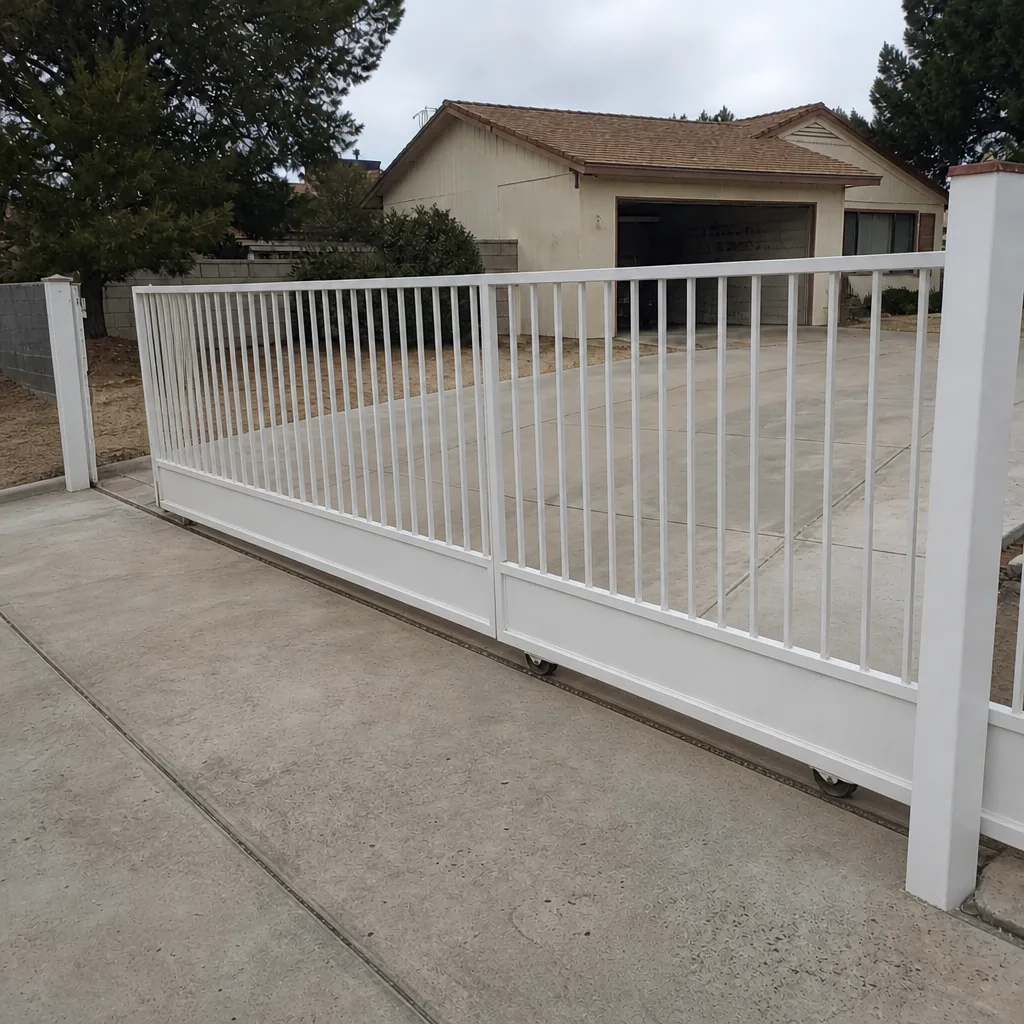
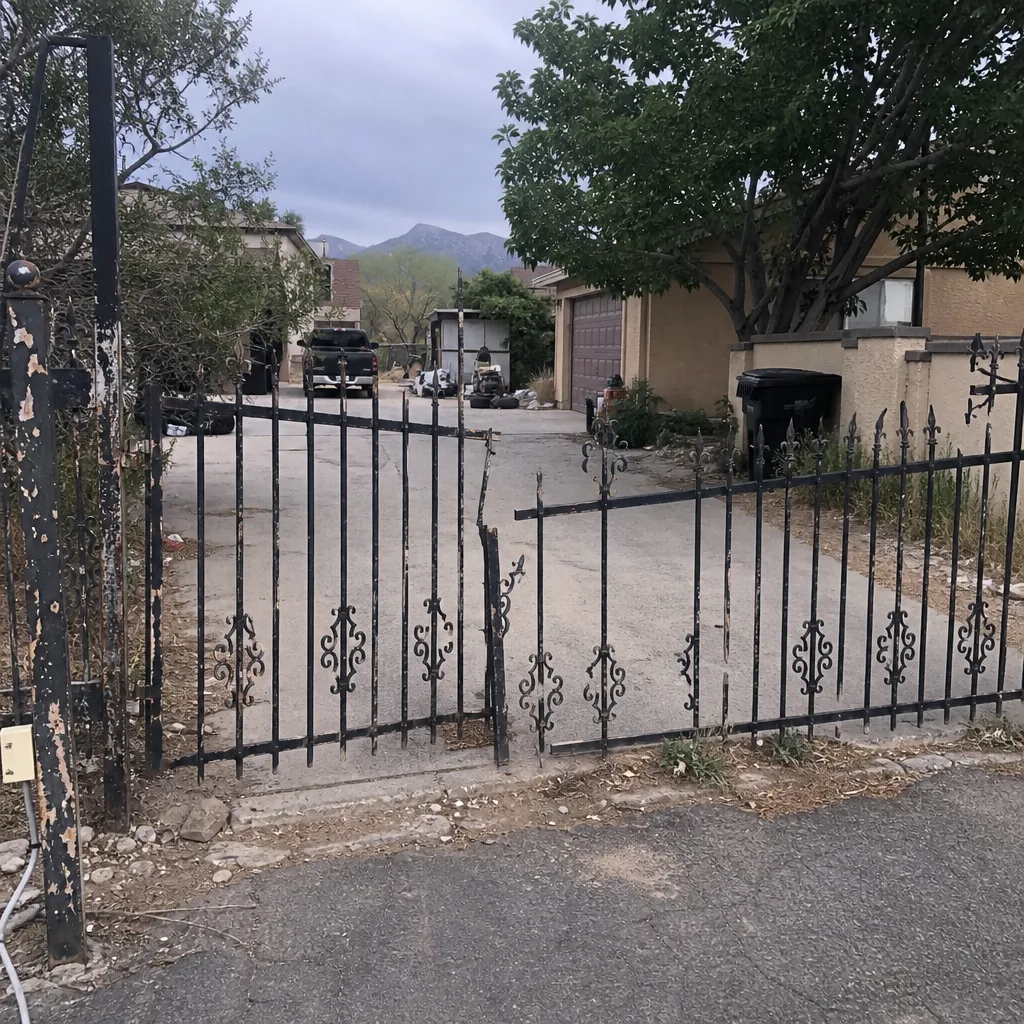
See the difference
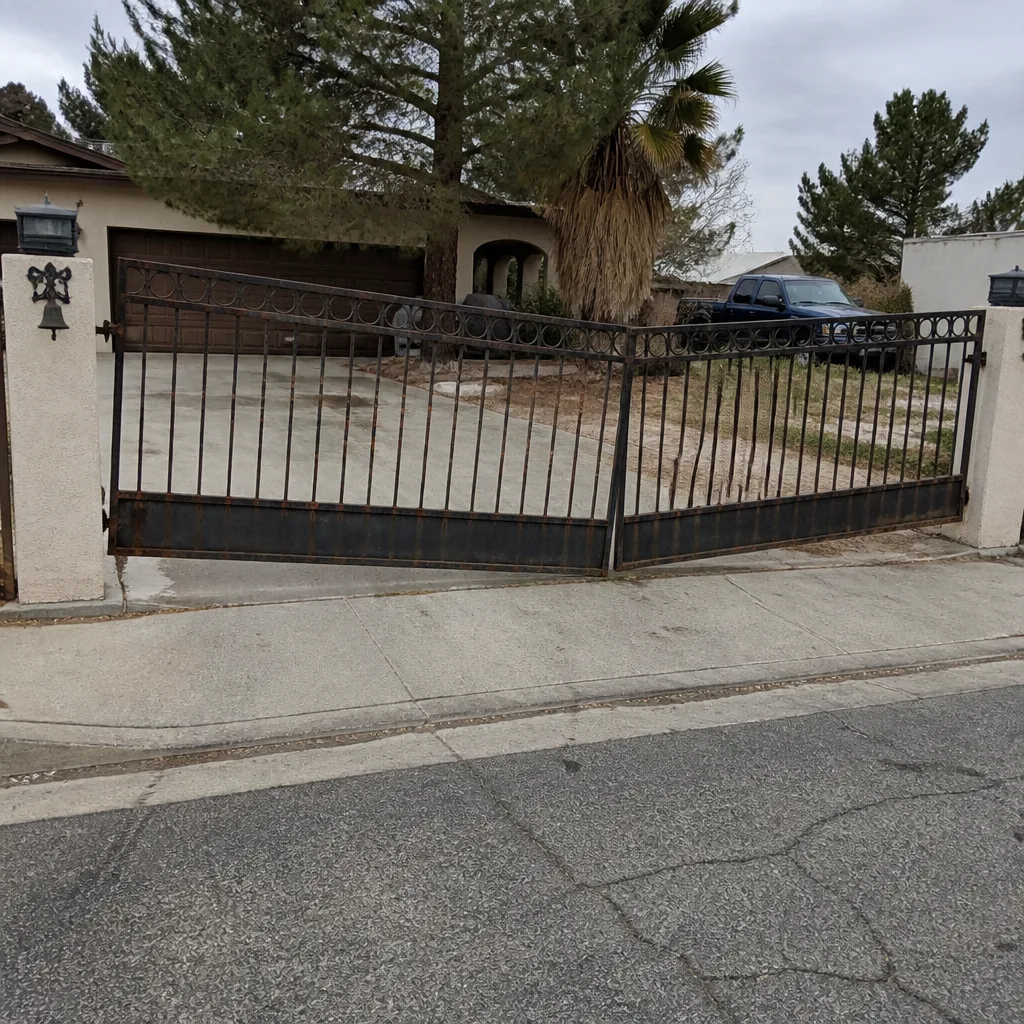 Before
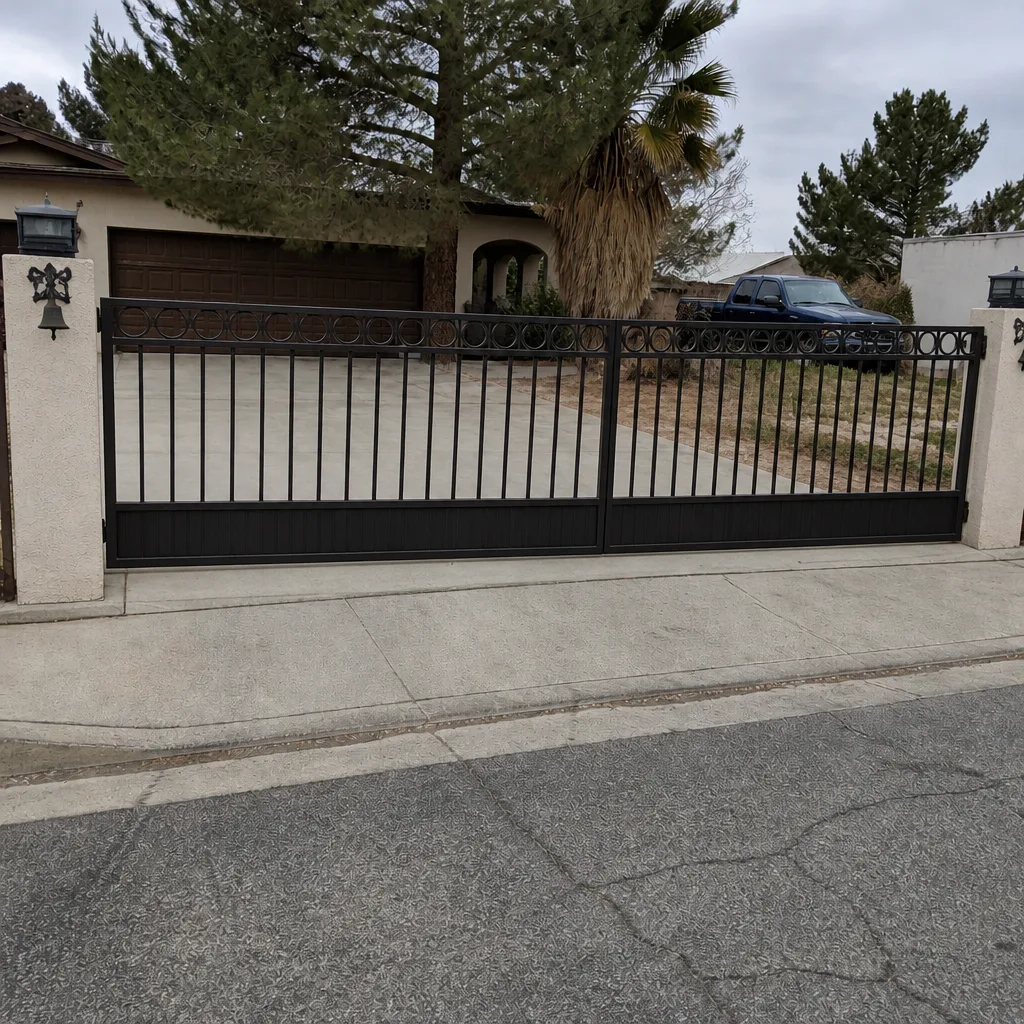 After
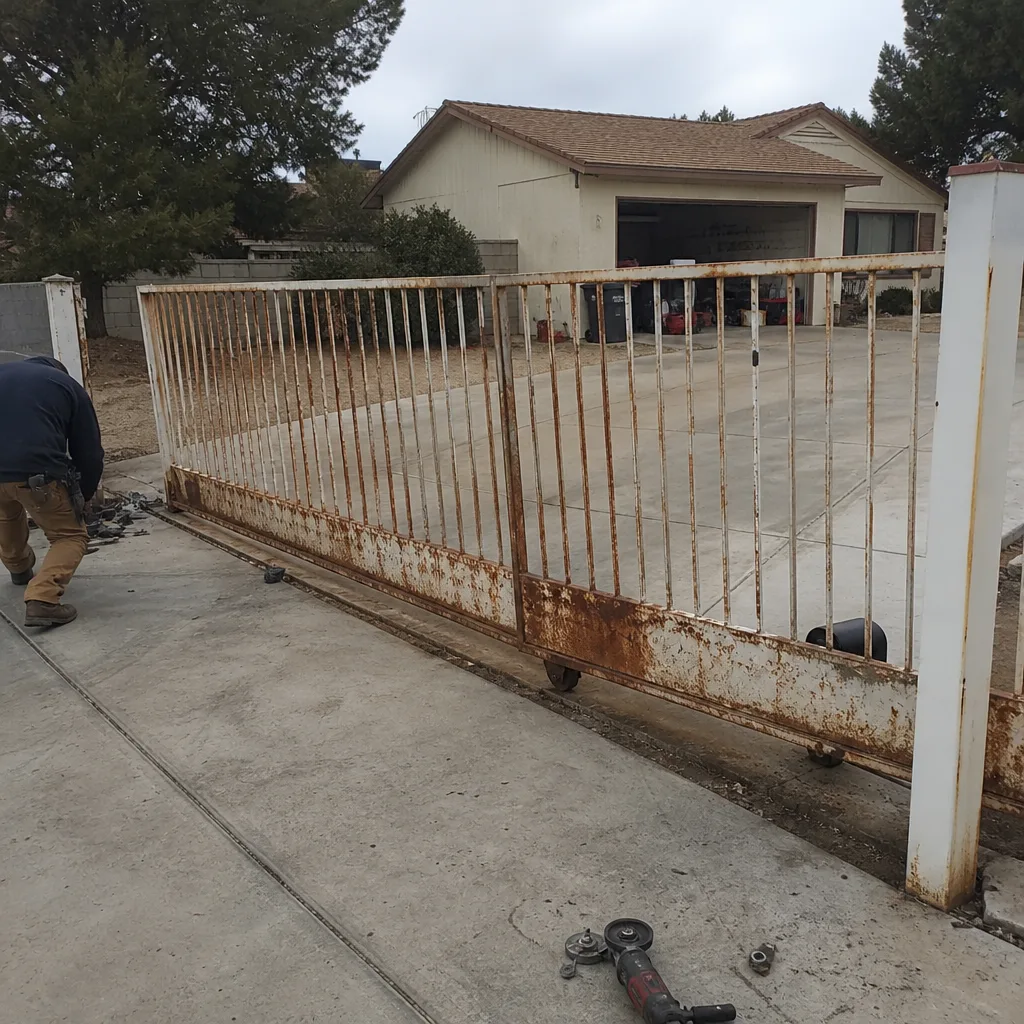 Before
 After
 Before
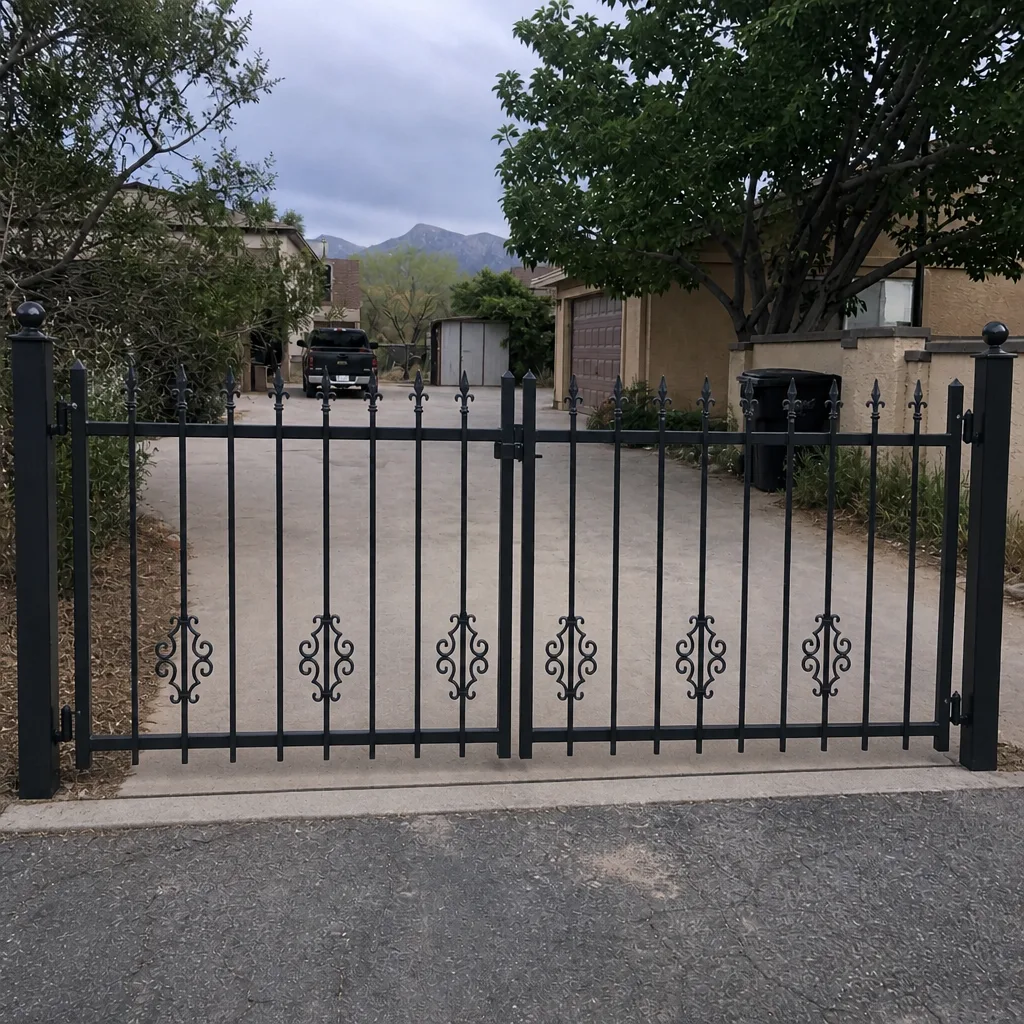 After
When to Call a Professional
Some installation problems are cosmetic. Most aren’t. Call a professional when a gate post has moved off plumb; when the gate frame has visibly warped; when automation is reversing, running one direction, or failing to respond to the remote; when a weld is cracked or a hinge mount is pulling free of the post; or when the same problem has come back after two attempted fixes. Those are the cases where a patch just hides the real cause. Also call if you’re not sure: a five-minute diagnosis beats six months of guessing. Ironworks Gate Co. Mesquite offers free estimates in Mesquite and a Free Second Opinion on Any Written Estimate if you’ve already had a fix quoted elsewhere. Call (844) 797-2573 and a live person will answer, any hour, any day.
Frequently Asked Questions
Time is the answer. If a gate sags, binds, or stops working inside the first 90 days, that’s installation error because nothing has had time to wear out. Between one and three years, it’s usually a material specification problem: undersized hinges, a frame tube too thin for the span, or a coating not suited to Mesquite’s heat. Past five years, hinge wear and battery replacement are normal maintenance and not the installer’s responsibility.
Almost always a shallow footing, concrete mixed too wet, or a post that wasn’t set to stable ground in Mesquite’s sandy soil on the east side of town. The gate itself is usually fine. The post has settled slightly, which throws the hinges out of plumb and drags the gate on the driveway. The correction is to reset or repour the footing, not to shim the gate. Call (844) 797-2573 for an exact quote on the correction, and the estimate is free.
In our experience, a gate that reverses mid-travel with a functioning remote usually has a sensor placement problem or an obstruction sensitivity set too high. Loop detectors picking up passing traffic, safety edges that were mounted in the wrong spot, or photoelectric eyes that have drifted out of alignment all cause exactly this symptom. Programming is occasionally the cause, but only when the fault is consistent and repeatable on the same travel. Intermittent reversal almost always points to a sensor. Call (844) 797-2573 and we’ll diagnose it on the first visit.
A full installation includes a post hole sized and set to depth for the gate’s weight, concrete mixed to the correct ratio and given the right curing time before the gate is hung, hinges sized for the gate’s span, a square frame, proper hinge lubrication before the first cycle, and automation programming tested for full travel in both directions. Shortcuts show up as shallow holes, wet-mixed concrete, undersized hinges, or an un-squared frame. If your installer can’t tell you the depth of the hole and the concrete ratio, that’s a shortcut. Call (844) 797-2573 for a free installation quote in Mesquite.
Yes. Gate automation includes the low-voltage power run, the safety edges, photoelectric eyes, and the loop detectors, plus operator programming tested against the actual driveway. This is the part of the job most likely to fail weeks after installation if it was wired or placed in a hurry, and it’s the part we diagnose in one visit because we’re trained on LiftMaster, FAAC, BFT, and Mighty Mule automation. Call (844) 797-2573 to schedule a free measure and a written price.
A written response and a scheduled correction, without arguing. If the installation failed inside the first 90 days, the installer should be back to correct the root cause, not apply a patch. Anything less than a written commitment to fix it and a scheduled visit is a red flag. Our 90-Day Done Right Promise is exactly that commitment: written, no paperwork, no arguing. If your current installer won’t put their guarantee in writing, call (844) 797-2573 and we’ll give you a second opinion on any written estimate at no charge.
The Bottom Line
Gate installation problems aren’t mysteries. They’re the predictable result of specific shortcuts: shallow footings, wet-mixed concrete, undersized hinges, un-squared frames, poorly placed sensors, and rushed wiring. The right way to handle one is to diagnose the root cause, correct it once, and get the correction in writing. Use the 90-day rule to know who’s accountable, use the Mesquite-specific factors to know which failures your local conditions are accelerating, and keep the records a professional can act on. If you’ve got a gate problem in Mesquite, we’re happy to look at it. Call (844) 797-2573 for a free estimate, same-day scheduling on repairs, and a written guarantee on every job.
Written by the team at Ironworks Gate Co. Mesquite.