
Last updated November 17, 2026
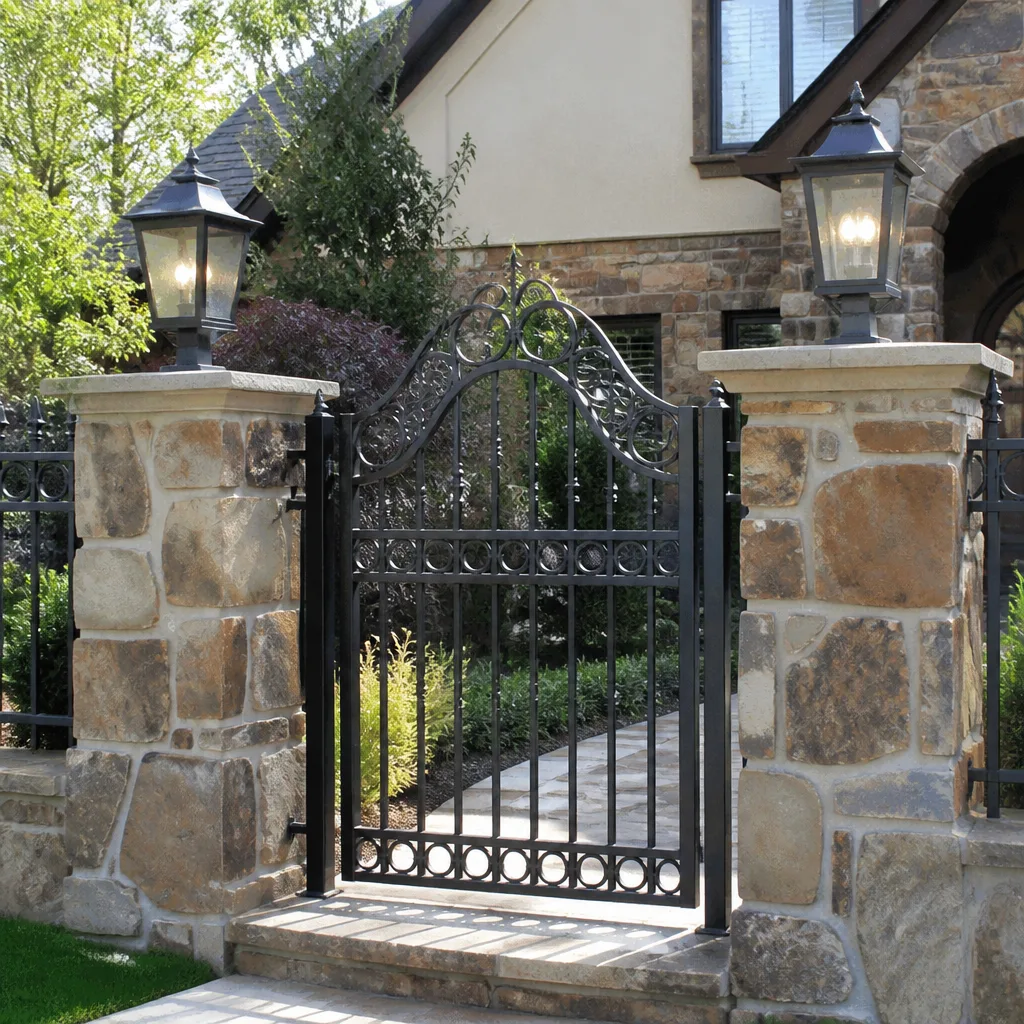 Wrought iron
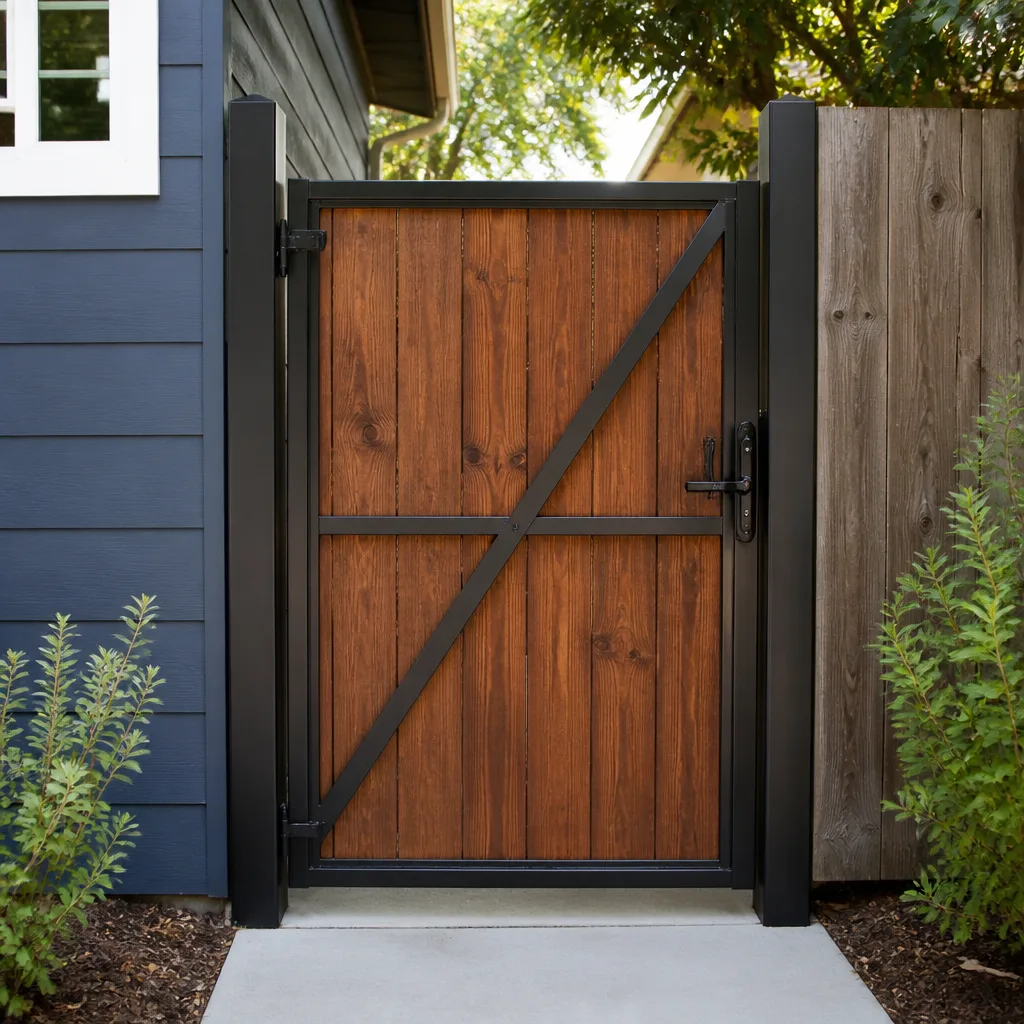 Wood & steel frame
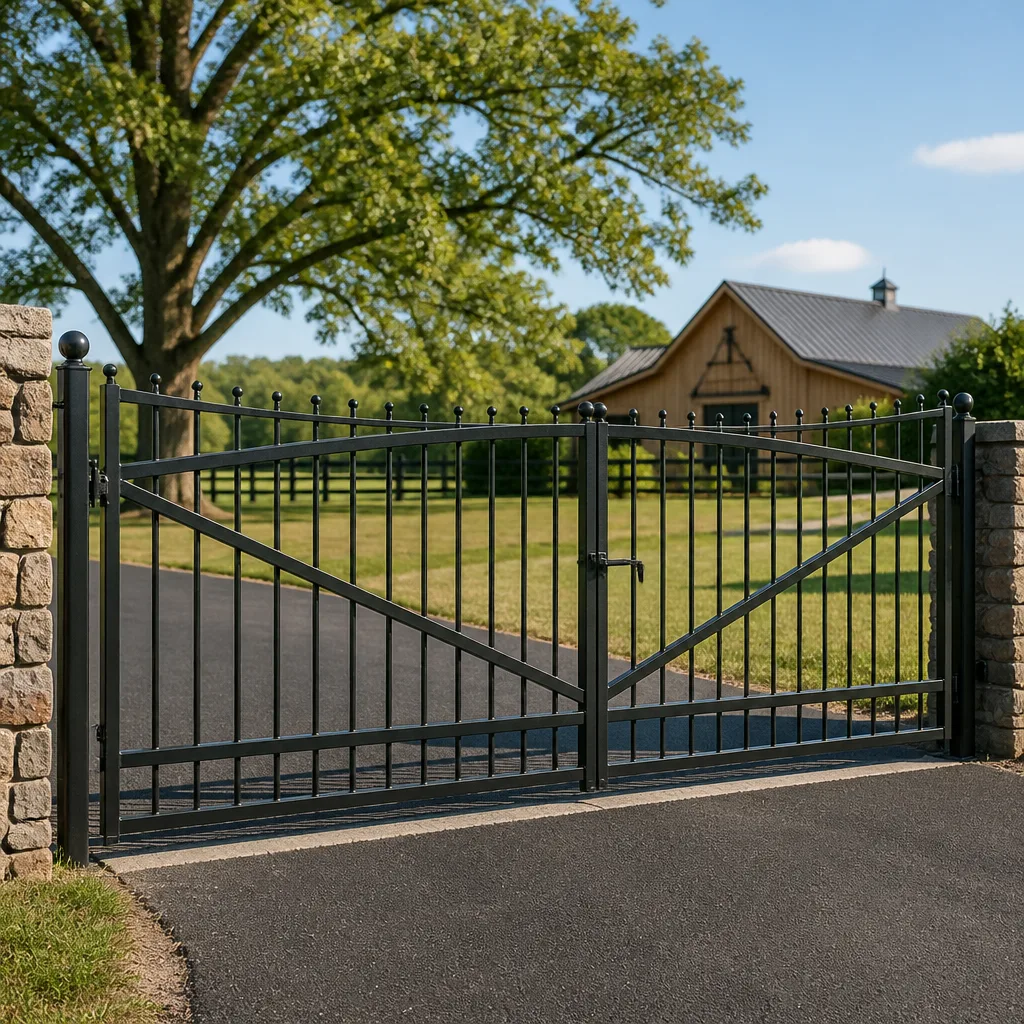 Farm & ranch
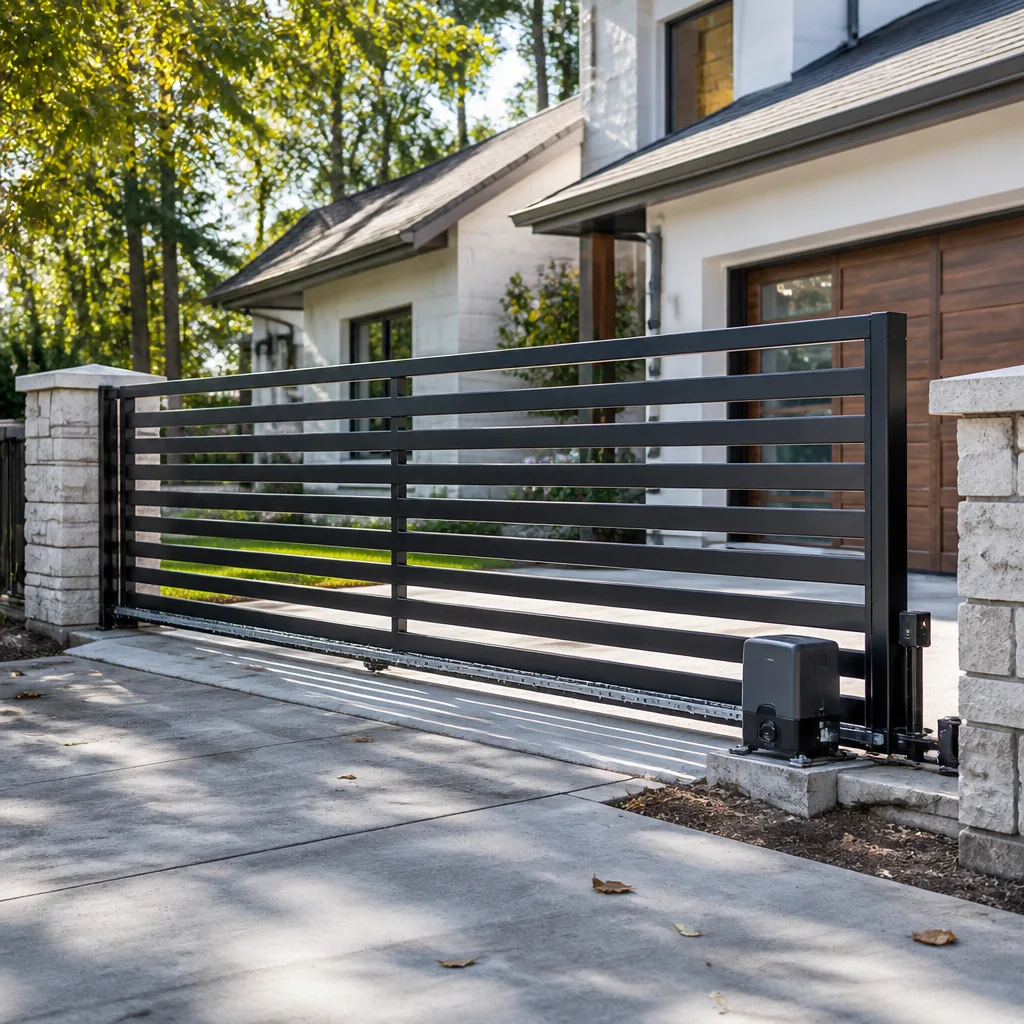 Sliding driveway gates
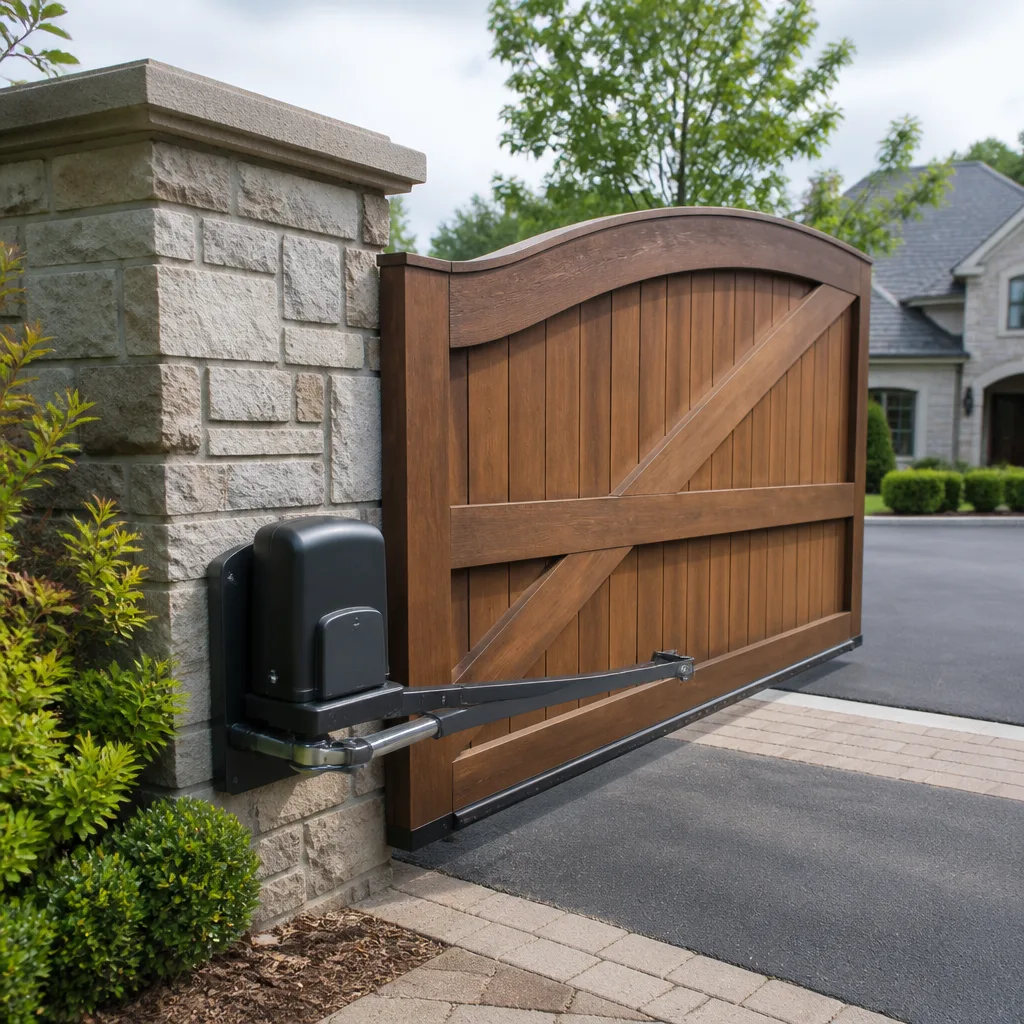 LiftMaster operators
Free on-site gate assessment - hinges, posts, and your LiftMaster or Nice gate operator checked before anything is quoted
The assessment is free and the quote is the invoice.
Get your free estimateThe Complete Guide to Gate Repair in Mesquite
A gate that sticks in July and drags in January isn’t two problems. It’s one problem the first repairman missed entirely. In Mesquite, that missed diagnosis usually traces back to two root causes: the Mojave climate working on metal and hardware every day of the year, and generalists who treat gates as a side job between fence panels and patio covers. This guide maps each failure type to its actual fix. You’ll learn why a wrought iron gate and an aluminum gate with the same symptom need different repairs, how to tell a structural failure from an automation failure before you pay anyone, what a real repair scope includes, and how to read an estimate so you can spot a contractor who is guessing. If you’re searching for gate repair in Mesquite NV, this is the long version worth keeping.
Quick Answer
Gate repair in Mesquite typically costs $150 to $450 for hardware and alignment work and $250 to $700 when motors, boards, or access control are involved, and nearly all of it comes down to desert-driven wear: UV breakdown, daily temperature swings, and dust in moving parts. The right fix addresses the root cause and corrects alignment, hinge wear, and operator limits together, not just the symptom, so you don’t pay twice for the same gate.
Styles & brands we work with
- Wrought iron
- Wood & steel frame
- Farm & ranch
- Sliding driveway gates
- LiftMaster operators
Table of Contents
- Why Mesquite’s Climate Wears Gates Differently
- The Three Failure Types – and Why Misdiagnosis Costs You Twice
- Wrought Iron, Ornamental Steel, and Aluminum: Three Different Repair Logics
- What a Proper Repair Scope Looks Like
- How to Read a Gate Repair Estimate
- When the Problem Is the Operator, Not the Gate
- Seasonal Maintenance That Prevents Most Mesquite Repairs
- What You Can Check Yourself and What You Shouldn’t Touch
Why Mesquite’s Climate Wears Gates Differently
Mesquite sits in the Virgin River valley at roughly 1,600 feet, and the local climate does things to gate hardware that generic repair guides never mention. Summer highs regularly push past 110°F. Winter nights drop toward freezing. That spread, often a 50°F daily differential, works metal and fasteners through expansion and contraction cycles all year. A hinge pin that fits snug in January can bind by August. The gate isn’t failing twice. It’s reacting to the same daily swing every day.
The UV load matters just as much. Southern Nevada gets some of the highest ultraviolet exposure in the country, and it attacks anything petroleum-based and anything plastic. Lubricants dry to a gum. Rubber weather seals on operator arms crack and let grit in. Photocell lenses haze over until the safety beam no longer reads. We see gate boards fail in Mesquite not from a surge but from sun-baked housings that let heat build inside a control box in direct afternoon sun.
Dust is the third element. Fine valley dust settles into rollers, tracks, and keypads. Combined with dried lubricant, it forms an abrasive paste that grinds hinge bores and seizes slide-gate carriages.
What this means in practice:
- Check gate hardware twice a year, not once. The seasonal spread here is harsher than in most of the country.
- Use UV-stable, high-temperature lubricant, not general-purpose oil that gums in the heat.
- Keep operator control boxes shaded or ventilated, and inspect seals and photocells every season.
- Expect gates that face full west or south afternoon sun to wear faster than shaded entries.
The Three Failure Types – and Why Misdiagnosis Costs You Twice
Almost every gate problem is one of three things: structural, automation, or hardware. Each has a different repair path and a different price band. The expensive mistake is paying for the wrong one.
Structural failures
These are the frame and post problems: sagging gates, posts pulling from the ground, racked frames where the gate no longer meets the latch square. In Mesquite, ground movement from swelling and shrinking soil with moisture swings adds to the load. A sagging gate is not fixed by adjusting the opener. If the frame is out of square, the operator will strain against it and eventually fail.
Automation failures
These live in the operator, control board, safety devices, or access control: a gate that won’t open on command, reverses halfway, or ignores the keypad. Common in Mesquite: hazed photocells, heat-stressed boards, and batteries in keypads and remotes that die faster in high heat.
Hardware failures
Hinges, rollers, latches, stops, and guides. This is where drought and temperature swings show up first. Worn hinge bushings let a gate drop, which then throws off alignment and mimics an automation problem.
Why misdiagnosis costs twice: a homeowner calls about a gate that “won’t close all the way,” and a generalist sells an opener adjustment. The real cause was a dropped hinge. The gate closes for a week, then the operator burns out fighting the misalignment, and now you’ve paid for a repair and a motor. A qualified gate specialist checks structure and hardware before touching the operator. That order matters, and that’s the kind of work we do every week in Mesquite.
Wrought Iron, Ornamental Steel, and Aluminum: Three Different Repair Logics
Treating every metal gate the same is one of the fastest ways to a warranty-voiding repair. The material dictates the method.
Wrought iron and ornamental steel
Heavier, weldable, and prone to rust at the bottom rail where dust, water, and salt from valley soil collect. Repair logic here is about welding and rust control: cutting out rusted sections, re-welding to sound metal, treating the affected area, and re-painting the full span so you don’t get a visible patch. A generalist without a welder will bolt on a bracket and call it fixed. It won’t hold through a Mesquite summer.
Aluminum
Light, won’t rust, and common on newer HOA-controlled entries. Aluminum doesn’t take the same heat as steel and can gall at hinges, and it cannot be repaired with the same heavy weld techniques without risking distortion. Repair logic here is about correct hardware, proper isolation at dissimilar-metal joints to prevent galvanic corrosion, and careful alignment.
Composite and mixed-material gates
Seen in some Mesquite communities, these need their own approach: replace worn connectors, avoid aggressive solvents, and keep metal-to-composite joints clean.
The takeaway for homeowners: ask a repair company what material your gate is and how they intend to fix it before they arrive. A specialist knows on the phone. A guesser doesn’t. Our Ironworks Gate Co. Mesquite home page spells out the full range of work we handle, from welds to keypads.
What a Proper Repair Scope Looks Like
A real repair isn’t a spot fix. Before touching a tool, a qualified specialist runs a sequence. Here’s the checklist we work from, and the one you should expect from anyone you hire.
- Walk the full swing or slide cycle. Watch how the gate moves, where it binds, and where it hesitates.
- Check the posts and foundation. Look for movement, cracks, or a post pulling up in the soil.
- Measure the frame for square. A racked frame is a structural problem, not a hinge problem.
- Inspect every hinge, roller, and latch. Note play, wear, and galling before adjusting anything.
- Test the operator separately from the gate. Disconnect the gate and run the motor alone to isolate automation from alignment.
- Verify all safety devices. Photocells, safety edges, and reverse-on-obstacle must work before the gate is released to the homeowner.
- Document the diagnosis and quote before work. Agree on the price in writing, then repair.
- Re-test the full cycle and confirm the security functions. No gate leaves until it closes clean and the access control responds correctly.
That’s a real scope. If a contractor shows up, sprays a hinge, and leaves in ten minutes, you’ve paid for a temporary patch that will fail by the next temperature swing.
How to Read a Gate Repair Estimate
An estimate tells you how the contractor thinks. Read it like a diagnostic, not a price. Here’s what separates a diagnosis from a guess.
Signs of a real diagnosis
- Line items name the specific parts and the failure found, not vague “gate adjustment.”
- The estimate separates structure, hardware, and automation work.
- It notes the material and the repair method (welding, re-hanging, hardware replacement).
- Safety devices are tested and listed.
- The price is fixed before work starts, and the guarantee is written.
Signs of a guess
- A single line item for the whole job with no detail.
- The estimate jumps straight to the operator before checking the hinge or frame.
- “We’ll see when we get in there” as the pricing model.
- No mention of testing the safety devices.
We give every Mesquite customer a no-hassle upfront price settled before a bolt is turned, so the bill matches the quote. And every completed job is covered by our 90-Day Done Right Promise: if it isn’t right, we come back and make it right, in writing, no arguing. When you compare estimates, compare the scope. The cheapest quote is usually the one that skips the diagnosis.
When the Problem Is the Operator, Not the Gate
Operators are where the biggest repair bills hide, and where brand knowledge pays off. Gates on LiftMaster, DoorKing, Elite, Mighty Mule, FAAC, BFT, Linear, Viking, and Ghost Controls all fail in slightly different ways, and a technician trained on the wrong brand guesses. We’re trained and equipped on all nine.
The most common Mesquite automation failures we see:
- Photocell haze. Sun-baked lenses stop reading, so the gate won’t close. A cheap, quick fix once correctly diagnosed.
- Heat-stressed control boards. A board in a sun-exposed box fails in July. The fix includes addressing the heat, not just swapping the board.
- Dead remote and keypad batteries. High heat shortens battery life, and a dead battery looks exactly like a failed receiver.
- Limit switch drift. A gate that over-travels or reverses for no reason often has a limit switch knocked out of position.
- Strained operators. When a hinge wears and the gate drags, the motor fights it until the gearbox fails. The motor was the victim, not the cause.
If your gate motor has failed, our Gate Motor & Opener in Mesquite page covers repair and replacement in detail. The key point is to diagnose the gate before condemning the motor.
Seasonal Maintenance That Prevents Most Mesquite Repairs
Most of what we repair in Mesquite was preventable with a little upkeep twice a year. Here’s a simple rhythm.
Spring – before the heat
- Wipe and lubricate hinges, rollers, and latches with a UV-stable, high-temperature lubricant.
- Clear dust and grit from tracks and the slide carriage.
- Test the photocells and safety edges.
- Check remote and keypad batteries.
Fall – before the cold snaps
- Re-check hinges and fasteners for looseness after summer expansion.
- Inspect the bottom rail and posts for rust and ground movement.
- Run a full cycle and watch for binding.
- Clear and clean the operator housing and control box.
A tune-up catches worn hinge bushings before they drop a gate, and it catches a hazing photocell before the gate refuses to close on a Friday night. Our $89 Seasonal Tune-Up covers this inspection and service. It’s the cheapest repair you’ll ever buy.
What You Can Check Yourself and What You Shouldn’t Touch
Some things are safe to check. Some genuinely aren’t, and it’s worth being clear about the line.
Safe to check
- Wipe and inspect hinges, rollers, and latches for wear.
- Change remote and keypad batteries.
- Look at the photocells for haze and clean the lenses gently.
- Watch a full open and close cycle and note where it binds.
Do not attempt yourself
- Welding structural repairs. A failed weld on a gate under load can drop hundreds of pounds of metal. This needs a trained welder.
- Operator internals or control board swaps. Line voltage is present, and a wrong wire can destroy the board or create a shock hazard. Call a licensed professional.
- Safety edge and reverse-on-obstacle adjustment. These protect children and pets. If they’re not set correctly, the gate can close on someone. Leave this to a trained technician.
- Post and foundation work. A post pulling from the ground is a structural hazard, not a weekend project.
If you’re not sure which category your problem is in, call us. A short conversation usually tells us what’s wrong.
Common Mistakes to Avoid
- Treating July sticking and January dragging as two separate problems. They’re almost always the same alignment or hinge wear reacting to Mesquite’s temperature swing. Fix the cause, not each symptom.
- Letting a generalist adjust the opener first. Checking structure and hardware before the motor is the correct order. Reversed, you pay for a motor that failed fighting a misaligned gate.
- Using general-purpose oil. It gums up in the heat and turns dust into an abrasive paste. Use a UV-stable, high-temperature lubricant.
- Accepting a one-line estimate. A vague price is a guess. Ask for the failure diagnosis and the parts list before work begins.
- Skipping seasonal tune-ups. A worn hinge replaced in spring is a fraction of the cost of the operator and hinge job it becomes by fall.
- Ignoring a rusted bottom rail. In Mesquite’s dust and soil, the bottom rail is where rust starts. Catching it early is a weld and paint job. Late, it’s a section replacement.
- Hiring the cheapest quote. The lowest bid is usually the one that skips the diagnosis and returns you to the same problem within a season.
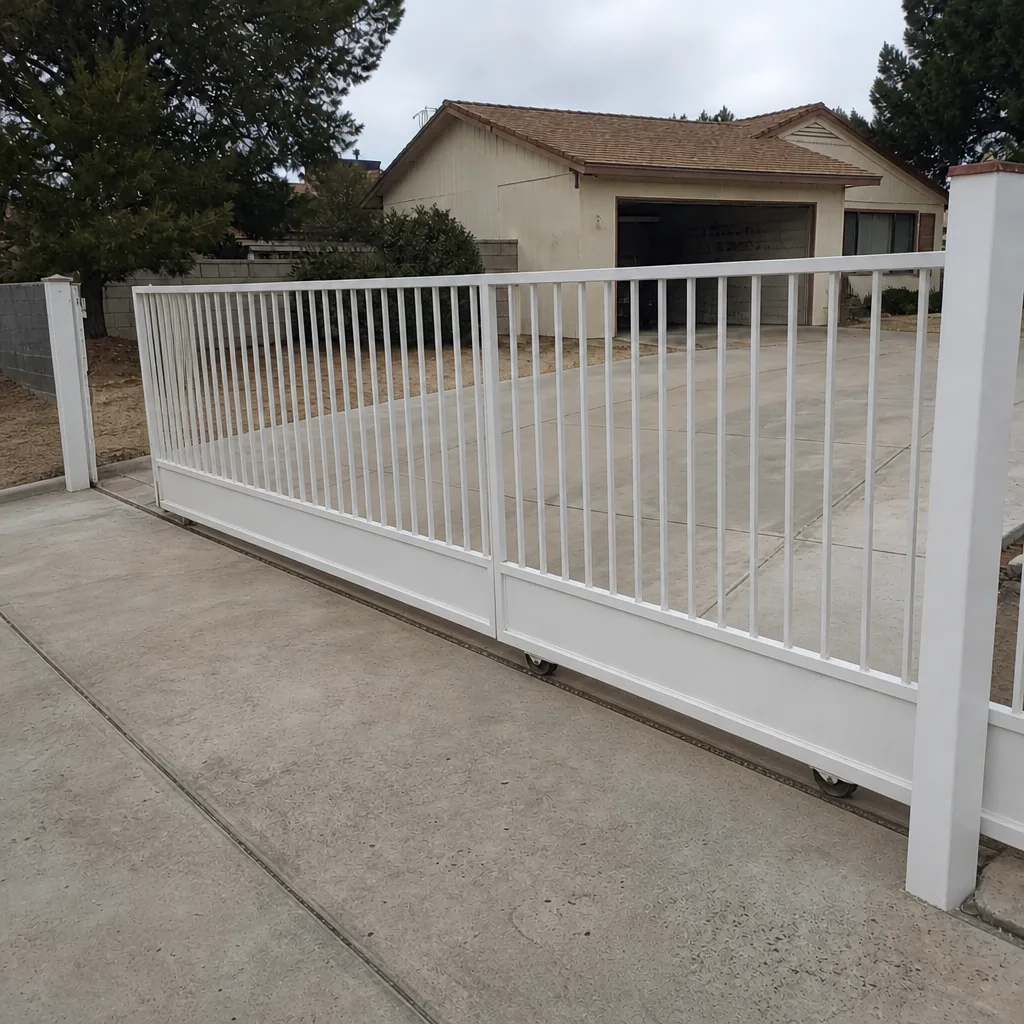
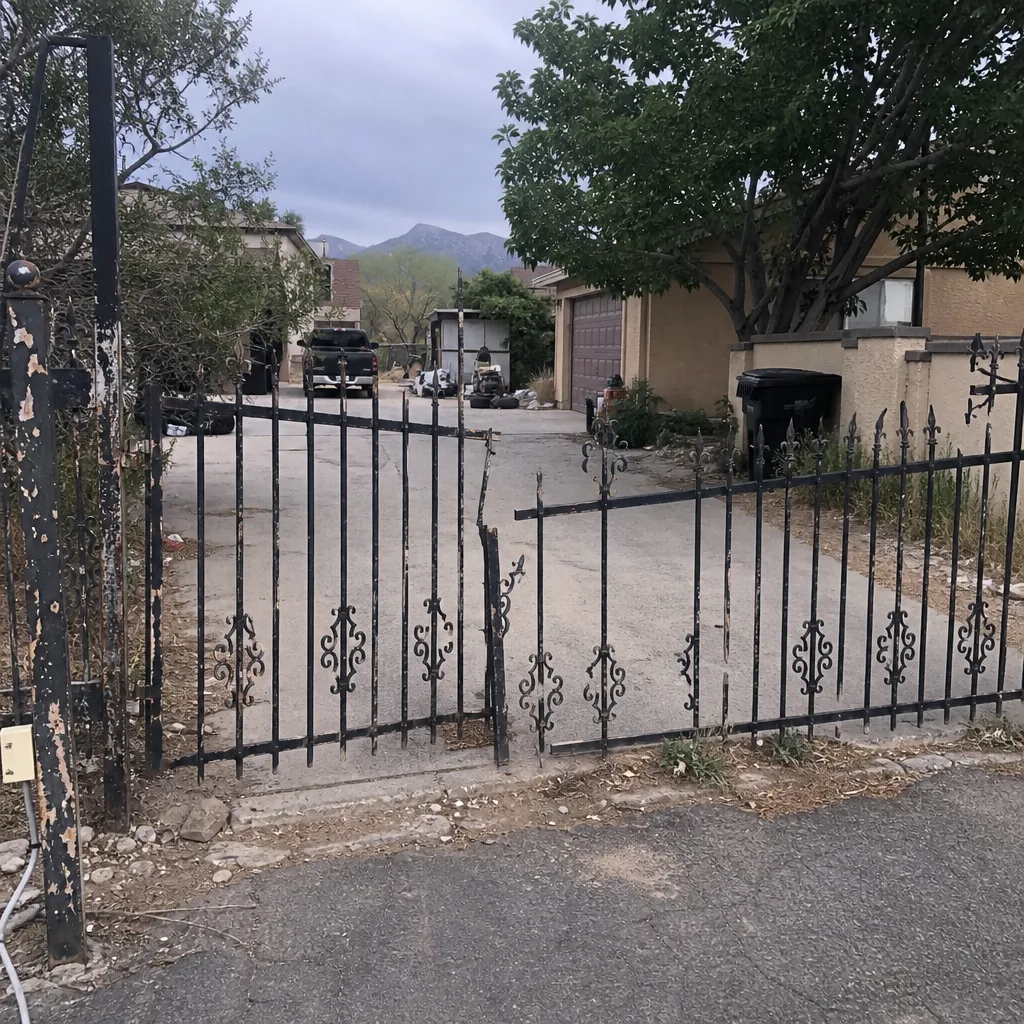
See the difference
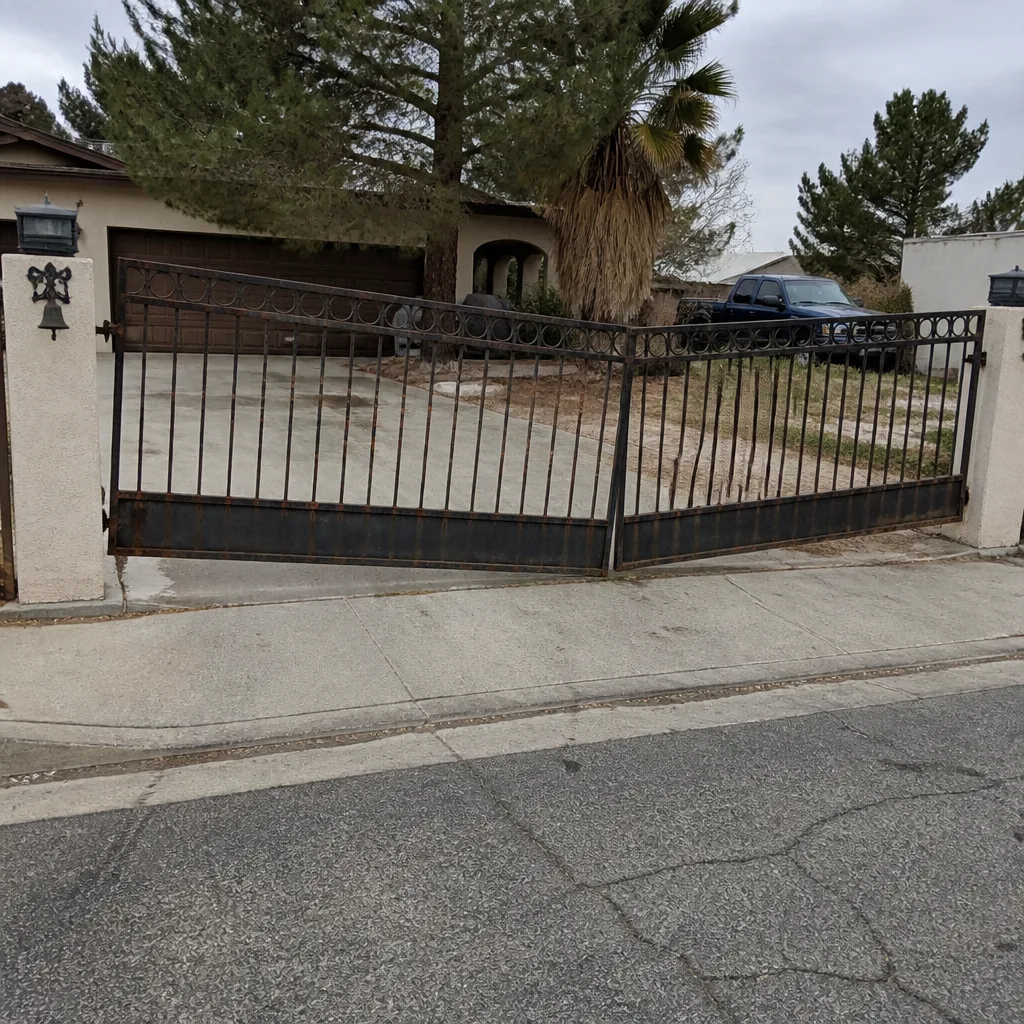 Before
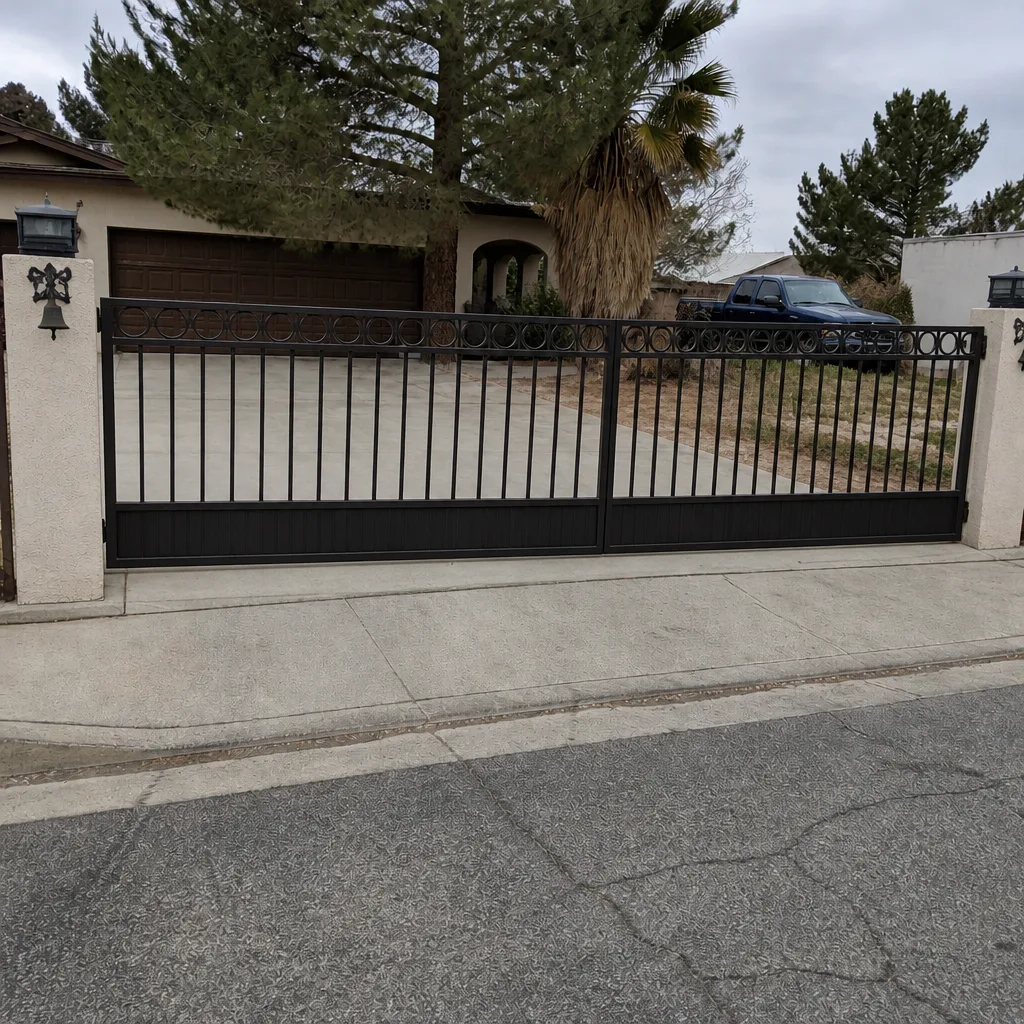 After
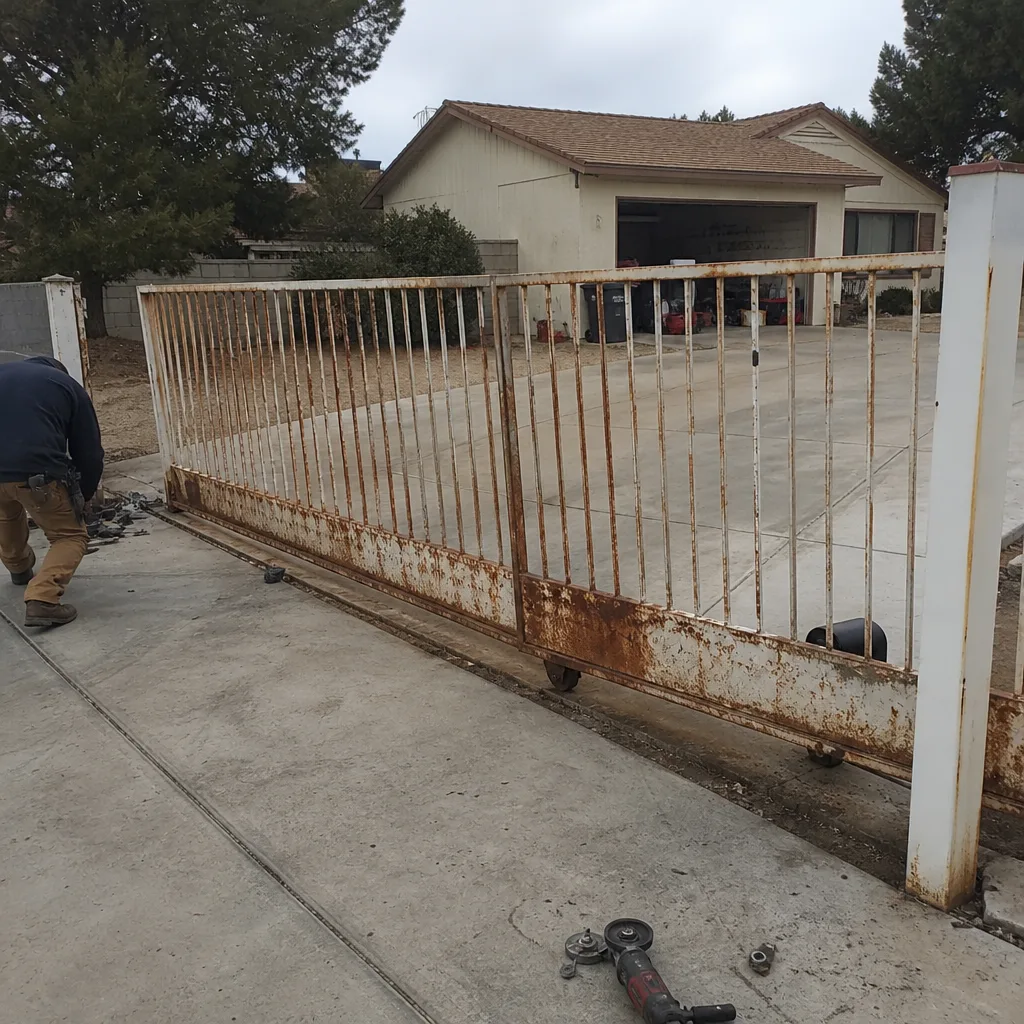 Before
 After
 Before
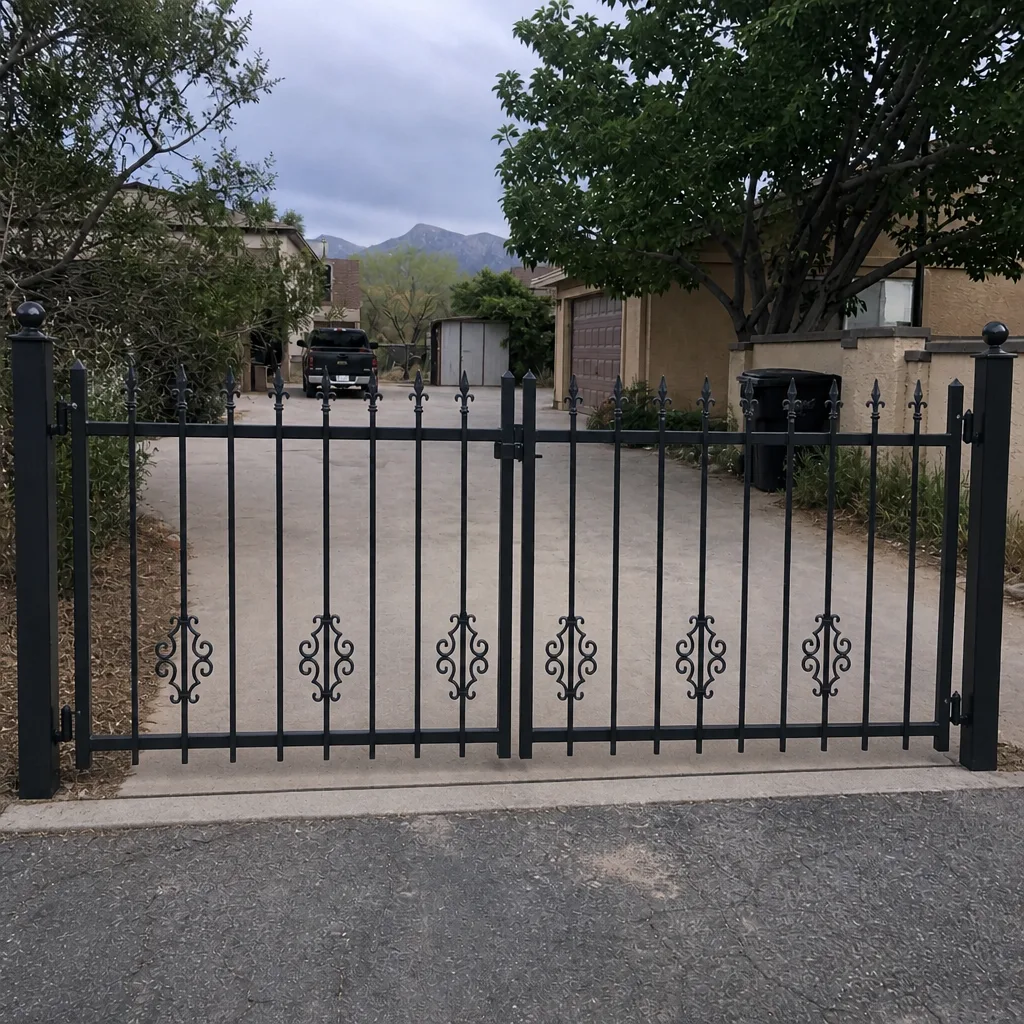 After
When to Call a Professional
Call a gate specialist when the problem is structural or involves the operator and safety devices. That means a post that’s moved, a frame out of square, a gate that binds or drags, a weld that’s failed, a motor that won’t run or reverses for no reason, or any safety device that isn’t testing correctly. If you’ve had a “repair” that didn’t last a season, that’s a diagnosis problem and worth a second look. Ironworks Gate Co. Mesquite offers free estimates in Mesquite, and we’ll tell you plainly what’s wrong and what it costs before we touch a bolt. Call (844) 797-2573. A live person answers, 24 hours a day, 7 days a week.
Frequently Asked Questions
Most Mesquite gate repairs run $150 to $450 for hardware, hinge, and alignment work, and $250 to $700 when the motor, control board, or access control is involved. The price is quoted and agreed before any work starts, and our Free Second Opinion on Any Written Estimate lets you compare fairly. Call (844) 797-2573 for an exact quote on your gate.
Yes, for most repair calls we can reach you the same day, and we keep emergency availability for gates that leave a property unsecured. Call (844) 797-2573 and we’ll give you a real window, not a voicemail callback.
It’s one problem, not two: worn hinge bushings or a slightly out-of-square frame reacting to Mesquite’s 50°F daily temperature swing, which expands and contracts metal and hardware all year. A specialist can correct the alignment and hardware so the gate moves clean through both seasons. Call for a free estimate.
The hinge was the cause and the motor was the victim. A worn hinge drops the gate, and the operator strains against the misalignment until the gearbox or board fails. If your motor has failed, the repair has to address the hinge and alignment too, or the new motor will fail the same way.
Yes. We’re trained and equipped on LiftMaster, DoorKing, Elite, Mighty Mule, and five other major brands, so the correct fix happens on the first visit. Call (844) 797-2573 and tell us the brand on your driveway.
A correctly diagnosed repair with UV-stable lubricant, proper alignment, and rust control should hold well beyond a season, and it’s backed by our 90-Day Done Right Promise in writing. A spot fix with general-purpose oil will fail by the next temperature swing. Call for a Free Second Opinion on Any Written Estimate before you pay twice for the same gate.
The Bottom Line
Two causes sit behind most gate failures in Mesquite: desert climate wearing the metal and hardware every day, and generalists treating gates as an afterthought. Misdiagnosing a structural or hardware failure as an automation fault is what costs homeowners twice. The fix is order and discipline: check structure before the operator, match the repair method to the material, demand a real scope and a written price, and keep a simple seasonal maintenance rhythm. Do that, and a gate in Mesquite stops being a recurring bill. Ironworks Gate Co. Mesquite does this work done right, and backed in writing. Call (844) 797-2573 for a free estimate.
Written by the team at Ironworks Gate Co. Mesquite.