
Last updated November 16, 2026
 Wrought iron
 Wood & steel frame
 Farm & ranch
 Sliding driveway gates
 LiftMaster operators
Free on-site gate assessment - hinges, posts, and your LiftMaster or Nice gate operator checked before anything is quoted
The assessment is free and the quote is the invoice.
Get your free estimateGate Repair Troubleshooting: Common Problems and How to Fix Them
A gate that stops halfway isn’t necessarily a motor problem. It’s one of at least four different issues depending on whether it stops on opening, on closing, only in heat, or only after rain. Treating the wrong one is the most common reason a repair fails twice, and in our experience across Mesquite it’s also the reason a homeowner ends up paying for a second service call that never should have been needed. This guide teaches you to read your gate the way a technician does: from symptom to system. You’ll learn which failure behaviors point to the motor, the sensor, the hinge, the track, the control board, or the power supply, and exactly when a problem moves out of the do-it-yourself zone.
Quick Answer
Gate repair troubleshooting means matching the gate’s exact failure behavior to the system that causes it, not guessing and replacing parts. A gate that stops on opening but closes fine usually points to a hinge bind or an obstructed track, while a gate that stops on closing is almost always a sensor or safety-edge issue. Intermittent failures, especially those tied to heat, rain, or time of day, are electrical until proven otherwise, and they need to be documented rather than blindly repaired.
Styles & brands we work with
- Wrought iron
- Wood & steel frame
- Farm & ranch
- Sliding driveway gates
- LiftMaster operators
Table of Contents
- The Symptom-to-System Diagnostic Matrix
- Mechanical Bind vs. Obstruction Sensor: Telling Them Apart
- Why Intermittent Failures Are Electrical Until Proven Otherwise
- The Three Checks You Can Safely Make Before Calling
- Reading Error Codes on Common Opener Brands
- Mesquite Climate and Why Gates Fail Here
- Repair the Part or Replace the System?
The Symptom-to-System Diagnostic Matrix
The first step in any gate repair is describing the failure precisely. “It doesn’t work” tells a technician nothing. The behavior tells everything. One visible symptom, like a gate that won’t open, traces back to six or more possible root causes, and the specific pattern narrows that list fast. This is the same triage we run on every call in Mesquite before a technician ever pulls out a wrench.
Here’s how to read the matrix. Match your gate’s behavior to the row, then look at what the behavior actually points toward.
- Nothing happens on the command. Motor, control board, or power supply. Check first that the keypad and remote both fail, not just one. If both fail, it’s system-side.
- Motor hums but the gate doesn’t move. Mechanical bind on the hinge, roller, or track, or a stripped gear inside the operator. The hum is the motor trying to overcome resistance that shouldn’t be there.
- Gate stops on opening but closes fine. Hinge bind, track obstruction, or a limit switch set too tight for the actual travel needed.
- Gate stops on closing. Almost always a safety edge, photo-eye, or loop sensor tripping. The gate is detecting something it interprets as an obstacle.
- Gate reverses mid-travel. Sensor false-positive or a control board logic fault. Reversal is the system’s protection protocol, so it’s doing its job, but reacting to a false signal.
- Gate moves slower than it used to. Motor wear, low battery on solar or backup setups, or drag from a bound track. Speed doesn’t drop on its own; something is creating resistance or losing power.
- Intermittent operation. Electrical, until proven otherwise. See the section below.
One thing Mesquite homeowners ask us all the time: is a half-open gate a motor problem? Usually no. In a hot, dusty climate like ours, half-open stops are far more likely to be a hinge that’s binding or a track with grit in it, and the motor is simply reacting to the added resistance. Reading the symptom correctly saves money before a single part is replaced.
Mechanical Bind vs. Obstruction Sensor: Telling Them Apart
From the driveway, a gate that stops on closing because a hinge is bound looks identical to a gate that stops because a photo-eye is dirty. Both stop. Both reverse. Both leave you standing there wondering why. The difference is invisible from outside the gate, and getting it wrong means you replace a working sensor or clean a hinge that was never the issue.
Here’s how a technician distinguishes the two, and how you can help narrow it down before we arrive.
- Listen to the motor. A bind produces a laboring, straining sound right before the stop. A sensor trip produces a normal running sound that cuts off abruptly, followed by reversal. Different noises, different causes.
- Watch the timing. Sensor reversals usually happen at the same spot every time, because the obstruction is in the same place. Bind-stops move around and get worse as the gate travels further.
- Disconnect the safety edge temporarily (power off first). This is the technician’s test, not yours. If the gate runs the full cycle with the edge disconnected, the edge was the problem. If it still stops, the bind is mechanical.
- Inspect the photo-eyes visually. Look for cobwebs, dust film, or sun glare hitting the eye at a specific time of day. In Mesquite, dust accumulation on the photo-eye is one of the top causes of false reversals, especially on gates facing the afternoon sun.
- Check the hinges by hand. With the gate powered down, you should be able to open and close it by hand with modest effort. If it takes real force, the bind is mechanical and no sensor work will fix it.
The reason this distinction matters is cost. Cleaning a sensor is a five-minute job. Replacing one that wasn’t broken is money wasted on a repair that leaves the real cause untouched. When the test is genuinely ambiguous, the honest answer is to isolate the systems one at a time, and that’s what our technicians do on every service call.
Why Intermittent Failures Are Electrical Until Proven Otherwise
A gate that works all week and fails on Saturday when you have guests isn’t being dramatic. It’s telling you something specific: the failure is conditional. Intermittent failures trace back to electrical causes far more often than mechanical ones, because mechanical wear produces consistent symptoms while electrical faults produce conditional ones. The gate works until the temperature rises, until the wind blows dust into the photo-eye, until the backup battery drains past a threshold, or until the limit switch gets close enough to a loose connection to lose contact.
In our experience working on gates across Mesquite, intermittent failures break down into a handful of common root causes:
- Temperature-sensitive control board faults. A board that’s beginning to fail will hiccup in the heat, which shows up in July afternoons far more often than at 6 a.m.
- Loose or corroded wiring connections at the operator or at the photo-eyes. Vibration from daily use works terminals loose over time.
- Low backup battery or solar-charge issues. Gates that run fine on mains power but fail on battery backup are telling you the battery is failing. Battery performance fades before it dies completely.
- Dust or debris on the photo-eye that shifts with the wind or with moisture. A speck that blocks the beam only when the breeze is in a specific direction produces exactly this pattern.
- Limit switches that have drifted. The gate hits the switch sometimes and misses it others.
The single most useful thing you can do for an intermittent failure is document it. Keep a simple log: the time and date of each failure, the weather (hot, cold, windy, wet), the time of day, and exactly what the gate did. Three or four entries turn an untraceable mystery into a diagnostic pattern. When a technician walks up to your gate and you hand them a log that shows every failure happened between 3 and 5 p.m. on hot days, the diagnosis becomes fast and the repair becomes certain. This is why our team asks for the log before we roll a truck: it’s the difference between a one-visit fix and a guessing game.
The Three Checks You Can Safely Make Before Calling
There are three things any homeowner can check safely before calling a professional. Everything beyond these moves into the zone where a technician with proper tools and training should be doing the work. The reason for the line is simple: gate systems combine tensioned springs, live electrical components, and hundreds of pounds of moving steel, and each one on its own is enough to cause serious injury when handled incorrectly.
Safe check one: the power supply. Confirm the operator has power. Check that the breaker hasn’t tripped, that the disconnect at the gate hasn’t been switched off, and that any battery backup switch is in the correct position. If the keypad lights up and the operator responds to remotes at all, you have power.
Safe check two: the remote and keypad. Confirm both work or both fail. A single dead remote is a battery or pairing issue. Both failing points to the receiver or the control board, and that’s technician territory.
Safe check three: a visual inspection with the power off. With the system powered down, walk the gate and look for obvious obstructions in the travel path, debris in the track or on the wheels, a visible bend or sag in the frame, or a hinge that looks loose. Don’t attempt to move the gate by hand unless you’re sure the operator is disengaged and the springs are intact. Do not attempt to adjust hinges, tighten spring tension, or open the operator housing. Those are the exact points where safe ends.
The reason we draw this line sharply is that we’ve seen well-intentioned homeowners hurt themselves on a bound gate, and we’ve seen gates damaged past economic repair because a well-meaning adjustment made things worse. If you’re unsure whether a check crosses the line, it does. Call us and describe what you see. Our gate repair in Mesquite team can usually tell from a two-minute phone conversation whether it’s a repair call or a piece of friendly advice to save you the visit.
Reading Error Codes on Common Opener Brands
Most modern gate operators give you a code when something fails, but the codes aren’t intuitive and the manual for a unit installed a decade ago is often long gone. Here’s how to read codes on the brands we work with most often, and what each code family generally points to.
Almost every major brand uses the same code families, even if the specific numbers vary:
- Rapid flash sequences (2, 3, or 4 blinks). Photo-eye or safety-edge obstruction. The gate is detecting an obstacle and refusing to move.
- Continuous or slow flash. Low battery or power fault on the operator itself. On Linear and Viking units this is usually straightforward to confirm, and a battery test gives the answer immediately.
- Limit fault codes. The gate has traveled beyond where the board expects it to. Common after a hinge sag or after someone has manually moved the gate without re-setting the limits.
- Motor or encoder faults. The board is not seeing the expected feedback from the motor. This usually means internal wear or a wiring fault at the operator.
- Access-control faults on DoorKing systems. The code often points to the keypad, the entry panel, or the phone/intercom line rather than the gate operator itself. This is a real distinction that catches homeowners off guard; the gate isn’t broken, the keypad or entry system is.
On Ghost Controls and other consumer-friendly operators, the manual’s code chart is often printed on the inside of the operator cover, so a quick look inside usually gives you the exact translation. For everything else, the fastest path is to call, tell us the brand and model number, and describe the code pattern. We’ve worked with all of these systems so many times that the code is usually enough to point us straight to the right part before we leave for the call. That’s the value of brand coverage: a technician who hasn’t seen your specific model is guessing, and a technician who works with it every week isn’t.
Mesquite Climate and Why Gates Fail Here
Gate failures in Mesquite don’t look exactly like gate failures in cooler, wetter parts of the country, and the difference matters for troubleshooting. The high desert does specific things to gate hardware, and knowing those patterns shortens the diagnostic chain.
Dust is the first factor. Between the desert wind and the construction dust across the valley, photo-eyes collect a fine film faster here than most systems are designed for. That film causes false obstructions and reversals that look exactly like a failing sensor. A routine wipe-down of the eyes goes a long way. Hinges and tracks collect dust too, and the dust mixes with whatever lubrication is present to create a gritty paste that binds rollers and grinds pins. This is why we recommend a seasonal tune-up rather than waiting for failure; the tune-up clears out the grit before it costs you a motor.
Heat is the second factor. Summer temperatures in Mesquite climb high enough that control boards in an operator housing run well past their rated operating temperature. Electronic components that are nearing the end of their service life often fail only on the hottest days, which is why we see a cluster of “it worked all winter and now it’s dead” calls in July and August. If your gate has started failing only on hot afternoons, tell the technician that specifically. It changes the diagnostic priority.
Temperature swings are the third factor. Mesquite has real day-night swing, and metal expands and contracts with it. Bolts work loose, hinges develop a hair of play, and limit switches drift over a season. None of that is a defect; it’s the physics of the material in our climate. The point is that a gate in Mesquite needs a slightly different attention cycle than a gate in a mild climate, and a technician who works here every day knows that. If you want your gate to open, close, and latch cleanly through a full Mesquite summer, the maintenance rhythm matters more than the brand of operator.
Repair the Part or Replace the System?
The most expensive mistake in gate repair is replacing a working system because one part failed. The second most expensive is repairing a part on a system that’s already past the point of economic repair. The honest conversation a technician should have with you is about which side of that line you’re on, and it should come before any work starts, not after the invoice.
Repair is usually the right call when the gate’s structure is sound, the operator is serviceable, and the failure traces to a discrete component: a hinge, a photo-eye, a limit switch, a battery, a control board, or a keypad. These are the failures that are worth fixing, and most can be completed on a single visit.
Replacement becomes the honest answer when the operator is failing across multiple systems at once, when the board and the motor are both at end of life, when parts for the specific model are no longer available, or when the gate structure itself has rusted through or warped past safe repair. A technician who tells you it’s time to replace should be able to explain exactly why, part by part, not just wave at the gate and shrug.
If you’re comparing options and want a second set of eyes on a written estimate from another company, we offer a free second opinion on any written estimate. It’s a straightforward offer: we’ll tell you honestly whether the recommended work is right, whether a repair would do the job, and what it should reasonably cost. When it does come time for new equipment, our gate installation in Mesquite team starts with a free measure and a written price so there are no surprises after the fact.
Common Mistakes to Avoid
- Replacing the motor first because “the gate won’t open.” The motor is the last thing to suspect in most failures. Hinges, sensors, and power come first. Two sentences and one diagnostic test often show the motor was never the problem.
- Greasing a dusty track. Adding lubricant to a grit-covered track in Mesquite turns dust into a grinding paste. Clean it first, then apply the correct lubricant sparingly. Most tracks in this climate need cleaning far more often than they need greasing.
- Adjusting spring tension yourself. Gate springs are under heavy load and can cause serious injury if released or adjusted incorrectly. This is not a homeowner adjustment, no matter what a video tells you.
- Ignoring an intermittent failure until it becomes permanent. A gate that fails once a week is telling you what’s about to fail completely. Waiting costs more, not less, because the failure often takes out an expensive component on the way down.
- Assuming a code means the same thing across brands. Code patterns vary between Linear, DoorKing, Ghost Controls, and every other brand. Reading the code for your specific model matters, and a technician who knows all nine major brands will read it correctly the first time.
- Letting a trusted neighbor with a wrench “take a look.” We’ve seen gate systems damaged in ways that turned a modest repair into a full replacement because someone who meant well tried to help. There’s a reason the line exists. If the fix requires tools beyond a screwdriver, it’s a technician’s job.
- Skipping the maintenance cycle. Gates that receive a seasonal tune-up in Mesquite routinely outlast gates that receive none. The dust and heat don’t take a season off, and neither should the maintenance.
See the difference
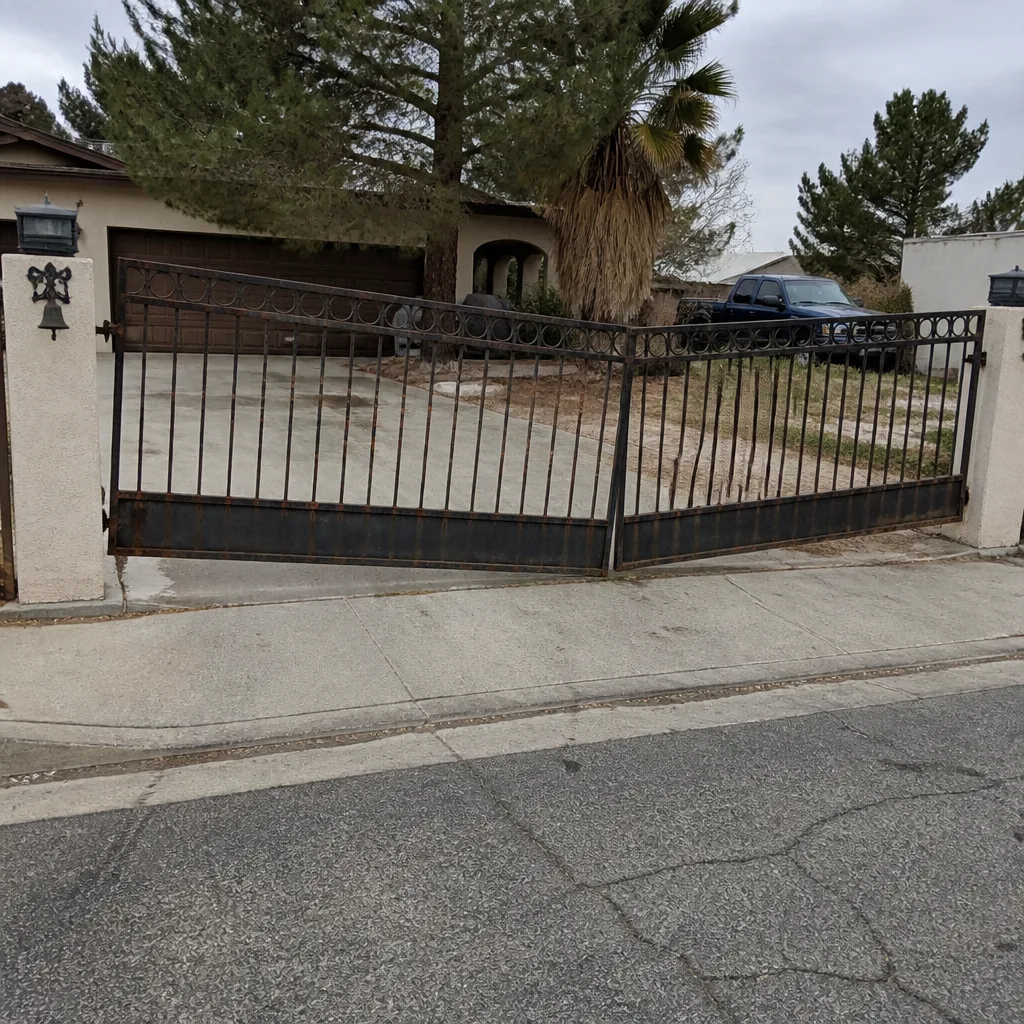 Before
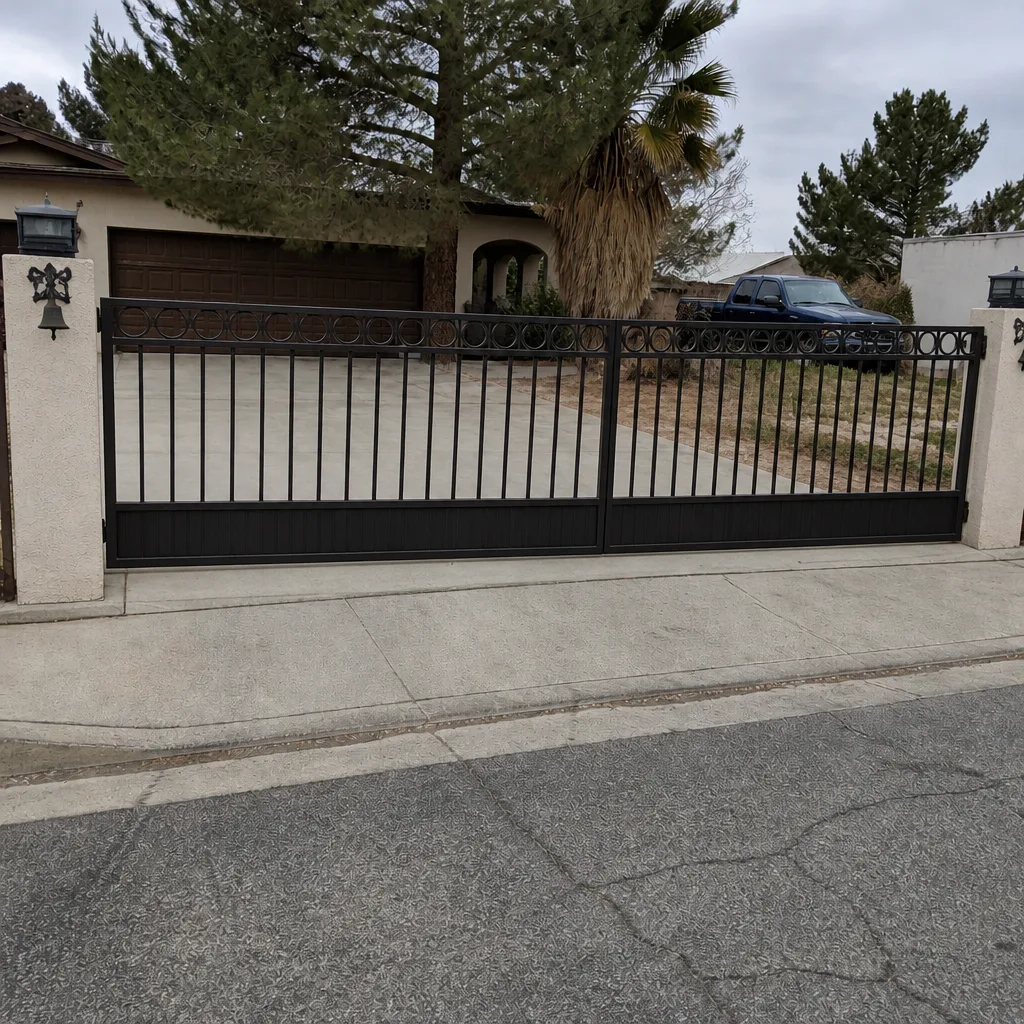 After
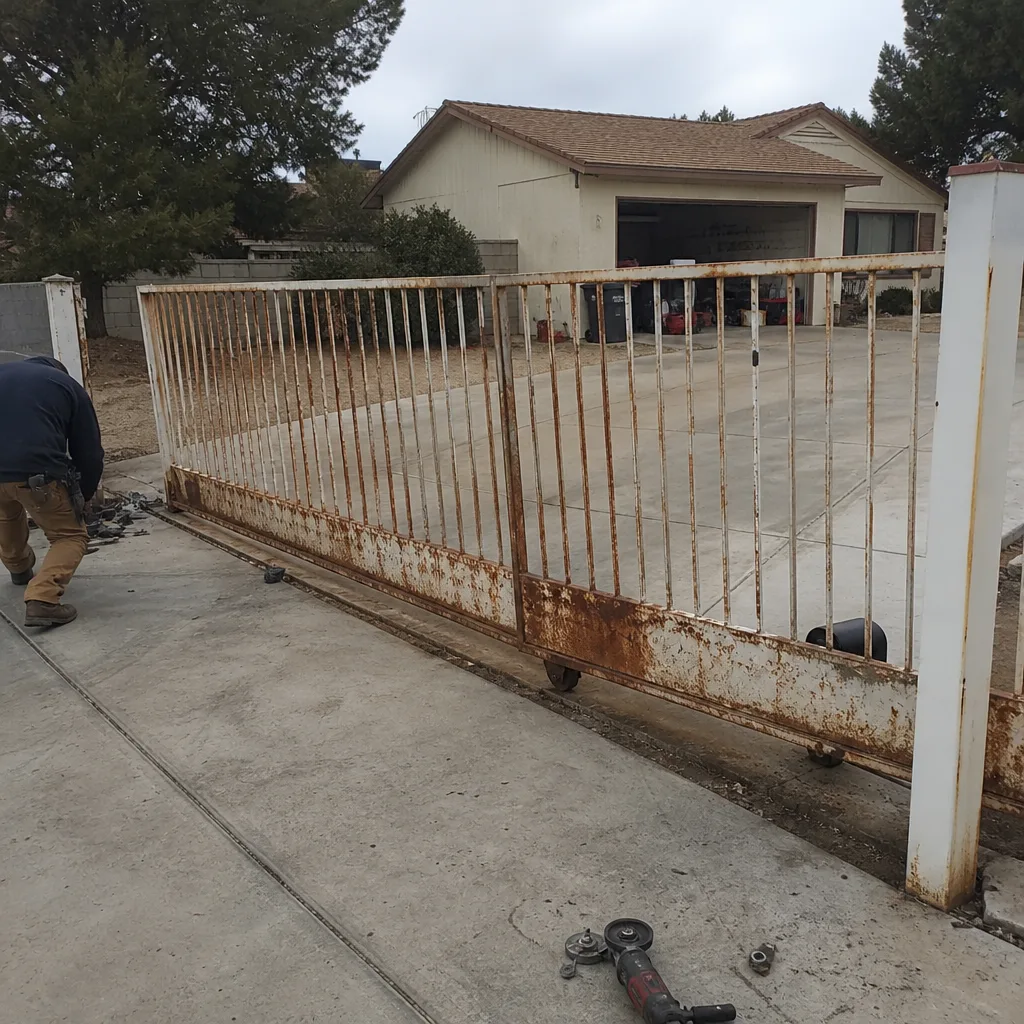 Before
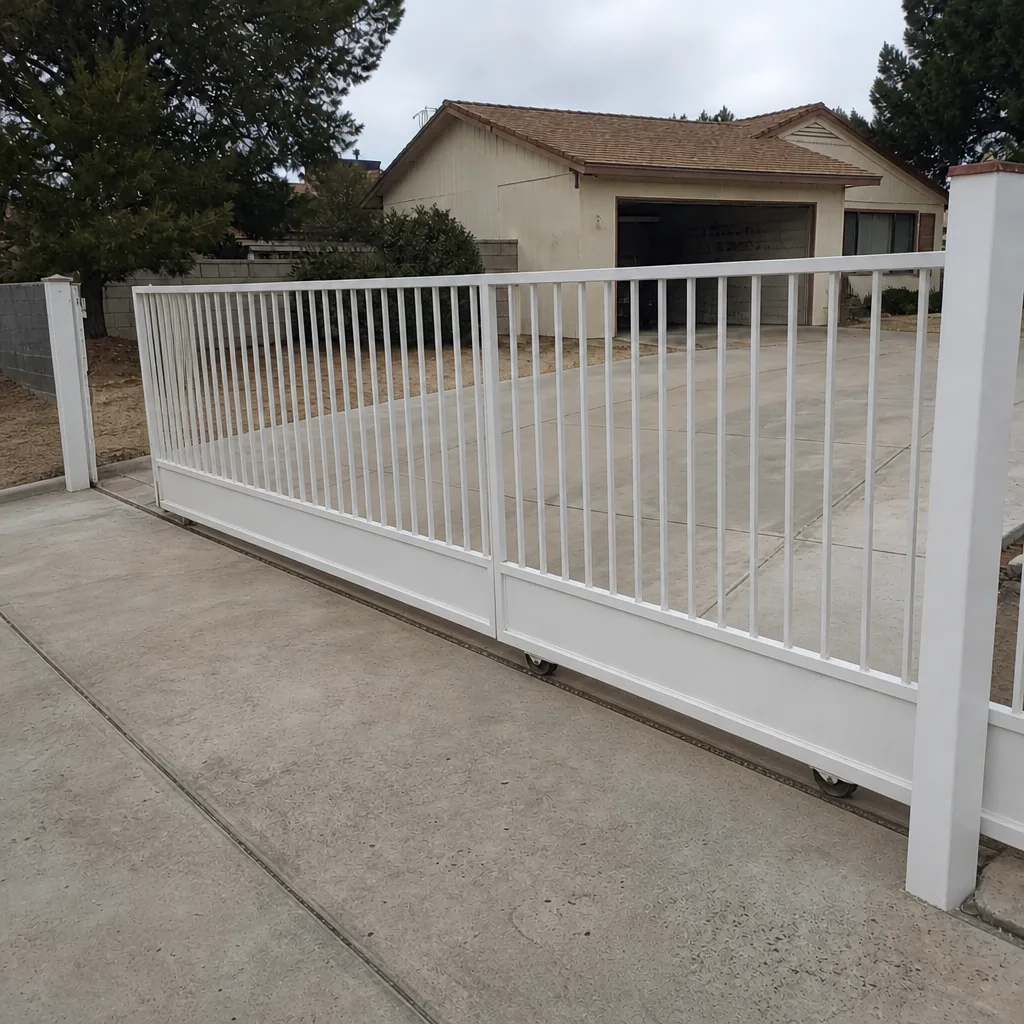 After
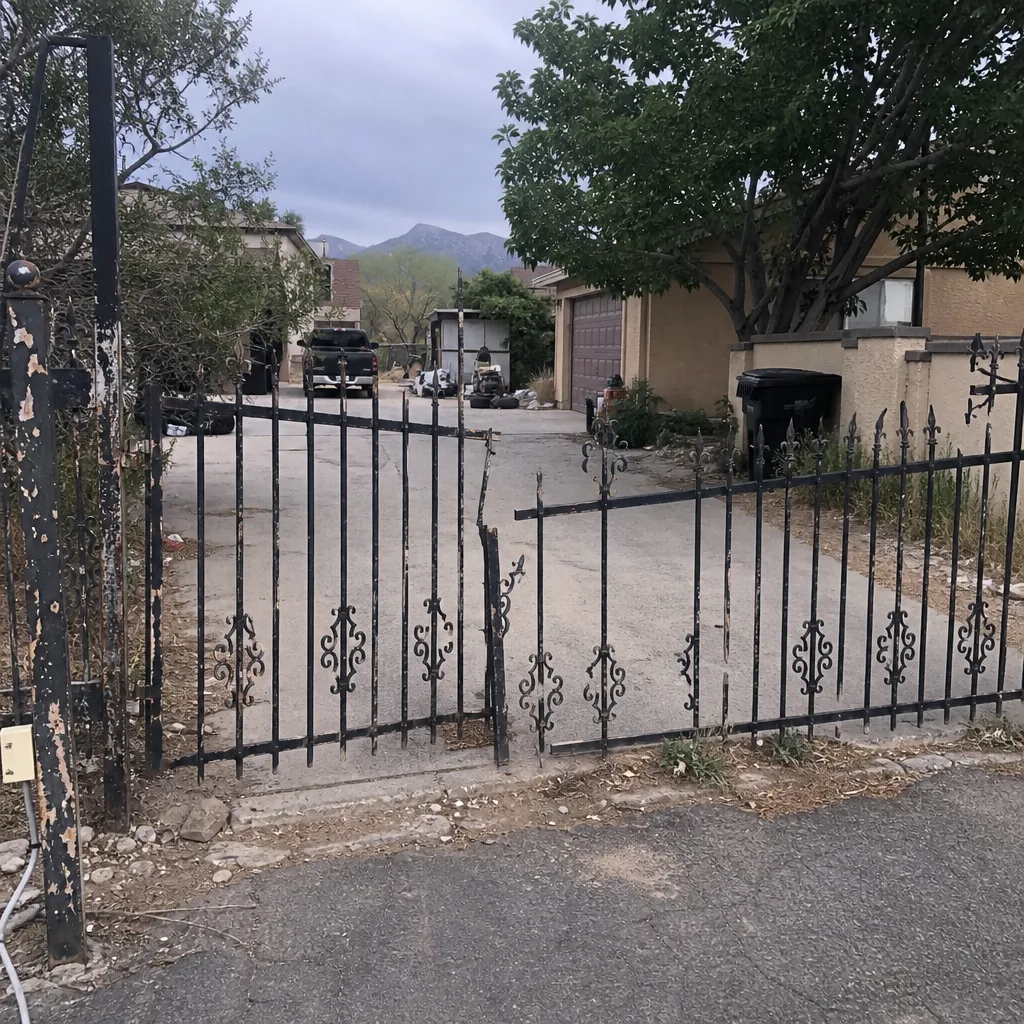 Before
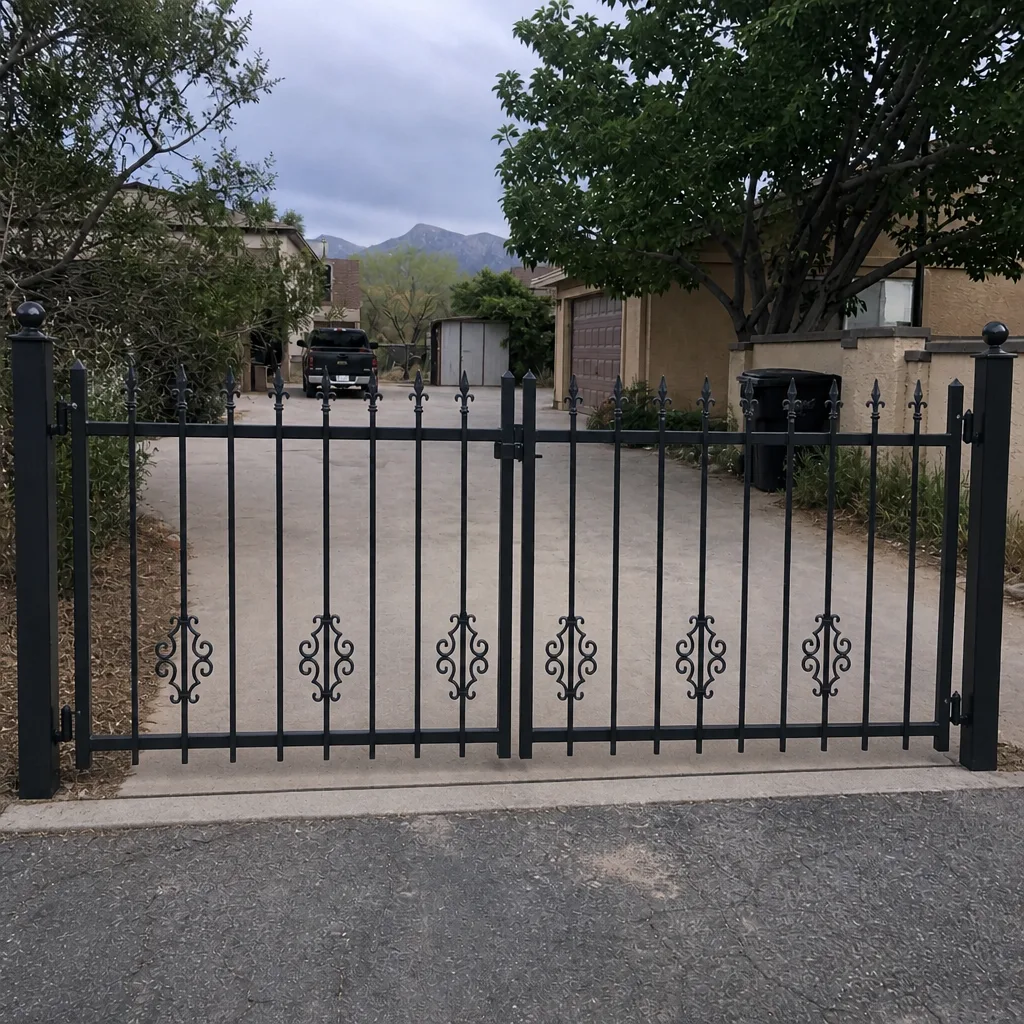 After
When to Call a Professional
Call a professional any time your gate is doing any of the following: moving with a laboring motor, reversing without an obvious obstruction, failing only on hot days, failing only after rain, throwing a code you can’t identify, or simply refusing to move at all. Call immediately if you see sparks, hear grinding from inside the operator, smell burning, or if the gate is sagging and moving on its own. Those are the situations where the repair can’t wait for a convenient weekend. Every one of them is fixable, and none of them get better by being ignored.
For everything else, call anyway. Describing the symptom over the phone takes two minutes, and the answer we give you will either point you toward a technician visit or save you one. Ironworks Gate Co. Mesquite offers free estimates in Mesquite; call (844) 797-2573 and a live person will pick up, any hour, any day.
Frequently Asked Questions
Because the failure is temperature-sensitive, which almost always points to an electrical cause rather than a mechanical one. Control boards, batteries, and motor windings in the operator can begin to fail only at high temperatures, and in Mesquite summers the inside of an operator housing runs hotter than a technician from a cooler climate would expect. Note the pattern, tell your technician it’s heat-related, and the diagnosis narrows quickly. Call (844) 797-2573 and describe the timing; it usually saves a diagnostic step.
Most common repair calls in Mesquite land between $180 and $450 depending on the part and the access. Hinge and photo-eye work sits at the lower end; control board and motor replacements sit at the upper end. Every price is quoted and agreed in writing before a single bolt is turned, so the bill at the end matches the number at the start. We’re also running $50 off any repair over $250, and a permanent 5% senior and veteran discount is always available. Call (844) 797-2573 for an exact quote; estimates are free.
In most cases, yes. A live person answers our phone 24 hours a day, 7 days a week, so you’re never waiting until Monday morning to reach someone. We schedule based on the actual urgency of the failure: a gate stuck open on a busy street or a gate that’s sparking gets priority, and most non-emergency repairs are completed in a single visit. Call (844) 797-2573 and we’ll give you a real arrival window, not a vague callback promise.
Because a safety device is doing its job, even though it’s reacting to a false signal. Reversal on closing means the photo-eye, safety edge, or ground loop is detecting an obstacle that isn’t there, and the fix is usually a cleaning or a sensor alignment rather than a replacement. In Mesquite, dust and afternoon sun glare on the photo-eye are the two most common triggers. Call (844) 797-2573; this is one of the fastest repairs we do.
You need a repair if the failure traces to a single component: a hinge, a sensor, a battery, a limit switch, a control board, or a keypad. You need a replacement only when the operator is failing across multiple systems at once or when parts for the model are no longer available. A technician should be able to walk you through the reasoning part by part. If you’ve received a written estimate elsewhere, we offer a free second opinion on any written estimate so you can make the call with clear information. Call (844) 797-2573 to set one up.
Yes. Our technicians are trained and equipped on nine leading brands, including Linear, Viking, Ghost Controls, DoorKing, LiftMaster, FAAC, BFT, Elite, and Mighty Mule, so the correct fix is made on the first visit whatever is on your driveway. That coverage matters in Mesquite because a technician who hasn’t worked with your specific model is guessing. Our own technicians have up to 13 years of experience, and every job is backed by our written 90-Day Done Right Promise. Call (844) 797-2573 to schedule.
The Bottom Line
Diagnosing a gate problem comes down to one skill: reading the failure behavior before touching a part. A gate that stops on opening, stops on closing, stops in heat, or stops after rain is telling you four different things, and matching the symptom to the system is what turns a repair into a one-visit fix instead of a series of guesses. Do the three safe checks. Document intermittent failures. Stay well clear of springs and live wiring. Beyond that, edge cases close fast, and the smart move is to describe the symptom to a technician who works with these systems every week in Mesquite. Ironworks Gate Co. Mesquite covers the full scope: repair, installation, motors and openers, and access control, all under our Mesquite home base. Call (844) 797-2573 for a free estimate. A square deal, upfront price, no surprises on the bill.
Written by the team at Ironworks Gate Co. Mesquite.