
Last updated November 16, 2026
 Wrought iron
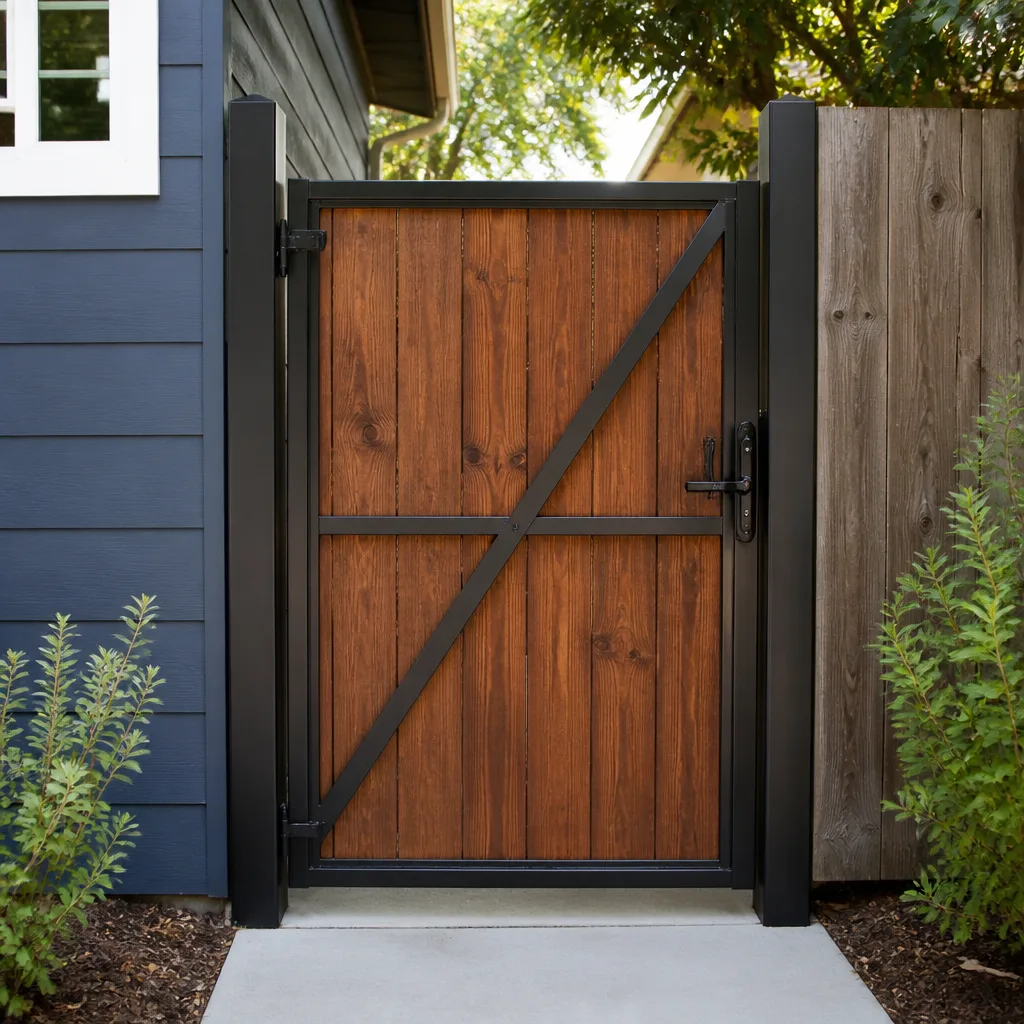 Wood & steel frame
 Farm & ranch
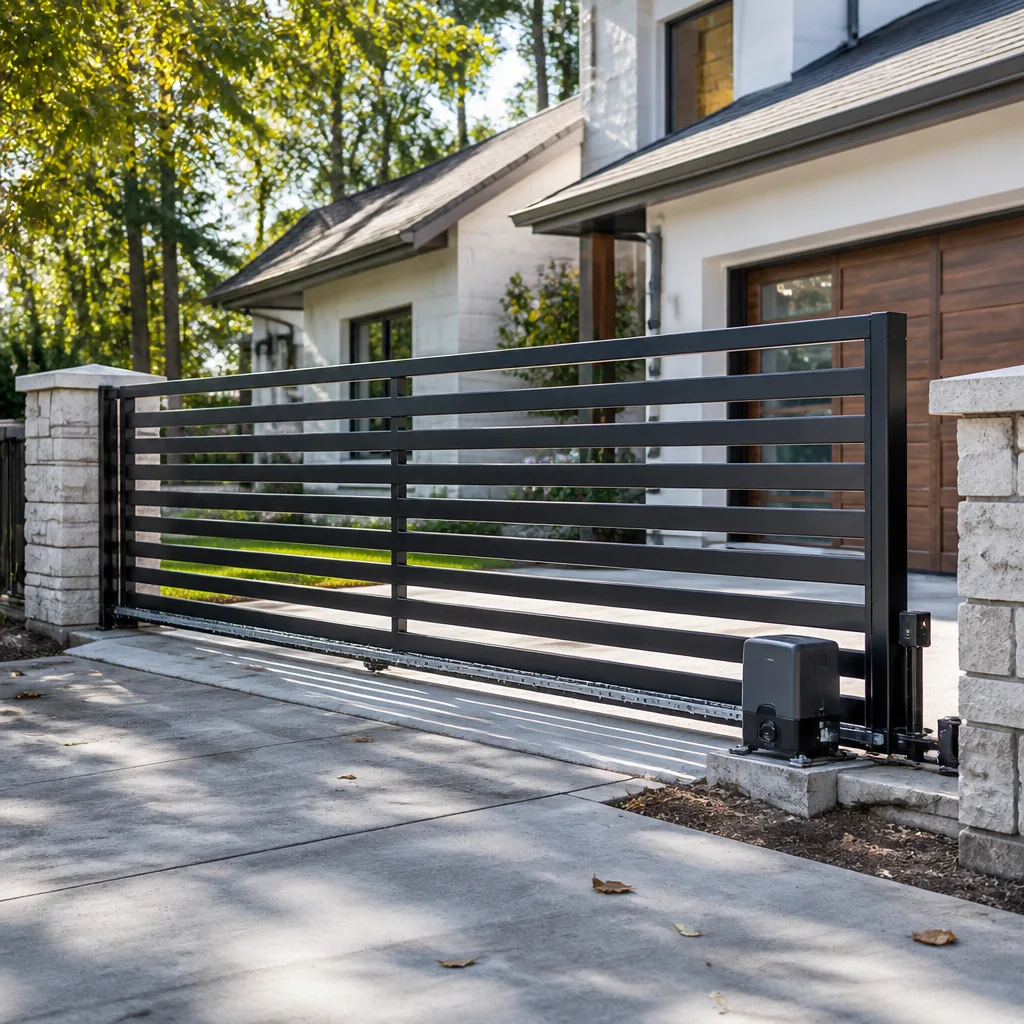 Sliding driveway gates
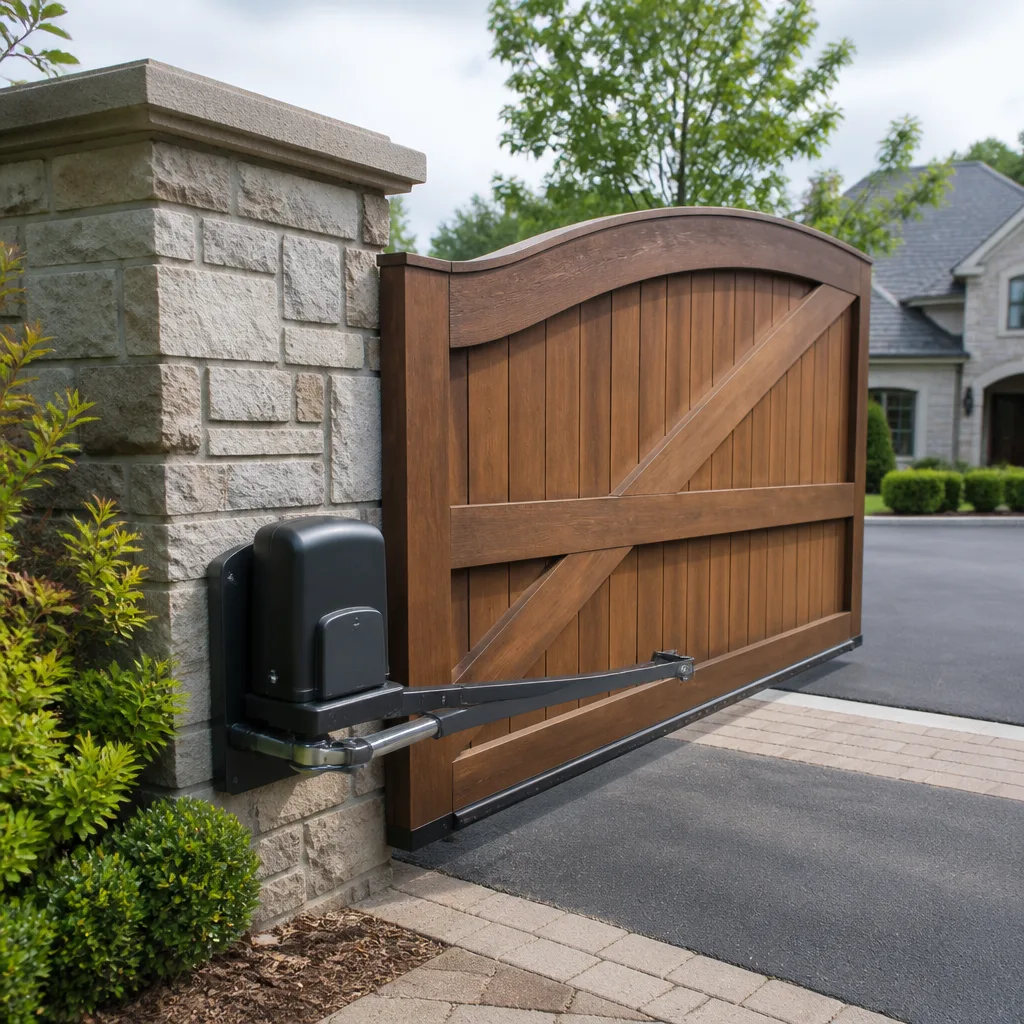 LiftMaster operators
Free on-site gate assessment - hinges, posts, and your LiftMaster or Nice gate operator checked before anything is quoted
The assessment is free and the quote is the invoice.
Get your free estimateGate Installation Maintenance Schedule: What to Do and When
Ninety days after installation is the most important maintenance window your gate will ever have, and almost no one tells new gate owners this. It’s when footing settlement is complete, when hinge load distribution has equalized, and when limit switch calibration should be verified against the gate’s actual travel weight. Miss that window and you won’t notice anything dramatic – just a gate that starts drifting a half-inch off its stop, a motor that works a little harder each month, a weld that’s carrying more load than it should. This guide lays out the exact first-year schedule we walk Mesquite homeowners through, the measurements that confirm settling went normally, and the record-keeping that saves real money on every service call after that.
Quick Answer
A new driveway gate needs checks at 30 days, 90 days, 6 months, and 12 months, then a shift to annual and twice-yearly service from year two onward. The 30-day and 90-day visits are the critical ones: footings finish settling, hinge loads equalize, and automation limit switches need recalibration against the gate’s real travel weight. After the first year, the schedule intervals change because the gate has stopped moving under its own settling.
Styles & brands we work with
- Wrought iron
- Wood & steel frame
- Farm & ranch
- Sliding driveway gates
- LiftMaster operators
Table of Contents
- The First-Year Maintenance Timeline
- What Settling Actually Means for a New Gate
- Limit Switch Drift in Year One
- The Long-Term Schedule That Begins at Year Two
- What to Record and Keep From Installation
- How Mesquite’s Climate Changes the Schedule
- Common Mistakes to Avoid
- Frequently Asked Questions
The First-Year Maintenance Timeline
A newly installed gate is a moving structure settling into the ground. Every interval in year one exists to catch a specific thing before it becomes expensive. Here’s the schedule we give every Mesquite homeowner at the end of an installation.
- 30 days: Re-torque all hinge bolts and mounting hardware to spec. Footings haven’t fully cured but have started to settle. Walk the gate through its full arc by hand and feel for drag or binding. Check post plumb with a level – any visible lean means a call, not a wait.
- 90 days: The critical visit. Footing settlement is complete. Verify limit switch calibration against actual travel weight and check the opener’s current draw against the original spec. Re-check post plumb and hinge load distribution. Reset or shim any hinge showing unequal wear.
- 6 months: Lubricate hinges, rollers, and the operator’s chain or screw drive per the manufacturer’s spec for your specific opener. Check the safety edges and photo-eye alignment. Inspect welds at the gate frame and at the post mounts for hairline cracks.
- 12 months: Full inspection of structure, finish, automation, and access control. Touch up any rust or coating wear, replace the operator battery if it’s a backup type, and reset the schedule for year two.
If your installation was done by our gate installation team in Mesquite, every one of these intervals is in the written handoff you get when the job closes. If it wasn’t, put them on your calendar now.
What Settling Actually Means for a New Gate
Settling isn’t a vague apology for a gate that sags. It’s the normal movement of a footing in response to the load it’s carrying, and it happens in a predictable arc over about 90 days. A concrete footing for a driveway gate is typically set 24 to 36 inches deep depending on soil and gate weight, and it takes that long for the concrete to cure fully and for the surrounding soil to consolidate around it under the weight of the post and gate. Mesquite’s caliche-heavy soil and hot, dry summers make that consolidation faster and more uneven than in wetter climates.
Two measurements confirm settling went normally versus abnormally:
- Post plumb: Set a spirit level on the gate post in both directions and take a reading. A gate with a slight lean of a fraction of a degree from the day it was installed is normal. A gate that has moved more than about half a degree in 90 days is not – it means the footing is moving, and it needs to be caught before the gate swings into a stop it can’t reach.
- Gate-to-stop gap: With the gate closed, measure the gap between the gate frame and the physical stop post at the top, middle, and bottom of the gate. Those three measurements should match the day-one measurements within a small tolerance. If the gap has grown or shrunk by a quarter inch or more in 90 days, settling has been abnormal and the gate needs adjustment or the footing needs assessment.
We see this most often in newer Mesquite subdivisions where the gate post sat on fill rather than native soil. The post looks fine at delivery and starts wandering by month three.
Limit Switch Drift in Year One
Limit switches tell your gate motor where open and closed actually are. They’re set to a specific travel distance during installation, and in the first year, that travel distance changes – because the gate has settled, because the hinges have worn in, because the operator has run against real-world weight and temperature rather than the factory bench.
When limit switches drift, you see it as one of a few symptoms: the gate stops short of the fully closed position, the gate reverses in the last few inches, the motor strains at one end of travel, or the gate creeps past its stop and bonks the post. None of those are the opener’s fault. They’re calibration drift, and they are the single most common first-year service call we get in Mesquite.
Here’s the honest part: use the operator’s built-in diagnostic (most FAAC, BFT, Linear, and Viking units have one) to check travel, but let a trained technician physically adjust the limit cams. On a heavy driveway gate, a limit switch set wrong means a gate that runs with excessive force, which can damage the opener, stress the gate frame, and on some operators void the warranty. The verification is fine to do yourself; the adjustment is not.
If your opener is one we don’t recognize on sight, that alone is a reason to call – our gate motor and opener service is trained on nine major brands, so we handle the calibration on the first visit rather than learning your system at your expense.
The Long-Term Schedule That Begins at Year Two
Year two is where the maintenance schedule changes shape. The gate has stopped settling – or, if it hasn’t, you already know that and it’s being watched. The urgent visits go away and preventive service takes over. This is also where a lot of homeowners quietly stop paying attention, which is exactly when a $40 hinge becomes a $900 gate repair.
- Twice-yearly service in Mesquite specifically: Spring and late fall. Spring catches winter storm damage, loosened fasteners from temperature cycling, and dust accumulation in the operator. Fall catches heat-season wear, dried-out lubricant, and any rust starting under the finish from summer UV exposure.
- Annual: Full inspection of the gate structure, all welds, finish and coating, operator mechanicals, safety edges, photo-eye alignment, and access control (keypads, remotes, battery backup).
- Every 3 to 5 years: Operator gearbox service, replacement of wearable components (rollers, chain, sprockets if applicable), and re-coating of exposed metal on older gates.
- Every 8 to 10 years: Full operator assessment. Electronics don’t have an infinite life, and while gate openers can run well past a decade with proper service, it’s the point at which replacement planning starts making more sense than repair.
Why the interval change? Because first-year intervals are calibrated to the rate at which a new gate changes. After year one, the gate changes at the rate of normal wear and Mesquite’s climate, which is slower and more predictable.
What to Record and Keep From Installation
This is the part most homeowners skip, and it’s the part that saves the most money. When a technician pulls up to service a gate, the difference between a 30-minute visit and a two-hour diagnostic hunt is usually a folder of half a dozen items kept from the day of installation.
- Installation photos: The footing depth and post placement before concrete, the mounted brackets, the hinged and latched sides of the gate, the operator positioned in place. Photograph everything the day it’s installed.
- Day-one measurements: Gate-to-stop gaps (top, middle, bottom), post plumb readings, gate height at the latch and hinge ends, and the travel distance of the operator. These are your baseline. Without them, no future measurement means anything.
- Model and serial numbers: The exact model of your gate operator, any access control keypad, and the safety edges. Write them on the operator’s own label with a marker and photograph the label.
- Wiring diagram and control board photo: Photograph the inside of the operator’s control box showing which terminal each wire lands on. Rewiring mysteries disappear when you have that photo.
- Programmed settings: If your installer set force limits, speed, reverse delay, or access codes, keep the written record. Lost access codes are a common and avoidable service call.
- The written warranty and service documents: The installer’s guarantee, the manufacturer’s warranty card, and any handoff list of the maintenance intervals already applied to the gate.
If you bought a house with a gate already installed and got no records, that’s fine – a full first inspection can rebuild most of the baseline. It’s just another service call, but cheaper than guessing. Our gate repair service in Mesquite does exactly this kind of baseline rebuild.
How Mesquite’s Climate Changes the Schedule
The schedule above is the general shape. In Mesquite specifically, three climate realities push certain intervals up.
Heat and UV. Summer temperatures in Mesquite routinely sit above 100 degrees, and UV exposure cooks the finish on painted or powder-coated gates. That means slower first-year settling isn’t a worry here, but faster finish degradation is. Inspect coating at every visit, not just annually.
Dust and fine sand. Wind-carried dust gets into hinges, rollers, chain drives, and the operator’s gearbox. Operators on dusty driveways need their lubrication interval shortened – typically every 6 months rather than 12 – and photo-eye lenses need wiping twice as often as a wetter climate would demand.
Caliche soil and rapid drainage. Caliche-heavy soil under Mesquite footings consolidates fast and hard. That means settling shows up earlier and more decisively. A 30-day plumb check matters more in Mesquite than in most places, not less.
We see a lot of gates in neighborhoods like Sun City Mesquite and along the newer ridge development areas where the hot, dry summer meets fast-draining soil and the first-year schedule needs a tighter early check. Every Mesquite job we do is scheduled with that in mind.
Common Mistakes to Avoid
- Skipping the 30-day and 90-day checks. The first two visits are the highest-leverage maintenance a gate will ever get. If you miss them, the third and fourth visits cost more and the gate wears faster for the rest of its life.
- Adjusting limit switches yourself. Force limits and cam positions aren’t a guessing game. A wrong setting on a heavy gate can damage the operator, strain the gate frame, and on some models void the warranty.
- Using the wrong lubricant. Hinges, rollers, and chain drives don’t all want the same product – and dust-heavy Mesquite driveways punish the wrong choice quickly. Follow the manufacturer’s spec for your specific opener and hinges.
- Ignoring small weld cracks. A hairline crack at a gate frame weld is easy to miss and inexpensive to fix. Left alone, the weld fails under load and the gate drops.
- Treating the operator like it doesn’t need service. The opener is a motor with a gearbox and a control board. It needs oil, adjustment, and inspection just like any other motor – the gate gets the attention, the operator gets forgotten.
- Waiting for a symptom before you call. Gates don’t usually fail suddenly. They fail slowly through a dozen small things that the schedule above would have caught.
- Losing the installation records. Every service call after the first one is faster and cheaper when the baseline measurements, model numbers, and control board photo are in a folder you can hand to the technician.
See the difference
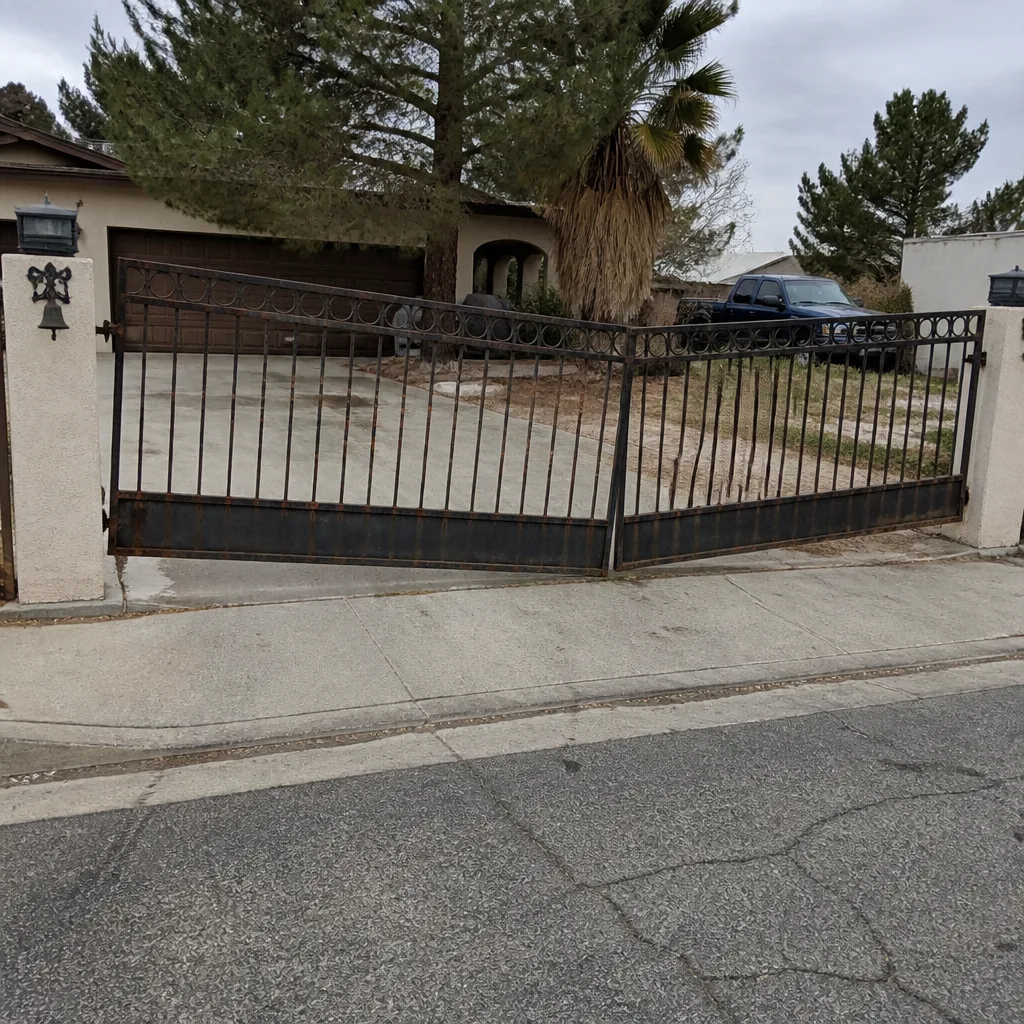 Before
 After
 Before
 After
 Before
 After
When to Call a Professional
Some of this schedule you can absolutely manage yourself – wiping photo-eyes, checking plumb with a level, walking the gate for drag. The moment you feel resistance in the swing, hear the operator straining, see a weld hairline crack, notice the gate swinging past its stop, or find your post has moved more than a fraction of a degree in the first 90 days, call. Those are not “wait and see” symptoms. Our Mesquite team is trained and equipped on nine major gate-automation brands, including FAAC, BFT, Linear, and Viking, so the correct fix happens on the first visit. Ironworks Gate Co. Mesquite offers free estimates in Mesquite – call (844) 797-2573 and a live person answers, 24 hours a day, 7 days a week.
Frequently Asked Questions
Four times: at 30 days, 90 days, 6 months, and 12 months. The 30-day and 90-day visits align with footing settling and hinge load equalization, and the 90-day check is when limit switch calibration should be verified against the gate’s actual travel weight. After year one, service shifts to twice-yearly in Mesquite’s climate, then to annual plus periodic operator service.
Settling is the normal 90-day consolidation of the footing and surrounding soil under the gate’s weight. A small amount of movement is expected. Abnormal settling shows up as more than roughly half a degree of post lean in 90 days, or a gate-to-stop gap that has grown or shrunk by a quarter inch or more. Either of those is a call, not a wait.
Twice-yearly service in spring and late fall, plus annual inspection. Mesquite’s heat and UV accelerate finish degradation, dust and fine sand shorten the operator’s lubrication interval to roughly every 6 months, and caliche soil makes 30-day plumb checks matter more than in most places. Call (844) 797-2573 for a scheduled inspection – estimates are free.
Installation photos (footing, brackets, operator, hinged and latched sides), day-one gap and plumb measurements, model and serial numbers, a photograph of the control board wiring, all programmed settings, and the written warranty and handoff documents. That record makes every future service visit faster and less expensive.
You can safely use the operator’s built-in diagnostic to see whether travel has drifted. Physical limit cam and force-limit adjustments on a heavy driveway gate should be done by a trained technician – wrong settings can damage the opener, strain the gate frame, and void the warranty on some models. If the gate stops short, reverses in the last few inches, or creeps past its stop, call for calibration.
After year one, the gate has stopped settling and the intervals shift from “catch early settling” to “prevent wear.” That means twice-yearly preventive service in Mesquite, annual full inspection, gearbox and wearable service every 3 to 5 years, and full operator assessment every 8 to 10 years. The interval change is because the gate now changes at the rate of normal wear rather than the rate of new installation.
The Bottom Line
The first year after installation is its own maintenance category. The 30-day and 90-day checkpoints catch footing settlement and limit switch drift before either becomes expensive. After year one, the schedule shifts to twice-yearly service in Mesquite’s climate, annual inspection, and periodic operator service at longer intervals. Keep the installation records – baseline measurements, model numbers, control board photos, programmed settings – because they make every future service call faster and less costly. And if you’re on the fence about whether something is settling normally or moving abnormally, call. A short diagnostic visit now costs far less than a gate repair later.
Ironworks Gate Co. Mesquite is a gate specialist for Mesquite homeowners – repair, installation, motors and openers, access control, parts and welding, trained on nine major gate-automation brands. Every job is protected by our written 90-Day Done Right Promise, priced upfront and agreed before a bolt is turned. Standing offers include $50 Off Any Repair Over $250, a Free Second Opinion on Any Written Estimate, the $89 Seasonal Tune-Up, and a permanent 5% Senior and Veteran discount.
Call (844) 797-2573 for a free estimate in Mesquite. A live person answers 24 hours a day, 7 days a week. Or start at the Ironworks Gate Co. Mesquite home page to see the full scope of what we do.
Written by the team at Ironworks Gate Co. Mesquite.