
Last updated November 17, 2026
 Wrought iron
 Wood & steel frame
 Farm & ranch
 Sliding driveway gates
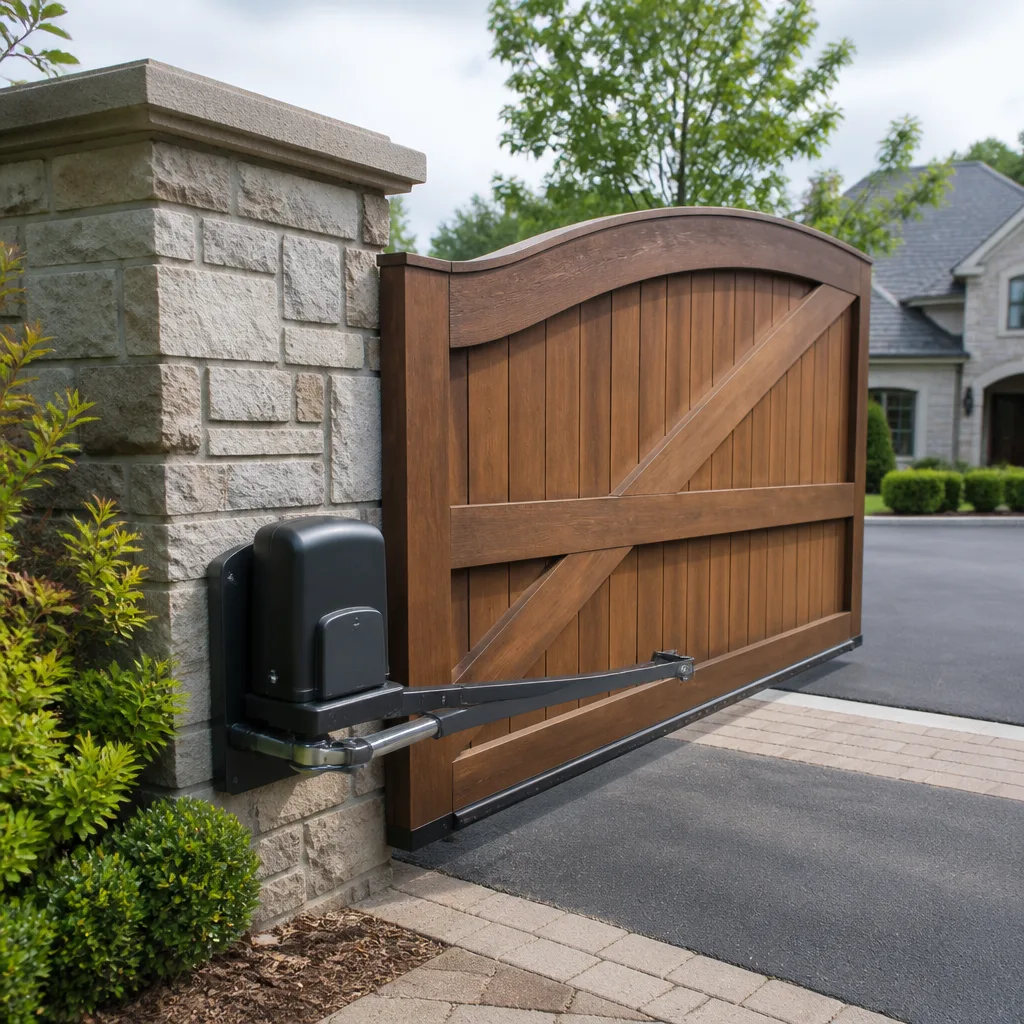 LiftMaster operators
Free on-site gate assessment - hinges, posts, and your LiftMaster or Nice gate operator checked before anything is quoted
The assessment is free and the quote is the invoice.
Get your free estimateGate Access Control Maintenance Schedule: What to Do and When
The number one reason access control systems fail in high-desert climates isn’t age. It’s that nobody accounts for what 115°F does to control board capacitors between June and August. Capacitors dry out, solder joints crack, and a keypad that worked fine in April starts dropping codes in July. In our experience across Mesquite, the failures that surprise homeowners are rarely sudden. They follow a predictable decay curve tied to heat cycles, dust, and time. This guide gives you a season-by-season schedule that treats the electronics, the credentials, and the mechanical linkages as one system. Follow it and you’ll prevent most of the service calls we get.
Quick Answer
Test your gate access control system monthly, service the mechanical linkages and lubricate moving parts quarterly, audit user codes and credentials twice a year, and test battery backup every three months in Mesquite’s heat. Schedule a full professional inspection every spring before temperatures peak in June. The three-part rhythm – monthly tests, quarterly service, seasonal professional checks – keeps the whole system working as one unit instead of a collection of parts failing at different times.
Styles & brands we work with
- Wrought iron
- Wood & steel frame
- Farm & ranch
- Sliding driveway gates
- LiftMaster operators
Table of Contents
- Why Mesquite Heat Changes the Maintenance Calendar
- Monthly: The Five-Minute Check That Catches Most Problems
- Quarterly: Lubrication, Linkages, and Response Times
- Twice a Year: The Credential Audit Most Homeowners Skip
- Battery Backup Testing: Why Once a Year Isn’t Enough
- Pre-June: The Inspection That Saves You a July Service Call
- The One-Page Log That Makes Service Faster and Cheaper
- The Annual Calendar at a Glance
Why Mesquite Heat Changes the Maintenance Calendar
Access control systems in Mesquite live through a heat cycle most manufacturers don’t design their maintenance intervals around. Control boards sit inside metal housings that soak up sun all afternoon. Interior temperatures inside those enclosures can run 30 to 40 degrees above ambient. When the outside air hits 112°F in July, the board inside might see 145°F or more. Capacitors rated for 105°C are fine on paper, but repeated heat cycling dries the electrolyte inside them and stresses every solder joint on the board.
What that means for your calendar: the standard “inspect once a year” advice written for mild climates doesn’t hold here. The electronics need checking before the heat arrives, not after something fails. The wiring insulation on exterior runs – especially anything exposed on a south or west wall – cracks faster in Mesquite than in coastal or mountain climates. UV exposure combined with heat is the culprit.
We’ve also watched how winter swings affect things. Mesquite gets cold nights in January and February, and the contraction that follows summer’s expansion works screws loose on terminal blocks and mounting hardware. By the time spring arrives, a keypad that was tight in October may have a loose connection. The pre-June inspection catches both the heat damage from the prior summer and the winter-loosened hardware before either causes a failure.
This is why our gate repair in Mesquite calls spike in July and August. By then the damage is done. A schedule built around the actual climate prevents those calls. If your gate motor is aging and you’re not sure it will survive another summer, our gate motor and opener service in Mesquite can assess it before the heat peaks.
Monthly: The Five-Minute Check That Catches Most Problems
Most access control problems announce themselves weeks before they stop the gate. A five-minute monthly walkthrough catches them while they’re still cheap to fix. You don’t need tools for this part. You need eyes and ears.
- Cycle the gate three times. Listen for changes in the motor sound. A new grind, a slower start, or a hesitation at any point in the travel means something is changing mechanically.
- Test every entry method. Use the keypad code, the remote, and any app or intercom you have. If one method fails and the others work, you have an isolated issue. If all fail together, the problem is likely the control board or power.
- Watch the safety sensors. Walk through the beam path while the gate is closing. The gate should reverse promptly. If the reverse is slower than it used to be, note it in your log. Slow sensor response is often a hinge or roller problem, not an electrical one.
- Look at the keypad display. Faded digits, a flickering backlight, or condensation behind the lens are early signs of housing failure. In Mesquite, UV degrades keypad plastics faster than in most climates.
- Check the enclosure for debris. Desert dust accumulates in control boxes, and packed dust holds heat against the board. A quick visual check tells you if it needs clearing.
Write down anything unusual with the date. That log becomes the most useful tool you own when something finally fails. It also tells a technician exactly when a problem started, which shortens the diagnostic time and lowers your bill.
Quarterly: Lubrication, Linkages, and Response Times
Here’s a fact most homeowners don’t connect: slow access control response is often a mechanical problem wearing an electrical disguise. When the gate takes an extra second to start moving after a code is entered, the control board gets blamed. Usually the real issue is a dry hinge, a worn roller, or a linkage that’s binding. The motor has to overcome that resistance before the gate moves, and the delay looks like an electronic fault.
Every three months, walk the full travel of the gate with the operator disengaged if your model allows it. Push the gate by hand and feel for binding, grinding, or uneven resistance. Then lubricate:
- Hinges and pivot points with a lithium or silicone-based lubricant – not WD-40, which attracts dust and gums up in desert conditions
- The operator’s drive chain or screw, following the manufacturer’s spec for your specific brand
- Roller tracks and guide rails, wiped clean before lubricating
- The latch and strike plate, if your gate has one
Check the mounting hardware at the same time. Bolts on gate posts work loose through the summer-winter expansion cycle. A post that shifts a quarter inch can throw off the alignment enough to slow the gate and strain the operator. Tightening hardware now prevents a motor replacement later.
If your gate uses a Linear or Viking operator, our technicians carry the parts and specs for both on the truck. If it’s a DoorKing unit, we can check the linkage and the electronics on the same visit. Being trained across nine major brands means we diagnose the actual problem instead of guessing.
Twice a Year: The Credential Audit Most Homeowners Skip
This is the maintenance task almost everyone ignores, and it’s the one with the biggest security impact. Every access control system accumulates users over time. The contractor who did work two years ago still has a code. The neighbor who fed the cat during a vacation still has a remote. The cleaning service that changed owners still has an entry method that was never revoked.
Stale credentials are security holes that sit quietly until someone uses them. Do a full audit every six months – spring and fall work well because they bracket the busy seasons.
- Pull the current user list from your keypad or controller, whether it’s a DoorKing, Ghost Controls, or any other system with user management.
- Match every code and remote to a real, current person. If you can’t name who holds a credential, it comes off the list.
- Revoke anything tied to a service provider who no longer works for you.
- Change any shared or temporary code that was set up for a one-time purpose and never removed.
- Update the master code if it’s the default from the factory. Many homeowners never change it, and default codes are published in every manual.
Write the current user list into your log with the date. When a credential question comes up later, you’ll have a record. The audit takes 15 minutes if your system is organized and an hour if it isn’t. Either way, it’s cheaper than discovering an old code was used by someone who shouldn’t have had it.
Battery Backup Testing: Why Once a Year Isn’t Enough
Battery backup exists for one reason: to keep your gate working through a power outage or a control board fault. In Mesquite’s heat, batteries age faster than the manufacturer’s stated life. A sealed lead-acid battery rated for three to five years in a climate-controlled room may last half that sitting in a hot enclosure on a west-facing wall.
Test the backup every three months, not once a year. The test itself is simple on most systems:
- With the gate closed, kill power at the breaker or disconnect switch
- Command the gate to open using a remote or keypad
- Watch whether it completes a full cycle on battery alone
- Note how quickly it moves and whether it stalls partway
- Restore power and confirm the system recharges without fault codes
A battery that moves the gate sluggishly or stalls at the halfway point is on its way out. Replace it before it fails during an actual outage, when it matters most. Since Mesquite gets monsoon-season lightning that can knock out power for hours, a working backup isn’t a luxury. Check the battery terminals for corrosion during the test too – heat and dust speed that up.
Our gate installation in Mesquite work always includes a battery backup, and we recommend testing any new install’s battery at the three-month mark to establish a baseline for how it behaves in your specific location.
Pre-June: The Inspection That Saves You a July Service Call
The single most valuable maintenance task on this calendar happens once a year, in late May or early June, before temperatures climb past 105°F. This is the inspection you want a trained eye on because it targets the parts that fail silently in heat.
The pre-summer inspection should cover:
- Control board inspection – look for bulging capacitors, discolored solder joints, and dust accumulation inside the enclosure. These are heat-damage signs.
- Wiring insulation check – especially any exterior run exposed to direct sun. Cracked insulation on a south or west wall is a common Mesquite failure.
- Terminal block torque – screws loosen through the winter contraction cycle; tightening them now prevents a connection failure in July.
- Enclosure seals – check weatherstripping and gaskets. A compromised seal lets dust and monsoon moisture into the electronics.
- Operator cooling path – make sure vents aren’t blocked and that the enclosure isn’t in a spot where afternoon sun hits it directly. Shade from a service panel or a simple sun shield can add years to board life.
If your system is older or has already had a failure, this inspection is worth having a professional do. A board that looks fine can have capacitors that are already drying out. Catching that in May saves a July call, a longer wait for service, and a bigger bill. Our Ironworks Gate Co. Mesquite home page has more on what our service visits include.
The One-Page Log That Makes Service Faster and Cheaper
Every maintenance task on this schedule produces information. A log is how you keep that information from getting lost. One page, kept near the gate or in a file folder, with these columns:
- Date of the service or check
- What was checked or done
- Anything noted as unusual
- Who performed it (you, or a technician)
- Parts replaced, with part numbers if available
This log does three things. It makes warranty claims faster because you can show exactly what was done and when. It makes future service calls cheaper because the technician doesn’t have to spend billable time figuring out the maintenance history. And it tells you when a part is coming due for replacement instead of waiting for it to fail.
Keep the operator’s manual with the log. Note the model and serial number on the first page. When you call us, having that number ready means we know what parts to bring, which is one reason most jobs are completed in a single visit with no-hassle upfront pricing settled before a single bolt is turned.
The Annual Calendar at a Glance
Here’s the whole schedule in one place, built for Mesquite’s heat.
- Every month: Cycle the gate three times, test every entry method, watch the safety sensors, check keypad condition and enclosure debris. Note anything unusual.
- Every three months: Lubricate hinges, linkages, chains, and tracks. Check mounting hardware. Test battery backup by killing power and running a full cycle.
- Every six months (spring and fall): Pull the user list, verify every credential against a real person, revoke anything stale, change any temporary code still active.
- Late May / early June: Full pre-summer inspection – control board, wiring insulation, terminal torque, enclosure seals, operator cooling. This is the highest-value check on the calendar.
- October: Post-summer review – recheck anything flagged in June, confirm the battery survived the heat, tighten hardware loosened by the season.
- Any time: Log every check, part, and observation so the system’s history stays with the system.
Common Mistakes to Avoid
- Testing the battery only once a year. In Mesquite heat, a battery can fail inside six months. Quarterly testing is the only way to know it will work during an outage.
- Blaming the electronics for a slow gate. A delay in response is far more often a dry hinge or binding linkage. Check the mechanics before you pay for a board replacement.
- Never auditing user codes. Old contractor codes, forgotten service-provider remotes, and default master codes are open doors. Do the spring and fall audit.
- Using WD-40 on hinges. It attracts dust and dries to a gummy film in desert conditions. Use a lithium or silicone-based lubricant instead.
- Skipping the pre-June inspection. The heat damage happens in July and August. The time to catch it is before it starts.
- Not keeping a log. Without one, every service call starts from zero, warranty claims drag, and you can’t see a part approaching failure.
- Assuming a new install needs no schedule. A new system in Mesquite starts aging on day one. Establish the battery baseline at three months and follow the same calendar from there.
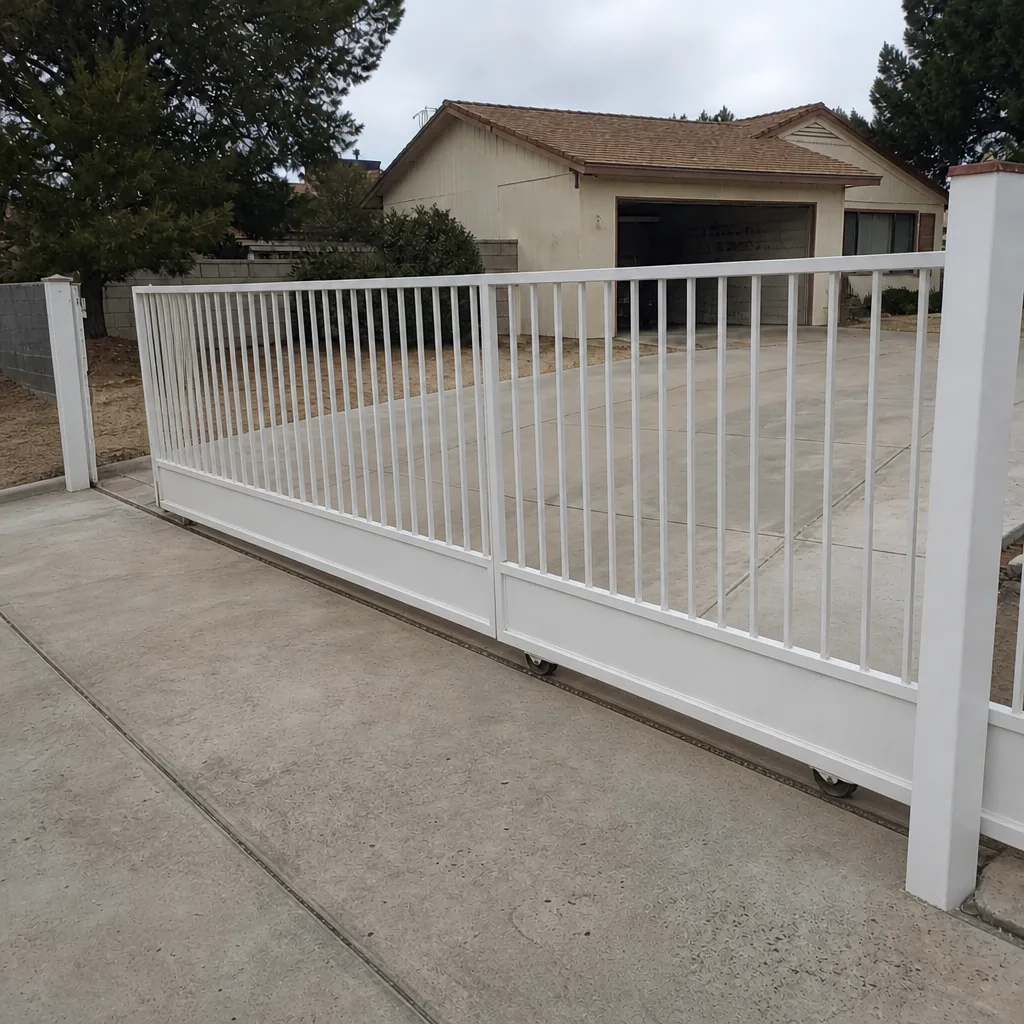
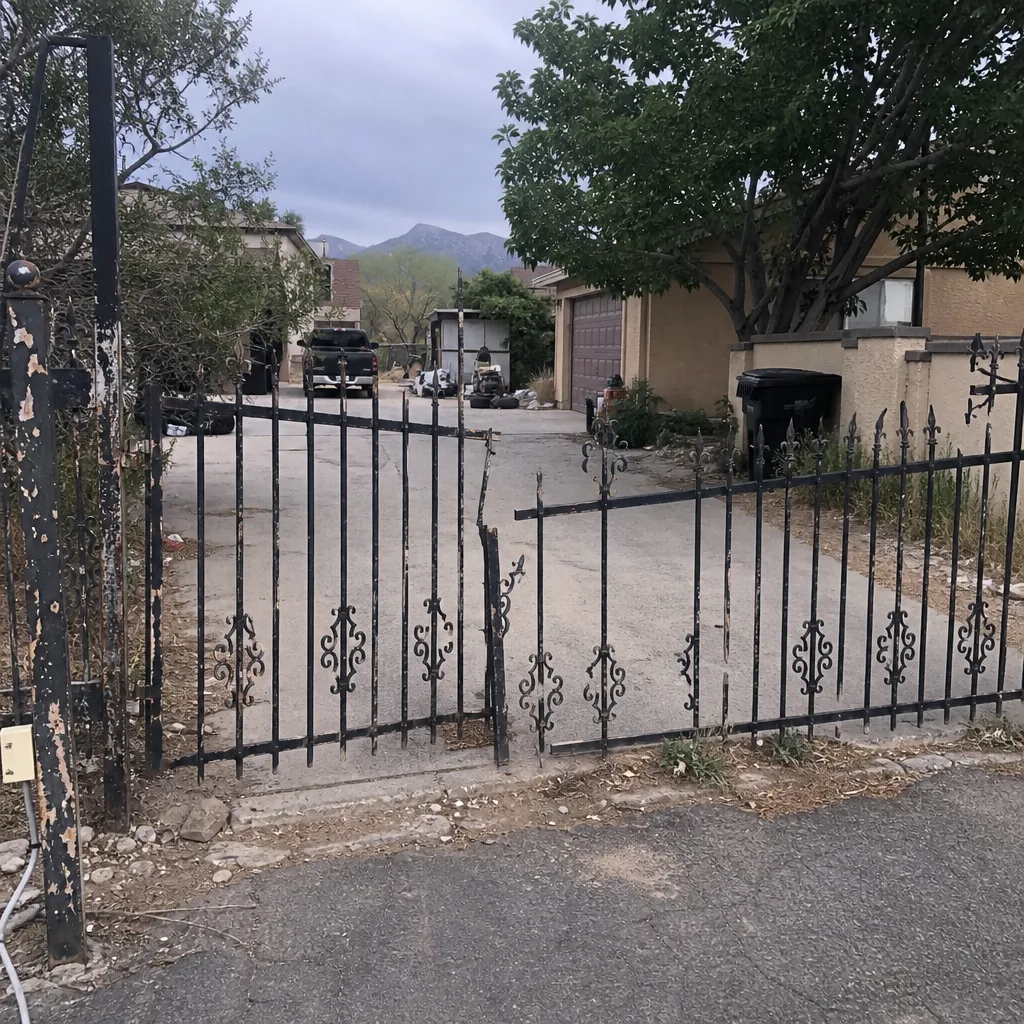
See the difference
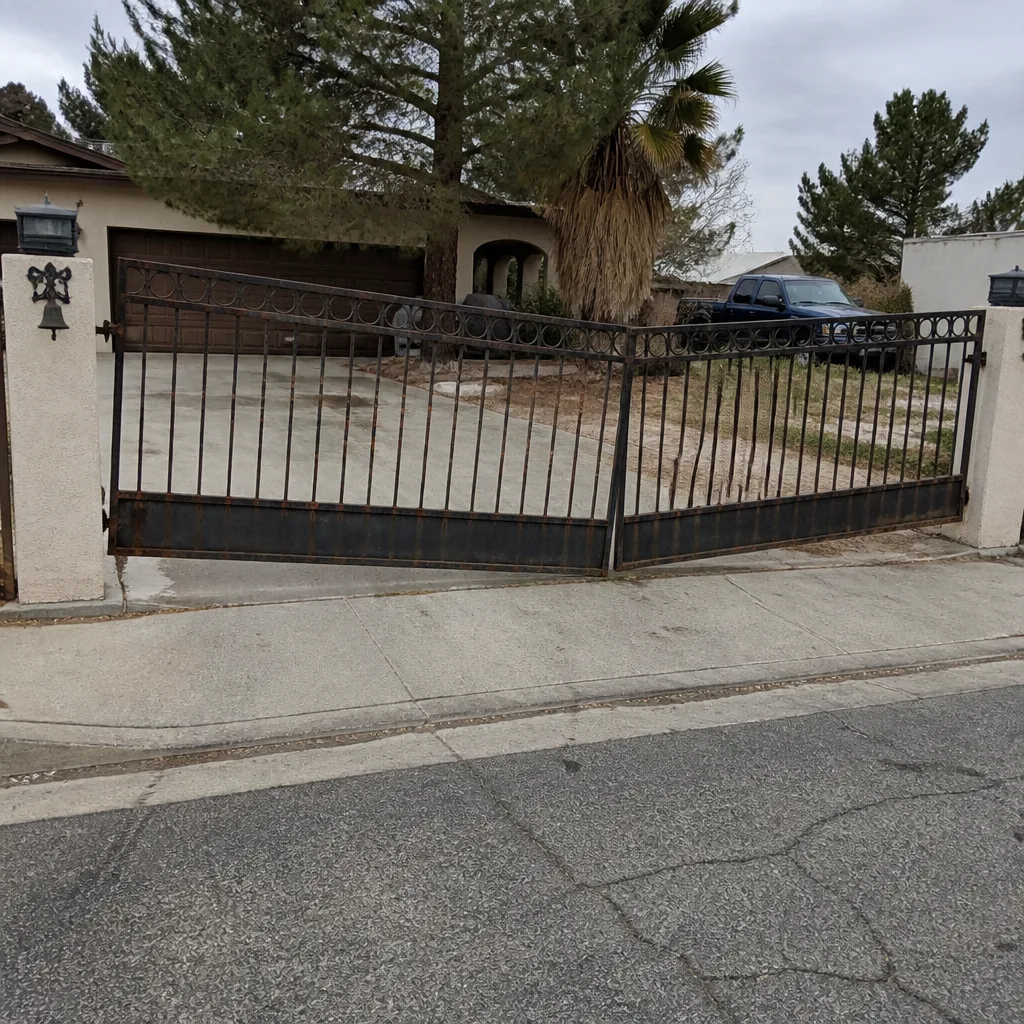 Before
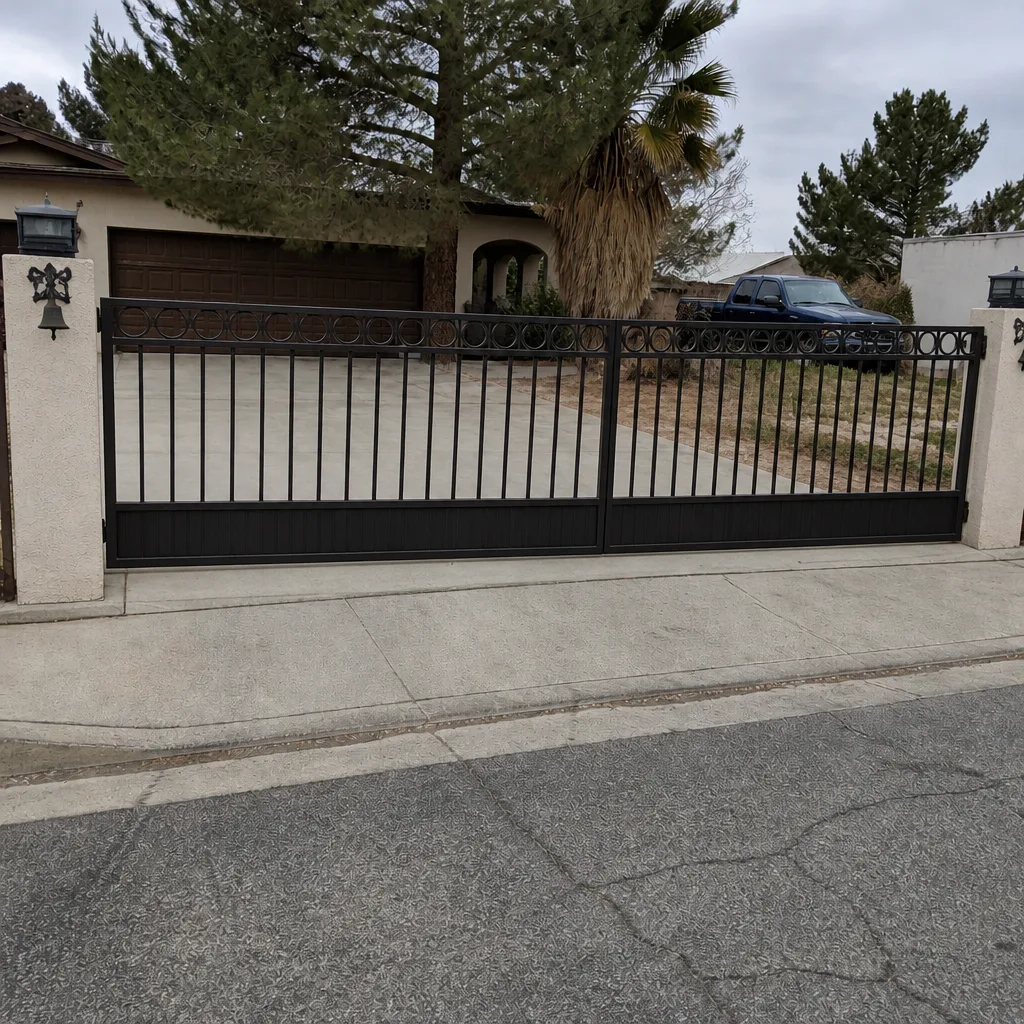 After
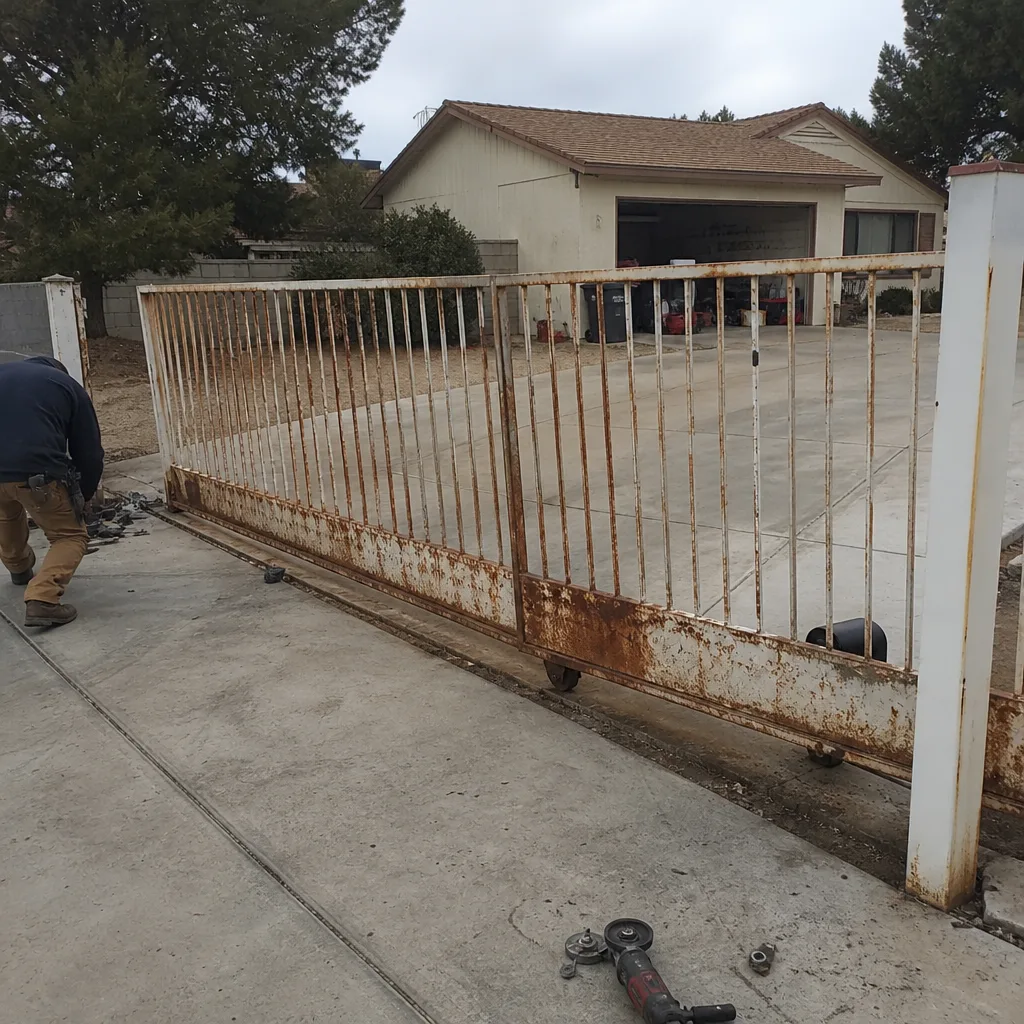 Before
 After
 Before
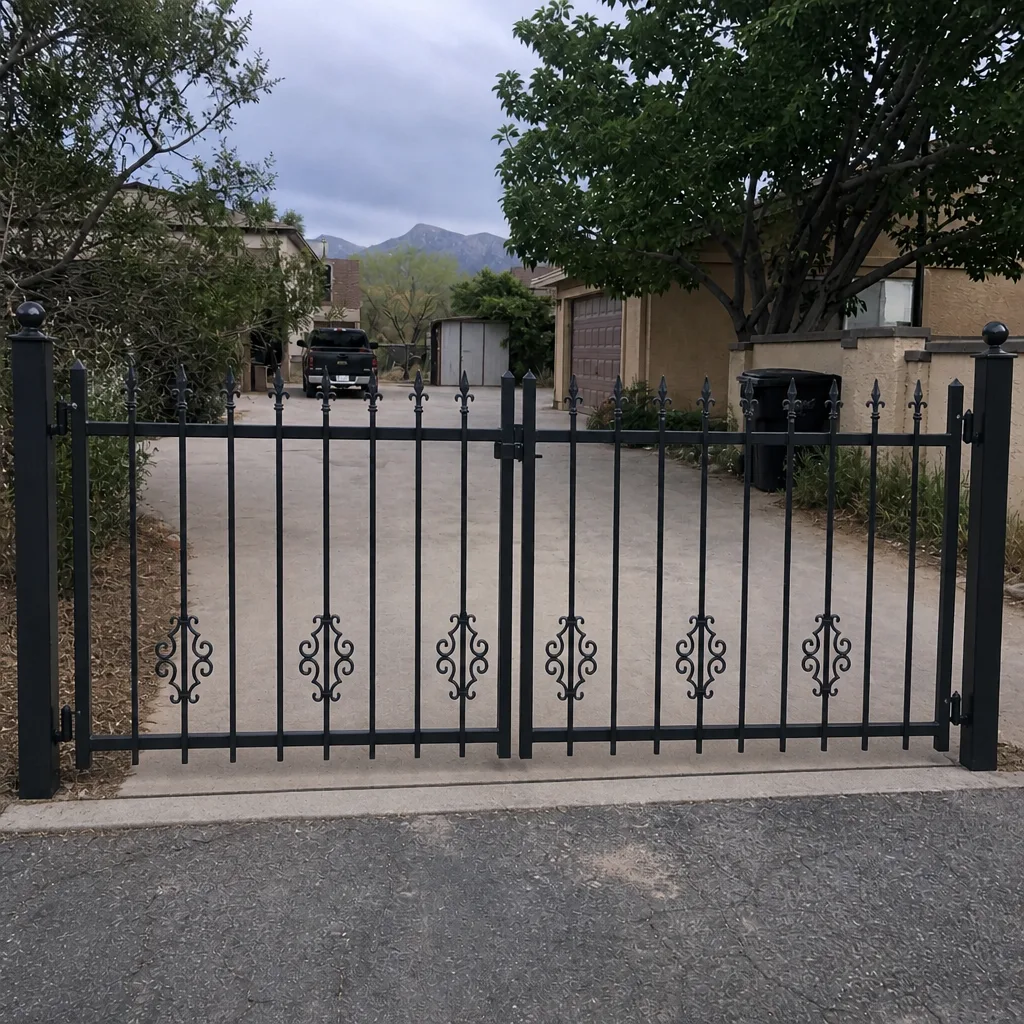 After
When to Call a Professional
Some tasks on this calendar are yours to handle. Others need a trained eye. Call a professional if the control board shows bulging capacitors or discolored joints, if any exterior wiring insulation is cracked or exposed, if the gate reverses slowly or not at all when the safety beam is broken, if the battery won’t complete a full cycle after a charge, or if you can’t tell whether a problem is mechanical or electrical. Those are the cases where a wrong guess costs more than a service call. Ironworks Gate Co. Mesquite offers free estimates in Mesquite – call (844) 797-2573. Our technicians have up to 13 years of experience across nine gate-automation brands, so the correct fix is made on the first visit. Every job is backed by the written 90-Day Done Right Promise, and our trained technicians follow the K.E.Y.S. values code on every call.
Frequently Asked Questions
Test the basic functions monthly and do a full credential and battery check quarterly or twice a year, depending on the task. The monthly five-minute walkthrough catches most problems, and the spring and fall audits catch the rest. In Mesquite’s heat, the battery test should happen every three months rather than once a year.
Heat is usually the cause, either dried-out capacitors on the control board or UV-degraded keypad plastics that fail once temperatures climb past 110°F. A pre-June inspection catches both before they cause a July failure. Call (844) 797-2573 for an exact quote – estimates are free.
If the gate responds promptly to a code or remote but moves slowly once it starts, the issue is mechanical – a dry hinge, worn roller, or binding linkage. If there’s a delay between the command and any movement at all, look at the electronics. Our technicians diagnose this correctly the first time on brands like Linear, Viking, and DoorKing.
Pull the current user list from your controller, match every code and remote to a real current person, revoke anything tied to a service provider who no longer works for you, and change any default master code. Do this every spring and fall. If your system doesn’t display a user list, you can call us for a free second opinion on any written estimate and we’ll walk you through it.
It should cover the control board, wiring insulation, terminal torque, enclosure seals, and the operator’s cooling path. These are the parts that fail silently in heat, and the time to catch them is late May or early June. Ironworks offers an $89 seasonal tune-up that covers this inspection.
Yes. A log makes warranty claims faster, makes future service calls cheaper because the technician doesn’t re-diagnose history, and tells you when a part is approaching replacement. One page with dates, tasks, and notes is enough, and the old operator’s manual lives with it.
The Bottom Line
Access control failures in Mesquite follow a predictable curve tied to heat, dust, and time. The schedule that prevents them is simple: monthly function tests, quarterly lubrication and battery checks, twice-a-year credential audits, and a pre-June inspection of the electronics before summer peaks. Treat the electronics, the credentials, and the mechanical linkages as one system and most service calls never happen. Keep a one-page log so the system’s history travels with it. Done right, and backed in writing, a well-maintained gate works through the heat the way it was meant to.
When you need a hand or a second opinion, call Ironworks Gate Co. Mesquite at (844) 797-2573 for a free estimate. We’re here 24 hours a day, and a live person answers every call.
Written by the team at Ironworks Gate Co. Mesquite.