
Last updated November 16, 2026
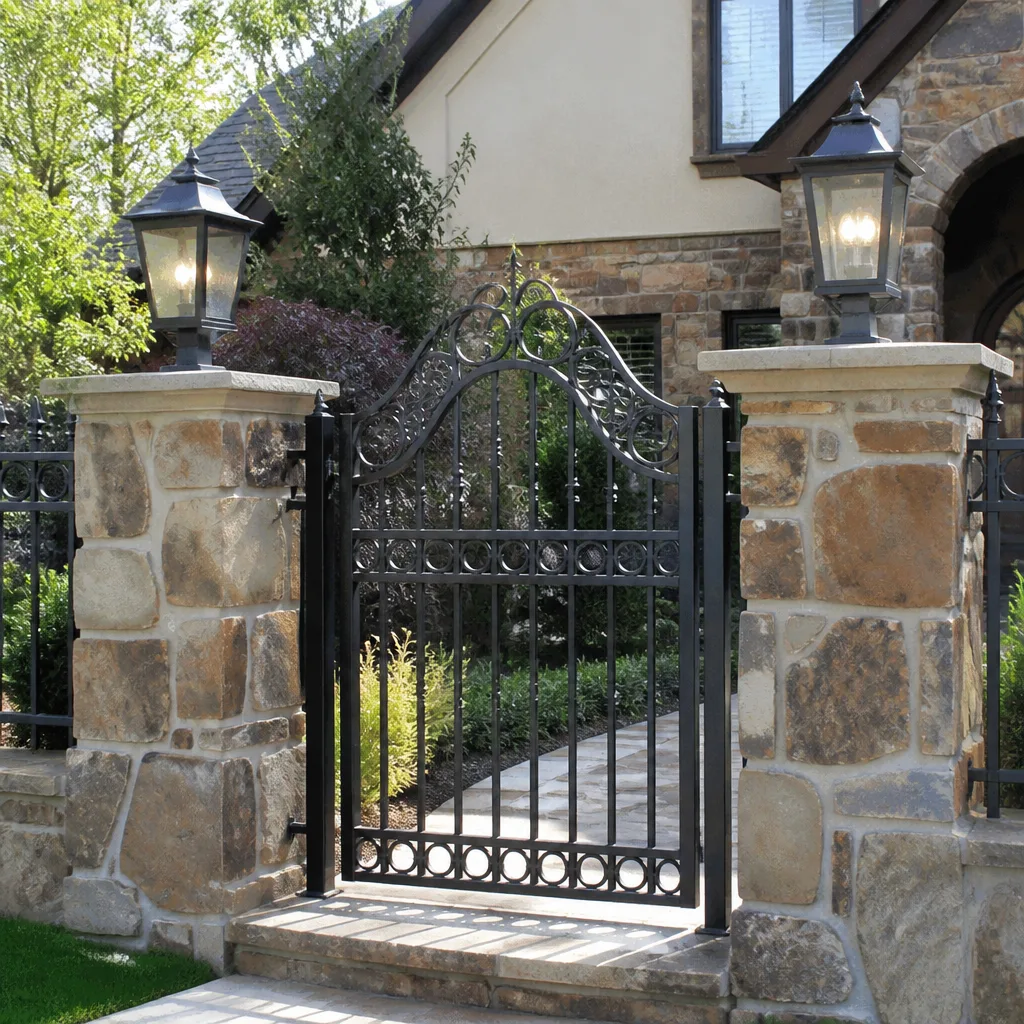 Wrought iron
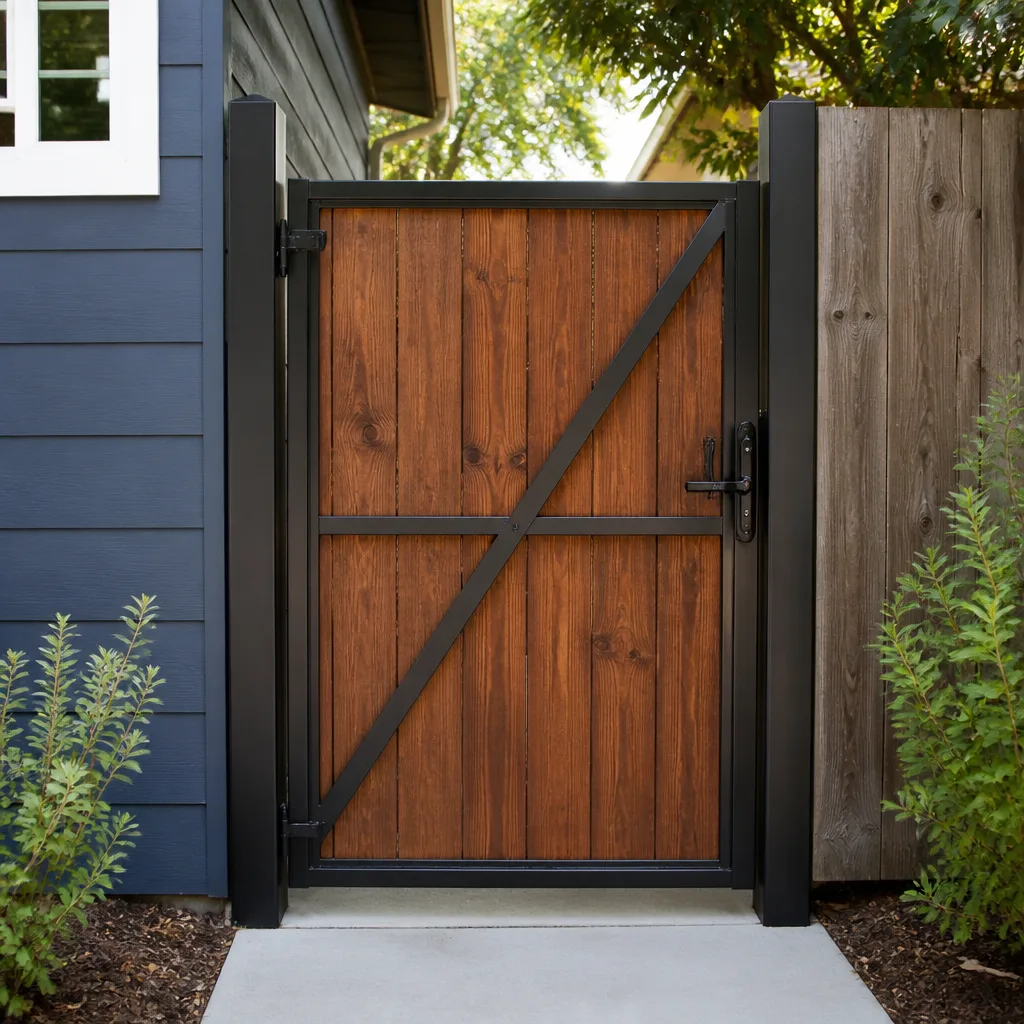 Wood & steel frame
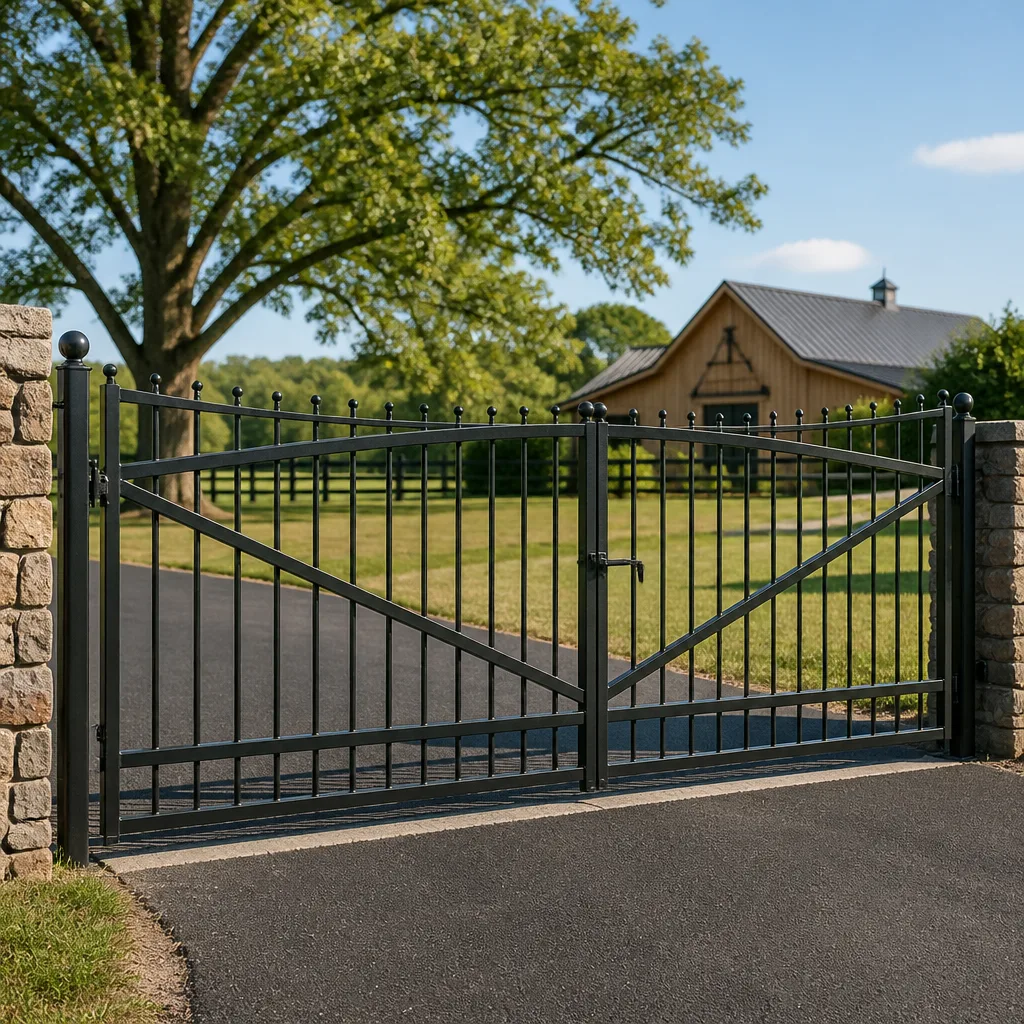 Farm & ranch
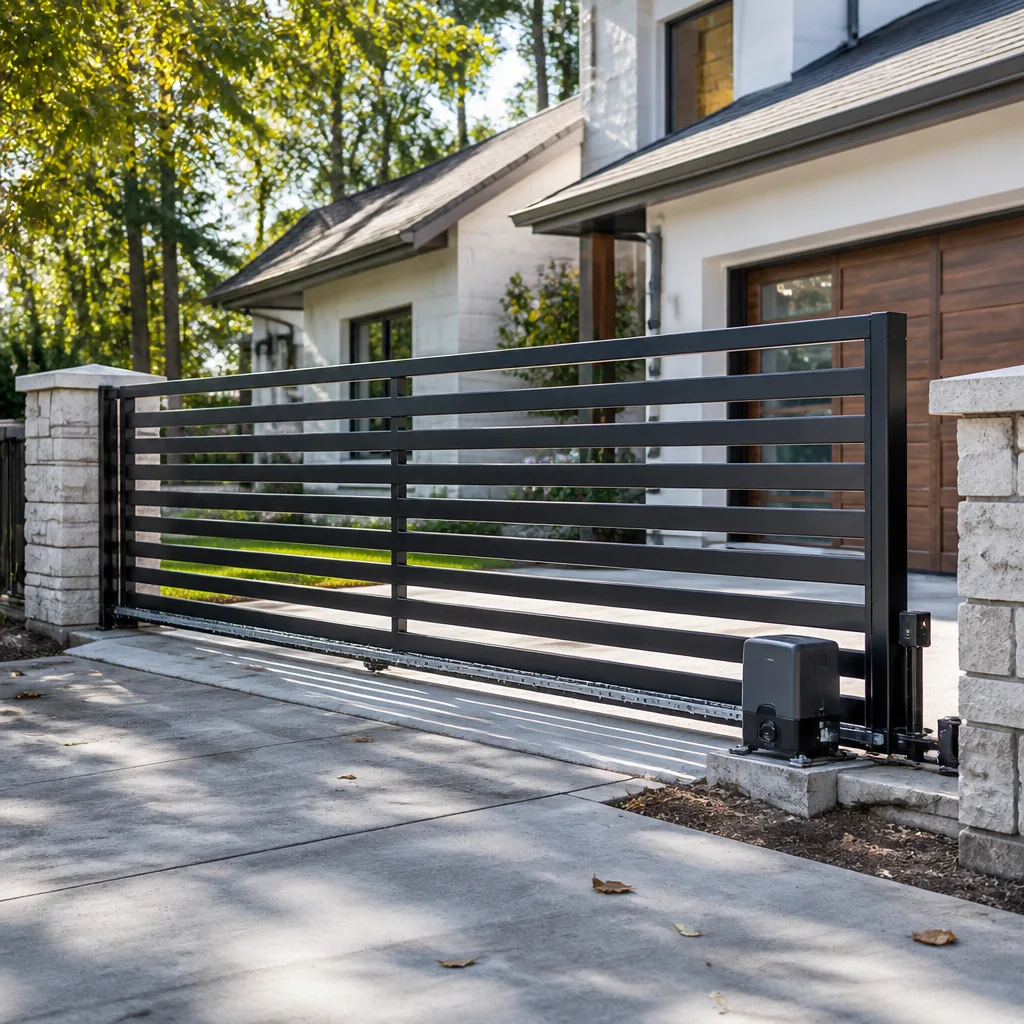 Sliding driveway gates
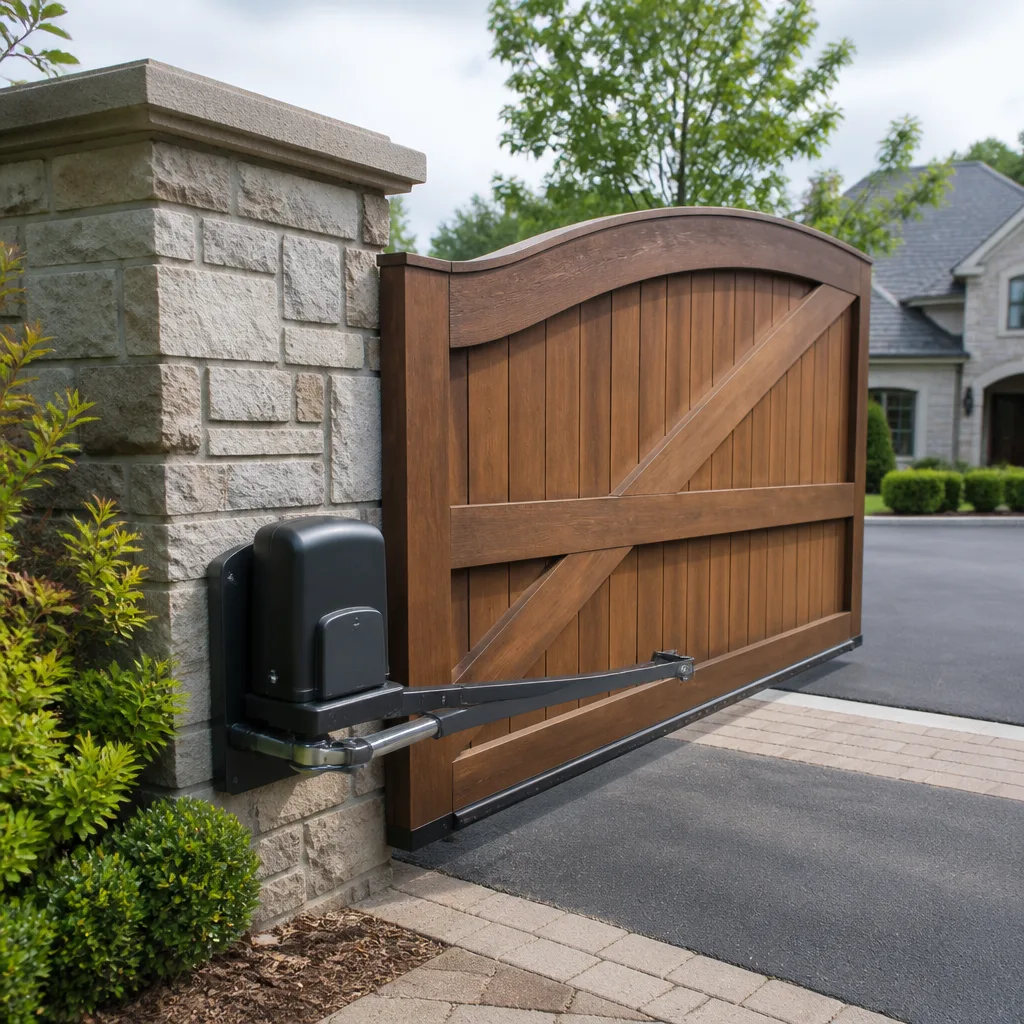 LiftMaster operators
Free on-site gate assessment - hinges, posts, and your LiftMaster or Nice gate operator checked before anything is quoted
The assessment is free and the quote is the invoice.
Get your free estimateThe Complete Gate Repair Guide for Mesquite Homeowners
Temperatures in Mesquite regularly climb past 115°F, and that is hot enough to warp an aluminum channel guide, lift a steel post footing half an inch out of the ground, and cook the grease out of a gate motor in a single summer. Most gate repair advice you will find online was written for coastal or northern climates and quietly ignores all of it. This guide treats Mesquite as its own environment: caliche soil, alkaline dust, monsoon runoff, and all. You’ll learn how gates fail here specifically, how to tell repair from replacement, and what to ask any company before they touch your automation electronics.
Quick Answer
Gate repair in Mesquite, NV usually comes down to four culprits: heat-fatigued metal, corroded post footings in alkaline caliche soil, UV-baked operator components, and post-monsoon drainage damage. A repair is almost always cheaper than a replacement when the gate frame and posts are structurally sound – often a same-day fix on hinges, rollers, latches, and lubrication. The tricky part is accurately diagnosing which one you’re facing, because in desert heat, a symptom that looks electrical is frequently mechanical.
Styles & brands we work with
- Wrought iron
- Wood & steel frame
- Farm & ranch
- Sliding driveway gates
- LiftMaster operators
Table of Contents
- Why Gates Fail Differently in Mesquite
- Caliche Soil and Post Corrosion at the Footing Line
- UV and Heat: Why Components Rated for Other Climates Fail Here
- The Mesquite Monsoon Failure Sequence
- Repair or Replace? A Desert-Calibrated Decision Tree
- What to Ask Before Anyone Touches Your Automation
- A Seasonal Maintenance Calendar for Mesquite Gates
Why Gates Fail Differently in Mesquite
A gate in Mesquite lives a harder life than the same gate in Portland or Minneapolis. The metal expands and contracts across a temperature swing that can span 60 degrees in a single day. Dust blows in off the open desert and works into every roller bearing and hinge pin. The soil is alkaline enough to eat steel from the inside out. And every summer, the lubricant inside your motor migrates away from the gears it was meant to protect.
The result is a failure pattern the national repair guides simply don’t describe:
- Warped channel guides. Aluminum tracks expand in the heat and don’t always contract evenly. Sliding gates start to bind in July and August.
- Footing lift. Repeated expansion pushes steel posts up out of the ground, throwing the whole gate out of plumb over a few seasons.
- Lubricant loss. Heat drives grease out of gate operator gearboxes, accelerating wear dramatically.
- Seized hardware. Alkaline dust bonds with old grease and turns hinges into grinding, immovable joints.
We’ve seen gates in Mesquite that were perfectly sound five years ago become unbudgeable by August. If your gate is jamming, sagging, or grinding, our Gate Repair in Mesquite service handles the full range. The key point: what looks like a motor problem is very often a mechanical one, and the fix is cheaper and faster than a motor swap.
Caliche Soil and Post Corrosion at the Footing Line
Most of the Mesquite area sits on caliche – a hard, calcium-carbonate-rich soil layer that is alkaline enough to attack steel. You won’t see the damage from above. The real corrosion happens right at the footing line, where the post meets the ground, and it advances from the inside out while the paint above stays intact.
What to check, carefully:
- Look at the post at ground level for bubbling paint, orange rust bloom, or a chalky white residue. That white residue is the caliche reaction, and it’s the first sign of trouble.
- Push the post side to side by hand. Any movement at the base means the footing is compromised.
- Probe the base of the post with a screwdriver. If it sinks in easily, the steel is pitted and thin.
- Check for a hairline gap where the concrete meets the post. Water and alkaline soil get in there, and once they do, the rust accelerates.
Caught early, a corroded footing can be repaired by cleaning, treating, and re-setting the post. Left alone, the post will eventually snap at ground level, and the gate comes down with it. If you’re seeing the early signs, it’s worth having a trained eye look before the next monsoon. Heat fatigue at the footing line and structural corrosion are two reasons we sometimes recommend a full Gate Installation in Mesquite rather than a repair – but only after the posts are honestly assessed.
UV and Heat: Why Components Rated for Other Climates Fail Here
A component marketed as weatherproof in Seattle is not the same thing as a component rated for Mesquite. The distinction matters most in three places: exposed plastic housings, rubber seals, and the electronics inside your gate opener.
UV radiation here is relentless. Plastic keypad covers, limit-switch housings, and the wire insulation that runs along a fence line all degrade faster than the manufacturer’s spec sheet assumes. Photovoltaic cells on solar gate openers can lose efficiency as their encapsulation yellows. Seals around control boxes dry out and crack, letting in the very dust you were trying to keep out.
What that means for you:
- Ask whether replacement parts are rated for high-UV, high-heat exposure. Off-the-shelf “weatherproof” parts often aren’t.
- Keep the operator control box shaded or ventilated if it’s in full afternoon sun.
- Replace cracked seals and sun-baked wire insulation before they fail, not after.
- If you run a solar opener – the Mighty Mule line is common on driveway gates around here – have the panel and battery checked at the start of every summer.
The automation side of this is where a lot of repairs are wrongly diagnosed. A motor that refuses to cycle at 2 p.m. in July is behaving differently than the same motor at 7 a.m. in March. Our team is trained on nine leading brands, including LiftMaster, Elite, and DoorKing, so the correct fix is usually made on the first visit. If the opener itself is the problem, our Gate Motor & Opener in Mesquite service covers repair and replacement.
The Mesquite Monsoon Failure Sequence
Mesquite sits in flash-flood country. When a monsoon cell drops an inch of rain in an hour, the runoff doesn’t soak in – it sheets across hard caliche and finds every low spot on your property. The damage to gates follows a predictable order, and knowing it helps you know what to check first.
1. Drainage. Water pools at the base of the posts and under the gate track. This is where the failure begins, not where it ends. Standing water softens the ground around footings and starts the corrosion process at the footing line.
2. Electrical. Once water reaches the operator’s control box or the low-voltage wiring buried near the gate, the electronics can short, the board can fail, or the safety sensors can trip. This is the most expensive stage and the one to catch early. If your gate won’t respond after a storm, stop cycling it and get it looked at before repeated attempts do more damage.
3. Track damage. Grit, gravel, and debris wash into the track and channel. The rollers grind through the fouled track, and a sliding gate that ran smoothly in June starts to jump and bind in July.
After any significant storm, walk your gate line: check for pooled water at the posts, look for water in the control box, and clear the track before you run the gate. If the gate won’t move or makes a new noise, that’s a call-us-now situation, not a wait-and-see. If you need to understand the full scope of what we repair and how we approach it, start at the Ironworks Gate Co. Mesquite home page.
Repair or Replace? A Desert-Calibrated Decision Tree
Generic advice says replace a gate after 15 to 20 years. That threshold is meaningless in Mesquite, where heat fatigue and footing corrosion age a gate on a different schedule. Here’s the decision process we actually use:
Step 1: Assess the structure. Is the frame intact? Are the posts solid at the footing line? If yes, repair is almost always on the table regardless of age.
Step 2: Check for heat fatigue. Look at the corners and weld joints. Cracks, warping, or a frame that’s no longer square point to heat damage that a repair may not fully resolve.
Step 3: Assess the automation. A motor at the end of its service life, with parts no longer available, tips the balance toward a new operator even if the gate itself is sound. A repairable motor does not.
Step 4: Weigh the cost. If the repair comes in well under the cost of a replacement and the structure is sound, repair. If the footing is compromised and the frame is heat-fatigued, a new gate is the honest answer.
Our rule of thumb: repair the gate if the steel is good, replace the operator if the electronics are done, and only replace the whole gate when the structure genuinely can’t be saved. We quote the work in writing before we start, so you’re never surprised by the bill.
What to Ask Before Anyone Touches Your Automation
Automation electronics are the easiest part of a gate to damage and the hardest to fix cheaply. Extreme heat makes that truer. Before you let anyone open your control box, ask these questions:
- “Are you trained on my brand?” Gate operators are not interchangeable. If they don’t service your brand – LiftMaster, Elite, DoorKing, FAAC, BFT, Linear, Viking, Ghost Controls, or Mighty Mule – they may guess at the fix.
- “Will you diagnose before you replace?” A control board is expensive. A technician who tests the board, the sensors, and the wiring before swapping parts is a technician worth hiring.
- “Is the price fixed before work starts?” You should get an upfront number in writing.
- “What’s the guarantee?” Ask for it in writing. Ours is the 90-Day Done Right Promise: if it’s not right, we come back and make it right.
- “Are your technicians background-checked?” Anyone working in your home and on your property should be.
If a company can’t answer these plainly, that’s your answer. Our technicians have up to 13 years of experience and are trained across those nine brands, so if your gate opener needs attention, we can help – and we’ll tell you honestly if a repair isn’t worth it.
A Seasonal Maintenance Calendar for Mesquite Gates
Gates in Mesquite need attention on a desert schedule, not a generic one. Here’s how to stay ahead of the failures described above:
- Spring: Clear the track of winter grit. Lubricate hinges and rollers with a heat-stable product. Test the safety edges and photo-eye sensors.
- Early summer: Check the operator’s grease level and top it off with a high-temp lubricant. Inspect the solar panel and battery if you have one. Look at the post footings before the heat peaks.
- Monsoon season: Clear drainage paths around the gate. Inspect the control box for signs of water after any big storm. Clear the track after storms before cycling the gate.
- Fall: Tighten hardware that loosened over the summer. Check for UV-cracked seals and sun-baked wiring. Touch up paint on any exposed steel at the footing line.
The single best investment is a seasonal tune-up. We offer an $89 Seasonal Tune-Up specifically because a gate that gets checked twice a year lasts dramatically longer in this climate than one that gets attention only when it breaks. For the bigger picture on how repair and installation fit together, our Gate Repair in Mesquite page and Gate Installation in Mesquite page cover the full scope.
Common Mistakes to Avoid
- Treating a mechanical problem as electrical. In desert heat, a binding gate can look like a dead motor. Replacing the motor before checking the track and hinges wastes money.
- Ignoring the footing line. The corrosion that matters is underground, at the base of the post. Check there every season.
- Using standard grease. Everyday grease thins out and migrates in 115°F heat. Use high-temp lubricants rated for the exposure.
- Cycling a wet gate. After a monsoon storm, clear the track before you run the gate. Grit turns a smooth rolling gate into a grinding one.
- Buying generic “weatherproof” parts. UV-rated components are a different category here. Ask for the rating, not the label.
- Waiting until the gate won’t move. A binding gate or one odd noise is the signal to act. Waiting until failure usually means a more expensive repair.
- Hiring generalists for automation. A company without brand-specific training may get the fix wrong the first time, and the second visit costs you more.
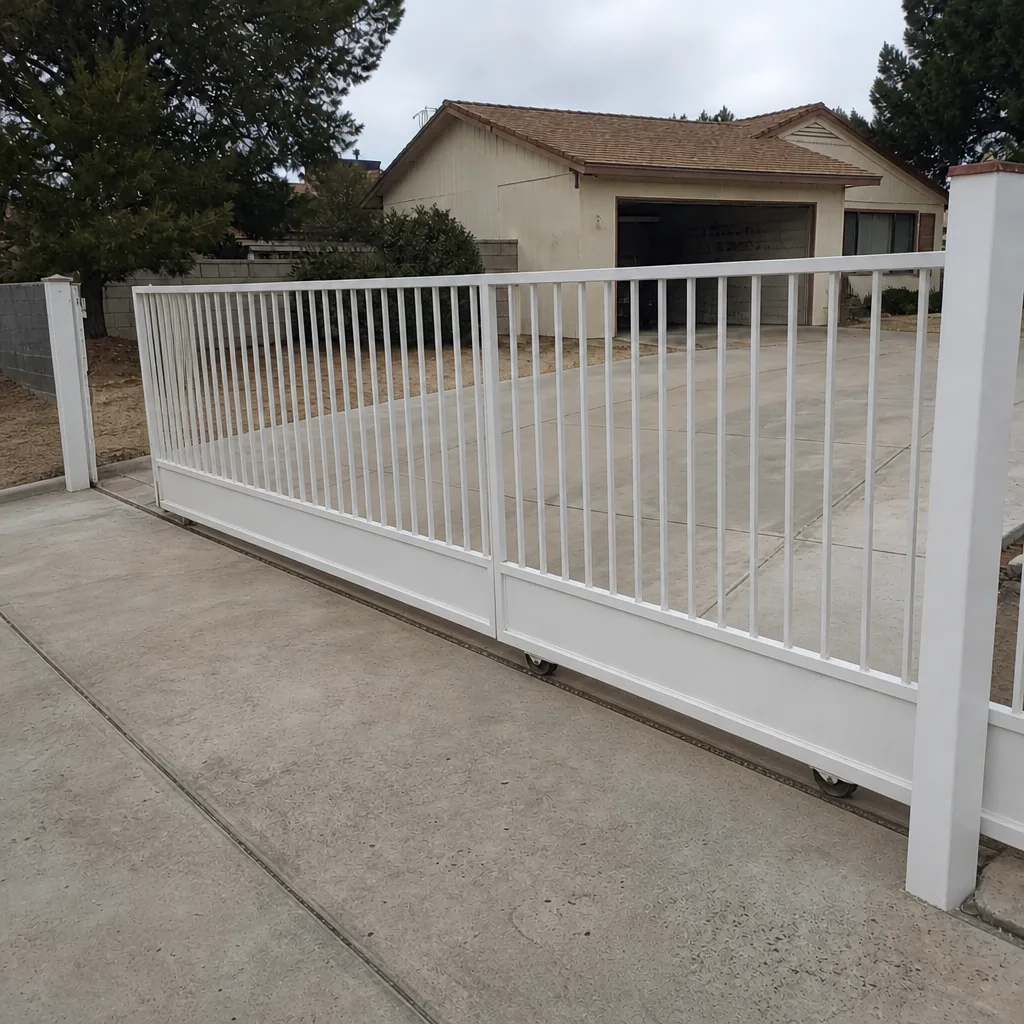
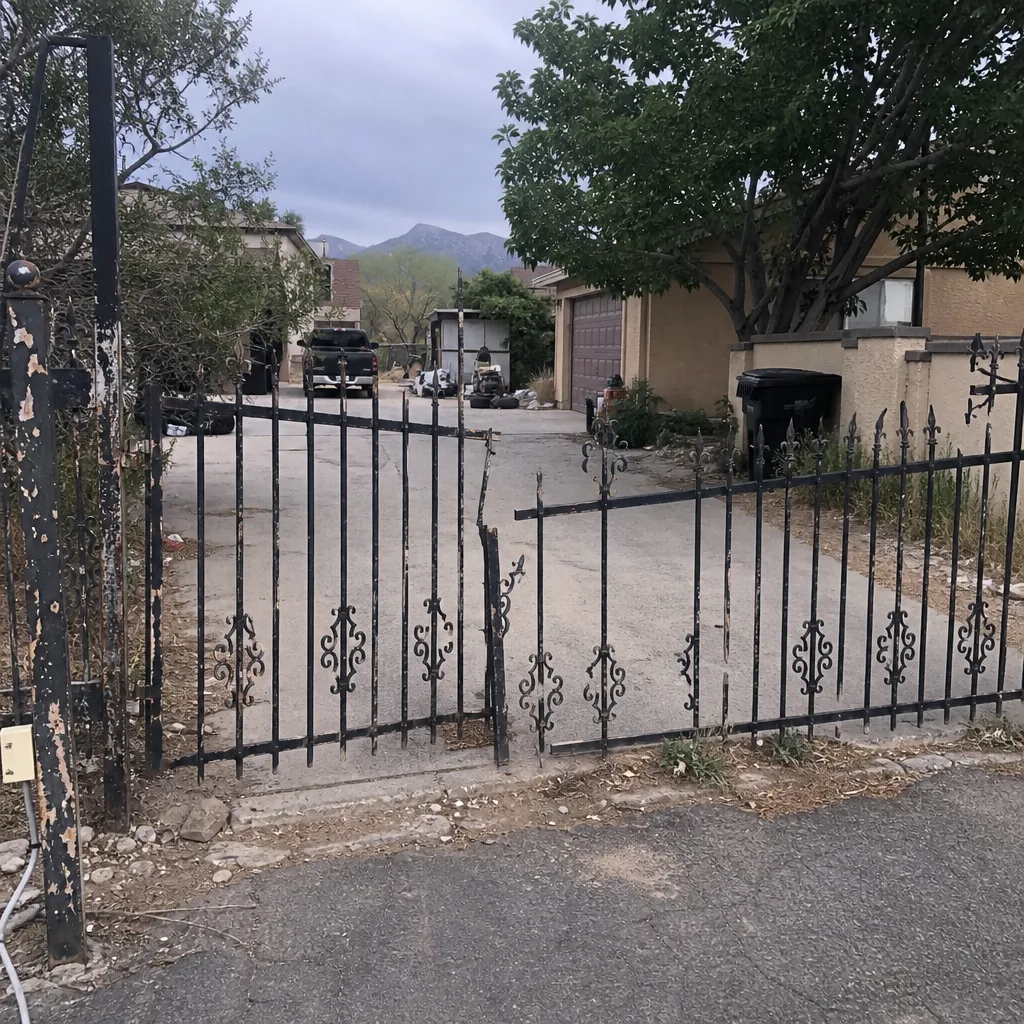
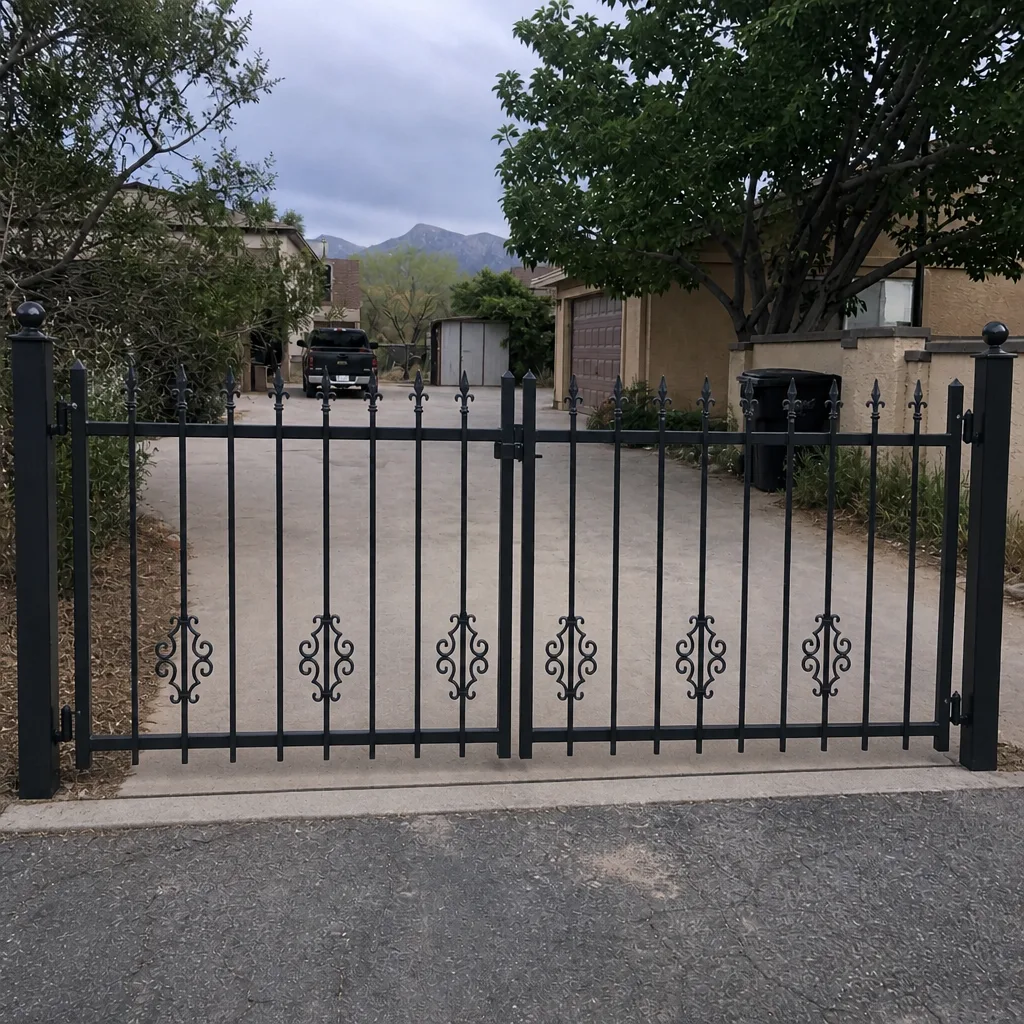
See the difference
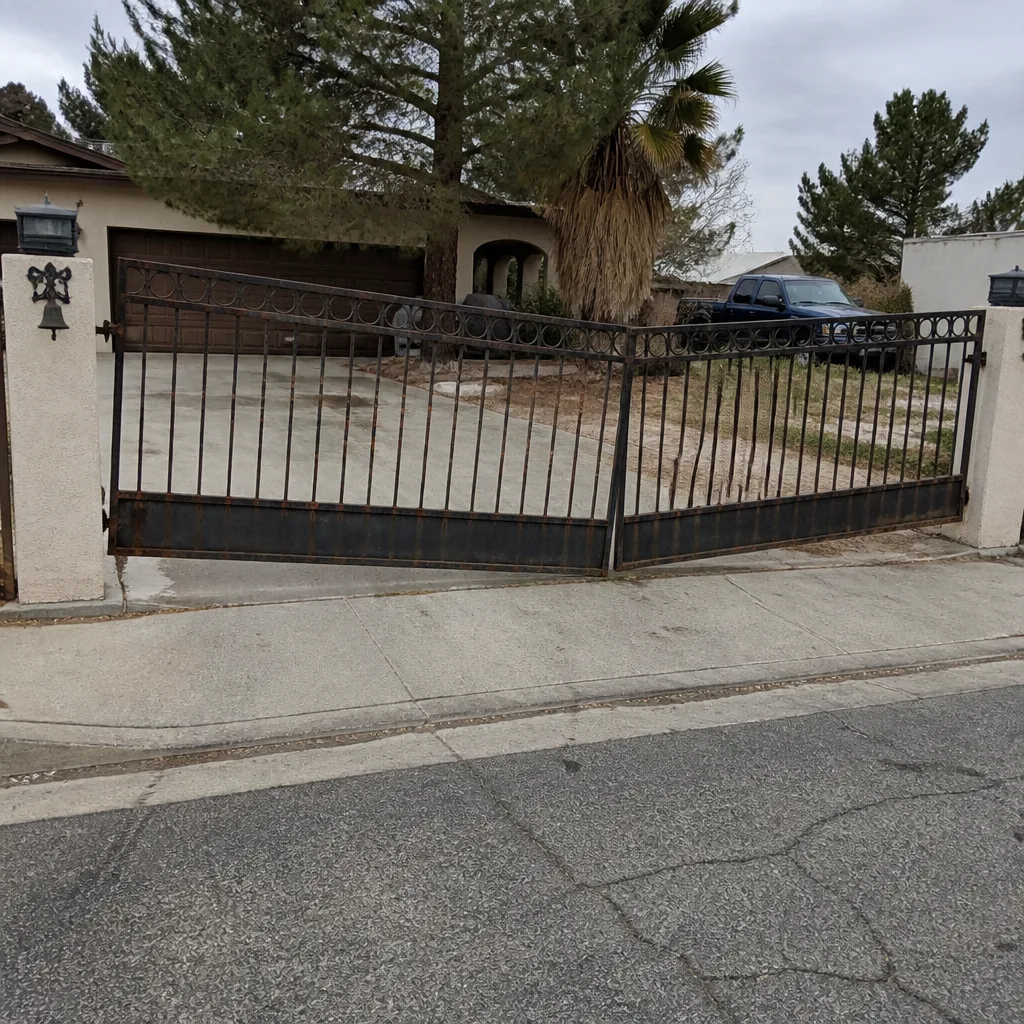 Before
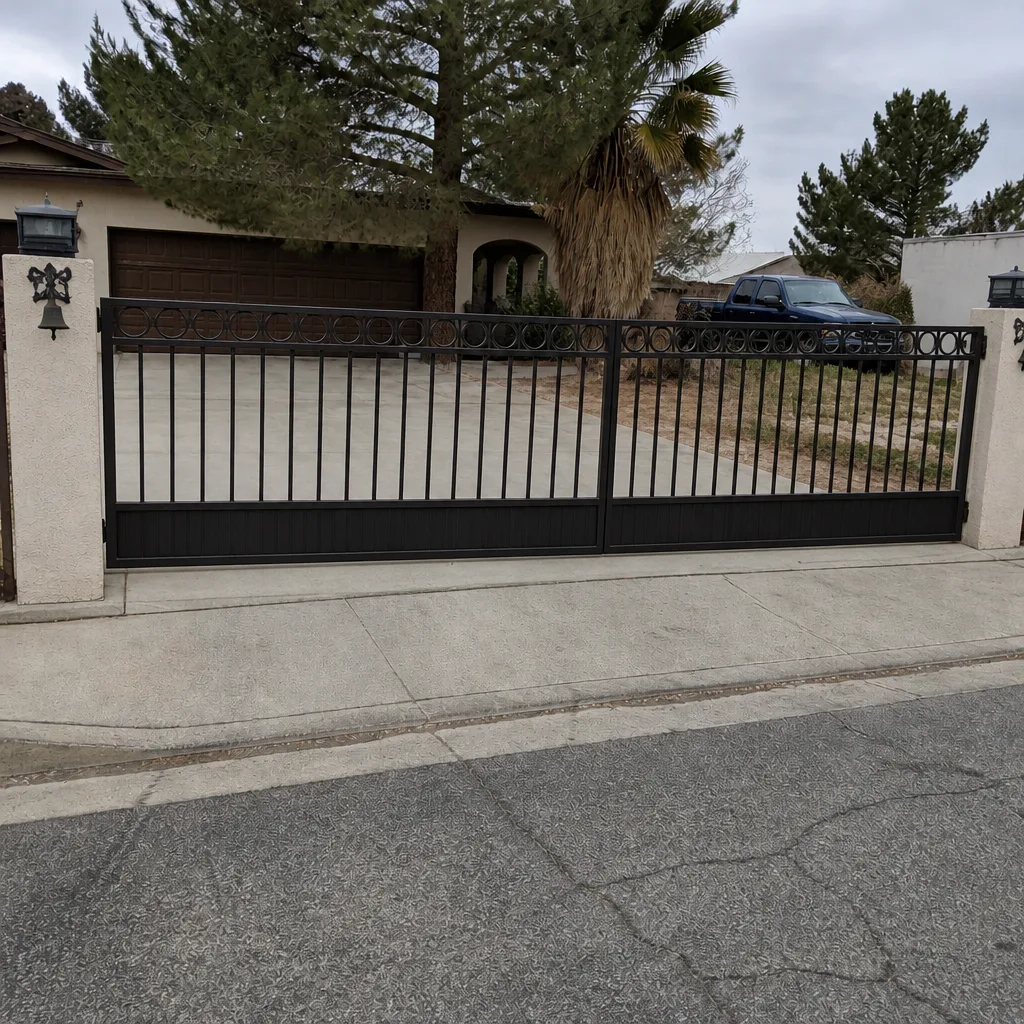 After
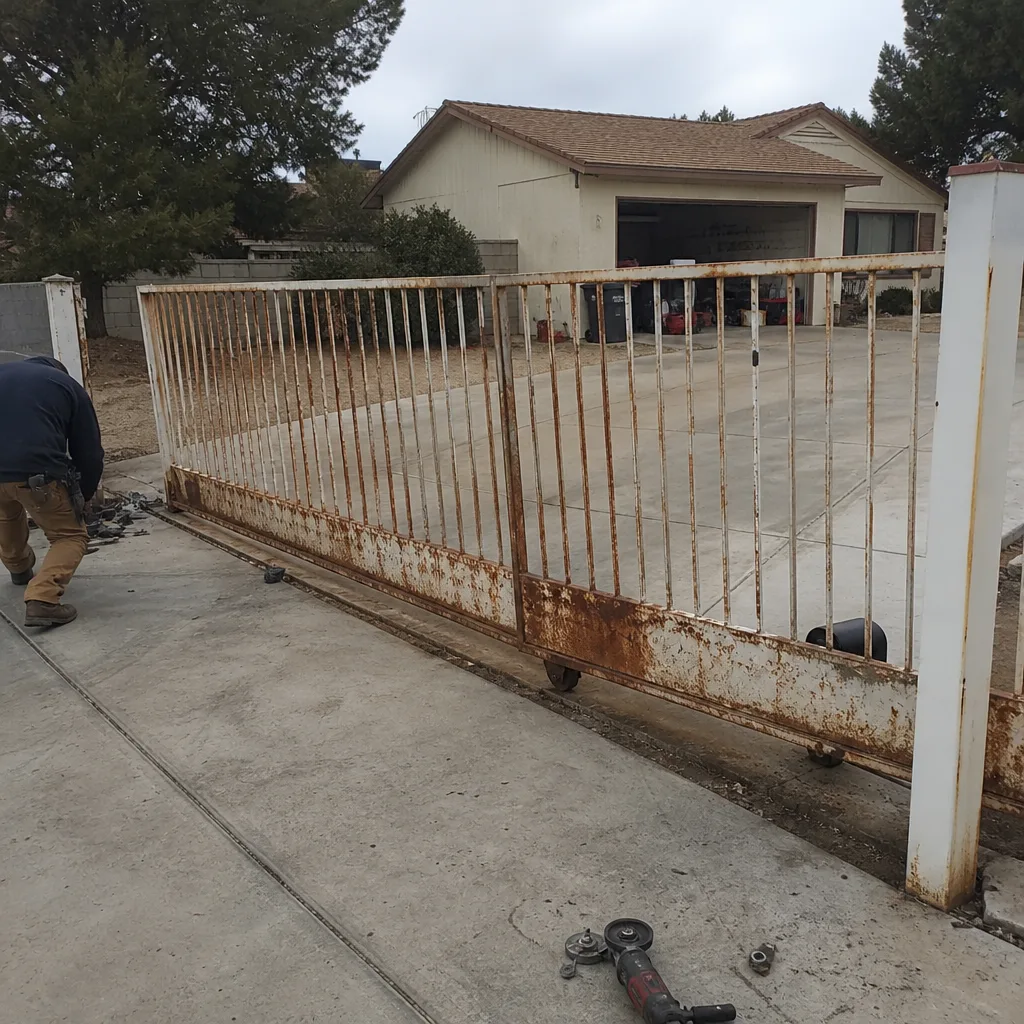 Before
 After
 Before
 After
When to Call a Professional
Some things are safe to check on your own: clearing the track, noting a new noise, inspecting the paint at the post base. Some things aren’t. Gate automation involves electrical connections, and gates carry real stored-load and crush hazards. High-tension springs and moving gate panels are not a place to experiment. Spring, hinge, and structural work should be done by someone trained for it.
Call a professional if the gate binds or won’t move, if the post shows rust or movement at the footing line, if the operator won’t cycle after a storm, or if you’re worried about the structural integrity of the gate. Ironworks Gate Co. Mesquite offers free estimates in Mesquite – call (844) 797-2573. A background-checked technician will come out, diagnose the problem honestly, and tell you whether a repair or a replacement is the right call.
Frequently Asked Questions
Most gate repairs in Mesquite fall in the $250 to $600 range for common problems like hinges, rollers, latches, and lubrication, with electrical and automation repairs running higher depending on the brand and part. We quote the price in writing before any work begins, so there are no surprises on the bill. Call (844) 797-2573 for an exact quote – estimates are free, and repairs over $250 get $50 off.
Often, yes. Many of our Mesquite jobs are completed in a single visit, and we answer the phone live, 24 hours a day, seven days a week – no voicemail, no callback queue. Call (844) 797-2573 and we’ll tell you honestly when we can be there.
Because aluminum channel guides and steel frames expand in the heat, and a gate that’s perfectly aligned at 70°F can bind at 115°F. It may also be alkaline dust fouling the rollers or lubricant that’s cooked out of the track. A technician can tell which one in a single visit.
You usually can’t tell from outside, and replacing a motor when the problem is mechanical is a costly mistake. Our technicians are trained on nine leading brands – including LiftMaster, Elite, and DoorKing – and test the motor, sensors, wiring, and track before recommending anything. Call (844) 797-2573 for a free estimate.
Yes. The calcium-carbonate soil around Mesquite is highly alkaline and attacks steel at the footing line, often from the inside out. By the time you see bubbling paint or rust bloom, the post may already be weakened. A seasonal check catches it early.
Ask whether they’re trained on your specific brand, whether they diagnose before replacing parts, whether the price is fixed in writing before work starts, whether they carry a written guarantee, and whether their technicians are background-checked. Ours are, and every job is backed by the 90-Day Done Right Promise.
The Bottom Line
Gates in Mesquite fail on a desert schedule, and the causes are specific: heat fatigue, caliche corrosion at the footing, UV-baked components, and monsoon runoff. Catches early, most of these are simple repairs; caught late, they turn into expensive replacements. The three habits that save you the most money are checking the footing line each season, clearing the track before and after storms, and getting a real diagnosis before anyone replaces a motor. If your gate is jamming, sagging, or just not behaving the way it used to, we’re here to help. Call (844) 797-2573 for a free estimate, and we’ll tell you honestly whether it’s a repair or a replacement. Done right, and backed in writing.
Written by the team at Ironworks Gate Co. Mesquite.