
Last updated November 17, 2026
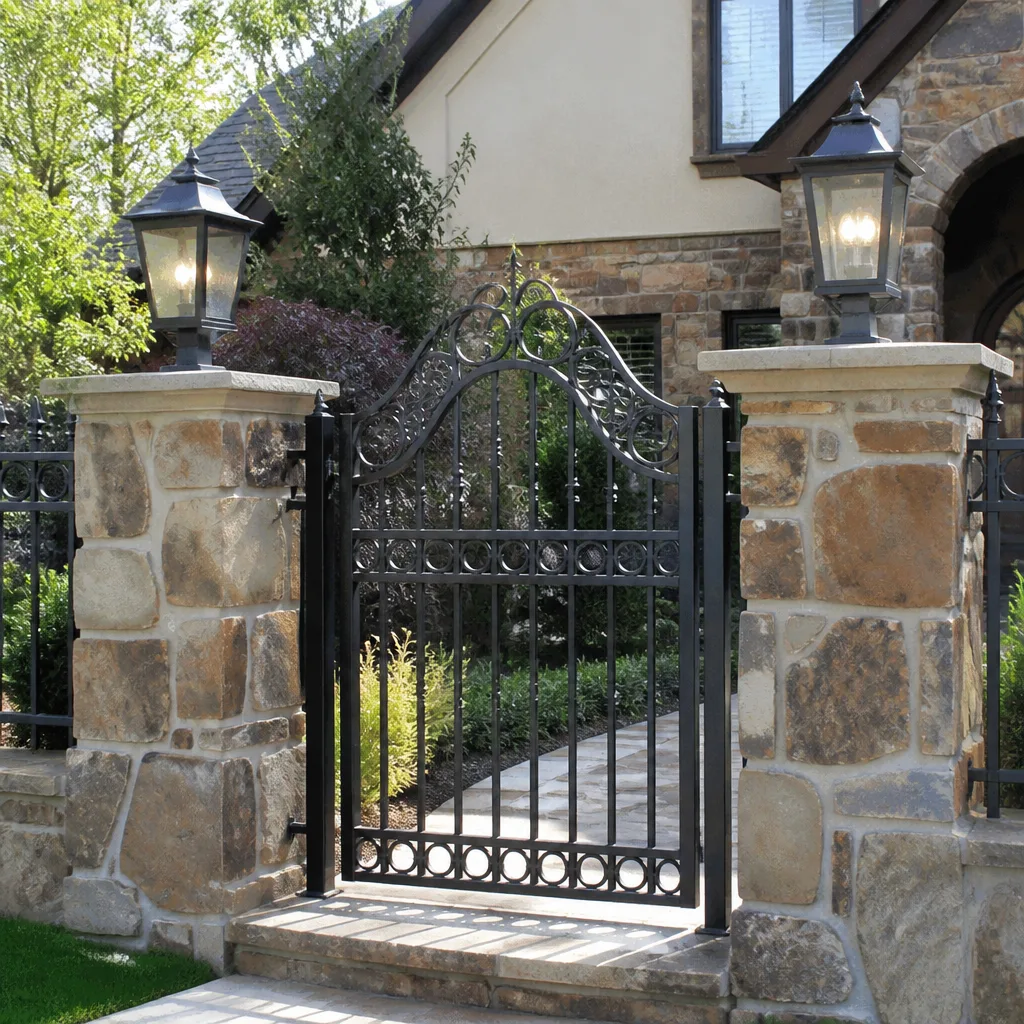 Wrought iron
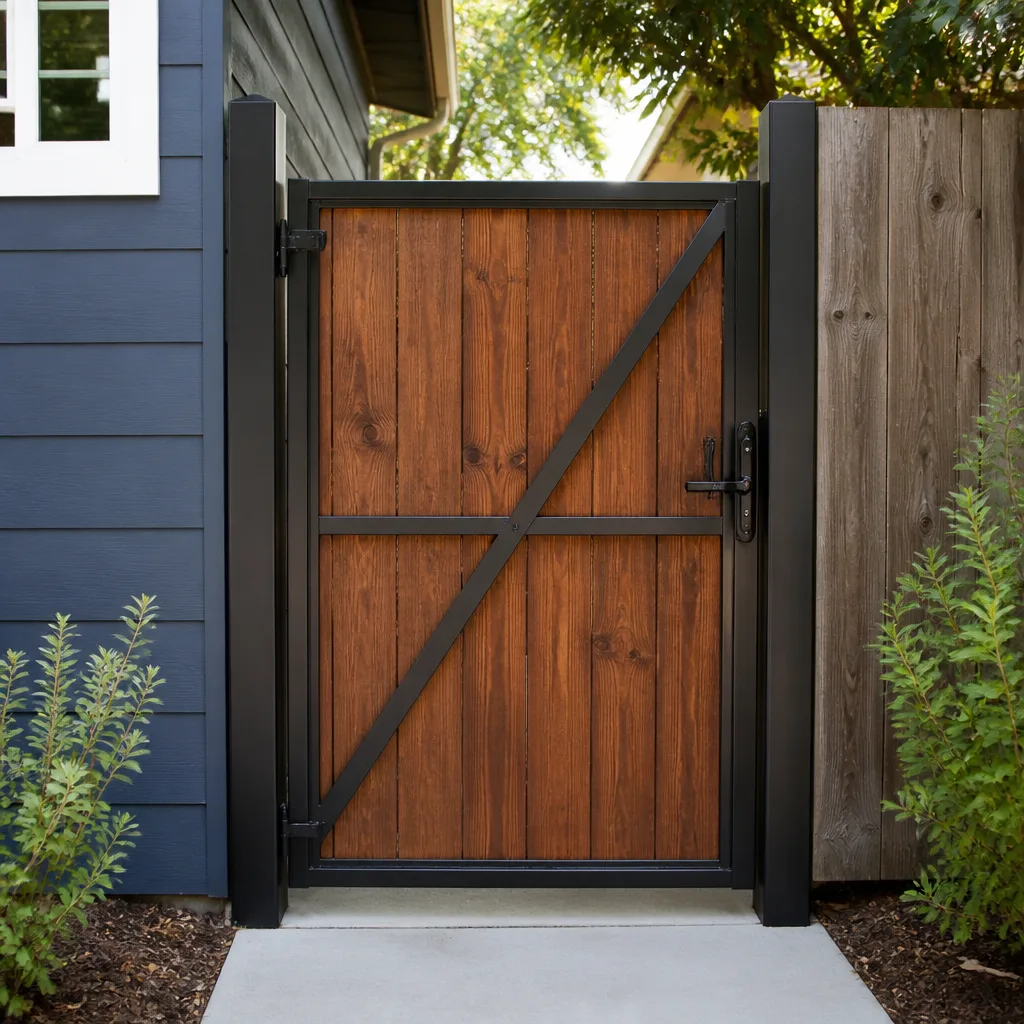 Wood & steel frame
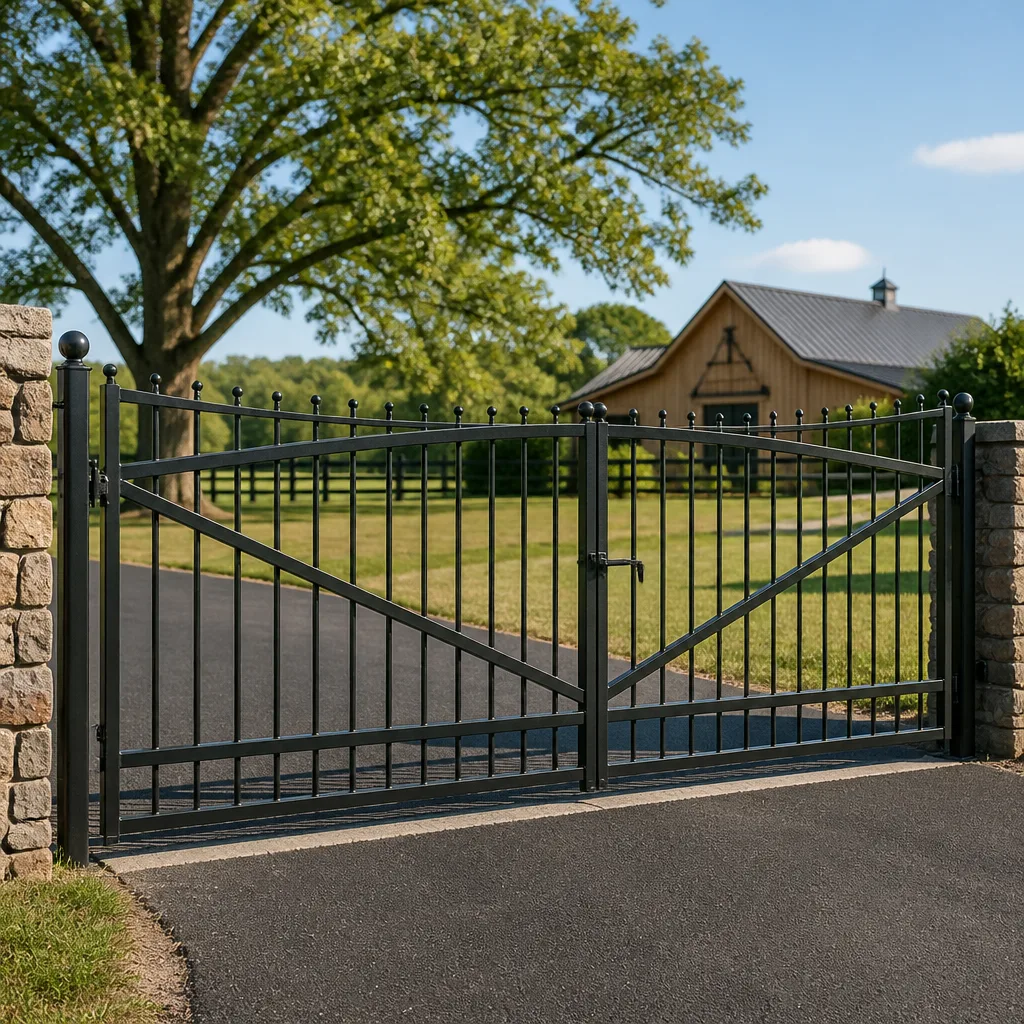 Farm & ranch
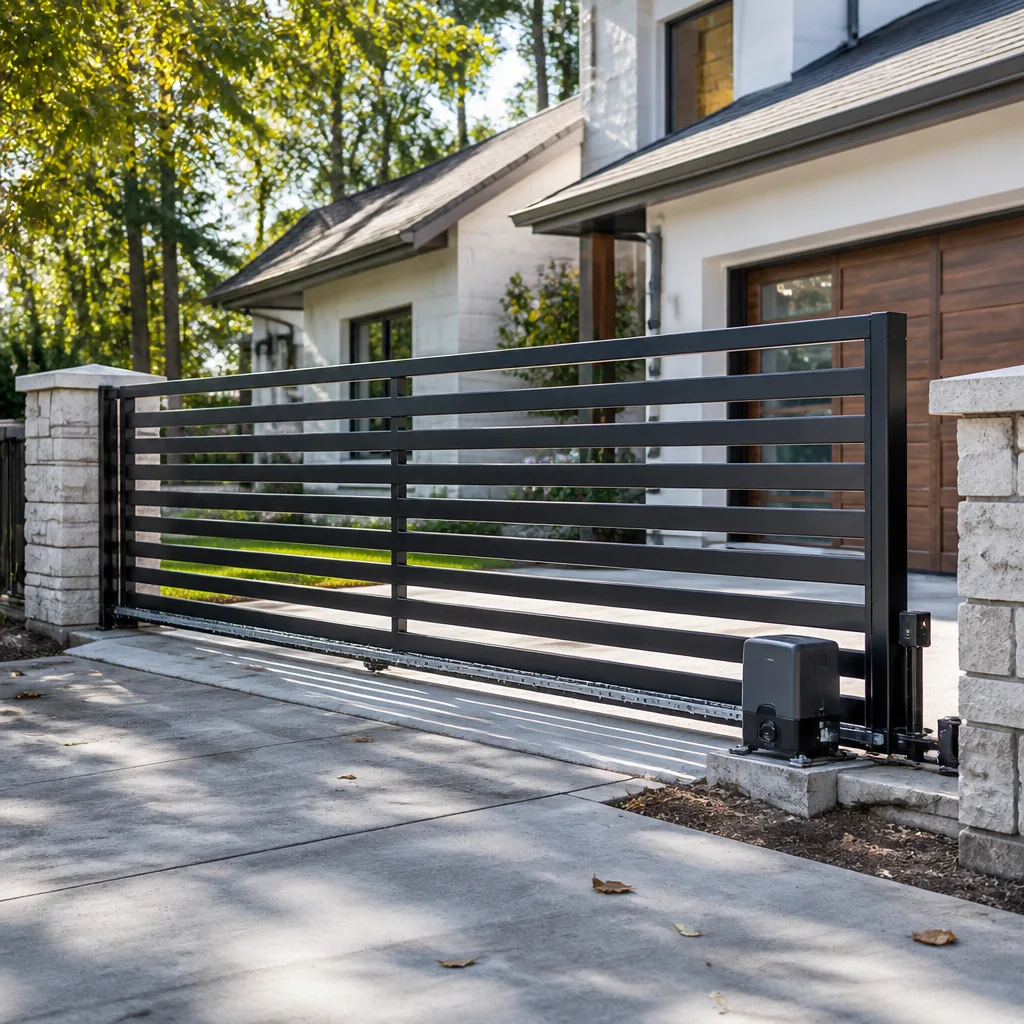 Sliding driveway gates
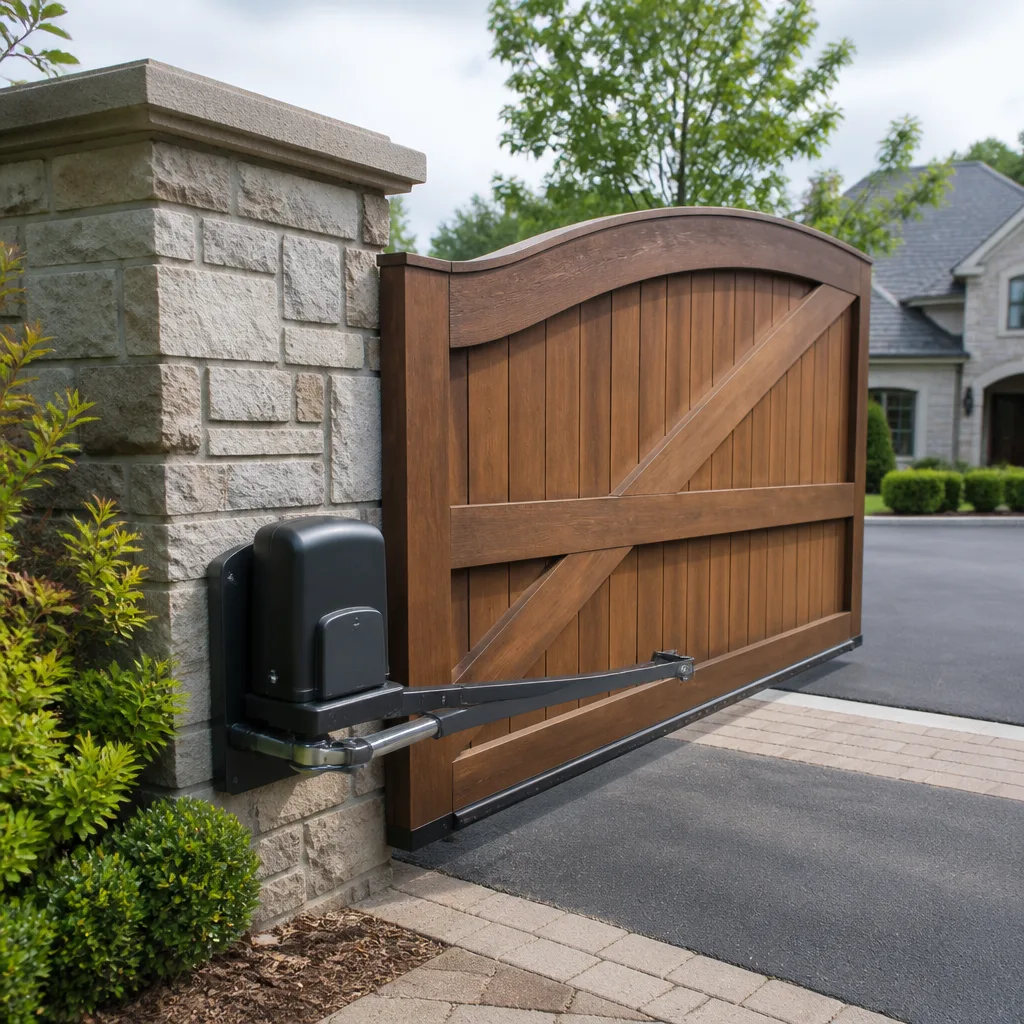 LiftMaster operators
Free on-site gate assessment - hinges, posts, and your LiftMaster or Nice gate operator checked before anything is quoted
The assessment is free and the quote is the invoice.
Get your free estimateGate Parts & Welding Warning Signs Every Homeowner Should Know
A faint orange stain running down from a hinge point isn’t surface rust. It’s water tracking out of a compromised weld joint, and that moisture path means the weld root has already begun to fail from the inside, where you can’t see it. Metal gates don’t fail suddenly. They give visible, audible, and behavioral warnings for months before a catastrophic failure. The problem is those warnings look like normal wear to an untrained eye. This guide trains you to see what experienced welders see when they walk up to a gate in Mesquite, so you know what’s serious, what can wait, and what to do next.
Quick Answer
The five warning signs that matter most are rust bleeding from weld joints, paint cracking along weld lines, visible gaps at the root of a weld, chalky white deposits on aluminum, and bubbling paint around a welded joint. Any one of these means the weld is compromised and should be inspected by a trained welder before the gate is put under load again. Add a new creak, a click, or a gate that suddenly needs two or three remote presses, and you have a gate that’s telling you to call today.
Styles & brands we work with
- Wrought iron
- Wood & steel frame
- Farm & ranch
- Sliding driveway gates
- LiftMaster operators
Table of Contents
- The Five Visual Signs of Weld Failure
- Surface Rust vs. Scale Rust: Which One Is Serious?
- How to Hear Structural Problems Before They Break
- The Behavioral Signs You Should Track Month to Month
- Which Gate Parts Fail First (and Why)
- Call Today vs. Schedule a Visit
- What Counts as Normal Aging
- How to Slow Weld Failure in Mesquite Heat
The Five Visual Signs of Weld Failure
Weld failure rarely announces itself. It starts as a color, a crack, or a gap you can see if you know where to look. Start at each hinge, walk the frame, and check every weld joint where the gate meets the post. Then check the internal joints where vertical pickets meet horizontal rails. Those five signs look like this:
- Rust bleeding from joints. A rust stain running down from a weld point means water is getting into the joint and rusting the steel from the inside. Surface rust sits on top of metal. A bleeding joint means moisture is inside the weld.
- Paint cracking along a weld line. Weld heat stresses the paint and the metal around it. Cracks that follow the weld seam exactly mean the joint is flexing under load, and paint is the first thing to show it.
- Visible gaps at the root. Look at where two pieces of metal meet at a weld. A gap at the root means the weld never fully penetrated. The joint has been running on partial strength from day one.
- Chalky white deposits on aluminum. White powder on an aluminum gate is aluminum oxide, the material’s way of telling you it’s corroding. It’s slow on a solid piece but fast at a weld, because weld heat changes the metal and makes it more reactive.
- Bubbling paint around a painted weld. Bubbles mean moisture or corrosion is trapped under the paint and lifting it. A weld that bubbles is a weld that’s failing from the inside out.
Visible rust is the most common warning sign we see on older gates across Mesquite, and it’s almost always the one homeowners misread as cosmetic. If you’re seeing any of these five signs, it’s worth a gate repair in Mesquite inspection before the gate is used again under full load.
Surface Rust vs. Scale Rust: Which One Is Serious?
Surface rust is orange, powdery, and sits on top of the metal. Scale rust is darker, flakier, and lifts away in chunks. Scale rust means the metal itself is being consumed, and it changes how much time you have. On surface rust, you have months. On scale rust, you have weeks, and sometimes days, before the structure under the paint is compromised.
Here’s the difference to check for yourself:
- Surface rust: Orange, thin, wipes off with a rag. Metal underneath is intact and sound. This is normal aging on a gate that’s seen weather.
- Scale rust: Dark red-brown, thick, lifts off in sheets. The metal underneath is pitted and thin. This is structural loss.
- Rust with depth: Poke it with a screwdriver. If the tip sinks in, the steel is gone at that point. If it stops hard, you caught it early.
In Mesquite’s dry heat with seasonal monsoon moisture, welds rust much faster than flat surfaces because water collects in the joint and evaporates slowly. A gate that looks fine on the outside of the frame can have rust running through the interior of a welded joint. The only way to know is to have it checked by someone who welds for a living. If you’re weighing a patch weld against replacing the gate, our guide on gate installation in Mesquite walks through where the cost lines cross.
How to Hear Structural Problems Before They Break
Walk out to your gate when the neighborhood is quiet, push it by hand, and listen. The sound tells you which part is failing. A creak at the hinge is hinge wear. A creak in the middle of the frame is racking, meaning the gate’s geometry is twisting under load. A click that repeats every rotation is a bad roller or wheel bearing. A grind means metal is grinding on metal somewhere in the track or hinge.
The sound itself is diagnostic, and matching sound to cause is what separates a real fix from a guess. Here’s the cheat sheet we use on every call:
- Creak at the hinge: Worn hinge pin, dry bearing, or hinge post pulling loose from the ground. Fixable.
- Creak in the frame, not the hinge: Frame is racking, which means a weld has partially failed and the gate is twisting. Structural.
- Repeat click at every rotation: Roller, wheel, or track issue. Mechanical.
- Grinding: Metal on metal, usually a seized roller or a hinge that’s worn through the pin. Needs to stop being used until inspected.
- Rattle in wind: Loose picket welds or a frame that’s lost its rigidity.
A gate that creaks at the frame shouldn’t be cycled through its operator until it’s looked at. Continuing to run it stresses the remaining welds, and what would have been a $200 repair becomes a full rebuild. This is the same reason we recommend that any gate with a failing weld gets a full-opener check at the same time, which is covered in gate motor & opener in Mesquite. A struggling motor is often a symptom of a gate that’s fighting a failing frame.
The Behavioral Signs You Should Track Month to Month
If your gate needed two remote presses last month and three this month, that’s not a battery issue. That’s a gate telling you it’s binding somewhere in its travel, and the operator has to work harder each cycle to overcome the drag. Operators don’t get weaker over time. Gates get heavier.
Track these four behaviors and you’ll catch problems long before the operator starts blinking a fault code:
- Remote presses required to open. If the number is going up, the gate is binding. Note the date and the count.
- Time to open or close. If the same gate takes longer to cycle than it did six months ago, the operator or the mechanicals are straining.
- Stopping partway. A gate that reverses or stalls halfway is in the safety-obstruction range and needs inspection before the operator fails too.
- New sounds on startup. A motor that used to be silent and now hums, clicks, or grinds is telling you it’s fighting something mechanical.
We see this pattern constantly in Mesquite on gates using LiftMaster, Viking, and Ghost Controls operators. Homeowners assume the motor is the problem and ask for a motor quote. When we arrive, half the time the motor is fine and the gate frame is the actual issue. That’s the reason we always check the gate frame before quoting an operator, and it’s why a Ironworks Gate Co. Mesquite home-based inspection is worth more than a phone diagnosis.
Which Gate Parts Fail First (and Why)
Gates fail from the ground up. The hinges and the base of each hinge weld take the entire weight of the gate every time it moves, and they’re the first parts to show stress. After hinges, the bottom rail welds fail, then the pickets, then the top rail. The post-mounted plate is almost always the last to go, because it’s usually the heaviest steel in the assembly.
The order of failure by gate part, and why:
- Hinge pin and hinge weld: Carries gate weight on every cycle. First to fatigue.
- Bottom rail welds: Longest exposure to ground moisture and splash. Rust penetration is fastest here.
- Picket welds: Thin metal, small weld area, most vibration. Fail silently until a picket drops.
- Top rail welds: Less stressed than the bottom, but visible first. Cosmetically alarming, structurally later.
- Post plate and foundation bolts: Big steel, buried or bolted. Fails last, and when it fails, it’s a foundation conversation.
If a picket has already dropped or a hinge has visibly separated, stop using the gate. A gate under operator power is 300 to 1,200 pounds of moving steel, and a failed weld under load can drop it. That’s not a repair call at that point. That’s a call today.
Call Today vs. Schedule a Visit
Not every warning sign is an emergency. Overreacting to normal wear wastes your money, and underreacting to a failing weld is dangerous. Here’s how to sort the two without guessing.
Call today – do not cycle the gate until inspected:
- Visible gap at a weld root, or a weld that has physically separated.
- Scale rust that flakes off or a screwdriver tips into the metal.
- A gate that creaks at the frame, not the hinge.
- A gate that stops partway or reverses on its own.
- Any dropped picket or a hinge pulling away from the post.
- The gate is leaning noticeably from vertical.
Can wait for a scheduled visit:
- Surface rust that’s orange and wipes off clean.
- Paint chips on a flat surface with sound metal underneath.
- A gate that needs an extra remote press but otherwise operates normally.
- One hinge that creaks but doesn’t show gap, movement at the post, or rust bleeding.
- Cosmetic discoloration with no bubbling, no flaking, no gap.
When in doubt, don’t cycle the gate. A trained welder can usually tell in two minutes which category you’re in. That’s why we always offer a free second opinion on any written estimate – if another company has quoted you a full rebuild, bring us the quote and we’ll tell you honestly whether you need it.
What Counts as Normal Aging
Every gate ages. Oxidation, sun fade, and slight color change are normal. So is a hinge that develops a slight creak after years of service, or a small paint chip on a top rail. None of that means the gate is failing. The distinction is simple: normal aging shows up on the surface. Structural failure shows up at the joint.
Normal for a metal gate:
- Surface rust on the body panels and flat sections.
- Faded paint on the sun-facing side.
- A single hinge that squeaks and stops squeaking when lubricated.
- Minor paint chips on impact points like the latch or the stop.
Not normal, and worth a look:
- Any rust bleeding from a weld or hinge point.
- Paint cracking in a line along a weld seam.
- A joint that shows bubbling or white chalky deposits.
- A gate that’s suddenly harder to open than it was last month.
Most of the gates we see in Sun City Mesquite and the surrounding neighborhoods are 10 to 25 years old. Plenty of them are in good shape and simply need a gate repair appointment for a hinge adjustment and a rust check. Others are one failure away from a full rebuild, and the homeowner had no idea. The visit tells you which one you own.
How to Slow Weld Failure in Mesquite Heat
Mesquite’s summer heat, winter cold snaps, and monsoon moisture combine to stress welded joints harder than most of the country. Steel expands in 110-degree afternoons and contracts overnight, and that expansion-contraction cycle works on every weld on the gate, thousands of times a year. Every joint on the gate is doing calisthenics whether you notice or not.
The four things that actually help:
- Wash the gate twice a year. Rinse the joints after monsoon season and after any wind-blown dust event. Dirt holds moisture against the steel.
- Lubricate hinges and rollers on schedule. A dry hinge works itself and its weld loose. A lubricated one doesn’t.
- Catch rust while it’s still surface rust. A spot touch-up on a rust bloom is minutes of work. A weld replacement is hours.
- Schedule a seasonal tune-up before summer. The $89 Seasonal Tune-Up we offer in Mesquite is built around checking joints and mechanicals before the heat cycle starts, not after something breaks.
Do those four things and you’ll add years to the gate. Skip them and the welding will do the aging for you.
Common Mistakes to Avoid
- Treating rust bleed at a hinge as cosmetic. The stain is the visible symptom, but the corrosion is inside the joint. Painting over it hides the warning without fixing the weld.
- Blaming the opener for a gate that binds. A struggling motor is usually reporting a mechanical problem, not causing one. Replacing the operator on a binding gate burns out the new motor too.
- Ignoring a gate that needs two remote presses. That first extra press is the cheapest warning sign to catch. By the third press, you’re often into a weld repair rather than an adjustment.
- Assuming a picket weld is fine because the picket hasn’t dropped. A picket weld can fail weeks before the picket falls. A rock or a push by hand tells you more than a glance.
- Using a handyman for a weld repair. A field weld on a load-bearing gate is not a handyman job. Welding a gate under load without proper penetration and inspection just shifts the failure to the next joint.
- Running an operator through a known structural problem. Every cycle on a failing weld accelerates the failure. If the frame creaks or a weld shows a gap, stop cycling the gate.
- Letting Mesquite monsoon season pass without a joint check. Splash from summer storms is the fastest route to weld rust. A quick inspection in September saves a weld replacement in spring.
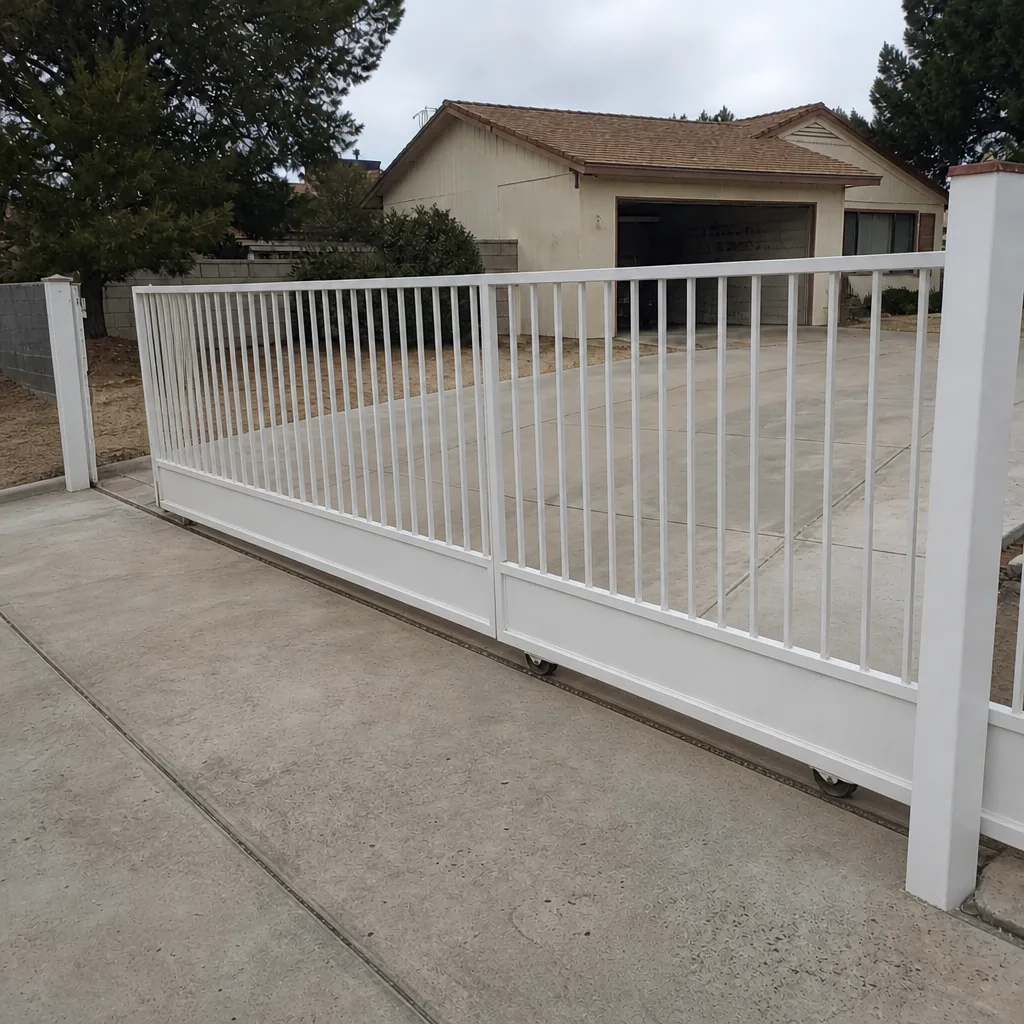
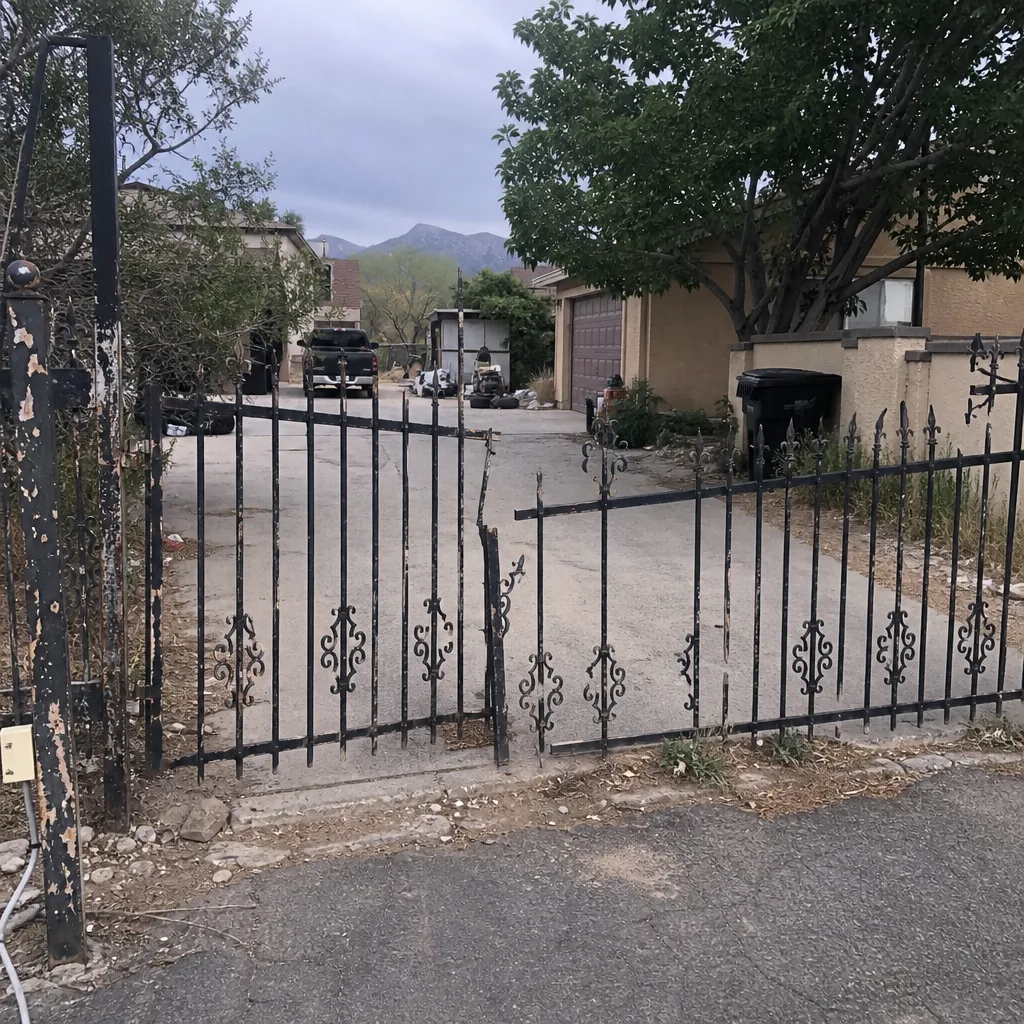
See the difference
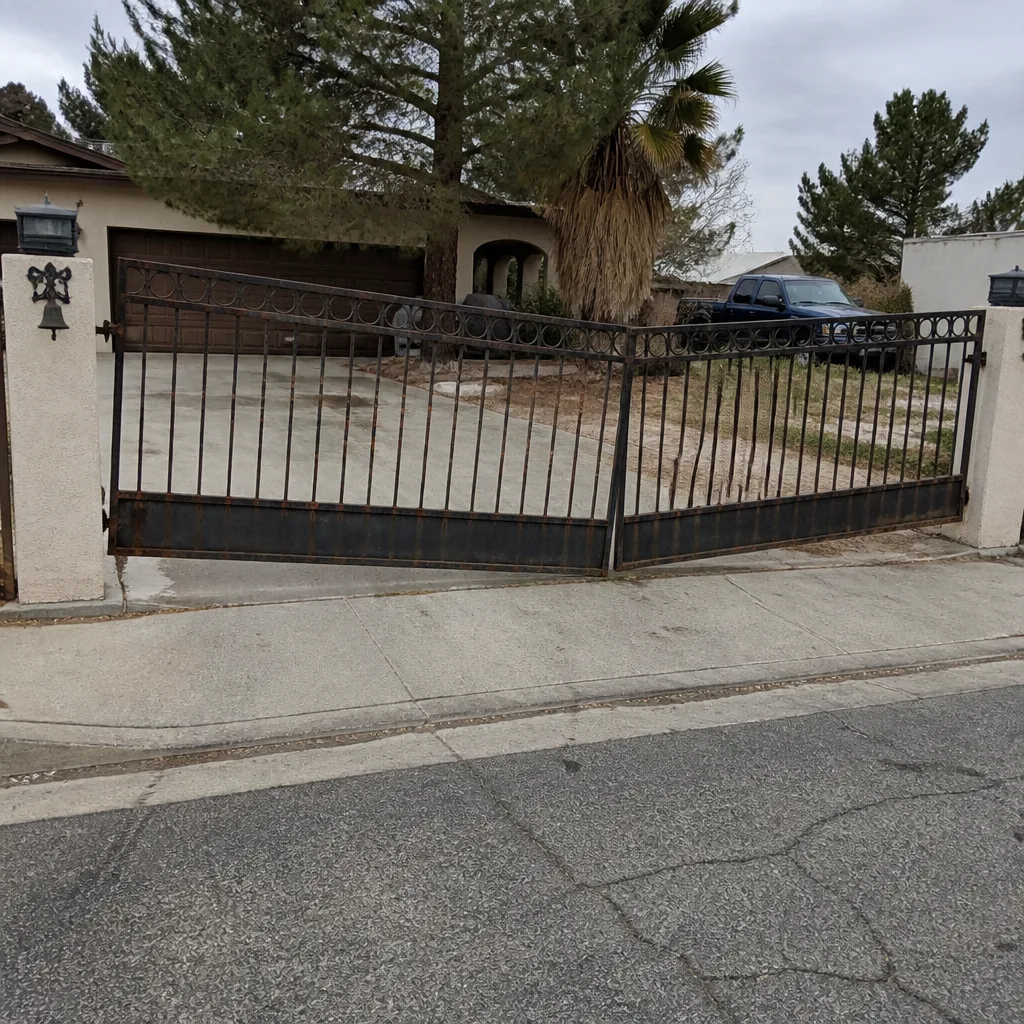 Before
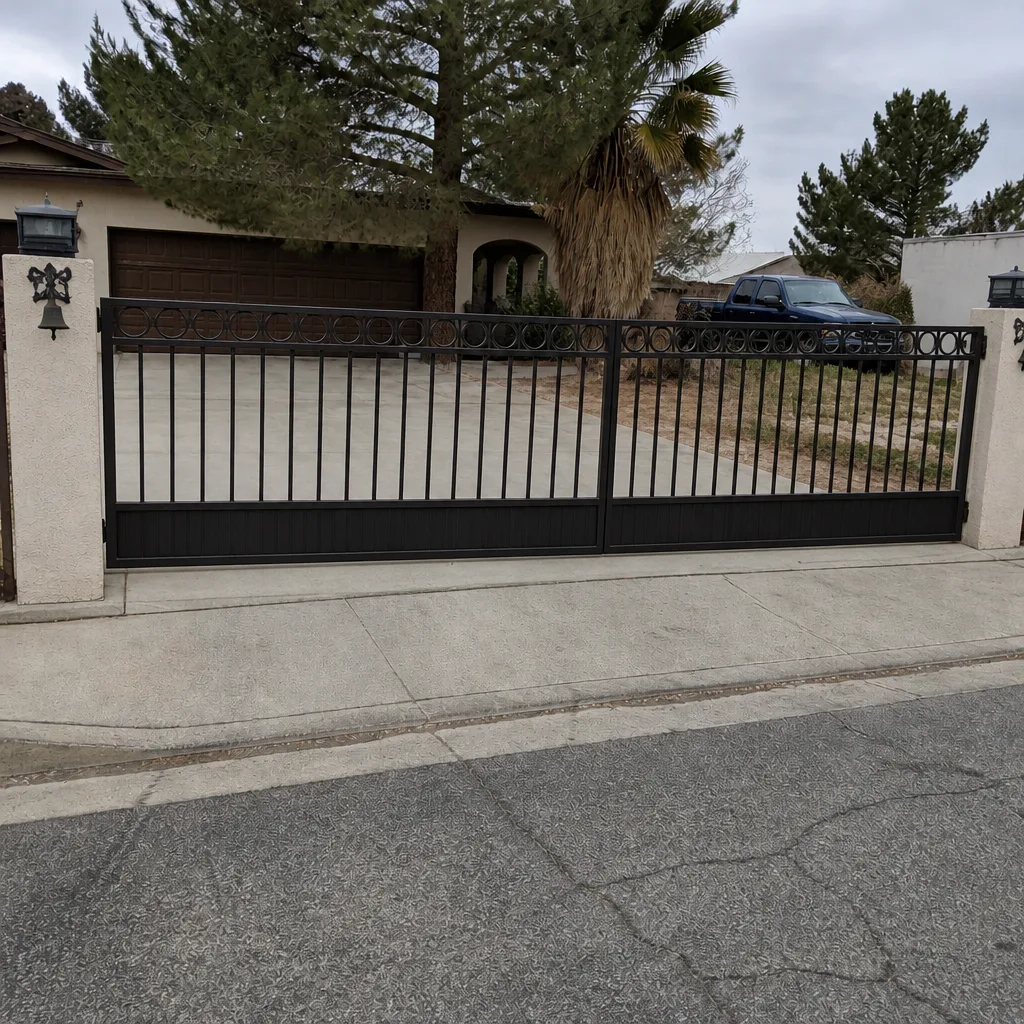 After
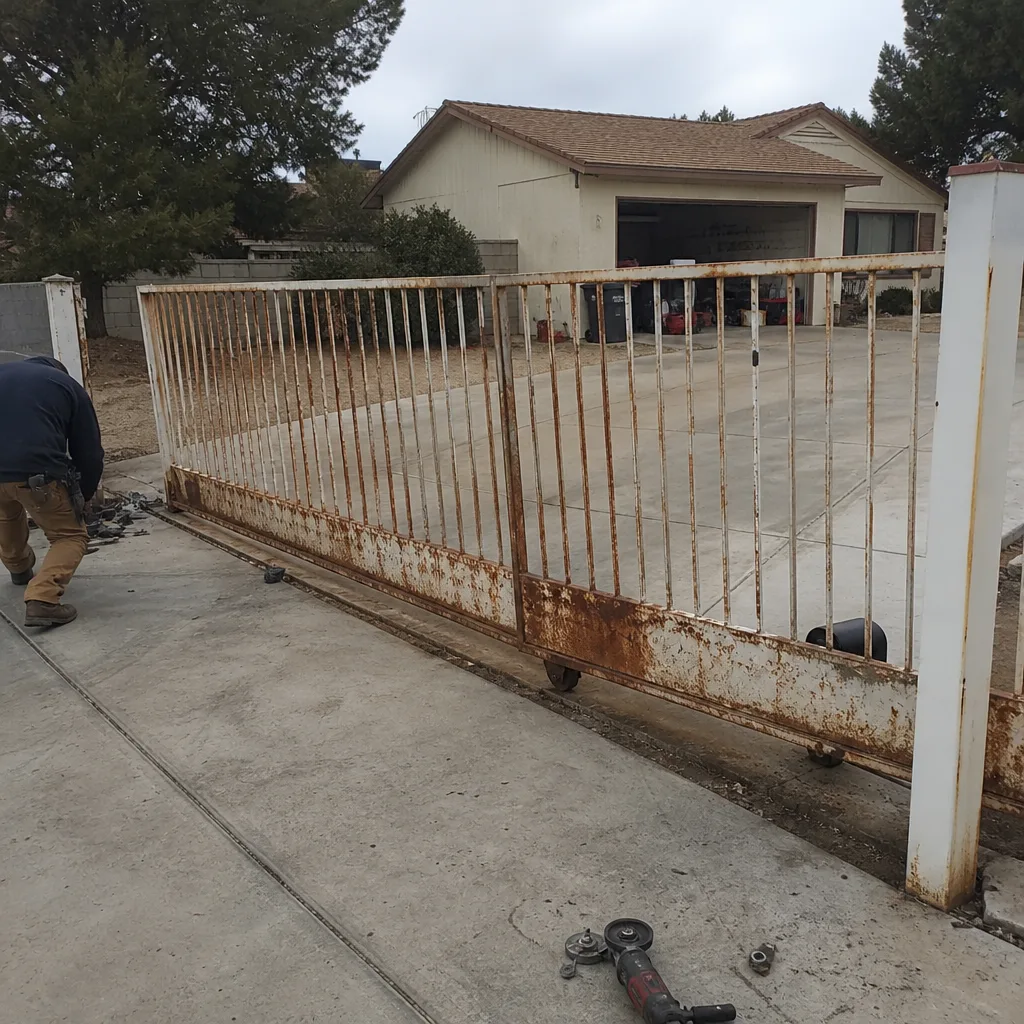 Before
 After
 Before
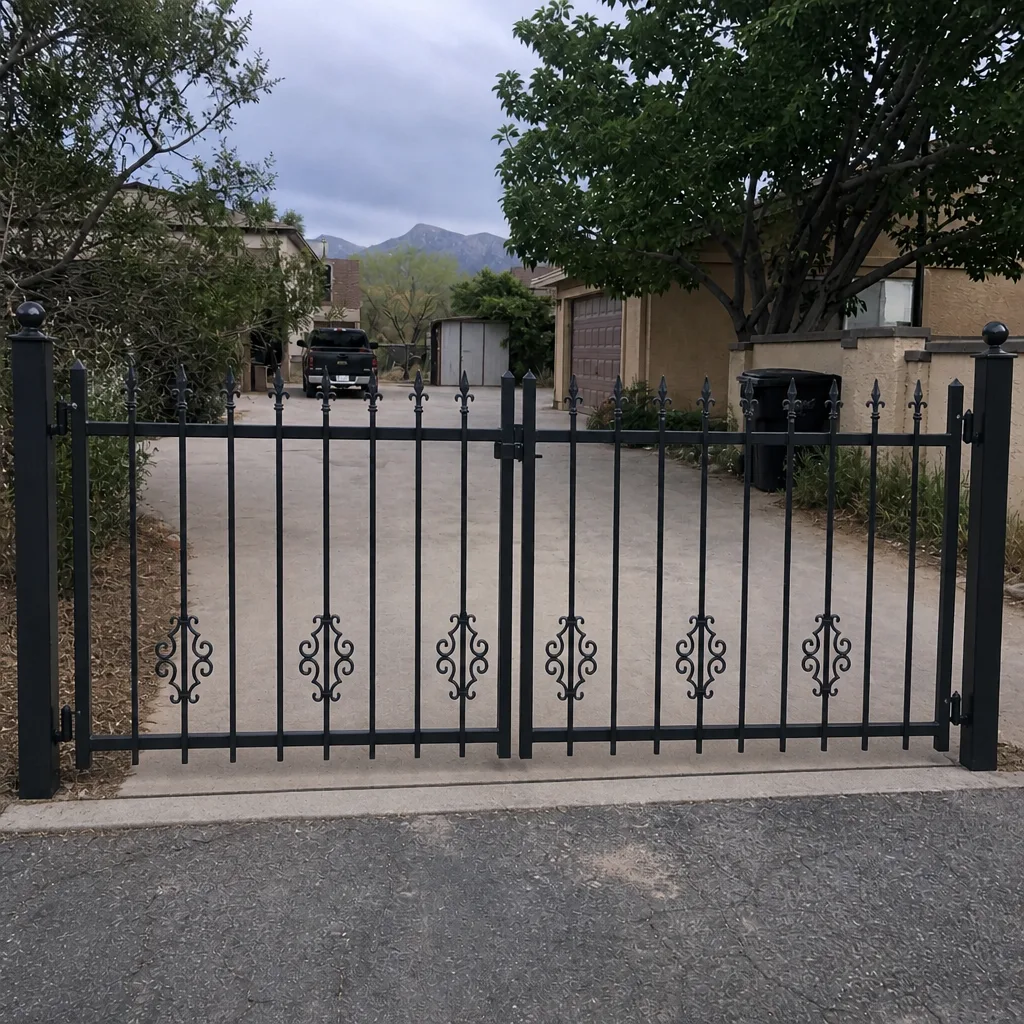 After
When to Call a Professional
Call a professional today if you see any of these: a visible gap at a weld root, scale rust that flakes off, a gate that leans, a gate that reverses or stops mid-cycle, or a frame creak rather than a hinge creak. Also call if your gate has needed an increasing number of remote presses over consecutive months, or if a picket has dropped. These are the warning signs where continuing to use the gate costs you money and, in the worst case, safety. If the gate is cosmetic but you want peace of mind, schedule a non-emergency visit. Our technicians have up to 13 years of experience and are trained on LiftMaster, Viking, Ghost Controls, DoorKing, and five more brands, so the diagnosis covers the whole gate, not just the motor. Ironworks Gate Co. Mesquite offers free estimates in Mesquite – call (844) 797-2573 and we’ll tell you what we see.
Frequently Asked Questions
A rust stain bleeding from a weld joint or a paint crack running along the weld line. These appear before any visible structural gap because water enters the joint and starts working on the weld root from the inside. Catch either one and you’re typically still in the repair window. Call (844) 797-2573 for a free estimate if you’re seeing it.
Most weld repairs in Mesquite fall between $200 and $500 depending on access, joint location, and paint finish. Hinge-area welds are usually at the lower end; picket repair on a painted estate gate runs higher. The price is quoted and agreed before any work starts, so there’s no surprise on the bill. Call (844) 797-2573 for an exact quote – estimates are free.
Yes. Call today during business hours and we schedule same-day inspections for gates that show the structural warning signs: visible gaps, frame creak, dropped picket, or a gate that stops mid-cycle. If it’s after hours, a live person answers the phone 24 hours a day, 7 days a week – not voicemail, not an answering service. Call (844) 797-2573.
Not unless the rust is in a joint. Surface rust on a flat panel is normal aging and often just needs a spot touch-up. Rust bleeding from a weld, bubbling paint at a weld, or scale rust that flakes off is a structural warning and should be inspected. If you’re not sure which one you’re looking at, our free second opinion on any written estimate covers it.
Because the gate is binding somewhere along its travel, and the operator has to work harder to move it. The most common causes on Mesquite gates are a partially failed weld in the frame, a seized roller, or a hinge pin that’s worn through. Replacing the motor without fixing the cause burns out the new operator. Call (844) 797-2573 and we’ll diagnose the gate before we talk about the motor.
Once a year for a gate under 15 years old, and twice a year once it passes 15. Mesquite’s heat cycles and monsoon moisture stress welded joints harder than most climates, and a joint check takes minutes compared to a weld replacement. Our $89 Seasonal Tune-Up is built around that inspection. Call (844) 797-2573 to schedule one before the summer heat begins.
The Bottom Line
Gates give you months of warning before they fail. Rust bleeding from a joint, paint cracking along a weld, visible gaps, chalky white deposits on aluminum, and bubbling paint are the five signs that matter, and they all point to the same thing: water inside the weld, working on the metal you can’t see. Listen for the frame creak, track how many remote presses it takes to open the gate this month versus last month, and don’t confuse normal surface aging with structural warning. Call today for the signs on the “call today” list. Schedule a visit for everything else. Either way, when the gate is welded right and backed in writing with our 90-Day Done Right Promise, you stop thinking about it. That’s the whole point.
If you’re seeing any warning sign in this guide and you’re in Mesquite, call (844) 797-2573 for a free estimate. A live person answers the phone 24 hours a day, 7 days a week. Upfront pricing is settled before a single bolt is turned, and every job is covered by the 90-Day Done Right Promise – written, no paperwork, no arguing. We’ll tell you what we see, what it costs, and whether it can wait.
Written by the team at Ironworks Gate Co. Mesquite.