
 Wrought iron
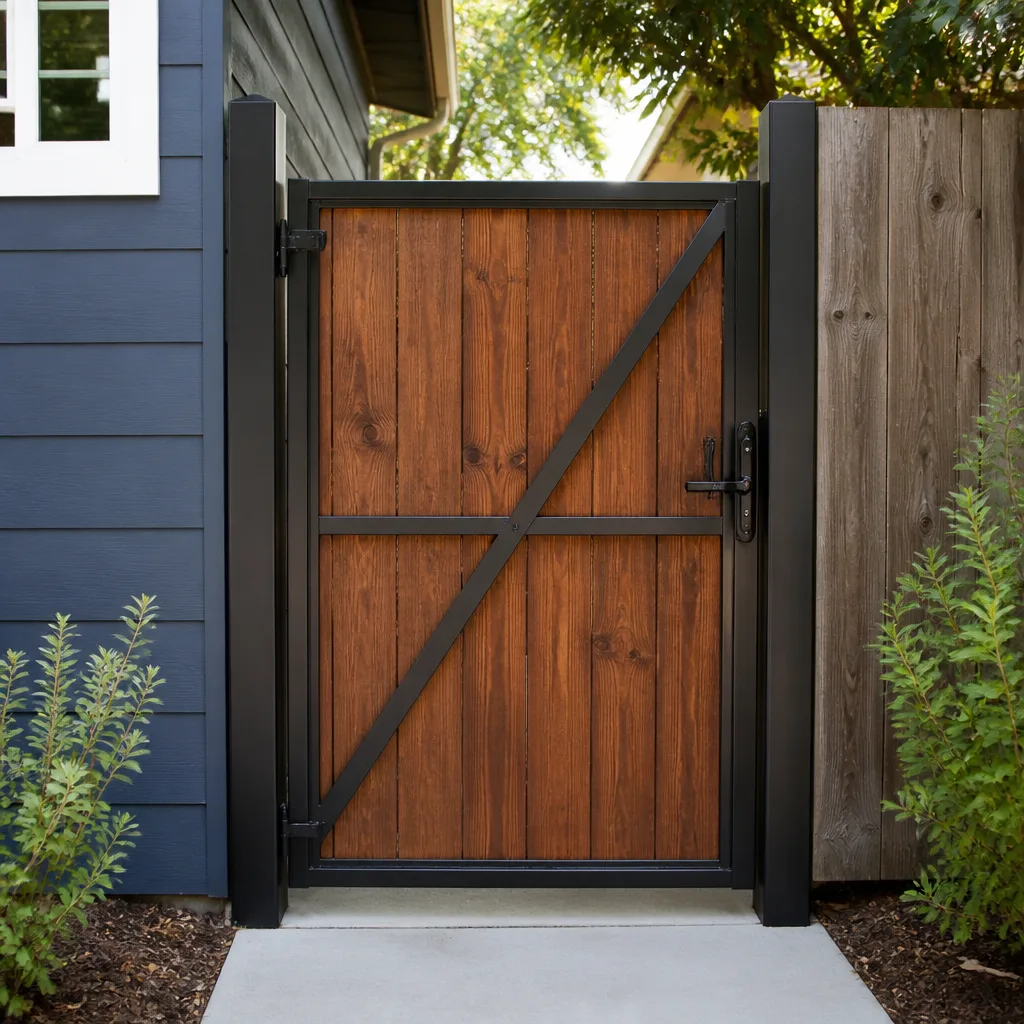 Wood & steel frame
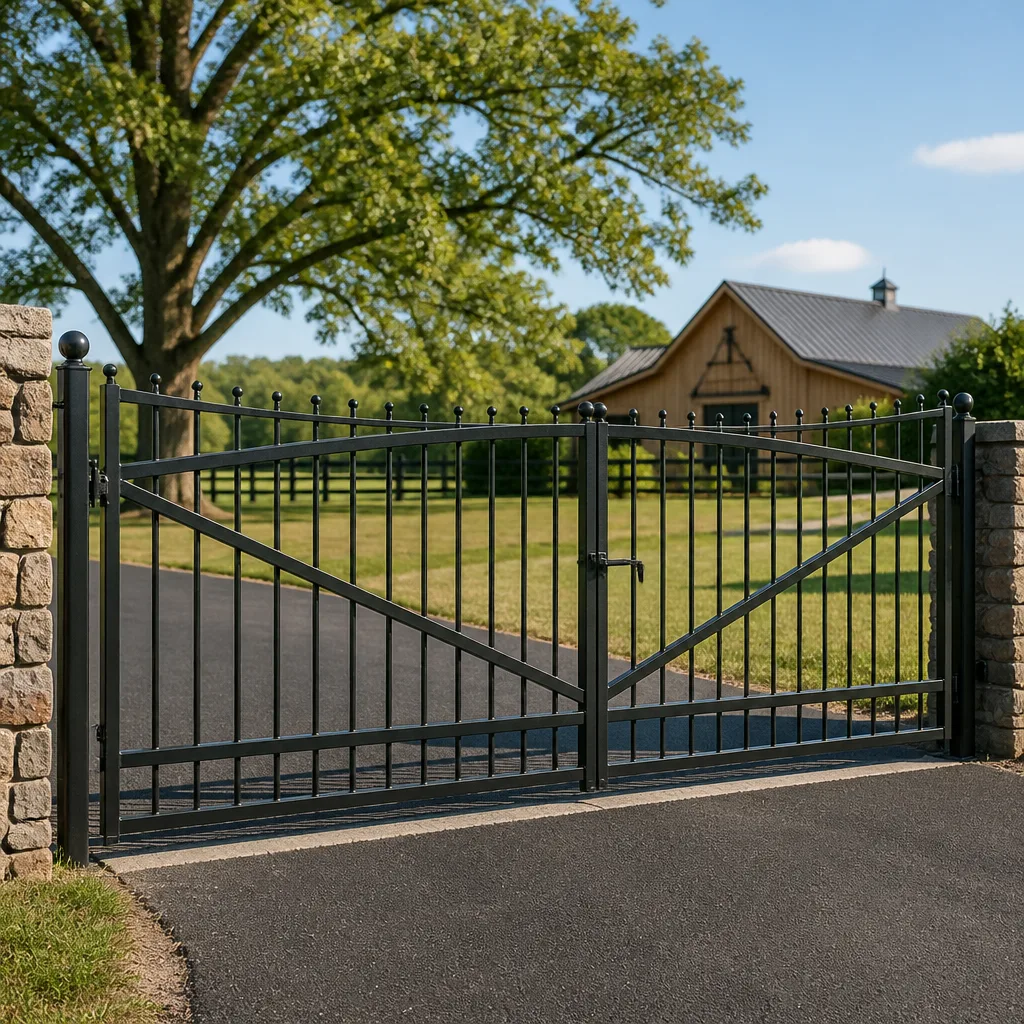 Farm & ranch
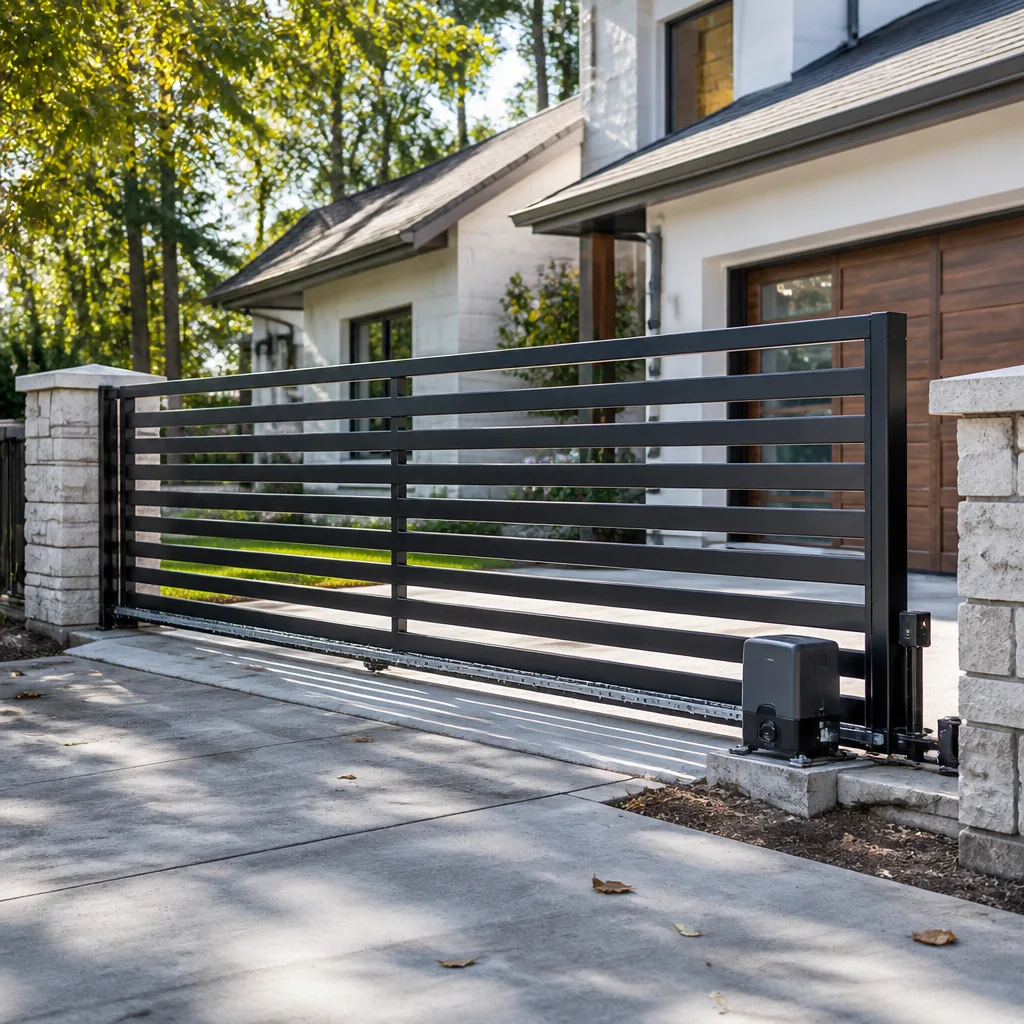 Sliding driveway gates
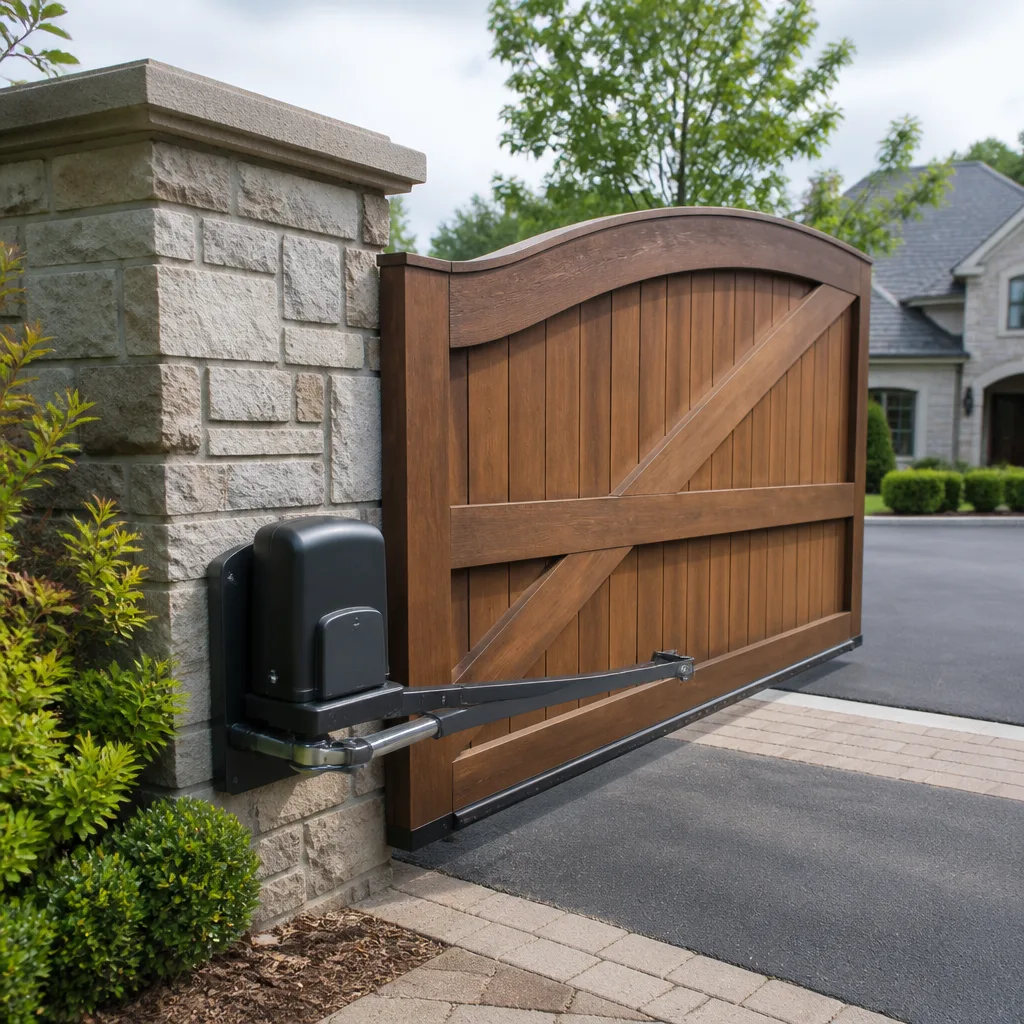 LiftMaster operators
Free on-site gate assessment - hinges, posts, and your LiftMaster or Nice gate operator checked before anything is quoted
The assessment is free and the quote is the invoice.
Get your free estimateStyles & brands we work with
- Wrought iron
- Wood & steel frame
- Farm & ranch
- Sliding driveway gates
- LiftMaster operators
See the difference
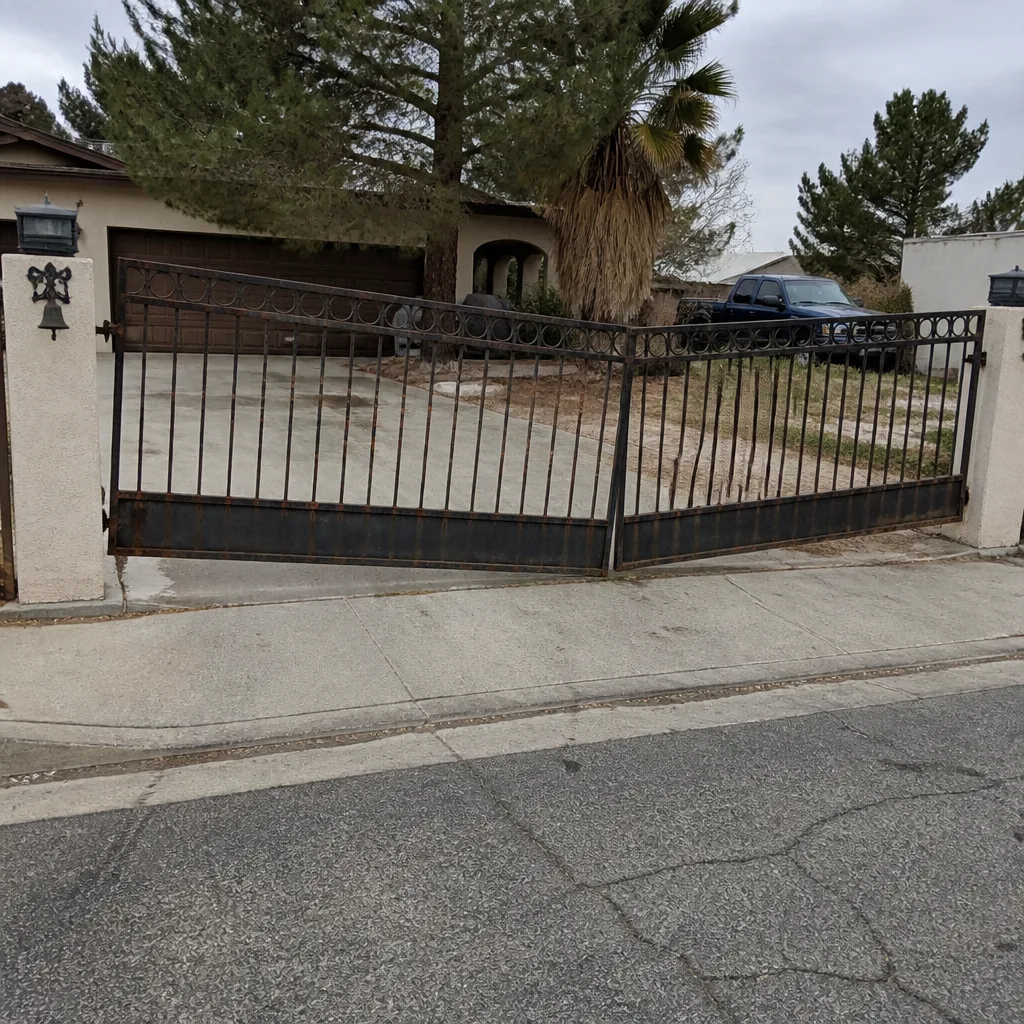 Before
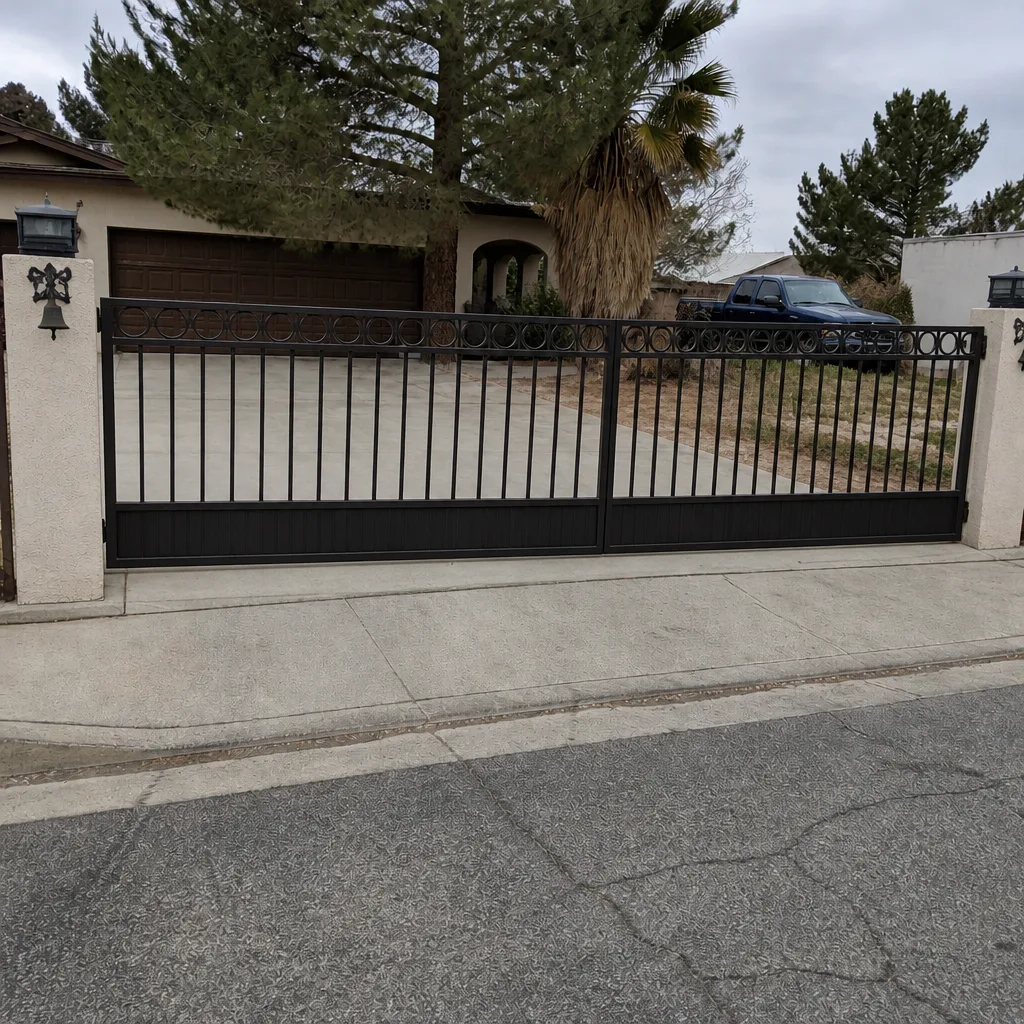 After
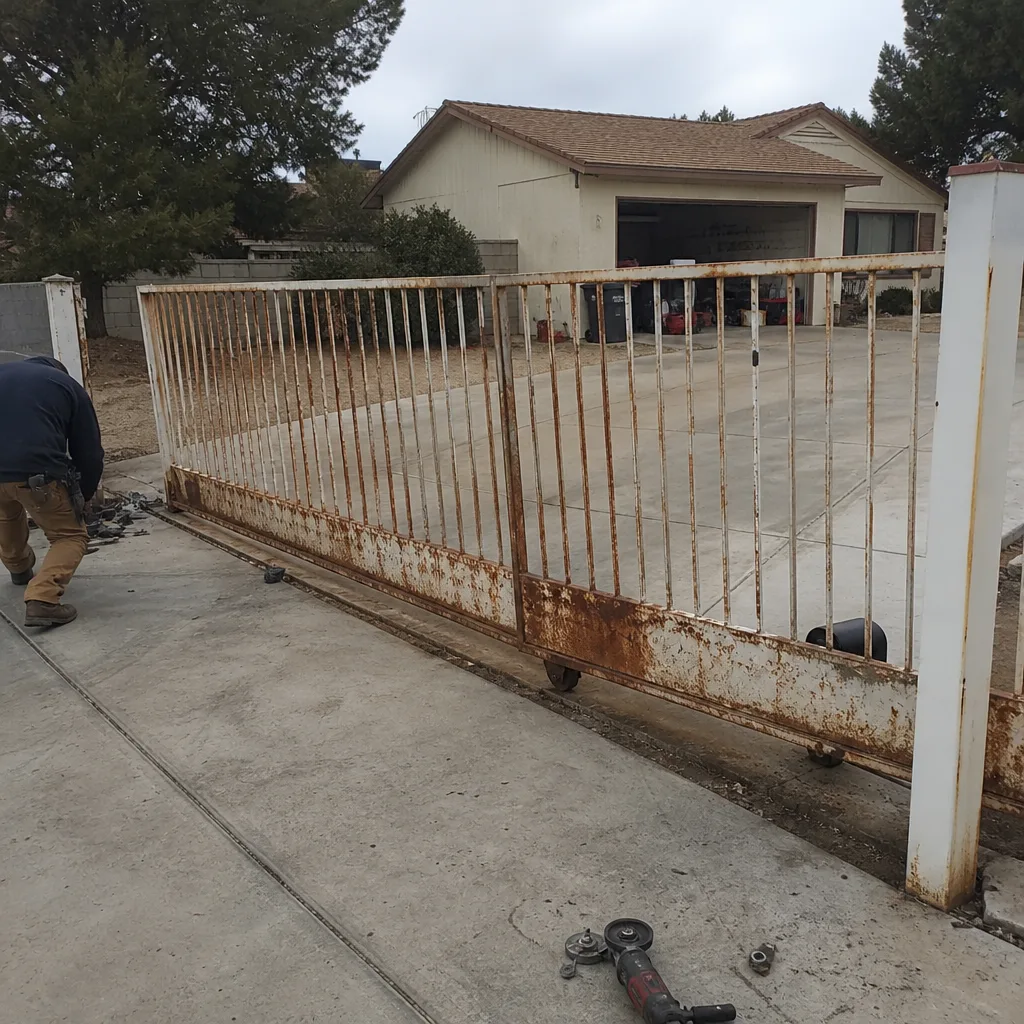 Before
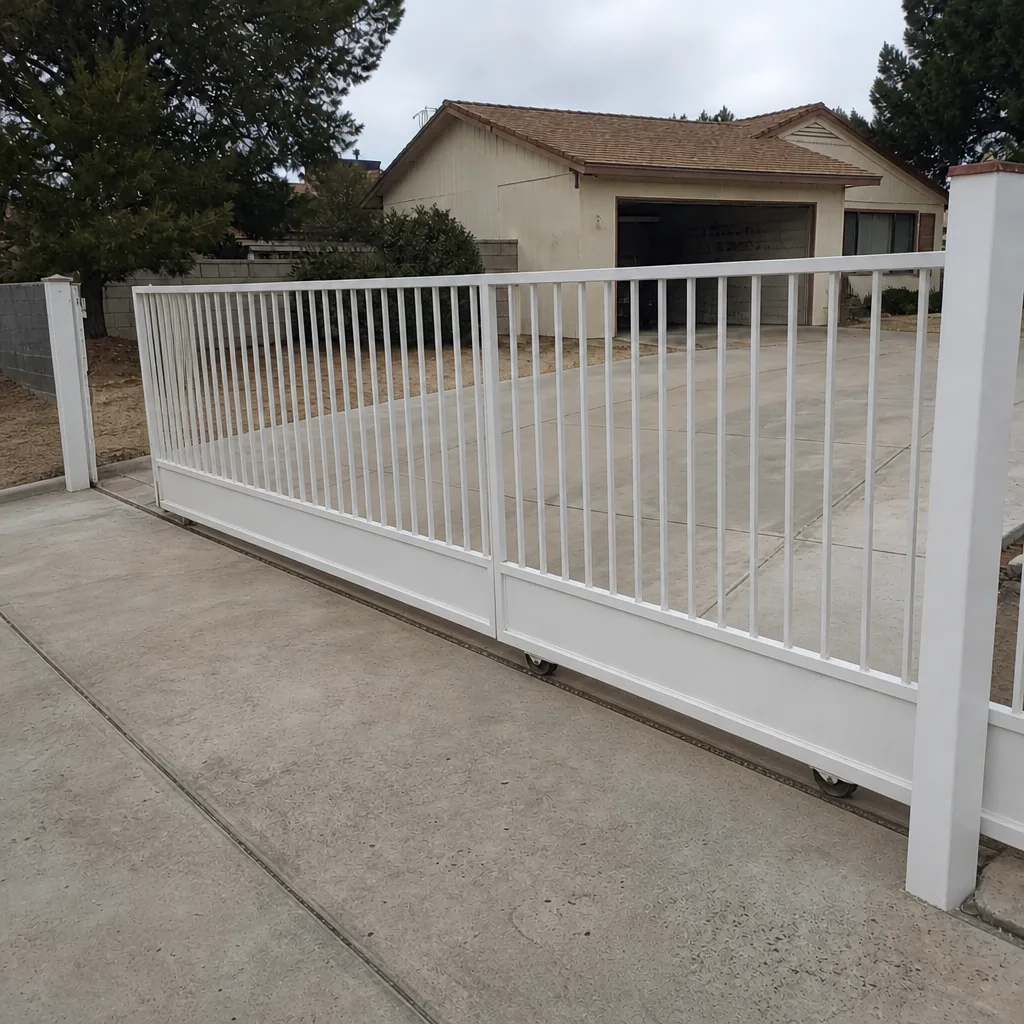 After
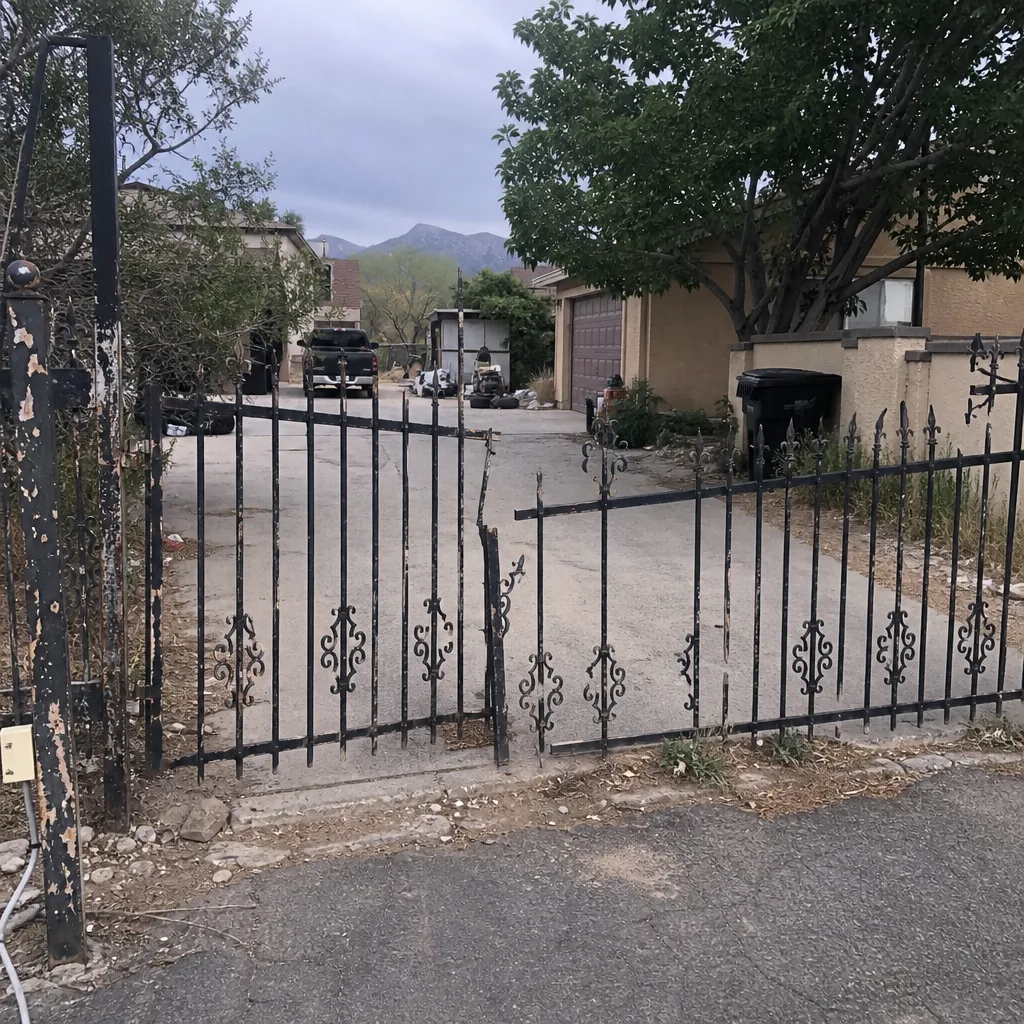 Before
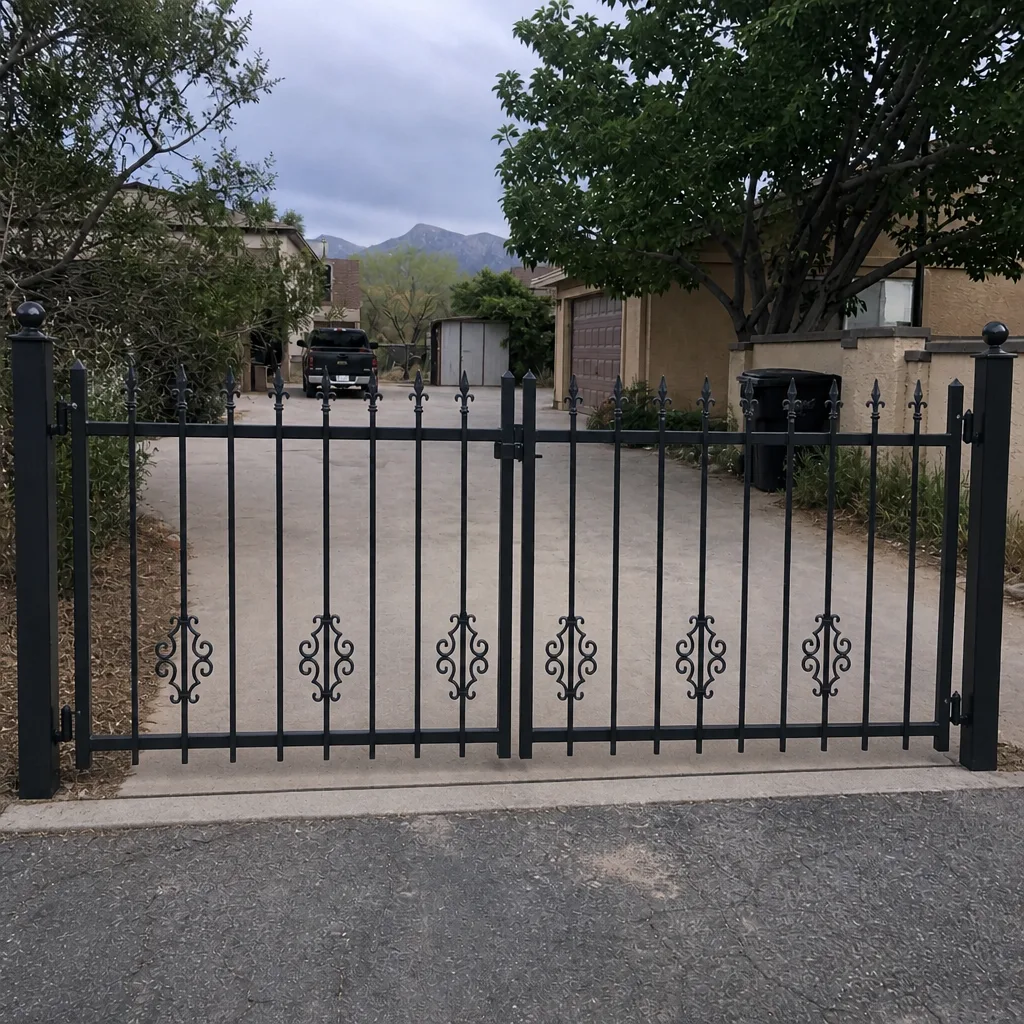 After
Why Won’t My Automatic Gate Open in Mesquite, NV? Start With Heat, Not the Breaker
The most likely reason your automatic gate won’t open in Mesquite, NV is heat exposure inside the control enclosure, not a tripped breaker: a capacitor that failed, a battery that sulfated, or a control board that baked through a summer at 110°F. The gate looks like it has lost power, but the power was never the problem. If your system sat through May to October without moving, start there. Call (844) 797-2573 and a live person will help you sort out what happened.
Here is the part most homeowners get backwards. Every troubleshooting guide online tells you to check the breaker panel first, then the remote, then the safety sensors. In Mesquite that order wastes your afternoon. A desert-baked gate usually fails on components that bypass the breaker entirely, and you will not find the cause by flipping a switch.
Key Takeaways
- After summer, suspect heat damage to the control board, capacitor, and battery before you test any breaker.
- Blowing spring sand packs into limit switches and sensor eyes, so the gate reads an obstruction and refuses to move.
- Solar-powered openers on desert properties often just need a clean panel, not a new battery.
- If the gate baked unattended for more than three months, a professional diagnostic is safer than a DIY reset sequence.
What Heat Does to a Gate System No One Touched All Summer
In Sun City Mesquite, plenty of gates sit locked up from May to October. Residents head to cooler climates, the gate goes quiet, and it bakes in an enclosure that can run far hotter than the outside air. When folks come back, the call we get sounds like “it worked when we left.”
Three failures line up in that scenario, and none of them show up at the breaker box:
- Electrolytic capacitors dry out. The start capacitor on a swing or slide motor loses its ability to kick the arm into motion. You may hear a hum, a click, or nothing at all.
- Battery sulfation. Backup and solar-charged batteries that sit idle in heat build sulfate on the plates and stop holding a charge. The gate reads as dead even though the charger is fine.
- Board firmware corruption. Control boards on LiftMaster and FAAC operators can scramble after long thermal cycling. The gate behaves erratically or ignores commands entirely.
Our technicians have up to 13 years of experience reading these symptoms, and they know the difference between a capacitor that needs replacing and a board that needs resetting. Getting that call right on the first visit saves you a second week without a working driveway.
Sand in the Works: The Failure Mode No National Guide Covers
Spring winds across the Mesquite valley drive fine abrasive sand into places it has no business being. It settles into limit switches and sensor eyes, and a gate that reads an obstruction will refuse to open. That is by design: the safety circuit says “something is in the path” and holds the gate shut.
What makes this a Mesquite problem and not a St. George problem is the volume of sand that moves through each spring, combined with block-wall and wrought-iron perimeter fencing that channels grit along the driveway. A sensor eye with a film of dust and sand will trigger a false obstruction about as reliably as a leaf blowing past. Same with a limit switch that cannot tell the gate where its travel ends. Before you touch any wiring, wipe the sensor lenses and look at the track or arm for packed grit. If a good cleaning gets you open, you found your answer.
For the full range of what we handle on these systems, see our Gate Repair in Mesquite page. It covers the repairs that come up on gates around town.
Solar-Powered Openers: Why the Battery Isn’t the Culprit You Think
A lot of desert properties run Mighty Mule or similar solar-assisted operators because pulling power out to a distant gate is expensive. When one of these stops working, the battery gets blamed first. Most of the time it is the panel.
Sand and dust coat the panel through the dry months until it stops producing enough current to keep the battery topped off. The gate acts like it has an electrical fault; the panel just needs cleaning. Test it by checking whether the panel face still looks glossy or is wearing a dull film. If it is dull, that film is your problem. Clean it, give the battery a day to recover, and try again.
If the gate still won’t move after a clean panel and a recovered battery, the charge controller or the battery itself may have failed. That is a meter-and-wiring job rather than a guess-and-replace job, and it is worth a call.
How to Use the Manual Release Without Making It Worse
Every automatic gate has a manual release so you can open it by hand during a power outage. It is a temporary way to get your car out, not a fix. Here is the safe order:
- Locate the release lever or key on your operator. On most LiftMaster and FAAC swing operators it sits on the arm or housing.
- Turn off power at the control box before you touch the release. This keeps the gate from suddenly re-engaging while you are near the hinge.
- Disengage the arm per the manufacturer’s instructions, then move the gate slowly by hand to feel for binding.
- Note any grinding, resistance, or looseness, since that tells a technician what is wrong before they arrive.
- Re-engage the release and restore power only when you are clear of the gate path.
One warning that matters: never force the arm on a motor with stripped gears. Mesquite’s heat and sand strip operator gears faster than in milder climates, and forcing a jammed arm turns a gear replacement into a motor replacement. If hand-moving the gate feels gritty or the arm won’t disengage, stop and call. This is the kind of heavy, spring-loaded machinery where a trained technician should take over.
When to Stop Troubleshooting and Call
If your gate sat unattended for more than three months and won’t open now, a professional diagnostic is the safer, faster path. You have three heat-related failures that look identical from the outside, and a DIY reset sequence on a misdiagnosed board can cost you a motor. Our line is answered by a live person 24 hours a day, seven days a week, so you are not waiting until Monday for an answer. We work on nine gate-automation brands, including LiftMaster, FAAC, BFT, and Mighty Mule, so the right fix happens on the first visit. Ironworks Gate Co. Mesquite backs every job with a written 90-Day Done Right Promise, which means if it isn’t right, we come back and make it right.
FAQs
Heat damage to the control board, capacitor, or battery is the usual cause after a Mesquite summer, and it happens even when the breaker is fine. Long thermal exposure degrades these parts while the gate sits idle. Call (844) 797-2573 for a diagnostic, and estimates are free.
Yes. Spring winds pack abrasive sand into limit switches and sensor eyes around Mesquite, and the gate reads an obstruction and stays shut. A careful cleaning of the lenses and switches often resolves it. If it doesn’t, call (844) 797-2573 and we will take a look.
A reset is safe to try if the gate moved recently and the fault is minor, but a system that baked unattended for months needs a real diagnostic. Forcing a reset on a heat-damaged board or a gear-stripped motor can make the damage worse. Our team at Ironworks Gate Co. Mesquite is available around the clock at (844) 797-2573.
Most gate repairs in Mesquite run from about $150 to $400 depending on the part, with capacitor and sensor fixes at the low end and board or motor work at the high end. We give an upfront price before any bolt is turned, so there are no surprises on the bill. Call (844) 797-2573 for an exact quote, and estimates are free.
If you’d rather have it looked at, Ironworks Gate Co. Mesquite offers a no-pressure assessment in Mesquite. Call (844) 797-2573 for a free estimate. A live person answers every call, day or night, and we’ll tell you plainly what’s wrong and what it costs to fix it.
Written by the team at Ironworks Gate Co. Mesquite, serving Mesquite, NV.