
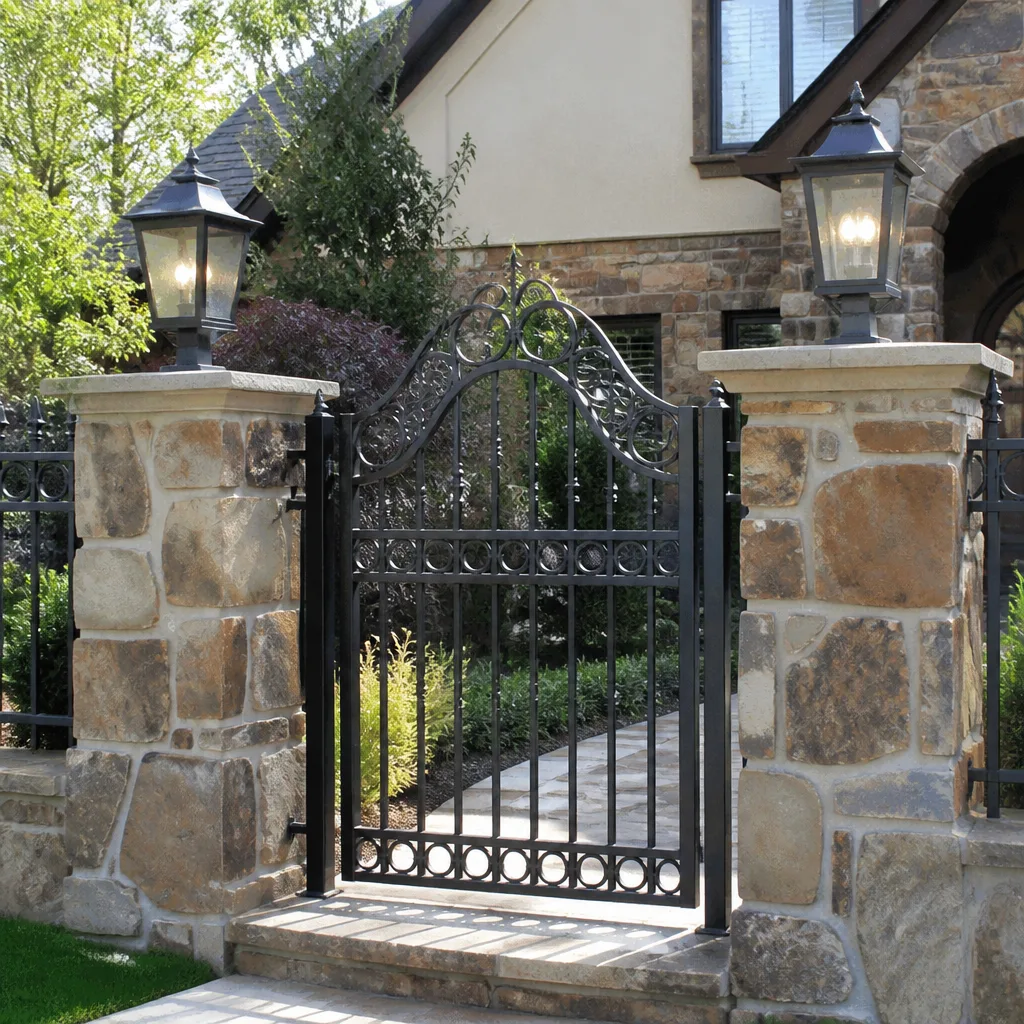
 Wrought iron
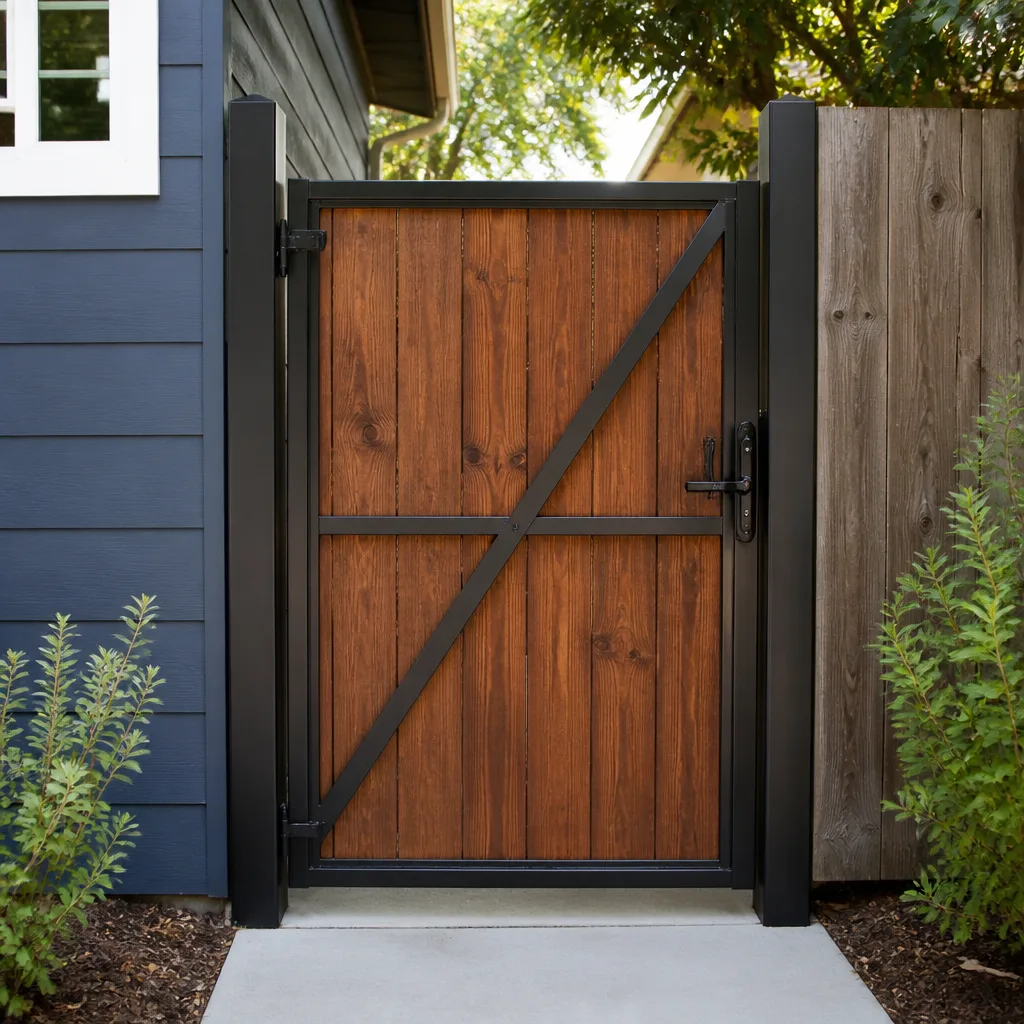 Wood & steel frame
 Farm & ranch
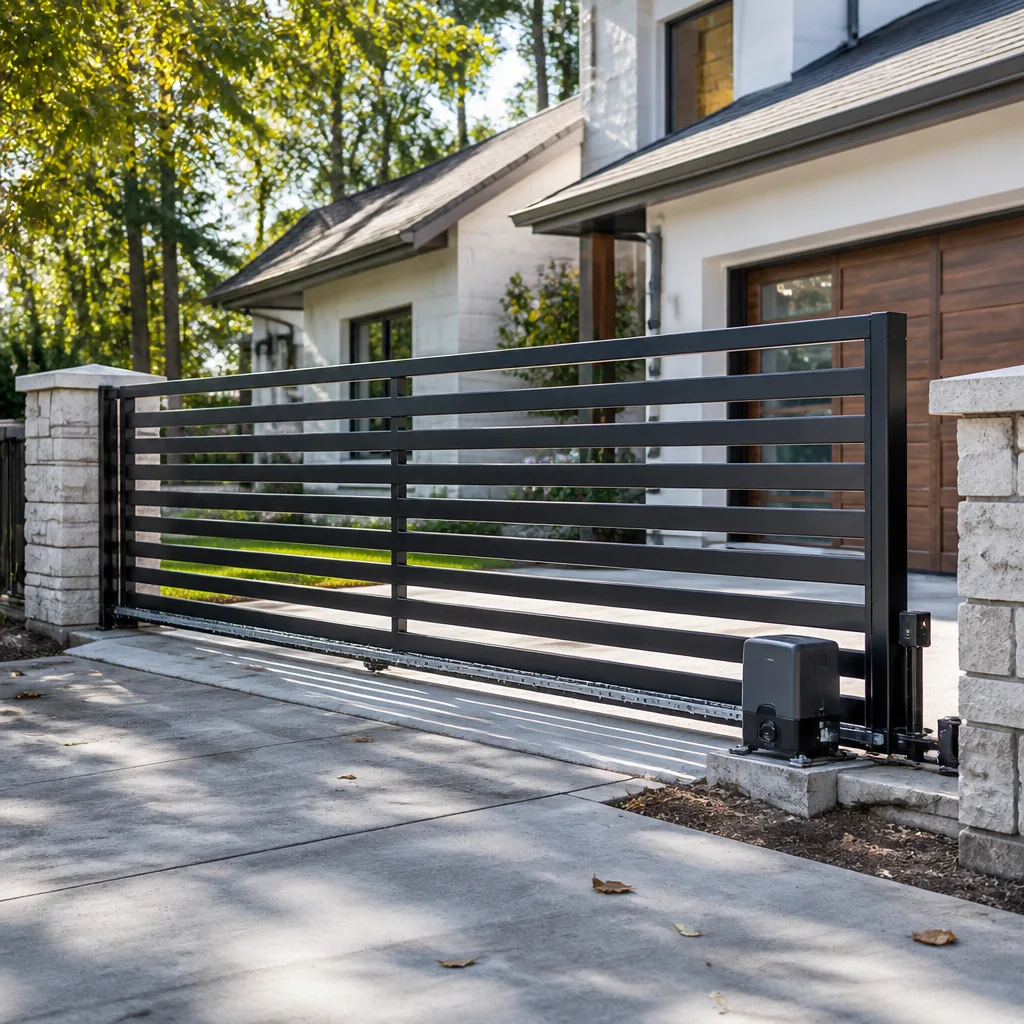 Sliding driveway gates
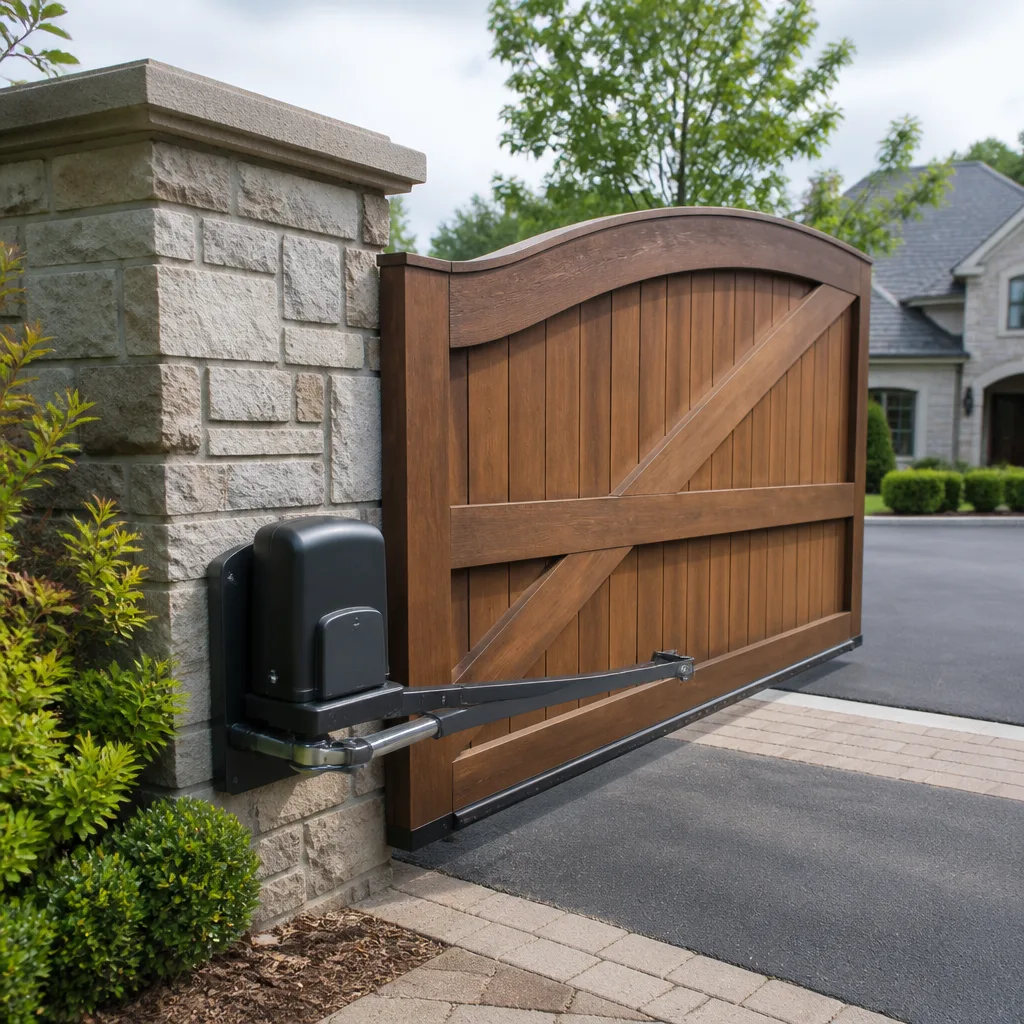 LiftMaster operators
Free on-site gate assessment - hinges, posts, and your LiftMaster or Nice gate operator checked before anything is quoted
The assessment is free and the quote is the invoice.
Get your free estimateStyles & brands we work with
- Wrought iron
- Wood & steel frame
- Farm & ranch
- Sliding driveway gates
- LiftMaster operators
See the difference
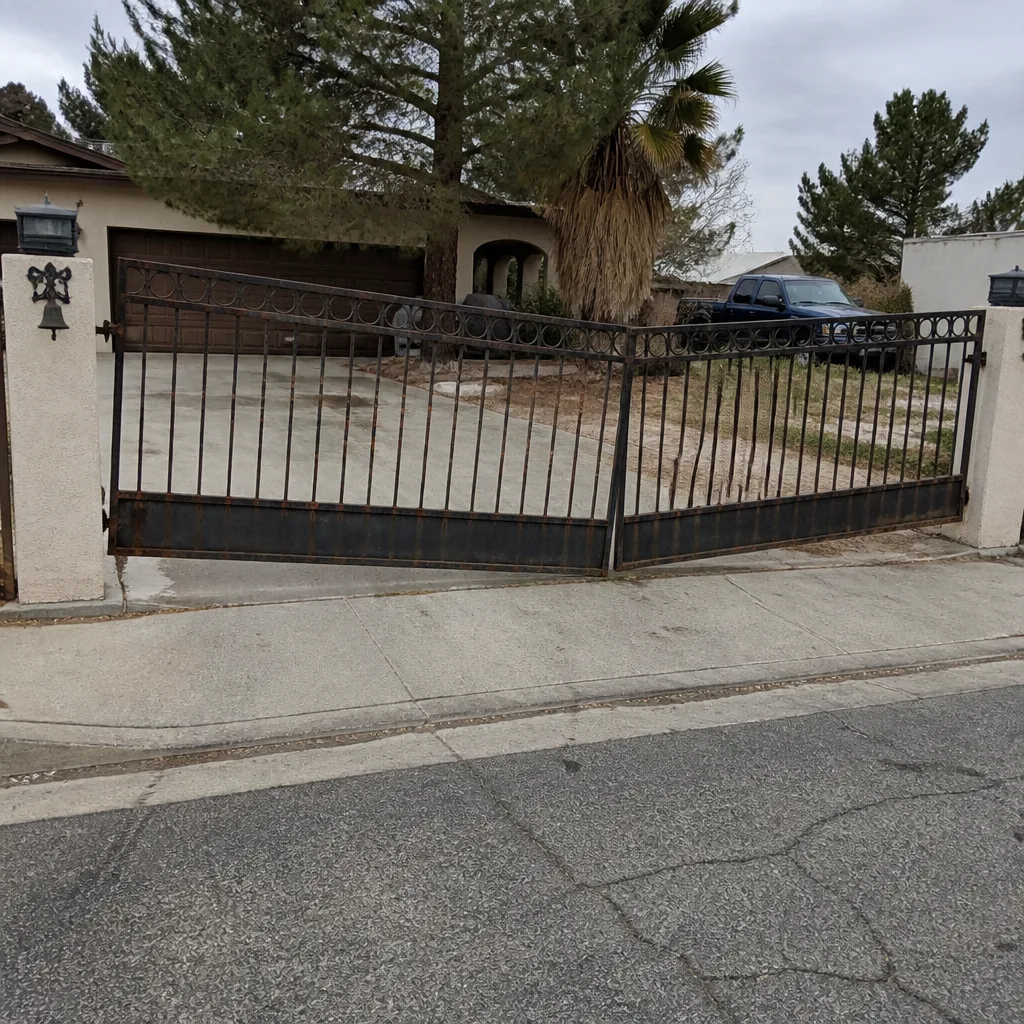 Before
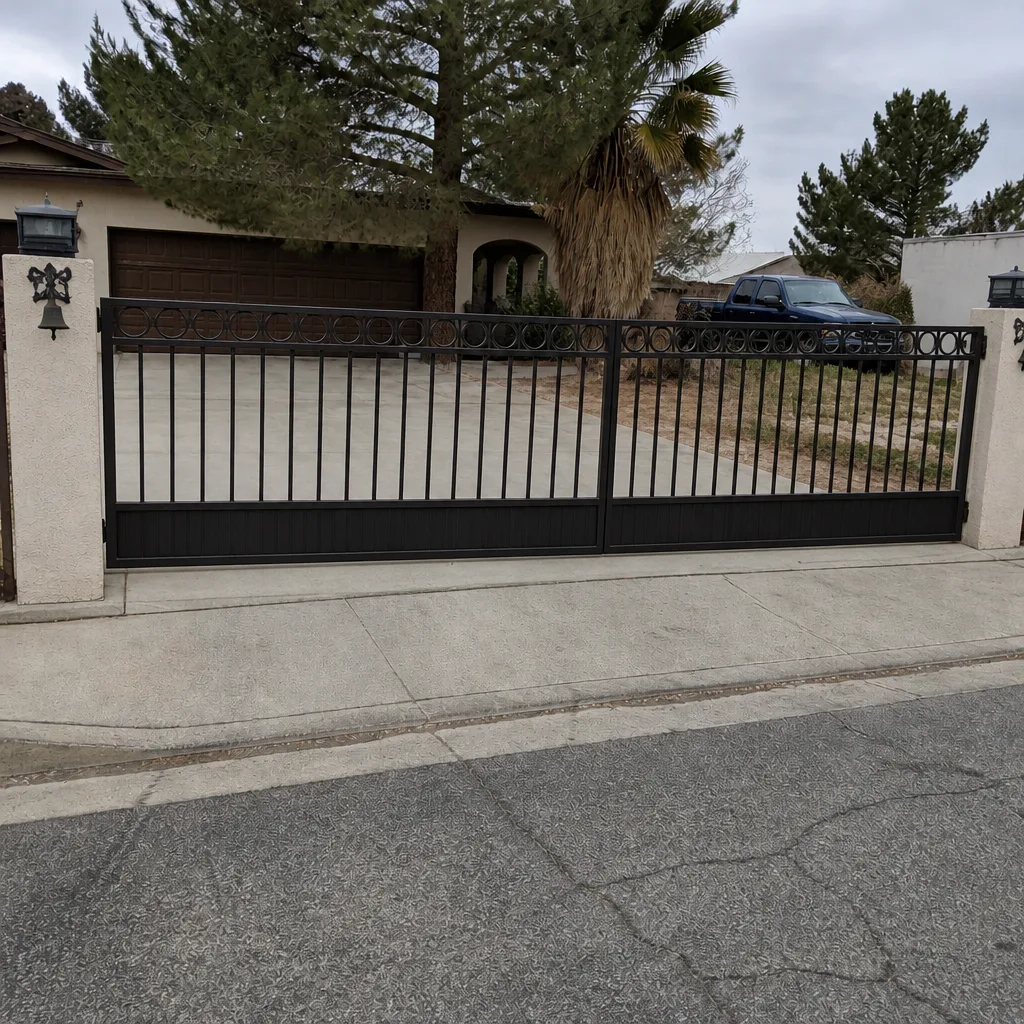 After
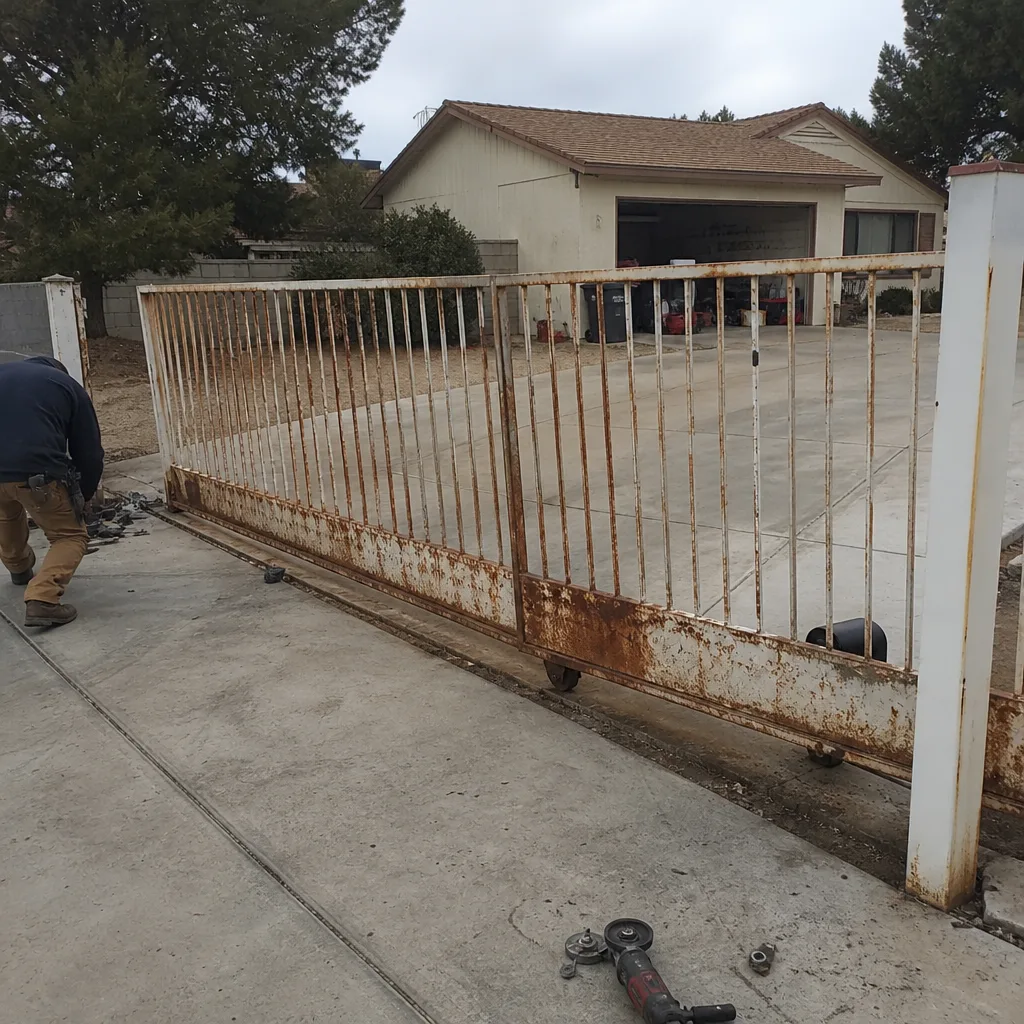 Before
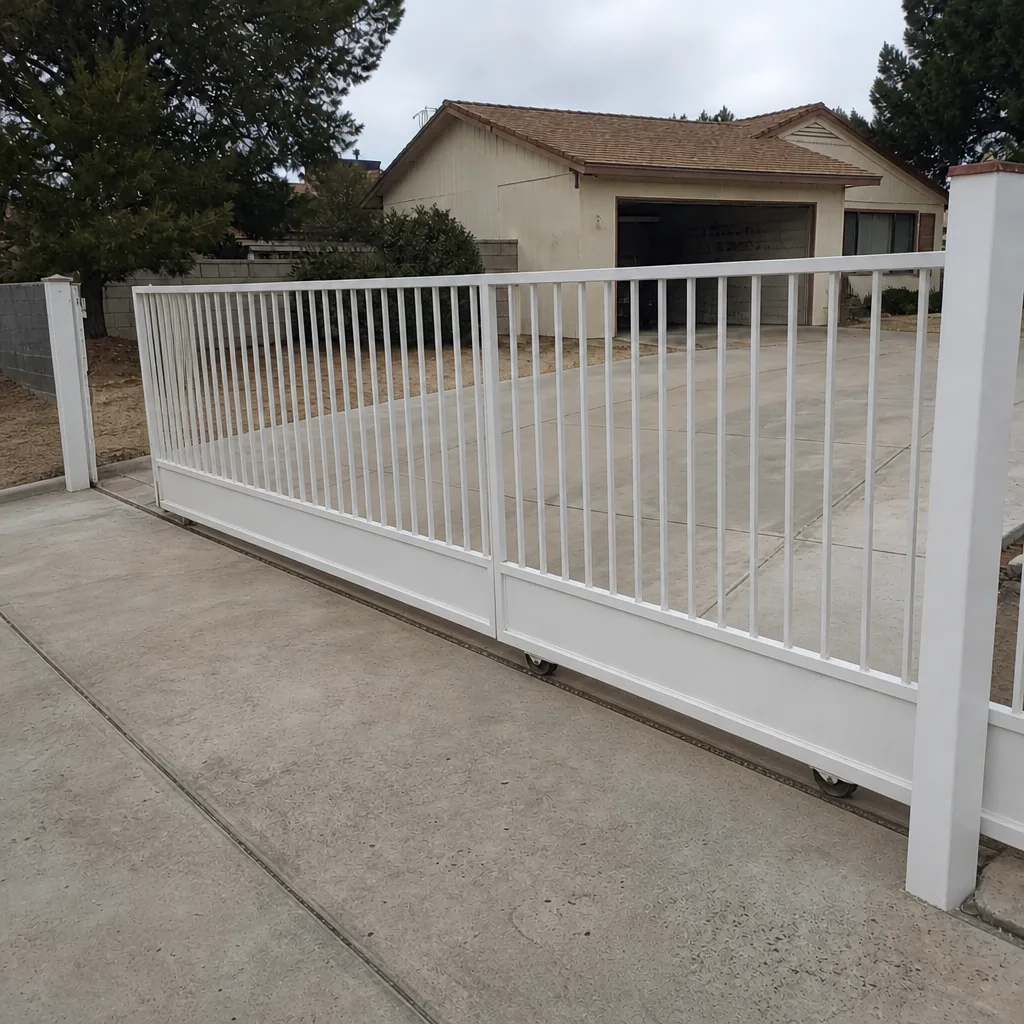 After
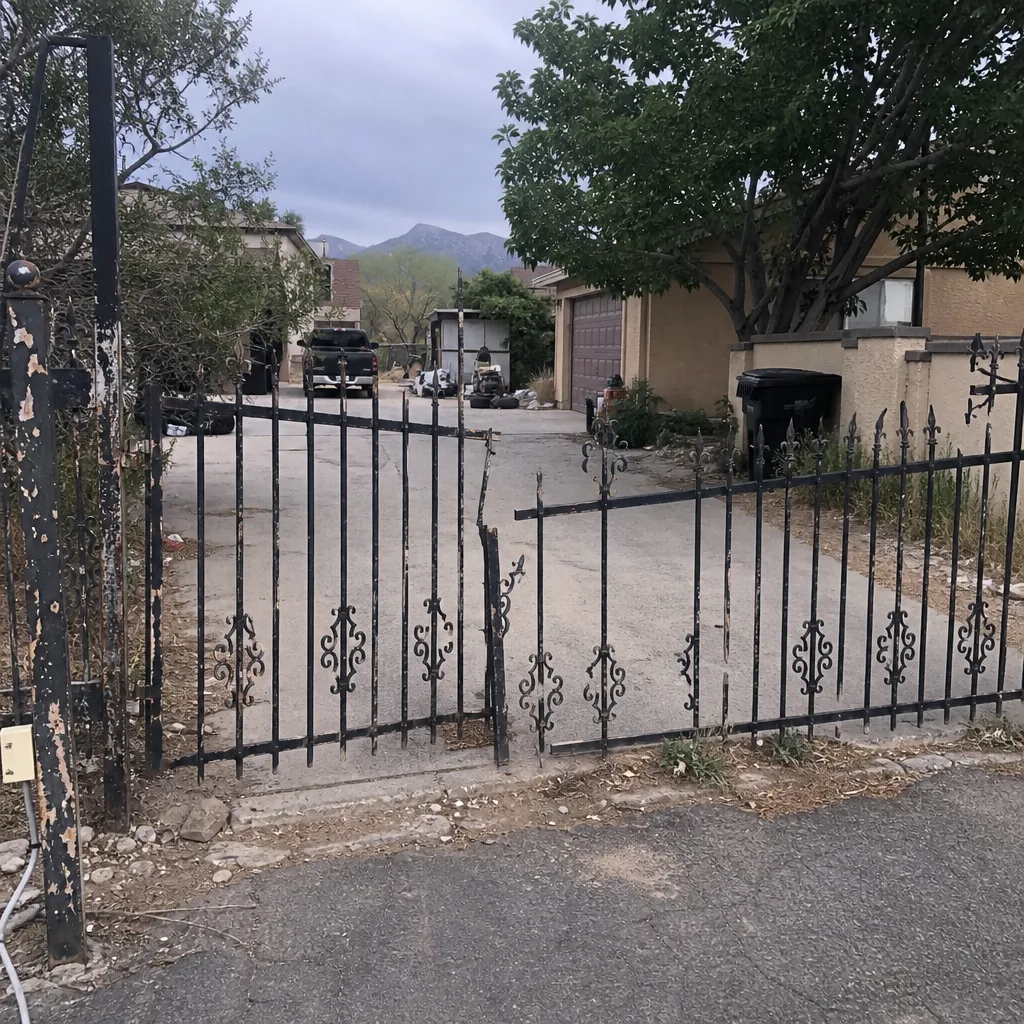 Before
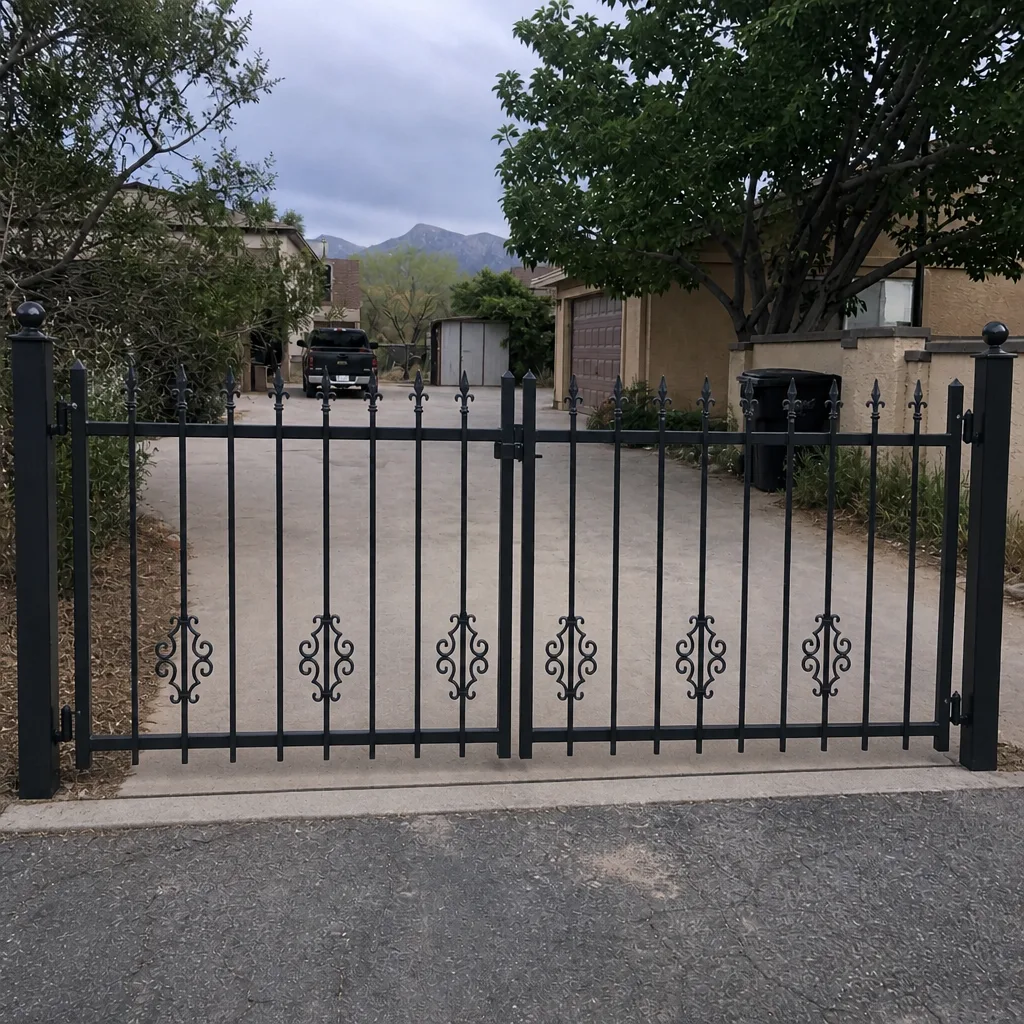 After
How Does an Automatic Gate Opener Work? A Mesquite, NV Owner’s Guide to All Seven Parts
An automatic gate opener works by turning a low-voltage command from a remote, keypad or safety sensor into controlled motor movement along a track or swing arm, with limit switches telling the motor when to stop. Your remote sends a radio signal to a receiver, the receiver tells the control board, the board sends power to the motor and gearbox, and the mechanical arm or chain slides or swings the gate. The board handles every safety check before, during and after the cycle. In Mesquite, four of those seven components face near-constant attack from heat, sand and UV, so knowing which four changes how you maintain the system.
If your gate is already struggling and you’d rather have a trained eye on it, call Ironworks Gate Co. Mesquite at (844) 797-2573. We work on driveway and estate gates across the valley, and we’ll tell you plainly what’s failing and what it costs to fix.
The Seven Components, Explained the Way We’d Explain Them in Your Driveway
No manual excerpts. Here’s what each part actually does, and where the desert works against it.
1. The control board
The board is the brain. It receives signals, runs the safety checks and decides how the motor behaves. In Mesquite, summer temperatures regularly push past 110°F, and a control board tucked inside a metal operator housing on a sun-facing block wall can bake well beyond that. Heat degrades the capacitors and solder joints on the board first, which is why you’ll sometimes see a gate that works fine at 6 a.m. and quits by 2 p.m.
2. The motor and gearbox
The motor turns, the gearbox multiplies that torque into the force that moves a 300-plus-pound gate. Spring winds here drive abrasive sand into every opening, and gearboxes are not sealed perfectly. Sand in the grease acts like grinding compound. That’s a large part of why operator gears on Mesquite gates can strip in a few years rather than the decade-plus you’d expect in a milder climate.
3. The limit switches
Limit switches tell the board the gate has reached fully open or fully closed. They’re set precisely, and thermal expansion in a steel gate frame moves that setting. A gate that closes three-quarters and reverses, or slams and reopens, often has drifted limit switches, not a dead motor. Metal expands and contracts across a Mesquite day; the limit switches don’t know that unless someone resets them.
4. The safety sensors
Photoelectric eyes across the driveway stop the gate if something breaks the beam. Dust is the enemy here. A fine film of desert dust on the lens scatters the beam, and the gate refuses to close because the board thinks something is in the way. Wiping the eyes is a two-minute check that resolves a surprising share of “my gate won’t close” calls.
5. The power supply and battery
The board needs steady low-voltage DC. On grid power, a transformer handles that. Many Mesquite properties with long driveways away from the house run solar, which we’ll get to below. Either way, a weak battery leaves the board resetting itself mid-cycle, which reads to the owner as random, unexplainable behavior.
6. The remote receiver
The receiver listens for your remote’s radio signal. When a gate stops responding to the remote but the keypad still works, the receiver or its antenna is the likely culprit. Antenna wire routed against metal or left dangling in the sun is common on older installs around Sun City Mesquite.
7. The mechanical arm or chain
This is the part you see. A swing gate uses an articulated arm; a slide gate uses a chain or rack. Hinges, rollers and the arm itself take the load. In this heat, pivot hinges seize and arms bend when the gate racks out of square. That’s the wear most homeowners notice first, and it’s also what accelerates wear on everything upstream.
Why Mesquite Specifically Wears Out Four of Those Seven Fast
The components under the most pressure here are the control board, the gearbox, the limit switches and the sensor eyes, and it’s the same three forces every time: extreme heat, blowing sand and hard UV.
- Heat cooks boards and thins lubricants in gearboxes and hinges.
- Sand works into gear trains and hinges on every spring wind event, and it clouds sensor lenses.
- UV degrades wiring insulation, weather seals and rubber boots, exposing the parts underneath to the same heat and grit.
Compare that to nearby St. George, and the difference is real: the wear cycle here is shorter. Pivot hinges that seize and operator gears that strip within a few years are the norm, not the exception, on Mesquite gates.
The housing stock matters too. Most of the valley is stucco single-family homes with block-wall or wrought-iron perimeter fencing, often in 1990s-2000s planned communities where HOA rules set the gate style and finish. That means the operator is usually working behind a heavy, fixed-style gate with no room to cheap out on the motor sizing.
And there’s the seasonal pattern. Sun City Mesquite empties out over the summer when residents head for cooler country. Those gates sit locked up, baking in the sun, for months. Fall calls here frequently involve reviving an operator that hasn’t moved since May, and the first thing we check is the battery and the board, not the motor.
How Solar Backup Works, and Why Sand on the Panel Matters
Many Mesquite properties with a long driveway run their gate on a solar-charged battery rather than trenching power out to the gate. Here’s the cycle in plain terms:
- The panel collects sun and sends current through a charge controller.
- The charge controller regulates that current so it doesn’t overcharge or cook the battery.
- The battery stores the charge and feeds the board through the day and night.
- The board draws from the battery for every cycle, remote signal and safety check.
Sand disrupts this quietly. A dust film on the panel surface cuts how much current reaches the controller, so the battery tops off lower each day. The gate keeps working, until one morning it doesn’t, and the owner assumes the motor failed. It was the panel the whole time. A quick rinse and a panel-angle check solve more solar gate calls here than any part replacement.
The Safety Loop You Probably Didn’t Know Was Buried in Your Driveway
Under the concrete, a wire loop runs around a section of your driveway and detects metal above it. A car parked over the loop tells the board “don’t close,” which is why the gate waits until you drive off. It’s a safety device, and it’s buried, which is exactly why it baffles people.
Monsoon-season flash floods shift the ground. When the soil under the driveway moves, the loop can move with it, its inductance changes, and the board reads that change as a permanent vehicle. The gate will open but refuse to close, and no amount of remote-pressing helps because the loop is telling the board the driveway isn’t clear. Homeowners who don’t know the loop exists call convinced the motor is dead. It isn’t. Diagnosing it takes a loop tester and a look at the ground around the gate posts, which monsoon flooding can also undermine.
If you’d rather stop guessing, Ironworks Gate Co. Mesquite can test the loop, the board and the safety chain in one visit, and every job is backed by our written 90-Day Done Right Promise. You can also read more about the automation side on our Gate Motor & Opener page.
How Solar Backup, the Loop and the Board Fit Together
Understanding the parts is one thing; knowing how they talk to each other is what saves you a service call. The board is the hub. The receiver, safety sensors and loop all report to the board, and the board decides whether to move the motor. Any one of them giving a false signal stops the whole cycle. That’s why a two-minute sensor cleaning often fixes what looked like a dead motor.
Here’s a quick reference table for the parts and their main desert failure modes:
| Component | What it does | Main Mesquite stress |
|---|---|---|
| Control board | Runs signals and safety checks | Heat beyond 110°F degrades capacitors and solder |
| Motor and gearbox | Provides movement force | Sand grinds into grease; gears can strip in a few years |
| Limit switches | Stops the gate at open and closed | Thermal expansion drifts the setting |
| Safety sensors | Stops the gate if the beam breaks | Dust film scatters the beam |
| Power supply/battery | Feeds the board steady DC | Heat and sand on the solar panel cut charging |
| Remote receiver | Listens for your remote | UV degrades antenna wire and seals |
| Mechanical arm/chain | Moves the gate | Hinges seize, arms bend in heat |
Why Brand Knowledge Shortens the Diagnosis
DoorKing, Elite, Mighty Mule and LiftMaster all build the same seven components, but they route them differently, set limits differently and handle solar differently. A technician who only knows one platform starts from scratch on the others. We’re trained and equipped on nine gate-automation brands, including those four, so the right fix happens on the first visit rather than the third. That’s the point of knowing the system: it turns guesswork into a diagnosis, and it tells you exactly which part to watch before it fails.
The mechanical side matters just as much as the electronics. Seized hinges and racked gates wear out good motors, so we check the hardware first on every call. If it’s a hinge or weld issue, our home page spells out the full scope of what we handle.
What you can do yourself without touching a spring, a motor or a live panel: wipe the sensor lenses, rinse the solar panel, clear sand from the track and hinges, and watch for new drift in where the gate stops. Leave the board, the wiring, the loop diagnosis and the spring work to a trained technician. Gate springs and high-tension parts can cause serious injury, and the forces inside an operator aren’t worth a shortcut.
FAQs
A gate that opens but won’t close is usually a safety signal telling the board something is in the way, most often a dusty sensor lens or a shifted driveway loop after monsoon ground movement. The board is doing its job by refusing to close. Wipe the lenses first; if that doesn’t do it, a loop or sensor test will find the cause. Call (844) 797-2573 and we’ll diagnose it in one visit.
No. The operator needs power from the grid or a charged battery, though most units include a manual release key so you can open the gate by hand during an outage. If your solar-charged gate keeps stalling, the panel or battery, not the motor, is the likely problem. We test the whole power chain at your Mesquite property; call (844) 797-2573 for an exact quote.
Once a year at minimum here, and twice is better for a sun-exposed operator on a long driveway. The heat, sand and UV in Mesquite wear parts faster than they would in St. George. An $89 seasonal tune-up covers cleaning, lubrication and limit checks, and it’s far cheaper than a stripped gearbox. Call (844) 797-2573 to book one.
Not reliably from the driveway, and that’s the honest answer. A dead motor and a failing board can look identical to the owner, and a loop or sensor fault can mimic both. A technician with a meter and brand-specific knowledge separates them in minutes. Call (844) 797-2573 for a free second opinion on any written estimate.
Let’s Take a Look
If you’d rather have it looked at, Ironworks Gate Co. Mesquite offers a no-pressure assessment in Mesquite. We’ll tell you which of the seven components is failing, what it costs upfront, and we’ll back the work in writing. Call (844) 797-2573 for a free estimate. A live person answers every call, day or night.
Written by the team at Ironworks Gate Co. Mesquite, serving Mesquite, NV.