
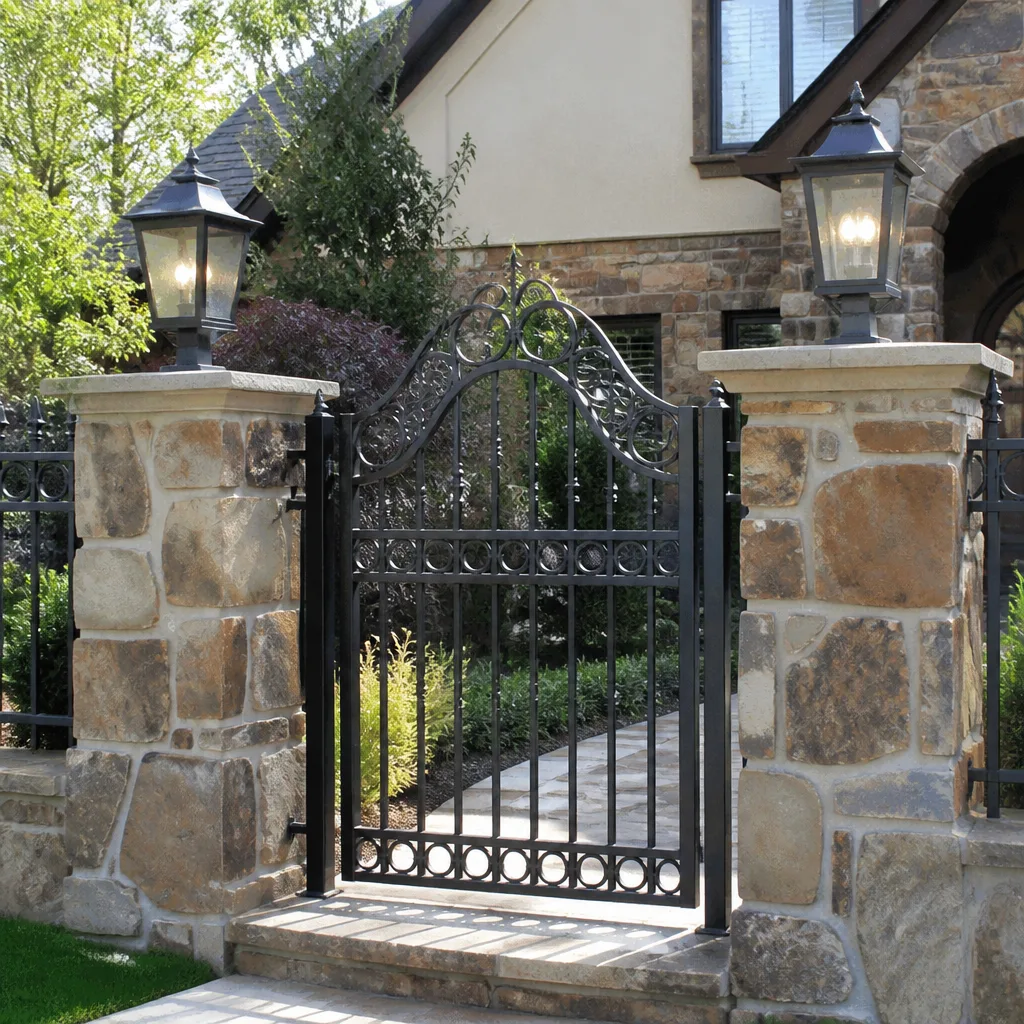
 Wrought iron
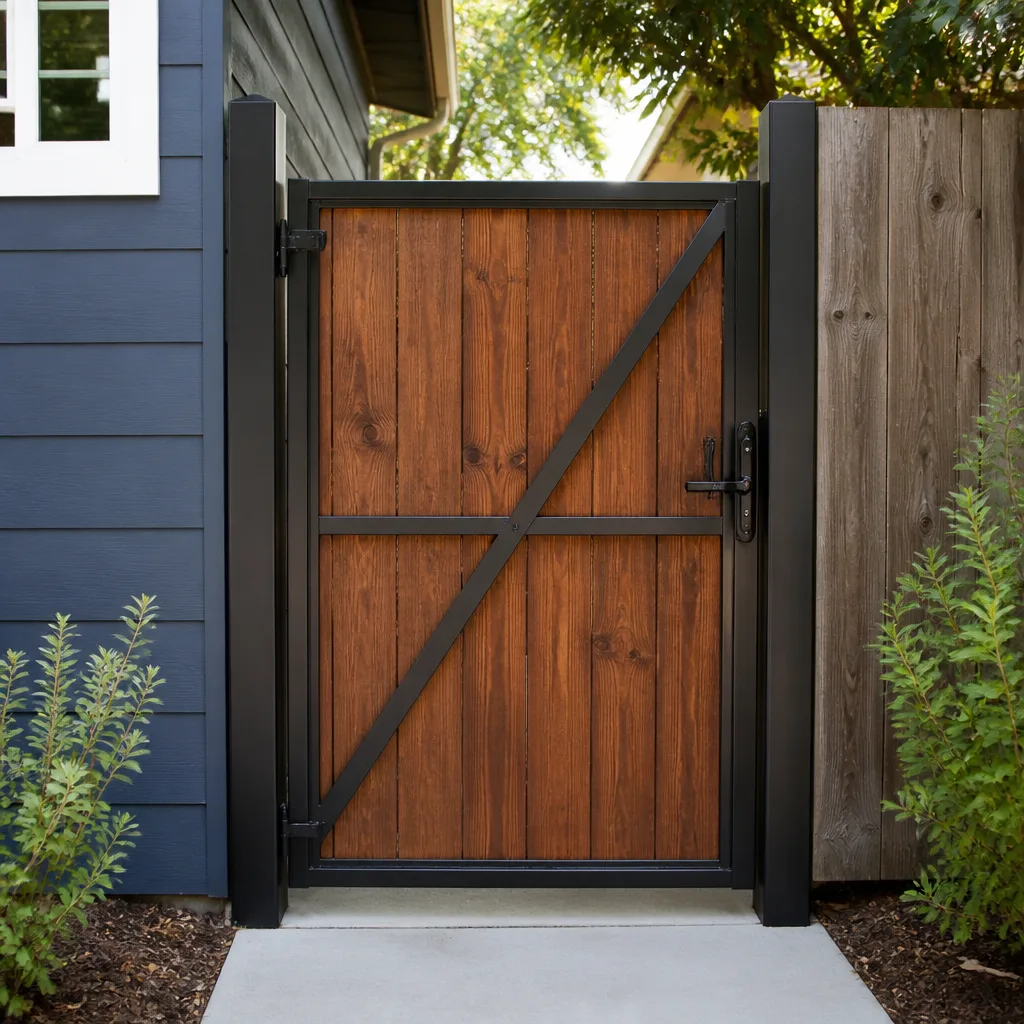 Wood & steel frame
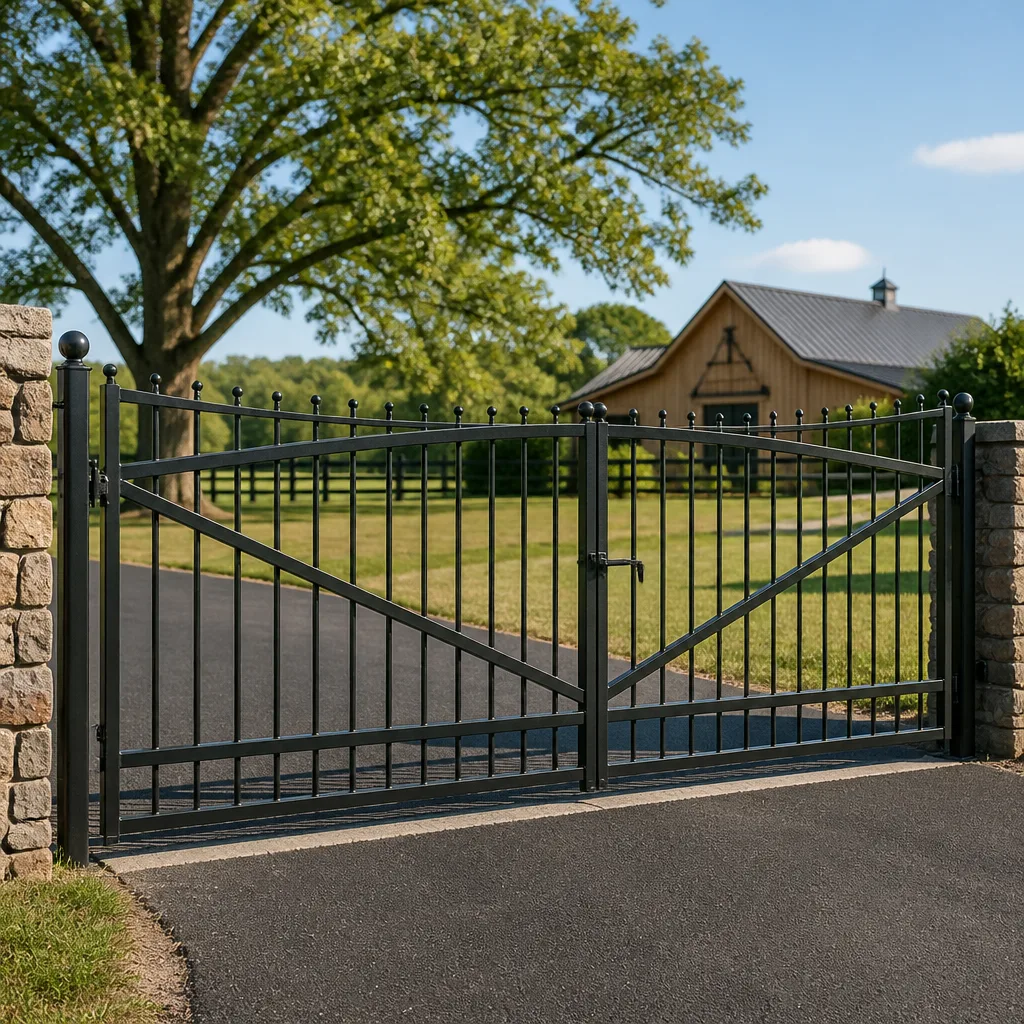 Farm & ranch
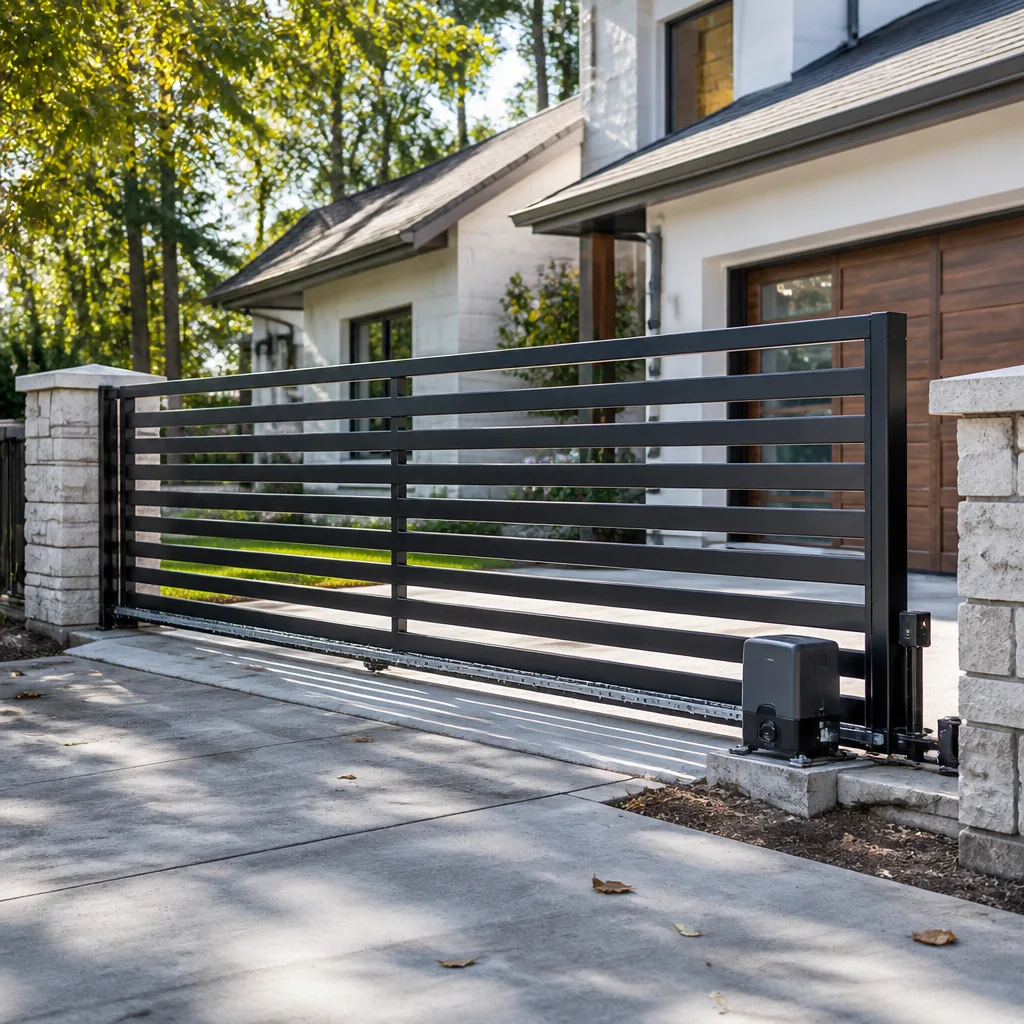 Sliding driveway gates
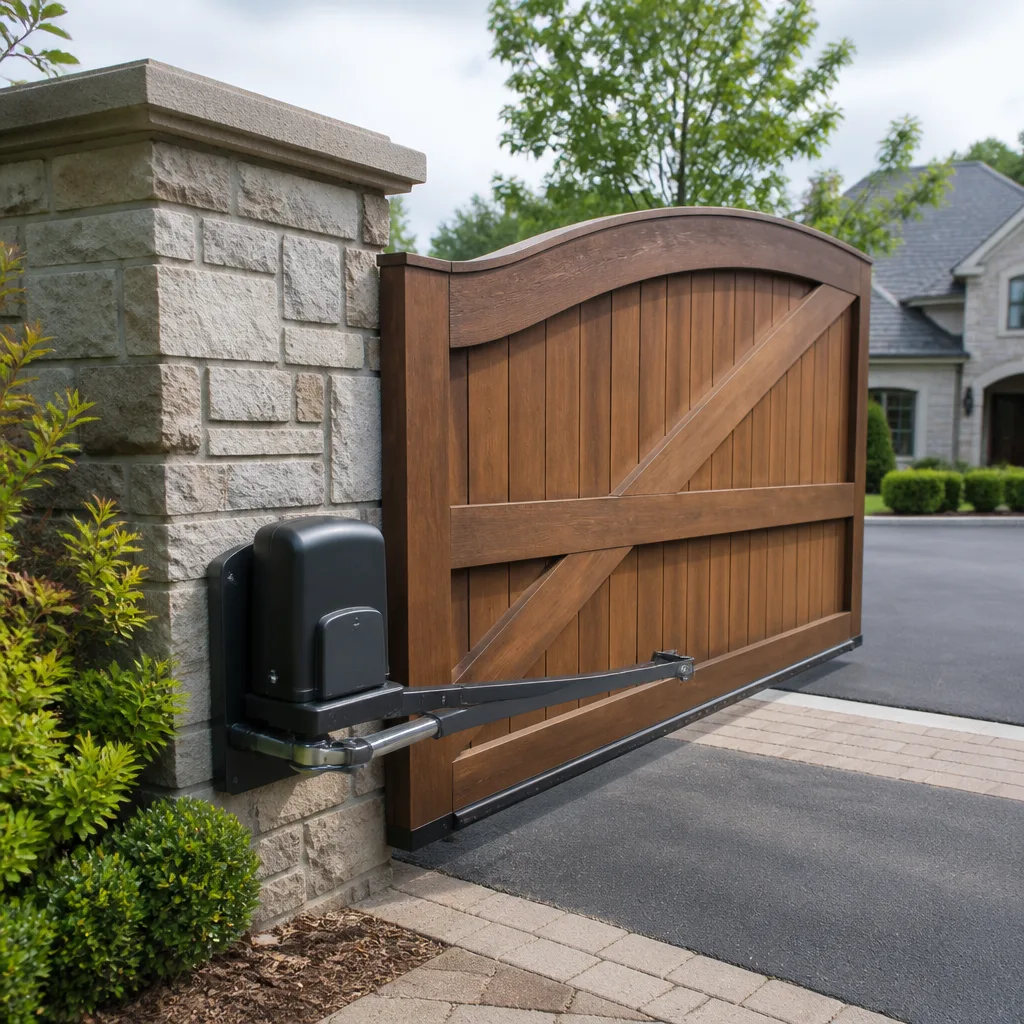 LiftMaster operators
Free on-site gate assessment - hinges, posts, and your LiftMaster or Nice gate operator checked before anything is quoted
The assessment is free and the quote is the invoice.
Get your free estimateStyles & brands we work with
- Wrought iron
- Wood & steel frame
- Farm & ranch
- Sliding driveway gates
- LiftMaster operators
See the difference
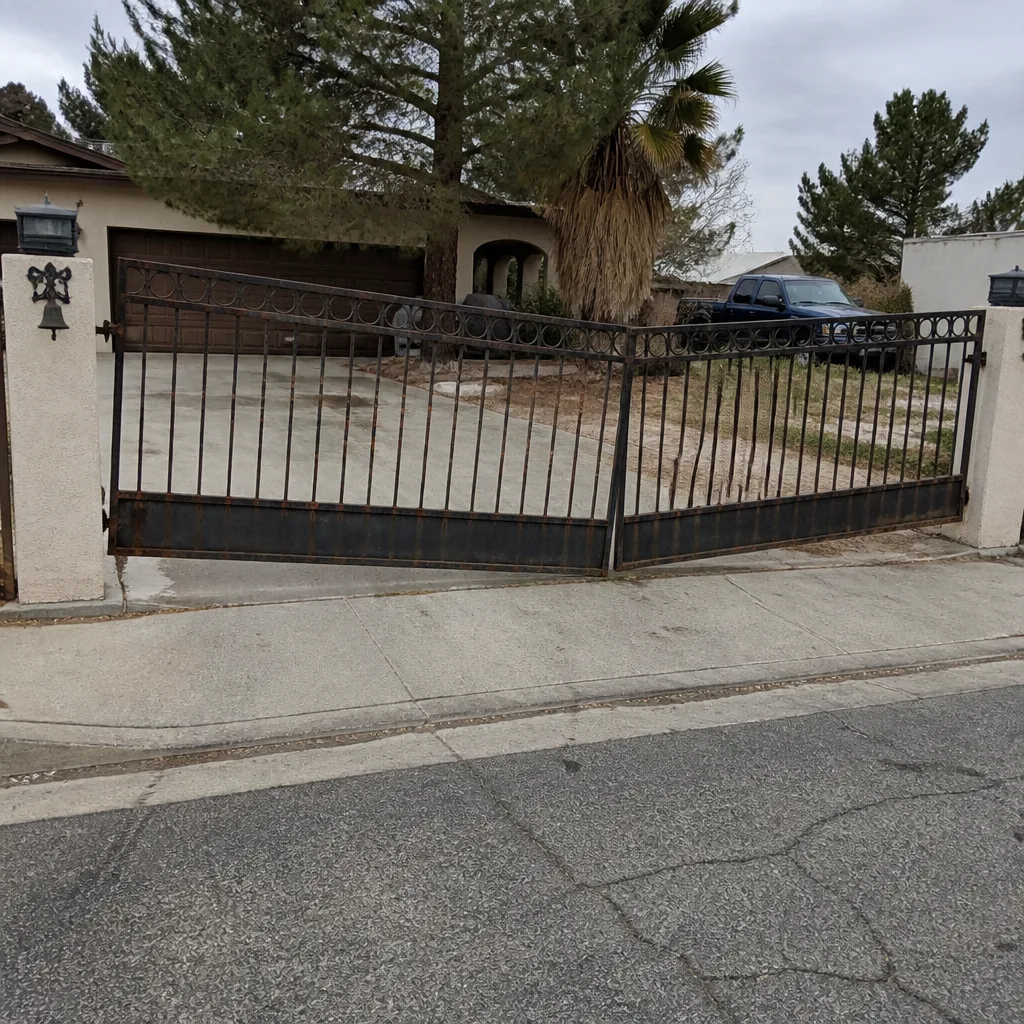 Before
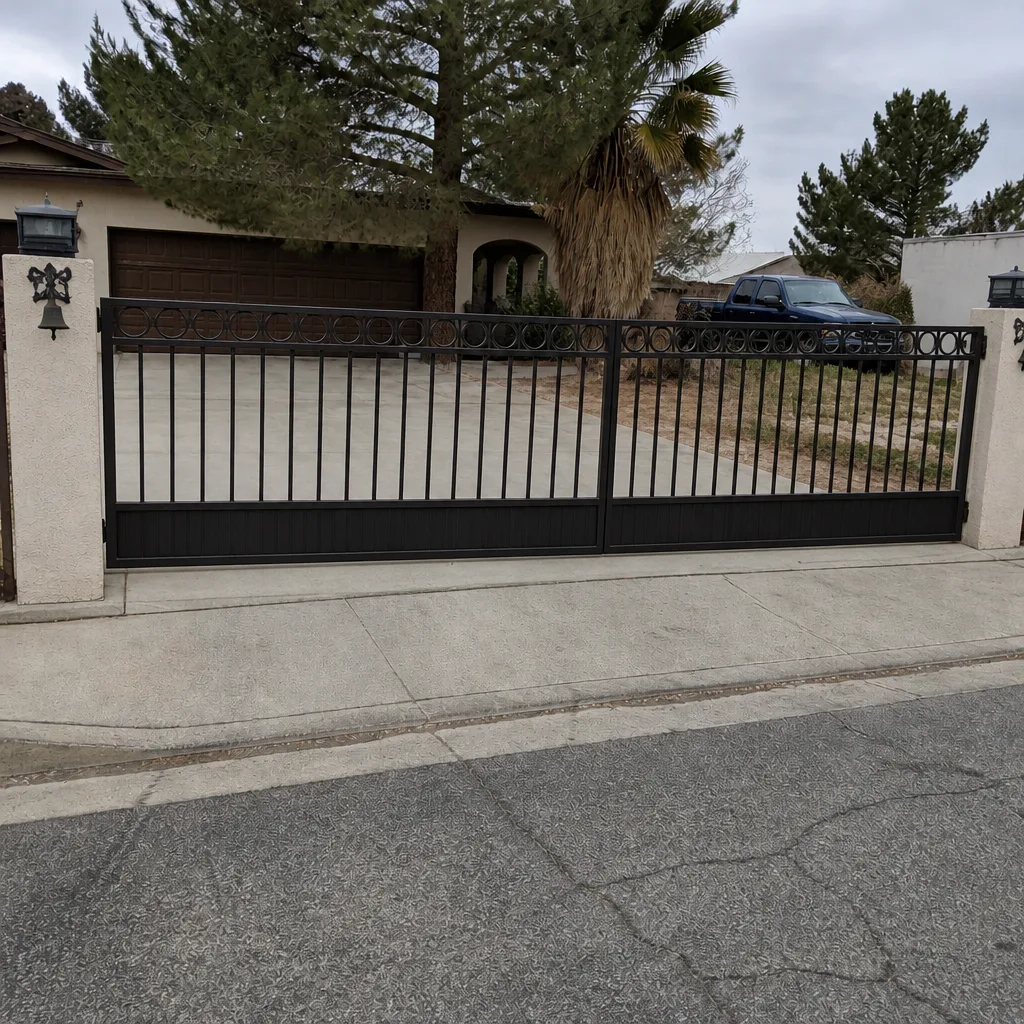 After
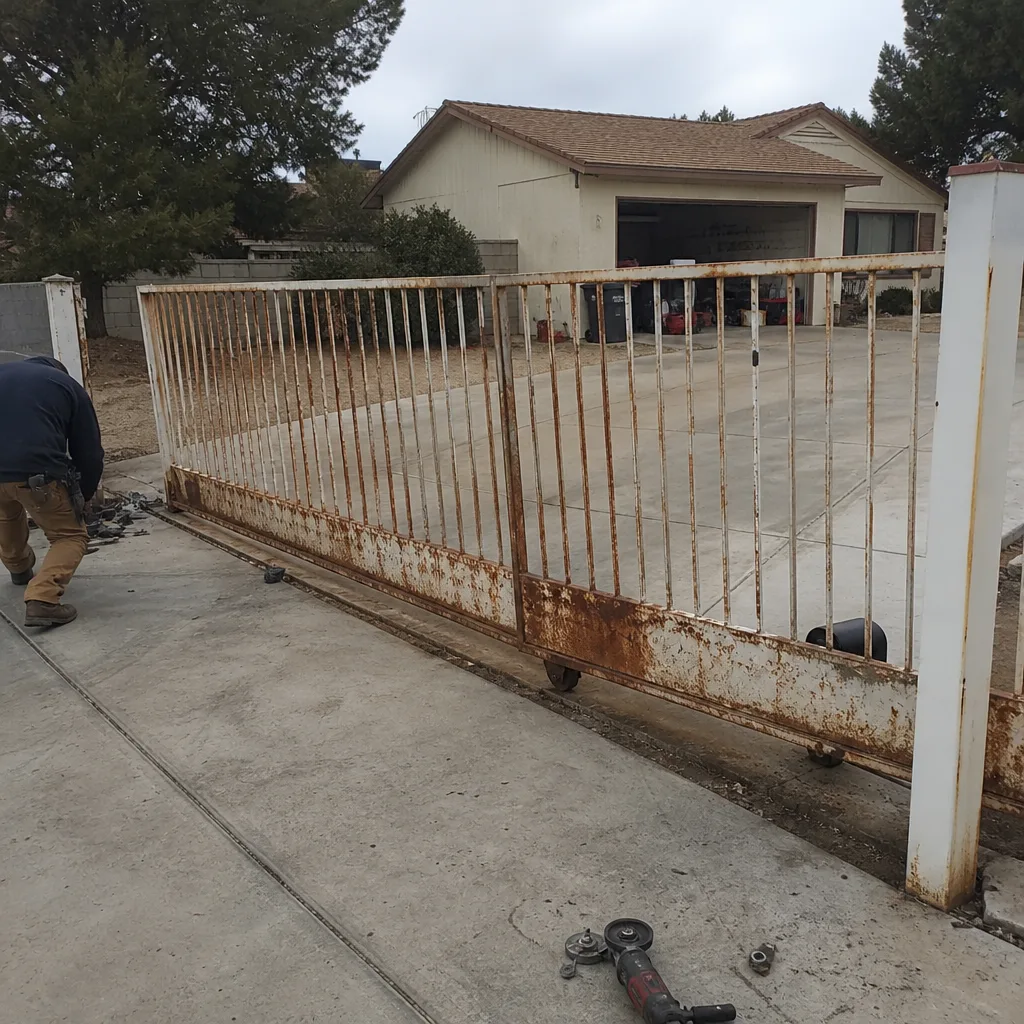 Before
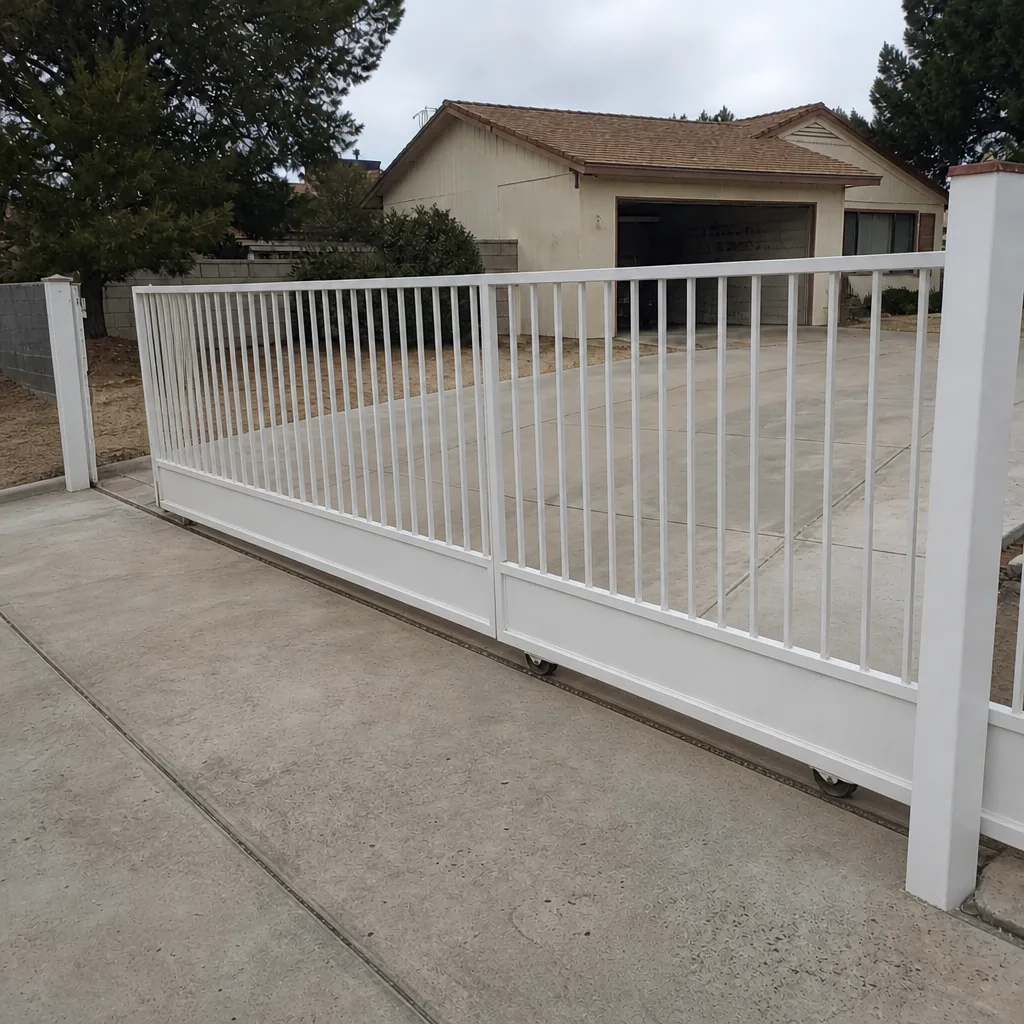 After
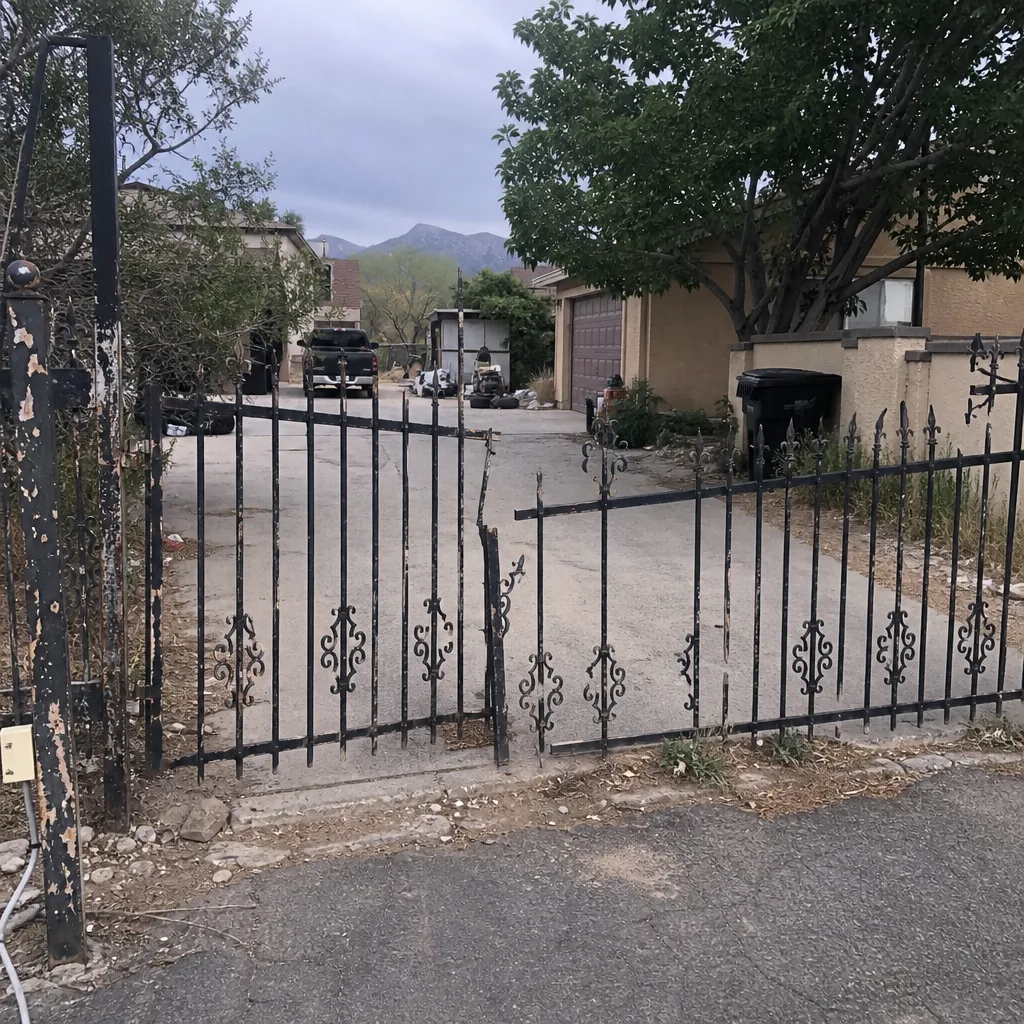 Before
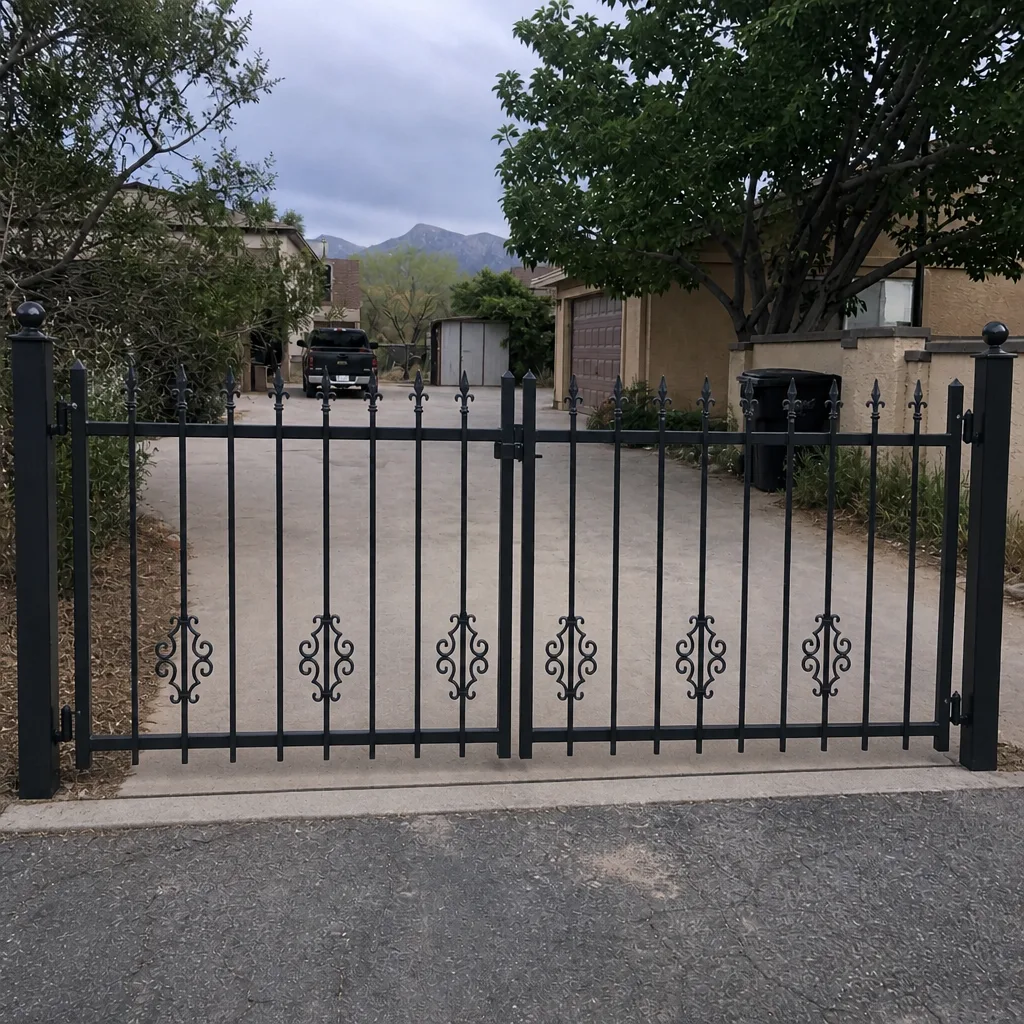 After
How Gate Access Control Systems Work in Mesquite, NV
A gate access control system is four separate circuits working together: an input device (keypad, remote, or card reader), a logic board that decides whether to open, the operator motor that drives the gate, and the physical gate mechanism itself. In Mesquite, the desert heat changes the order those layers fail in, and most homeowners don’t learn the sequence until something stops working. We work on these systems every week, and this is the honest picture. Call (844) 797-2573 if you’d rather have a technician walk your driveway and diagnose it in person.
Key takeaways
- Every access system has four layers, and each communicates differently.
- Sustained heat above 110°F shortens the life of logic-board capacitors and keypad membranes more than anything else.
- Snowbird vacancies create their own failure pattern: backup batteries sulfate and loop detectors lose their ground reference.
- If one layer is failing, a single visit usually fixes it. If two or more are compromised after a hot summer, a full audit is worth more than piecemeal repairs.
The four layers, and how they actually talk to each other
Most explanations stop at “the keypad sends a signal to the opener.” That’s true but unhelpful when something breaks. Here’s the chain in plain terms.
1. Input devices
The keypad, remote, intercom, or card reader is the layer you touch. A rolling-code remote transmits an encrypted code that changes every press, so a receiver only accepts it if the pairing is still valid. A keypad sends a PIN sequence over a low-current wire to the logic board. A Wiegand card reader passes a credential to the same board. Lose that pairing or damage the wiring, and the board never opens, even if the motor is fine.
2. The controller or logic board
The board is the brain. It reads the credential, checks it against what’s stored, and then commands the motor. It also runs safety logic: if a loop detector reports a vehicle under the swing path, the board reverses or holds the gate. A failed capacitor on this board often shows up as erratic behavior: a gate that opens partway, pauses, or ignores a remote it accepted yesterday.
3. The operator motor
The operator converts the board’s command into movement. It has its own limits, torque settings, and sometimes its own internal board. When the motor is the failing layer, the symptom is usually mechanical: strain, grinding, or a gate that moves slowly and stops. This is also where Mesquite’s heat does its quiet damage on the motor’s thermal protection.
4. The physical gate mechanism
Hinges, rollers, tracks, and the gate frame itself. Blowing sand packs into pivot hinges and track rollers, and a gate that drags forces the operator to work harder. A dragging gate can look like a motor problem when the motor is fine. We see this all over Sun City Mesquite, where HOA rules lock in a single gate style and homeowners want the original gate repaired rather than replaced.
When you’re ready to have any of these layers serviced, our Gate Access Control page covers the full scope of what we handle.
How Mesquite heat breaks each layer in a specific order
Sustained heat above 110°F doesn’t kill a whole system at once. It picks off the layers in a fairly predictable order, which is why diagnosing by symptom works.
- Keypad membranes go first. The rubberized membrane over the buttons softens and the contacts underneath degrade. A keypad that needs a second or third press in August is usually a membrane on its way out, not a dead board.
- Logic-board capacitors swell next. Electrolytic capacitors on the controller board are rated for a temperature ceiling, and a Mesquite summers push past it season after season. Swollen capacitors cause the erratic behavior described above.
- Loop detectors lose their ground reference. The in-ground loop relies on a stable ground connection. Heat cycling, plus monsoon-season soil movement, disturbs that reference, and a loop that reads a phantom vehicle holds the gate open or refuses to close.
- Operator thermal protection trips. The motor’s built-in thermal cutoff engages more often in the heat, and a gate that “runs for a minute then quits” is often the operator protecting itself rather than a motor about to fail.
That’s a pattern temperate-climate guides never mention. It’s also why we keep our technicians trained on the nine major gate-automation brands: LiftMaster, FAAC, BFT, Linear, Viking, Ghost Controls, DoorKing, Elite, and Mighty Mule. Knowing which brand’s board handles heat poorly, and which keypad membrane survives the summer, is the difference between guessing and fixing it right the first time.
The credential types we actually program
Access credentials are the codes and cards that tell the board who’s allowed in. Different systems use different types, and reprogramming after a board replacement is where brand-specific skill matters most.
- Rolling-code remotes. The most common residential credential. The remote and receiver share a changing code; replacing either means re-pairing.
- PIN sequences on keypads. Stored on the logic board. A board swap wipes them, and re-entering them correctly depends on knowing the brand’s programming sequence.
- Wiegand card readers. Used on estate and gated-community entries. The reader passes a credential number to the board over a standard data format, so a reader and board from different brands can often work together if the wiring is right.
That brand knowledge is why a system on a LiftMaster operator and one on a FAAC operator get diagnosed and reprogrammed differently, even when the visible symptom is identical.
Reviving a system after a snowbird vacancy
When a gate sits unpowered for months while its owners are away for the summer, the failure pattern changes. Rechargeable backup batteries sulfate and stop holding a charge, so a system that should run on battery during a power blip won’t. Loop detectors that sat through soil contraction lose their ground reference. And a gate that baked in the sun for months often needs the hinges freed before the operator can be tested fairly.
Reviving a neglected system is a distinct job from a standard repair: it means testing each layer in sequence, not just swapping the part that seems dead. If yours sat idle all summer, call us before you assume the operator needs replacing.
A plain-language decision guide
Here’s how to think about repair versus a broader audit. If only one layer is failing, a single-visit repair is usually the right call, and we settle the price upfront before touching a bolt. If spring winds and a hot summer have compromised two or more layers, a full access-system audit makes more economic sense than piecemeal fixes, because each visit has its own labor. We can make that point honestly because we carry all nine brands and don’t need to steer you toward a replacement you don’t need.
Every job we complete is backed by our written 90-Day Done Right Promise, and a live person answers the phone around the clock. Standing offers include $50 off any repair over $250, a free second opinion on any written estimate, and an $89 seasonal tune-up.
How to tell which layer is failing (what to check, not how to fix)
These are safe observations any homeowner can make. Leave the actual repair to a trained technician, especially where the operator’s high-tension mechanism, mains wiring, and loop connections are involved: those carry real shock and pinch hazards.
- Try a second input device. If the keypad fails but the remote works, the input layer is the suspect.
- Watch the gate’s motion. Slow, straining movement points to the mechanism or motor; erratic stops point to the board.
- Listen after the command. A click from the operator with no movement suggests a board or wiring fault; a hum with no movement suggests the motor.
- Check for a dragging gate by hand only when the power is off and the gate is at rest, and never in the path of a moving gate.
FAQs
An input device sends a credential to a logic board, the board verifies it and commands the operator motor, and the motor drives the physical gate. Each layer depends on the one before it, so a fault in any layer can make the whole system seem dead. Call (844) 797-2573 to have us trace it layer by layer.
Heat degrades keypad membranes and logic-board capacitors first, and that’s the most common summer failure we see. A keypad that needs several presses, or a receiver that ignores a remote it accepted last week, usually points to those two components. Call (844) 797-2573 for an exact diagnosis and a free estimate.
If one layer is failing, a single-visit repair is almost always cheaper; if two or more layers broke down over a hot summer, a full audit usually costs less than repeated piecemeal visits. We price it upfront before any work starts. Call (844) 797-2573 for a free estimate.
Yes. A neglected system usually needs backup batteries replaced, loop grounds re-established, and hinges freed before the operator can be tested fairly. That’s a diagnostic job, not a single-part swap. Call (844) 797-2573 and we’ll walk you through what we’d check.
If you’d rather have it looked at, Ironworks Gate Co. Mesquite offers a no-pressure assessment in Mesquite. Call (844) 797-2573 for a free estimate.
Written by the team at Ironworks Gate Co. Mesquite, serving Mesquite, NV.