
Last updated November 17, 2026
 Wrought iron
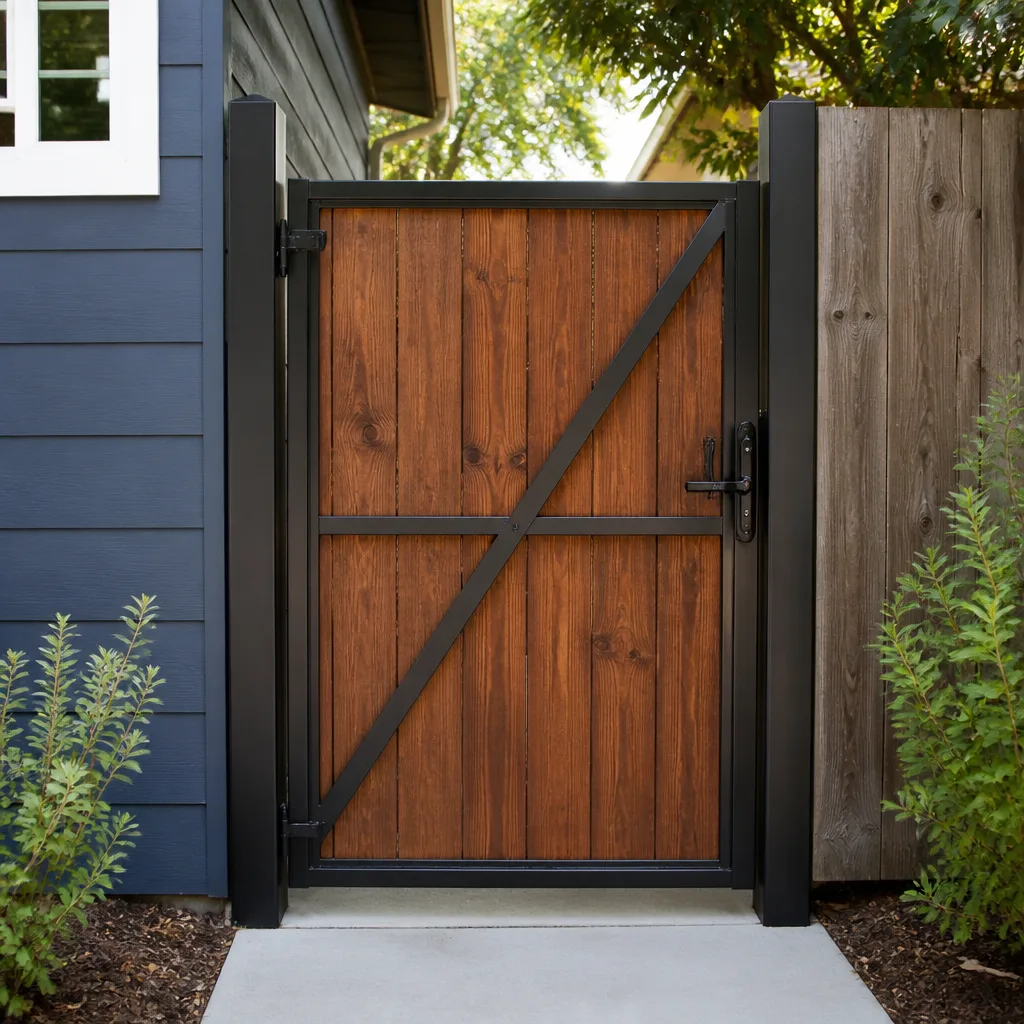 Wood & steel frame
 Farm & ranch
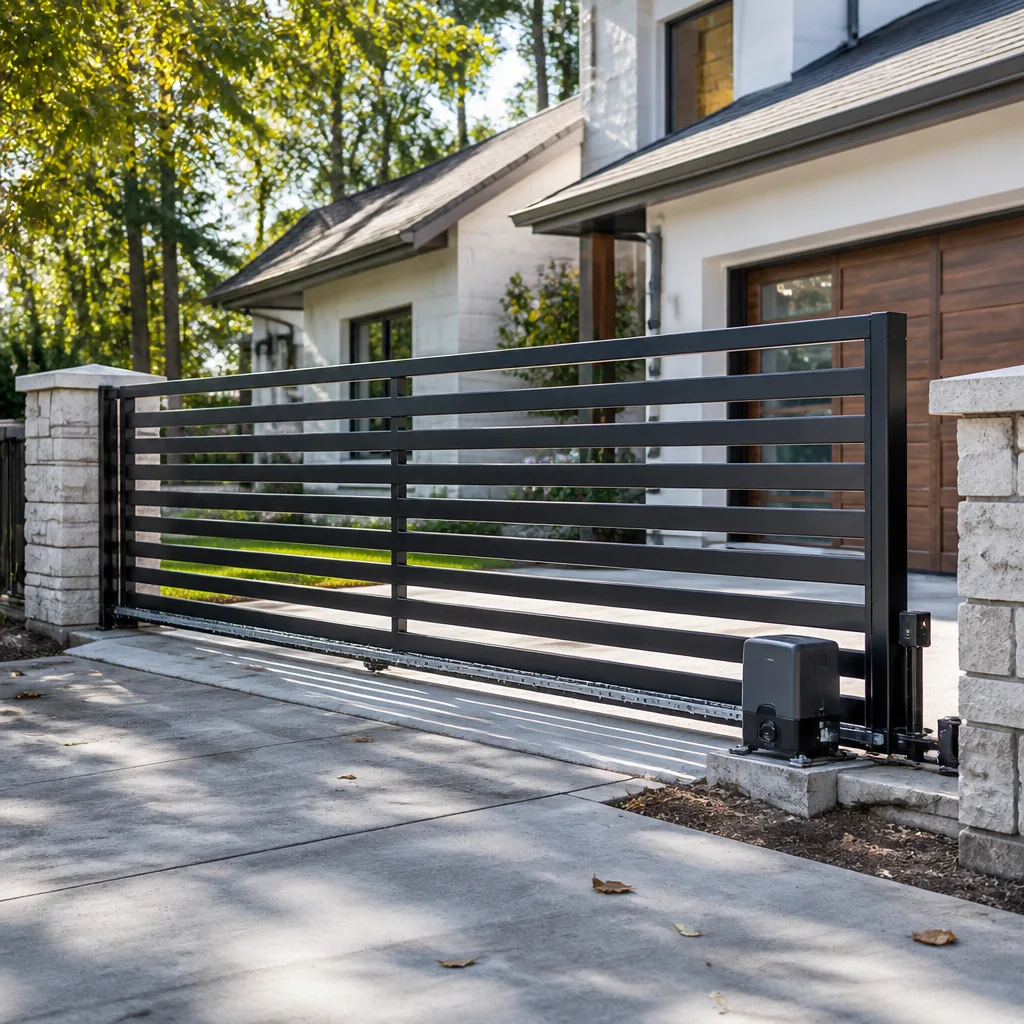 Sliding driveway gates
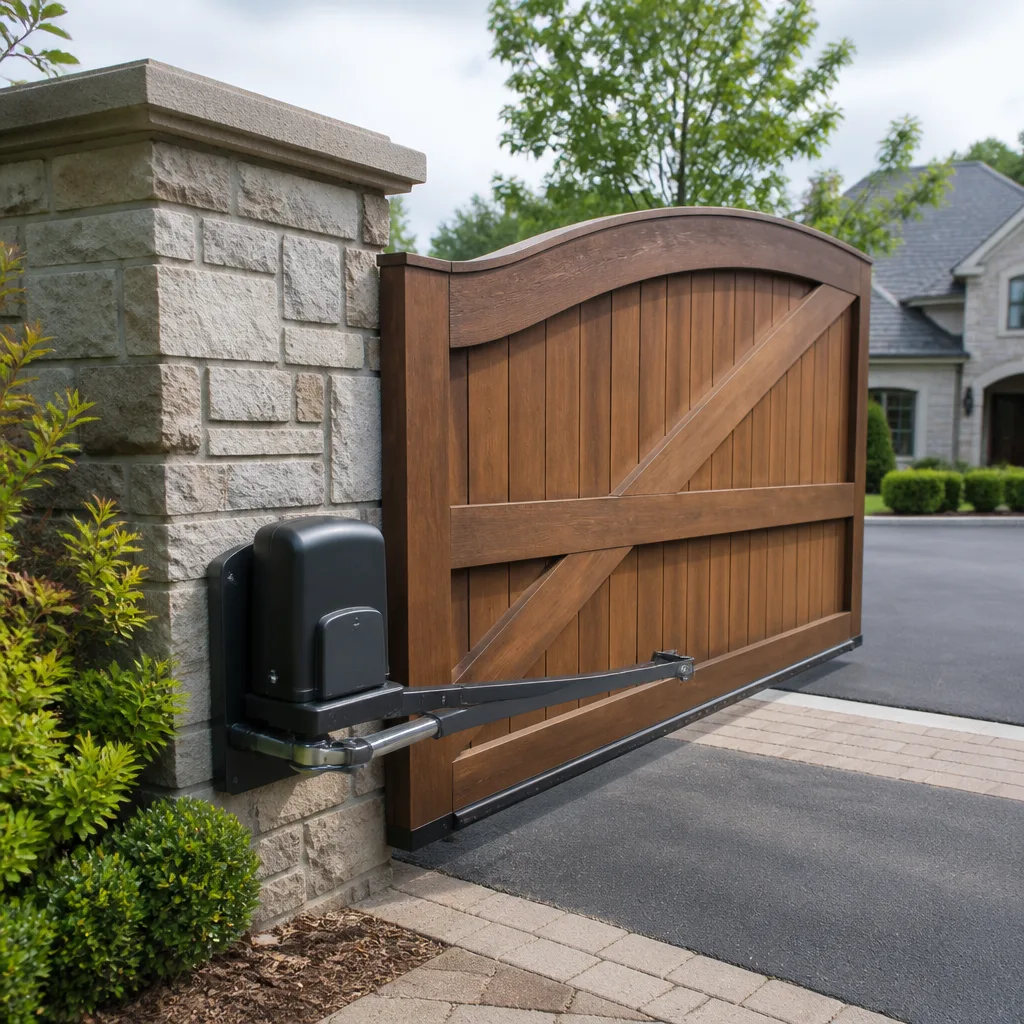 LiftMaster operators
Free on-site gate assessment - hinges, posts, and your LiftMaster or Nice gate operator checked before anything is quoted
The assessment is free and the quote is the invoice.
Get your free estimateSeasonal Gate Repair Care for Mesquite: Year-Round Homeowner’s Guide
The gate motor that failed in August wasn’t killed by August. It was killed by skipping the April inspection when the fix would have cost about $40. That’s the pattern we see across Mesquite, Nevada: the breakdowns that surprise homeowners were set in motion months earlier by heat, grit, or a hinge that started to bind. Mesquite doesn’t run on four equal seasons. It runs on a punishing summer, a short but real freeze window, and two mild stretches that are the only sensible time to do preventive work. This guide maps gate care to that calendar. You’ll learn what to check, when to check it, and how to fold it all into two focused inspections a year instead of chasing small tasks month by month.
Quick Answer
Gate care in Mesquite works best on two inspections a year: a pre-summer inspection in April or May that prevents most heat-season failures, and a fall inspection in October or November for structural and welding work while the weather is mild. Summer is for managing automation expectations, not major repairs. Winter freeze prep is a short, specific checklist for posts, hinges, and hydraulic operators. Two inspections cover it all if you do them properly.
Styles & brands we work with
- Wrought iron
- Wood & steel frame
- Farm & ranch
- Sliding driveway gates
- LiftMaster operators
Table of Contents
- Why the Mesquite Calendar Beats the Generic Seasonal Template
- Pre-Summer Prep: April and May
- Summer Management: June Through September
- The Fall Inspection Window: October and November
- Winter Freeze Preparation
- How to Calendar Two Inspections That Cover Everything
- Routine Owner Checks vs. Technician Work
- Common Mistakes to Avoid
Why the Mesquite Calendar Beats the Generic Seasonal Template
Most gate maintenance advice is written for a climate with four balanced seasons. Mesquite doesn’t have one. Summer here pushes past 110°F, and the ground and metal soak up that heat from May onward. Winter brings a brief but genuine freeze risk, particularly on clear nights in December and January when temperatures dip below 32°F for a few hours. Spring and fall are short, mild windows, and they’re the only practical times for welding, painting, and structural adjustments.
The result is a heat cycle, a freeze cycle, and two work windows. When homeowners ask about seasonal gate maintenance in Mesquite Nevada, we steer them away from a generic spring-summer-fall-winter checklist and toward that reality. The stakes are simple: a gate motor replaced in August costs far more than a $40 bearing or a tightened hinge found in April.
If your gate has never had a structured annual routine, start with a professional assessment rather than guessing at the machine. Our Gate Repair in Mesquite service covers the full diagnostic from hinges and welds to the control board and operator. And if you’re planning a new build or replacement, Gate Installation in Mesquite covers everything from the footing to the final adjustment.
Pre-Summer Prep: April and May
April and May are the most valuable weeks on the Mesquite gate calendar. The heat hasn’t set in yet, metal hasn’t fully expanded, and any failure you prevent here is a failure you won’t pay for in July. This inspection targets the three most common heat-season breakdowns: thermal expansion binding, UV coating breakdown, and battery drain.
Thermal expansion binding happens when a gate’s metal and hinges swell in the heat and can’t move freely, so the motor works harder and harder to push it along. A binding gate can burn out a perfectly good motor. In April, a technician checks every hinge for play, greases the pivot points, and confirms the gate swings clear with a few pounds of hand pressure.
UV coating breakdown is the quiet one. Sun exposure cracks and dulls the protective finish on painted steel and accelerates corrosion on welds. Touching up a weld seam in May costs a fraction of cutting out a corroded corner in September. Here’s what that pre-summer visit covers:
- Grease and adjust every hinge and pivot point to remove binding before the heat sets in.
- Inspect and touch up UV coating, paint, and weld seams across the frame and posts.
- Test the battery backup and check the charging circuit so a power blip doesn’t leave you locked out.
- Clear the track, rollers, and guides of grit and debris blown in from desert wind.
- Confirm safety edges and photo beams respond correctly before heavy summer use.
- Check the motor’s gearbox for the first signs of wear.
This is the $40-in-April-versus-a-motor-in-August logic in practice. A seasonal tune-up at the start of the heat season is the single highest-value thing you can do for a gate in Mesquite. Our technicians have up to 13 years of experience on nine automation brands, so if a part needs replacing, we identify it accurately on the first visit.
Summer Management: June Through September
Above 110°F, every gate operator works in conditions it wasn’t designed for. A motor rated for normal duty may enter thermal protection or run slower in the worst afternoon heat. That’s not a fault. It’s physics. The goal from June through September isn’t perfect performance; it’s preventing the failures that heat triggers.
A few things to expect. Automation may run slower or stall mid-cycle during the hottest hours of the afternoon, then work fine in the evening. Control boards and batteries sit in enclosed boxes that can reach well above ambient temperature. Some homeowners choose to shade a control enclosure that’s bolted to a sun-baked south or west wall. Shading helps the electronics run cooler, and it’s a reasonable improvement, but shading won’t rescue a motor that’s already failing. If the gate is stalling, reversing, or tripping the breaker repeatedly, that’s a motor or board problem, not a shade problem.
What to watch for and what to do:
- Slow or stalled cycles in peak heat: normal if the gate recovers in cooler hours; concerning if it doesn’t.
- Battery drain: heavy summer battery use on backup systems is common; test the battery now, not in a power outage.
- Control board heat stress: if a board sits in direct sun, a simple shade panel can extend its life.
- Squealing or grinding: often a sign a bearing or gearbox is dry or failing; don’t wait it out.
- Repeated reversing: frequently a sign of binding, a bad safety sensor, or a motor working beyond its limit.
- Fading or cracking paint: a summer touch-up on welds prevents a fall welding bill.
If your gate is running rough this summer, a call is cheaper than a failure. Our Gate Motor & Opener in Mesquite service covers diagnosis and repair on every brand we carry, including FAAC, BFT, and Viking units.
The Fall Inspection Window: October and November
Ocotober and November are the best months for structural and welding work in Mesquite. Metal isn’t swollen with heat, the evenings are comfortable, and there’s enough time before winter to let paint and repairs cure properly. This is when you fix the frame, not just the parts. It’s also the best time to address anything that summer exposed.
A fall visit should cover both the structure and the machine:
- Inspect every weld seam and post footing for cracking, corrosion, or loosening.
- Check post stability and torque base anchors.
- Repair or re-weld any compromised joints now, while the weather allows proper curing.
- Repaint exposed metal and seal welds before winter moisture.
- Inspect the track and rollers for seasonal wear and realign the gate’s travel.
- Test the operator’s limits and safety devices with cooler-weather performance in mind.
- Check for loose hardware, worn bushings, and any hinge that’s drifting.
Fall is also the smart time to schedule any hanging or adjustment work, because the mild weather makes it easier to get a precise fit. If your gate is settling or dragging, getting it corrected in October saves you a scramble in December. A company that makes a 40-year-old gate close like the day it was hung relies on this kind of seasonal discipline. If you want to understand the full scope of what we cover, Ironworks Gate Co. Mesquite home lays it out.
Winter Freeze Preparation
Mesquite does freeze, even if only for a few hours at a time. When it does, water in the wrong place becomes a problem. Gate posts, low hinges, and hydraulic operators all have specific cold-weather weak points that are worth a short checklist before December.
First, pipe-adjacent posts. If your gate is near irrigation lines or buried coax, a hard freeze can crack the ground around a post footing, and an unstable post leads to a sagging gate. Check for soil erosion and settling near posts as soon as the first cold snap passes. Second, low-lying hinges and pivots. Moisture that gathers at the bottom hinge can freeze and seize it. Keep those fittings greased, and make sure water drains away from the bottom of the gate. Third, hydraulic operators. Some hydraulic gate operators use fluid that thickens in cold weather, which strains the pump and slows the gate. If your operator has a hydraulic drive, a cold-weather check on the fluid and seals is worth scheduling in November.
And the single most important winter task: test the battery backup before the cold arrives. A battery that’s marginal in July can fail completely on a cold January night when you need to get your car out. This is one of the reasons we build two inspections into a year’s routine rather than one. If your operator is due for a winter check, a certified technician on your brand’s specific model is the right call.
How to Calendar Two Inspections That Cover Everything
You don’t need to chase small tasks every month. Two focused inspections, well-timed, cover every season’s risks. Here’s the structure we recommend for any Mesquite gate owner:
- Late April or early May (pre-summer): focus on preventing the three heat-season failures. Grease hinges, touch up UV coating and welds, test the battery, clear the track, and confirm safety devices. This is the highest-leverage visit of the year.
- October or early November (fall structural): focus on welding, structural soundness, paint touch-ups, and adjustment. This is when you repair and cure, and when you winterize the operator.
If your gate is new or recently repaired, these two may be all you need. If your gate is older or shows signs of settling, add a lighter mid-summer check to confirm the seasonal tune-up held. Two focused visits protect the gate year-round; monthly tinkering doesn’t. A $89 seasonal tune-up at the right time of year does more for a gate’s longevity than a dozen scattered fixes.
One last thing about timing: fall is when we see the most demand for structural and welding work in Mesquite, so book ahead. The mild weather is the reason the work goes well, and it’s also the reason the calendar fills first.
Routine Owner Checks vs. Technician Work
Some checks are safe and smart for any homeowner to do. Others genuinely belong to a trained technician. Knowing the difference keeps you out of trouble and keeps your gate on the road longer.
A homeowner can safely clear dirt and debris from the track and rollers, look over the gate for visible rust or cracks, and confirm the gate swings with light hand pressure. These are quick visual checks that flag a problem early. A homeowner can also test the battery backup by following the manufacturer’s manual. Anything beyond that, though, deserves a professional look.
Springs under tension, welding on a loaded frame, hydraulic systems, and the control board itself are not owner-serviceable tasks. High-tension springs and cables can release stored energy without warning and cause serious injury. Electrical work on the operator and safety circuits carries shock risk. And welding on a live gate frame is a job for someone with the right equipment and training. If a check turns up a snapped spring, a cracked weld, or a board that won’t power up, stop and call a professional rather than improvising.
Common Mistakes to Avoid
- Waiting until failure to call anyone. A motor replaced in August usually started failing in spring. The cheap fix is the one you do before the heat.
- Greasing and forgetting. Hinges need real inspection, not just a squirt of oil. Binding that you can’t feel is still burning out the motor.
- Ignoring the battery until it’s needed. A backup battery that’s never tested tends to fail exactly when the power does. Test it before winter.
- Chasing small fixes monthly instead of scheduling two proper inspections. Scattered tinkering misses the big risks. Two well-timed visits cover the year.
- Shading a dead motor instead of replacing it. Shade helps a control board under heat stress. It doesn’t fix a motor that’s worn out.
- Skipping fall structural work because the gate “still opens.” A gate that opens can still have a cracked weld or a loosening post that fails in the next wind.
- Letting a dripping exterior pipe freeze near a post. Mesquite’s short freeze windows do real damage to footings when water collects in the wrong spot.
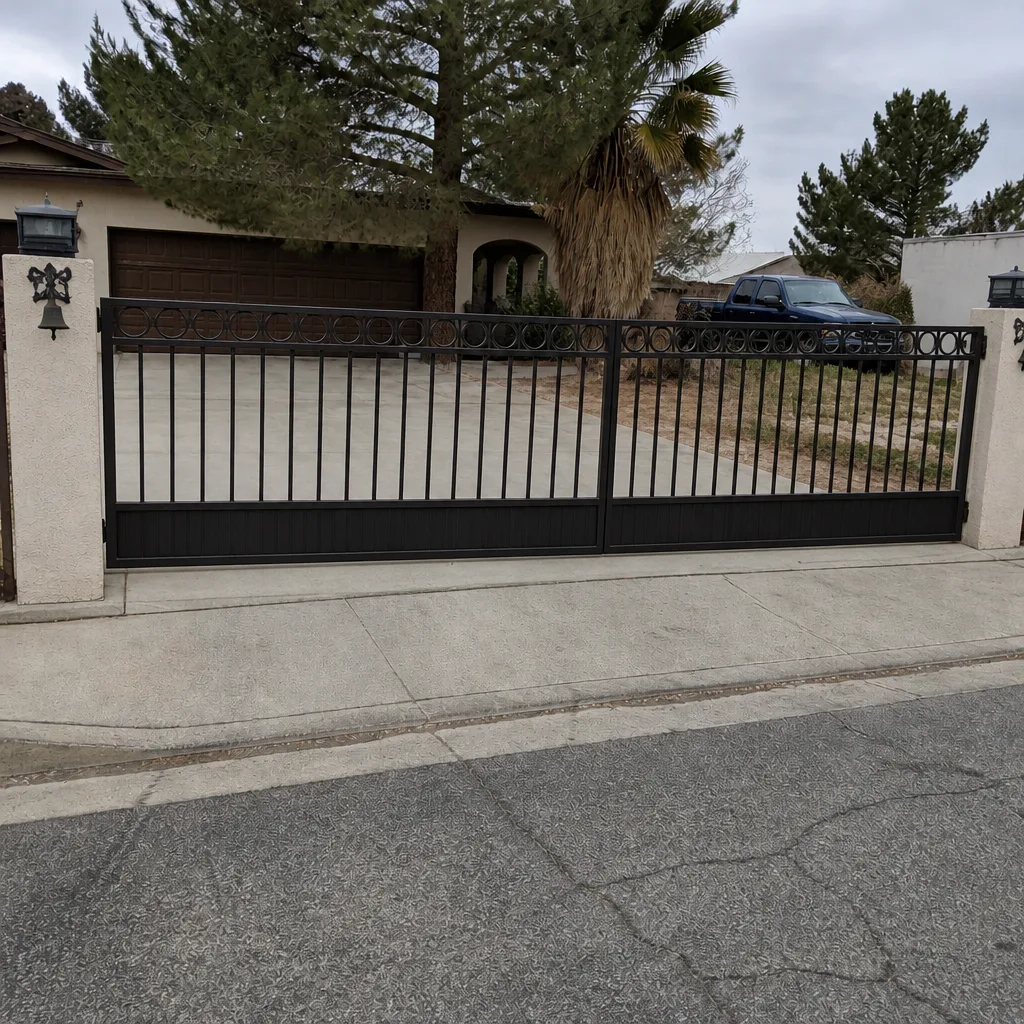
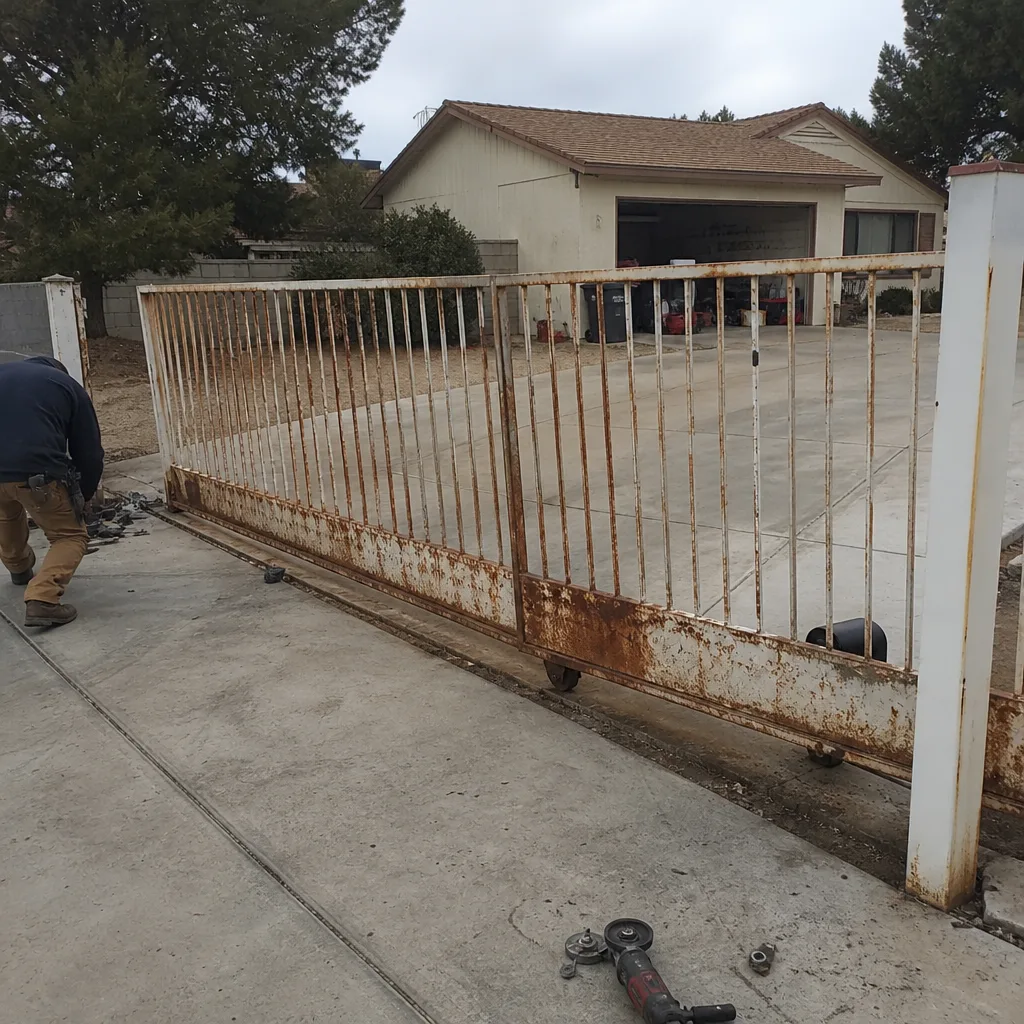
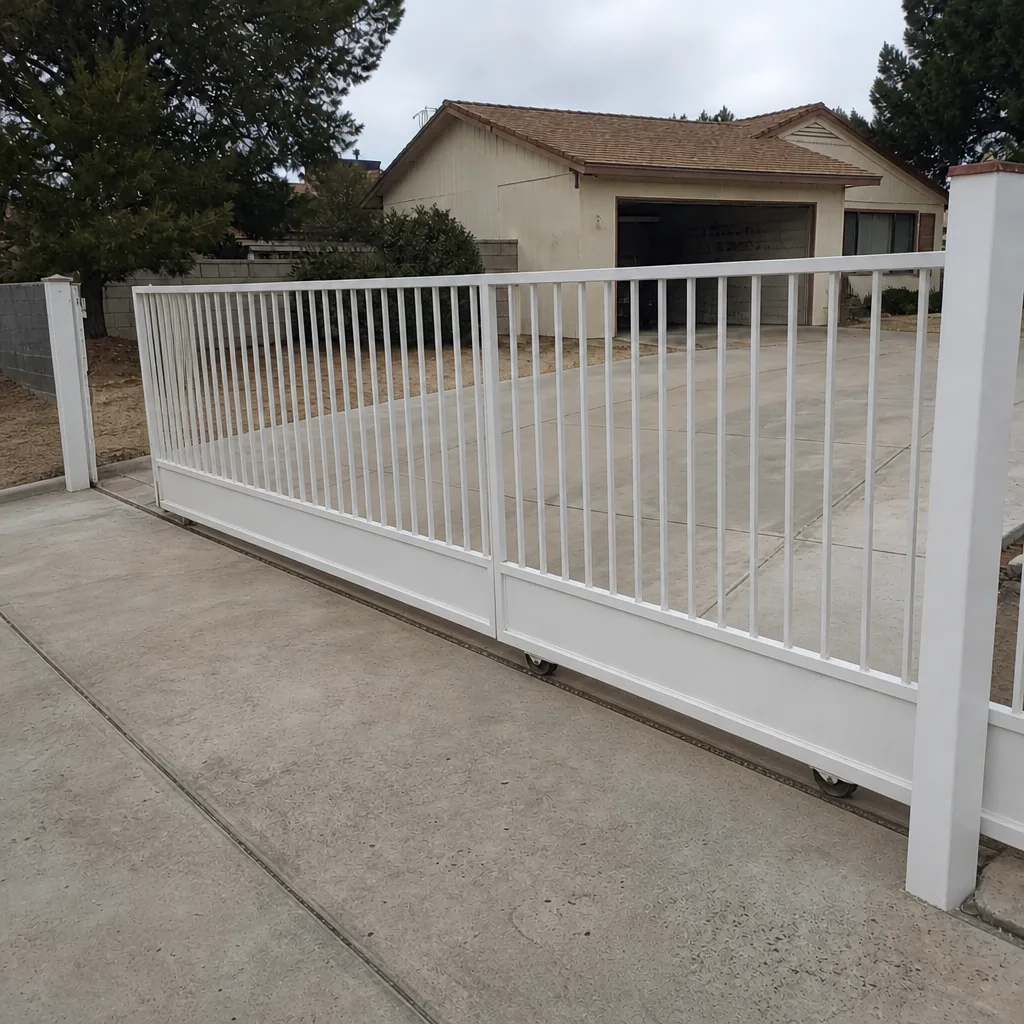
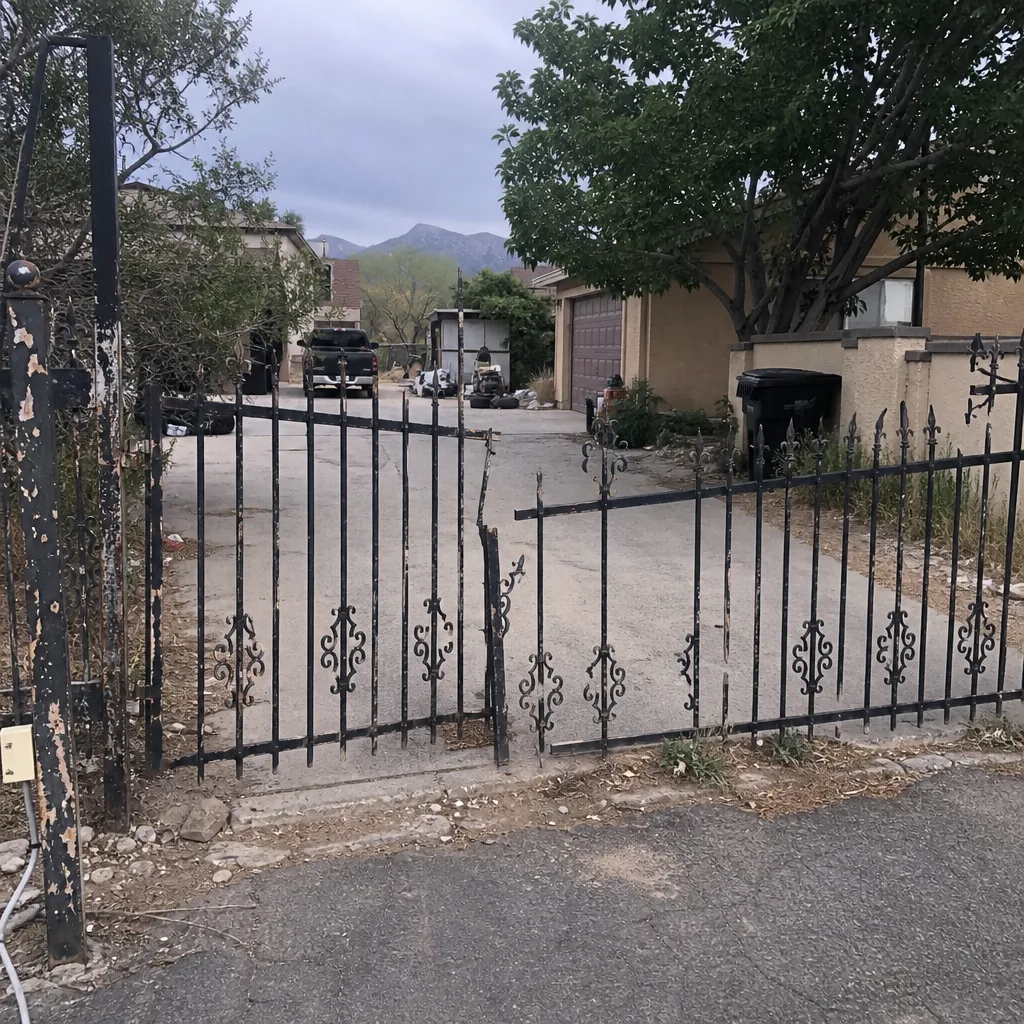
See the difference
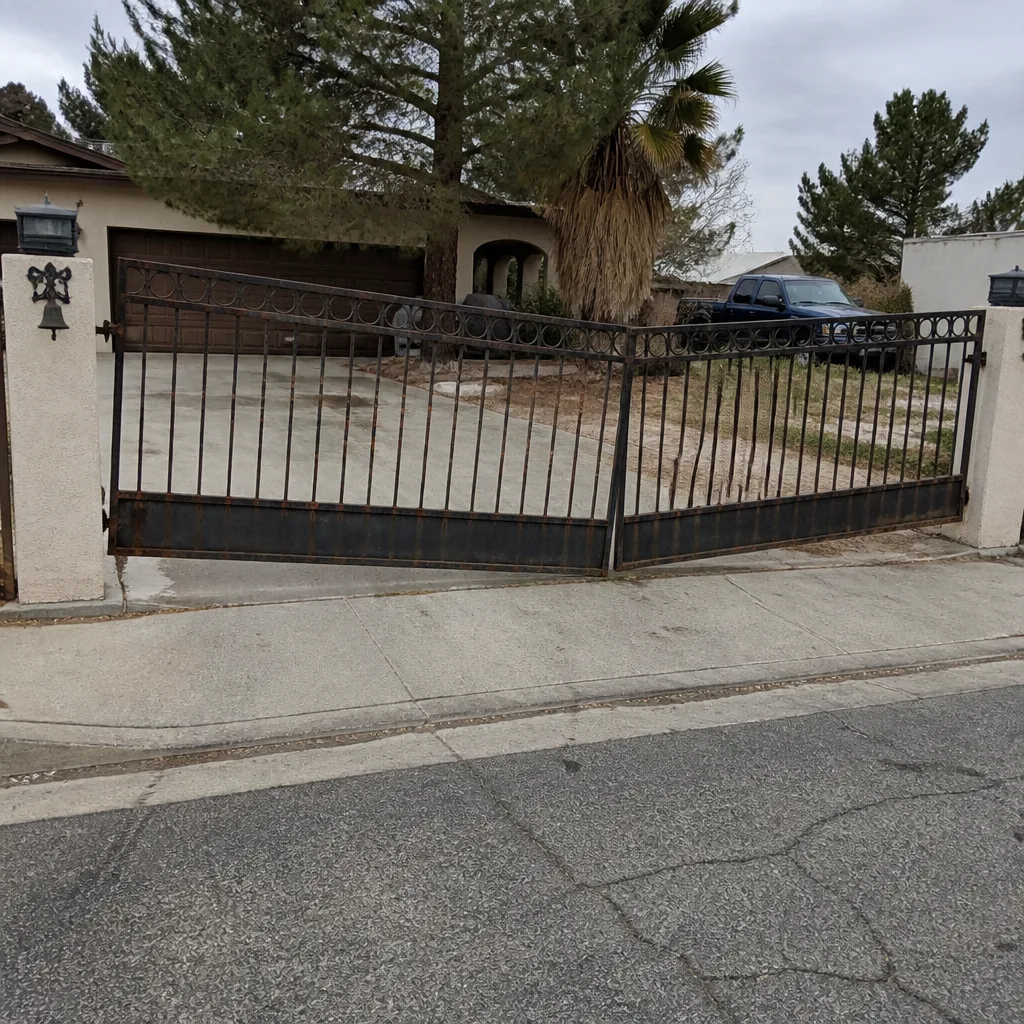 Before
 After
 Before
 After
 Before
 After
When to Call a Professional
Most gate work can be scheduled ahead of time, but certain signs mean it’s time to call now. A gate that won’t open or close at all, a motor that trips the breaker, a snapped spring or cable, a weld that’s visibly cracked, a gate dragging or off its track, or a safety edge or photo beam that no longer responds all deserve a trained technician rather than a weekend attempt. The same goes for hydraulic operators that are leaking or sluggish in cold weather, and for any electrical issue at the control panel. These are exactly the calls a gate specialist should handle, and they’re the difference between a repaired gate and a gate that fails again next season. Ironworks Gate Co. Mesquite offers free estimates in Mesquite. Call (844) 797-2573 and we’ll give you a straight answer and an upfront price before any work begins.
Frequently Asked Questions
Twice a year is the right cadence for most Mesquite homes: a pre-summer inspection in April or May and a fall inspection in October or November. That schedule covers the three big heat-season risks in spring and the structural and winterizing work in fall. Older or settling gates may benefit from a lighter mid-summer check as well. Call (844) 797-2573 for an exact quote; estimates are free.
Yes, with care. The right motor, kept cool and maintained, runs through the heat fine, though it may slow or enter thermal protection on the hottest afternoons. The motors that fail usually had a spring of skipped maintenance. If your operator is tripping, reversing, or grinding, that’s your cue to call.
Yes. Mesquite’s short freezes affect pipe-adjacent posts, low hinge points, and hydraulic operators. Test the battery backup before the cold arrives, keep bottom hinges greased and draining, and check hydraulic fluid on models that use it. A November visit handles all of this before the first freeze. Call us for a free second opinion on any written estimate.
A tune-up covers the full pre-summer or fall checklist: hinge and pivot grease, weld and coating inspection, battery and charging-circuit test, track cleaning, and safety-device testing. Our $89 Seasonal Tune-Up is built around the two seasonal windows that matter here. It’s the highest-value maintenance item on the year’s calendar.
Fall is the better time. Metal isn’t swollen with summer heat, and paint and repairs cure properly before winter. That’s why we recommend scheduling welding, frame repairs, and post adjustments for October or November. If you have a cracked weld now, don’t wait; get it assessed.
Start with a full assessment so we can establish a baseline, then set up the two-visit calendar. Our technicians have up to 13 years of experience on the brands that matter, including FAAC, BFT, Linear, and Viking, so the right fix happens on the first visit. Call (844) 797-2573 to get started.
The Bottom Line
Gate care in Mesquite comes down to two well-timed inspections. The April or May visit prevents the three most common summer breakdowns. The October or November visit handles the structural and welding work while the weather is mild, and it winterizes the operator for the short freeze window. Between those two, your job is simple: notice, don’t ignore, and call when something changes. Done right, a gate should hold up season after season, and the person who gets it there is the one who doesn’t wait for August to notice April’s problem. That’s the whole method. Call (844) 797-2573 for a free estimate and we’ll build the calendar around your gate.
Written by the team at Ironworks Gate Co. Mesquite.